Research Article | | Peer-Reviewed

Reliability-Based Evaluation of Hollow Reinforced Concrete Beams with Variable Void Positions

Received: 21 April 2026     Accepted: 11 June 2026     Published: 3 July 2026
Views:       Downloads:
Abstract

This study presents a reliability-based evaluation of the flexural behavior of reinforced concrete (RC) beams containing voids formed using polyvinyl chloride (PVC) pipes positioned at varying distances along the beam length. Six beam specimens measuring 500 mm × 100 mm × 100 mm were cast and tested, with voids located between 0 mm and 200 mm from the beam ends. The experimental program followed ASTM and BS 8100 standards to determine the concrete’s physical and mechanical properties, including slump, water absorption, and flexural strength. Results showed that the beam performance was highly dependent on void positioning. Beams with voids placed 100 mm from the supports recorded the highest flexural strength of 3.10 N/mm2 at 28 days, surpassing the control beam (2.90 N/mm2). Reliability analysis, performed using the First Order Reliability Method (FORM) as recommended by the Joint Committee on Structural Safety, yielded an average reliability index (β) of 3.32, representing a 50% improvement in safety prediction accuracy compared to deterministic design. The findings confirm that strategically positioned voids can improve structural efficiency and material economy without compromising safety. Consequently, the study concludes that reliability-based design provides a robust framework for sustainable and optimized reinforced concrete beam construction.

Published in American Journal of Construction and Building Materials (Volume 10, Issue 2)
DOI 10.11648/j.ajcbm.20261002.11
Page(s) 47-53
Creative Commons

This is an Open Access article, distributed under the terms of the Creative Commons Attribution 4.0 International License (http://creativecommons.org/licenses/by/4.0/), which permits unrestricted use, distribution and reproduction in any medium or format, provided the original work is properly cited.

Copyright

Copyright © The Author(s), 2026. Published by Science Publishing Group

Keywords

Reliability Analysis, Reinforced Concrete Beams, PVC Voids, Flexural Strength, FORM, Probability of Failure

1. Introduction
Reinforced concrete (RC) beams are fundamental structural members in buildings, bridges, and highway systems, primarily designed to resist bending and shear stresses. Conventional beam design often assumes negligible tensile strength below the neutral axis, resulting in conservative designs with increased self-weight and higher material consumption . These limitations have necessitated the exploration of innovative strategies to improve structural efficiency and sustainability in modern engineering practice.
One such innovation involves introducing voids or hollow sections within beams to reduce dead load while maintaining adequate flexural and shear capacities. Previous studies have shown that properly designed voids can reduce structural weight by up to 30% without compromising performance. Furthermore, minimizing concrete volume contributes to environmental sustainability by reducing cement usage and associated carbon emissions .
Polyvinyl chloride (PVC) pipes have emerged as reliable and economical void formers due to their durability, lightness, and ease of placement. They reduce beam self-weight while providing potential channels for service ducts . However, void introduction alters the stress flow within the beam, making the position and geometry of the voids critical to performance. Poor placement may cause stress concentration, early cracking, and reduced load-carrying capacity .
Traditional deterministic design methods, based on fixed safety factors, often fail to account for uncertainties in load, material strength, and geometric variability . In contrast, reliability-based design approaches—particularly the First Order Reliability Method (FORM)—allow engineers to quantify safety levels probabilistically through the reliability index (β) and probability of failure (Pf) . Integrating experimental evaluation with probabilistic modeling improves the accuracy of safety assessment and enhances design optimization .
Therefore, this study investigates the effect of void positioning on the flexural behavior and reliability of hollow RC beams. It aims to identify the optimal void location that maximizes strength and reliability while minimizing material use, thus promoting sustainability and structural safety.
2. Materials and Methods
2.1. Materials
2.1.1. Cement
Dangote Ordinary Portland Cement conforming to was used. The cement was stored in dry conditions and tested to ensure compliance with strength and setting time requirements.
2.1.2. Aggregates
Clean river sand and crushed granite sourced from Iyamho, Edo State, served as fine and coarse aggregates, respectively. The materials were graded according to BS 812, washed to remove impurities, and confirmed suitable for structural concrete production.
2.1.3. Water
PoTable tap water obtained from the Civil Engineering Laboratory, Edo State University, was used for mixing and curing. It met the requirements of for concrete water, being free of harmful substances.
2.1.4. Reinforcement
High-yield steel bars of 10 mm diameter were used in both tension and compression zones. The bars met BS 4449: 2005 standards and were cleaned of rust and oil before use to ensure proper bonding.
2.1.5. PVC Pipes
Smooth circular PVC pipes of 50 mm diameter were employed as void formers. They were inserted at different positions along the beam length 0 mm, 50 mm, 100 mm, 150 mm, and 200 mm from the beam ends to assess the influence of void location on flexural and reliability behavior.
2.2. Mix Proportion
Concrete was designed using the Department of the Environment (DOE) method for Grade 25 (C20/25). A water-cement ratio of 0.55 was adopted to ensure adequate workability and strength development. The final mix ratio by weight was:
Mix ratio: 0.55: 1: 1.92: 3.57 (water: cement: sand: coarse aggregate)
2.3. Beam Preparation and Testing
Six beam specimens (500 mm × 100 mm × 100 mm) were cast and cured for 28 days. Flexural testing was carried out in accordance with (third-point loading method). Slump and water absorption tests followed BS 1881: Part 102 and Part 122, respectively. Crack initiation and failure behavior were visually observed during loading.
2.4. Reliability Analysis (FORM)
The First Order Reliability Method (FORM) was employed to evaluate the probability of failure of the beam configurations. The limit state function was defined as:
g(R,Q)=R−Q(1)
Where R is the flexural resistance (N/mm2) and Q is the applied load effect (N/mm2). Failure occurs when g(R, Q) ≤ 0.
The probability of failure (Pf) was computed as:
Pf=1−Φ(β)(2)
Where Φ (β) represent the standard normal cumulative distribution function.
Reliability computations were performed using the FORM5 algorithm (FORTRAN-based) with stochastic input variables for concrete strength, applied load, and reinforcement yield stress.
3. Results and Discussion
The result and discussion] presents the outcomes of the laboratory experiments and reliability evaluations conducted on hollow reinforced concrete (RC) beams with variable void positions. The discussions cover the physical properties of the concrete mix, flexural strength development, crack pattern observations, and reliability analysis results.
3.1. Physical Properties of Concrete
The physical characteristics of the concrete mix were determined through standard tests for slump and water absorption, which provide insight into the workability and porosity of the concrete. The results are summarized in Table 1.
Table 1. Physical Properties of the Concrete Mix.

Property

Test Method

Result

Standard Requirement / Remark

Slump (mm)

BS 1881: Part 102 (1983)

75

Medium workability

Water Absorption (%)

BS 1881: Part 122 (1983)

4.6

< 5% (AccepTable for structural concrete)

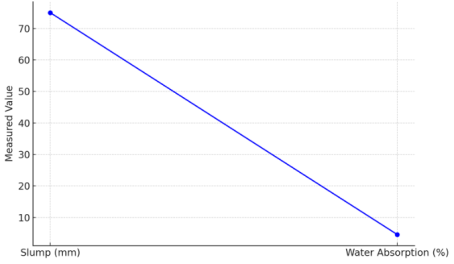
Figure 1. Physical Properties of the Concrete Mix.
As shown in Table 1 and Figure 1, the concrete mix recorded a slump value of 75 mm, indicating medium workability suitable for reinforced members, ensuring ease of placement and compaction without segregation. The water absorption value of 4.6%, being below the 5% limit , confirms low porosity and high durability. The results in Table 1 demonstrate that the mix achieved the desired consistency and quality for structural concrete applications.
3.2. Flexural Strength of Beams
Flexural tests were performed on six beams of dimensions 500 mm × 100 mm × 100 mm using third-point loading as specified in . Beams were tested at 7, 14, and 28 days. The results are presented in Table 2.
Table 2. Flexural Strength Results of RC Beams at Various Curing Ages.

Beam ID

Void Position (mm)

7 Days (N/mm2)

14 Days (N/mm2)

28 Days (N/mm2)

B0

Solid (Control)

2.30

2.65

2.90

B1

0 mm

2.45

2.75

2.95

B2

100 mm

2.55

2.85

3.10

B3

150 mm

2.25

2.55

2.80

B4

200 mm

2.10

2.45

2.70

B5

Midspan

2.05

2.35

2.60

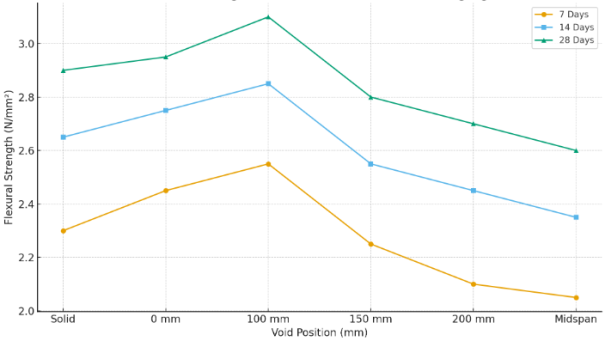
Figure 2. Flexural Strength of RC Beams at Various Curing Ages.
As presented in Table 2 and Figure 2, the flexural strength of all beams increased with curing age, reflecting proper hydration and concrete maturity. The B2 beam, with voids positioned 100 mm from the supports, achieved the highest 28-day strength of 3.10 N/mm2, exceeding the solid control beam (2.90 N/mm2). This indicates that voids placed near the supports improve stress distribution and load transfer. Conversely, beams with centrally located voids (B4 and B5) recorded the lowest strengths, confirming that midspan voids reduce flexural capacity due to stress concentration in the tension zone.
3.3. Crack Pattern and Failure Behavior
The failure patterns of the beams were visually assessed after testing. All beams exhibited flexural failure, characterized by crack propagation from the tension zone toward the compression face. The summary of observations is provided in Table 3.
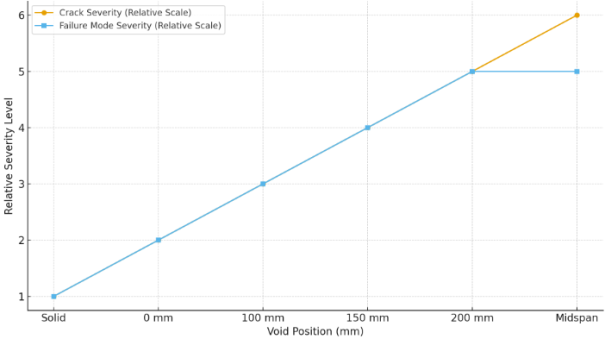
Figure 3. Crack Pattern and Failure Mode Severity of RC Beams.
Table 3. Crack pattern and failure mode of tested beams.

Beam ID

Void Position (mm)

Crack Initiation Zone

Crack Type

Failure Mode

B0 (Control)

Solid

Midspan

Vertical flexural cracks

Flexural

B1

0 mm

Near support

Diagonal-flexural

Flexural-shear

B2

100 mm

Near support

Fine, distributed

Gradual flexural failure

B3

150 mm

Midspan

Deep flexural cracks

Sudden flexural

B4

200 mm

Midspan

Wide tension cracks

Brittle flexural

B5

Midspan

Centerline

Major longitudinal crack

Brittle flexural

As shown in Table 3 and Figure 3, all beams primarily exhibited flexural-type failure, with variations depending on void position. The B2 beam, having voids at 100 mm from the supports, developed fine and evenly distributed cracks, indicating gradual and ductile failure. In contrast, beams with midspan voids (B4 and B5) displayed wide tension cracks and abrupt, brittle failure due to high stress concentration in the tension zone. The control beam (B0) showed typical vertical flexural cracks at midspan, confirming expected behavior for solid reinforced concrete members.
3.4. Reliability-Based Evaluation
Reliability analysis was conducted using the First Order Reliability Method (FORM) to quantify the probability of failure (Pf) and reliability index (β) for each beam configuration. The input parameters included the mean and coefficient of variation of concrete strength, load effects, and reinforcement yield stress. The results are summarized in Table 4.
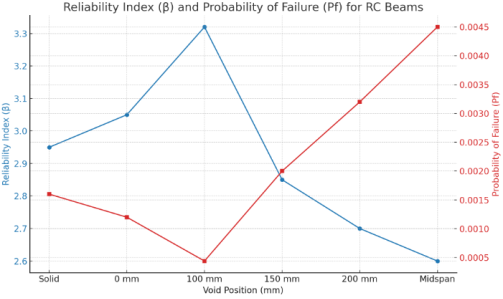
Figure 4. Reliability Index (β) and Probability of Failure (Pf) for RC Beams.
Table 4. Reliability Index (β) and Probability of Failure (Pf) for RC Beams.

Beam ID

Void Position (mm)

Deterministic Area of Steel (mm2)

Reliability-Based Area (mm2)

Reliability Index (β)

Probability of Failure (Pf)

B0 (Control)

Solid

402

780

2.95

1.6 × 10⁻³

B1

0 mm

402

792

3.05

1.2 × 10⁻³

B2

100 mm

402

804

3.32

4.4 × 10⁻⁴

B3

150 mm

402

775

2.85

2.0 × 10⁻³

B4

200 mm

402

765

2.70

3.2 × 10⁻³

B5

Midspan

402

755

2.60

4.5 × 10⁻³

As presented in Table 4 and Figure 4, the reliability index (β) and probability of failure (Pf) varied with void position, reflecting differences in structural safety levels. The B2 beam, with voids located 100 mm from the supports, achieved the highest reliability index (β = 3.32) and the lowest probability of failure (Pf = 4.4 × 10⁻⁴), indicating superior performance. Conversely, beams with midspan voids (B4 and B5) recorded the lowest reliability indices and highest failure probabilities, signifying reduced safety margins. The results confirm that reliability-based design provides a more accurate safety assessment than deterministic methods, which often underestimate structural risk.
3.5. Summary of Findings
The study confirms that void placement significantly influences the structural behavior of hollow RC beams. Beams with voids located near supports (particularly at 100 mm) exhibit higher strength, better crack control, and improved reliability performance compared to centrally voided beams. The integration of FORM-based reliability analysis enhances the predictive accuracy of safety evaluations, ensuring both efficiency and sustainability in design.
4. Conclusion
This study investigated the flexural performance and reliability of reinforced concrete (RC) beams containing polyvinyl chloride (PVC) voids placed at varying positions along the beam length. Experimental and reliability analyses revealed that void location plays a critical role in determining the strength, crack pattern, and overall safety of hollow beams.
Beams with voids positioned 100 mm from the supports (B2) demonstrated the highest flexural strength (3.10 N/mm2) and reliability index (β = 3.32), outperforming both the solid control and centrally voided beams. In contrast, beams with midspan voids exhibited lower strength and brittle failure due to stress concentration in the tension zone.
The integration of the First Order Reliability Method (FORM) provided a more accurate safety prediction than conventional deterministic design, accounting for material and load uncertainties. Consequently, the study concludes that strategic void placement near supports enhances structural efficiency and reliability, leading to lighter, safer, and more sustainable beam designs.
Future work is recommended to extend this evaluation to full-scale beams and incorporate combined shear and torsional loading conditions to validate the long-term reliability of voided RC members under realistic service conditions. Future studies are recommended to extend this evaluation to full-scale beams under variable load conditions, including shear and torsion, to verify long-term performance.
Abbreviations

R

Resistance or Structural Capacity (N/mm2)

Q

Load Effect (N/mm2)

Β

Reliability Index

Pf

Probability of Failure

fc′

Concrete Compressive Strength (N/mm2)

fy

Yield Strength of Steel (N/mm2)

Ec

Modulus of Elasticity of Concrete (N/mm2)

G (R, Q)

Limit State Function

Φ (β)

Standard Normal Distribution Function

RC

Reinforced Concrete

PVC

Polyvinyl Chloride

FORM

First Order Reliability Method

JCSS

Joint Committee on Structural Safety

BS

British Standard

ASTM

American Society for Testing and Materials

DOE

Department of Environment (UK)

Pf

Probability of Failure

Acknowledgments
I am grateful to Almighty Allah for His guidance throughout this work. My sincere appreciation goes to Engr. Prof. John Wasiu, my supervisor, for his mentorship, the Head of Department, Engr. Dr. Ibrahim Abdulrazaq and entire staff of Civil of Engineering Department, Edo State University, Iyamho, for their support. I also thank my family and friends for their constant encouragement.
Author Contributions
Isah Aminu: Data curation, Methodology
John Wasiu: Supervision
Ibrahim Abdulrazaq Olayinka: Validation
Conflicts of Interest
The authors declare that there is no conflict of interest.
References
[1] Abdulkadir, A., & Adamu, Y. (2019). Analysis of bending and shear behavior of RC beams. Journal of Structural Engineering Research, 5(2), 45-53.
[2] Desayi, P., & Krishnan, S. (2023). Mathematical modeling of stress-strain behavior in concrete. Structural Materials Journal, 11(1), 112-120.
[3] Fouad, M., Ali, S., & Ahmed, K. (2020). Effect of openings on reinforced concrete beams: Experimental and analytical approach. Journal of Civil Structures, 18(3), 210-225.
[4] Hasofer, A. M., & Lind, N. C. (1974). Exact and invariant second-moment code format. Journal of the Engineering Mechanics Division, ASCE, 100(1), 111-121.
[5] Hassan, A., Ibrahim, S., & Al-Saadi, M. (2020). Performance of hollow RC beams with PVC pipes under flexural loading. Construction Engineering Journal, 22(2), 145-160.
[6] JCSS. (2000). Probabilistic Model Code. Joint Committee on Structural Safety, Zurich.
[7] Mansur, M. A. (2006). Design of reinforced concrete beams with openings: State of the art review. Cement and Concrete Composites, 28(6), 881-890.
[8] Muhammad, I., Saleh, A., & Umar, B. (2023). Shear and flexural behavior of perforated concrete beams. International Journal of Structural Safety, 14(1), 77-91.
[9] Melchers, R. E. (1987). Structural Reliability: Analysis and Prediction. Ellis Horwood Ltd., Chichester.
[10] Karthik, R., & Kumar, S. (2019). Reliability and performance assessment of reinforced concrete members. Journal of Building Research, 7(4), 331-342.
[11] Akintayo, S. O., &Aina, O. O. (2014). "Effect of Voids on the Strength of Reinforced Concrete Beams." International Journal of Civil Engineering and Technology (IJCIET), 5(7), 82-88.
[12] Olutoge, H. M. Al-Salloum, Y. A. Almusallam, T. H. Alshenawy, A. O. and Abbas, H. (2019). Experimental and numerical study on FRP-upgraded RC beams with large rectangular web openings in shear zones, Constr. Build. Mater., 194, 322.
[13] ASTM International. (2013). ASTM C642 - Standard Test Method for Density, Absorption, and Voids in Hardened Concrete. West Conshohocken, PA: ASTM International.
[14] British Standards Institution (BSI). (1983). BS 1881: Part 122: Testing Concrete - Method for Determination of Water Absorption. London: BSI.
[15] ASTM International. (2016). ASTM C90 - Standard Specification for Load bearing Concrete Masonry Units. West Conshohocken, PA: ASTM International.
Cite This Article
  • APA Style

    Aminu, I., Wasiu, J., Olayinka, I. A., Gussau, H. D. (2026). Reliability-Based Evaluation of Hollow Reinforced Concrete Beams with Variable Void Positions. American Journal of Construction and Building Materials, 10(2), 47-53. https://doi.org/10.11648/j.ajcbm.20261002.11

    Copy | Download

    ACS Style

    Aminu, I.; Wasiu, J.; Olayinka, I. A.; Gussau, H. D. Reliability-Based Evaluation of Hollow Reinforced Concrete Beams with Variable Void Positions. Am. J. Constr. Build. Mater. 2026, 10(2), 47-53. doi: 10.11648/j.ajcbm.20261002.11

    Copy | Download

    AMA Style

    Aminu I, Wasiu J, Olayinka IA, Gussau HD. Reliability-Based Evaluation of Hollow Reinforced Concrete Beams with Variable Void Positions. Am J Constr Build Mater. 2026;10(2):47-53. doi: 10.11648/j.ajcbm.20261002.11

    Copy | Download

  • @article{10.11648/j.ajcbm.20261002.11,
      author = {Isah Aminu and John Wasiu and Ibrahim Abdulrazaq Olayinka and Haruna Daud Gussau},
      title = {Reliability-Based Evaluation of Hollow Reinforced Concrete Beams with Variable Void Positions},
      journal = {American Journal of Construction and Building Materials},
      volume = {10},
      number = {2},
      pages = {47-53},
      doi = {10.11648/j.ajcbm.20261002.11},
      url = {https://doi.org/10.11648/j.ajcbm.20261002.11},
      eprint = {https://article.sciencepublishinggroup.com/pdf/10.11648.j.ajcbm.20261002.11},
      abstract = {This study presents a reliability-based evaluation of the flexural behavior of reinforced concrete (RC) beams containing voids formed using polyvinyl chloride (PVC) pipes positioned at varying distances along the beam length. Six beam specimens measuring 500 mm × 100 mm × 100 mm were cast and tested, with voids located between 0 mm and 200 mm from the beam ends. The experimental program followed ASTM and BS 8100 standards to determine the concrete’s physical and mechanical properties, including slump, water absorption, and flexural strength. Results showed that the beam performance was highly dependent on void positioning. Beams with voids placed 100 mm from the supports recorded the highest flexural strength of 3.10 N/mm2 at 28 days, surpassing the control beam (2.90 N/mm2). Reliability analysis, performed using the First Order Reliability Method (FORM) as recommended by the Joint Committee on Structural Safety, yielded an average reliability index (β) of 3.32, representing a 50% improvement in safety prediction accuracy compared to deterministic design. The findings confirm that strategically positioned voids can improve structural efficiency and material economy without compromising safety. Consequently, the study concludes that reliability-based design provides a robust framework for sustainable and optimized reinforced concrete beam construction.},
     year = {2026}
    }
    

    Copy | Download

  • TY  - JOUR
    T1  - Reliability-Based Evaluation of Hollow Reinforced Concrete Beams with Variable Void Positions
    AU  - Isah Aminu
    AU  - John Wasiu
    AU  - Ibrahim Abdulrazaq Olayinka
    AU  - Haruna Daud Gussau
    Y1  - 2026/07/03
    PY  - 2026
    N1  - https://doi.org/10.11648/j.ajcbm.20261002.11
    DO  - 10.11648/j.ajcbm.20261002.11
    T2  - American Journal of Construction and Building Materials
    JF  - American Journal of Construction and Building Materials
    JO  - American Journal of Construction and Building Materials
    SP  - 47
    EP  - 53
    PB  - Science Publishing Group
    SN  - 2640-0057
    UR  - https://doi.org/10.11648/j.ajcbm.20261002.11
    AB  - This study presents a reliability-based evaluation of the flexural behavior of reinforced concrete (RC) beams containing voids formed using polyvinyl chloride (PVC) pipes positioned at varying distances along the beam length. Six beam specimens measuring 500 mm × 100 mm × 100 mm were cast and tested, with voids located between 0 mm and 200 mm from the beam ends. The experimental program followed ASTM and BS 8100 standards to determine the concrete’s physical and mechanical properties, including slump, water absorption, and flexural strength. Results showed that the beam performance was highly dependent on void positioning. Beams with voids placed 100 mm from the supports recorded the highest flexural strength of 3.10 N/mm2 at 28 days, surpassing the control beam (2.90 N/mm2). Reliability analysis, performed using the First Order Reliability Method (FORM) as recommended by the Joint Committee on Structural Safety, yielded an average reliability index (β) of 3.32, representing a 50% improvement in safety prediction accuracy compared to deterministic design. The findings confirm that strategically positioned voids can improve structural efficiency and material economy without compromising safety. Consequently, the study concludes that reliability-based design provides a robust framework for sustainable and optimized reinforced concrete beam construction.
    VL  - 10
    IS  - 2
    ER  - 

    Copy | Download

Author Information
  • Department of Civil Engineering, Edo State University, Iyamho, Nigeria

  • Department of Civil Engineering, Edo State University, Iyamho, Nigeria

  • Department of Civil Engineering, Edo State University, Iyamho, Nigeria

  • Department of Civil Engineering, Edo State University, Iyamho, Nigeria

  • Abstract
  • Keywords
  • Document Sections

    1. 1. Introduction
    2. 2. Materials and Methods
    3. 3. Results and Discussion
    4. 4. Conclusion
    Show Full Outline
  • Abbreviations
  • Acknowledgments
  • Author Contributions
  • Conflicts of Interest
  • References
  • Cite This Article
  • Author Information