Abstract
Industry–TVET linkage remains a persistent policy challenge in Ethiopia, driven by a continuing mismatch between technical and vocational education outcomes and evolving labour market demands. Although successive policy reforms and legal frameworks, most recently TVET Proclamation No. 1298/2023, mandate active collaboration between Technical and Vocational Education and Training (TVET) institutions and industries, these partnerships continue to be fragmented, informal, and inconsistently implemented across institutions and regions. As a result, challenges related to graduate employability, practical skills acquisition, workforce readiness, and cooperative training effectiveness persist. This study undertakes a qualitative systematic review to synthesize existing evidence on TVET–industry linkage practices, challenges, governance arrangements, and policy gaps in Ethiopia. The review is guided by Human Capital Theory and the Skill Mismatch Model to explain the relationship between training quality, industry engagement, and graduate employability outcomes. A total of 30 peer-reviewed articles and relevant policy documents, retrieved from Scopus and Google Scholar, were selected through systematic database searches following PRISMA guidelines and appraised using the Critical Appraisal Skills Programme (CASP) checklist. Thematic synthesis involving coding, categorization, and interpretive analysis was employed to identify recurring themes across studies. The synthesis reveals five major thematic clusters: (1) weak enterprise participation and cooperative training deficiencies; (2) curriculum–labour market misalignment; (3) governance fragmentation and exclusionary policy formulation; (4) resource constraints and institutional capacity gaps; and (5) emerging digital transformation challenges. Cross-cutting findings indicate that these challenges are systemic and mutually reinforcing rather than isolated. The review proposes an evidence-based integrated framework for strengthening TVET–industry partnerships in Ethiopia, emphasizing binding governance mechanisms, inclusive policy development, curriculum co-design, institutionalized incentive systems, and digital capacity-building.
Keywords
TVET, Industry Linkage, Cooperative Training, Employability, Policy Gaps, Governance, Ethiopia
1. Introduction and Background
Technical and Vocational Education and Training (TVET) is increasingly recognized as a strategic instrument for enhancing productivity, promoting inclusive economic growth, and addressing youth unemployment through the development of market-relevant skills. Globally, the effectiveness of TVET systems depends largely on the strength of collaboration between training institutions and industries. Such partnerships facilitate curriculum responsiveness, workplace learning opportunities, technological transfer, and smoother school-to-work transitions. Consequently, international organizations — including UNESCO, the ILO, and the World Bank — advocate for demand-driven TVET systems characterized by strong industry engagement
.
In Ethiopia, TVET has been positioned as a cornerstone of national development strategies aimed at supporting industrialization, job creation, and structural transformation. Successive TVET policies and strategies have emphasized cooperative training, competency-based assessment, and shared responsibilities between public institutions and private enterprises. Most recently, the TVET Proclamation No. 1298/2023 reaffirmed the importance of industry participation in the planning, implementation, and evaluation of training programmes, signalling a continued commitment to institutional collaboration at the highest legislative level.
Despite these policy commitments, evidence consistently suggests that Industry–TVET linkage in Ethiopia remains weak, fragmented, and unevenly implemented. Studies conducted across different regions and sectors report recurring concerns related to limited enterprise participation, inadequate cooperative training arrangements, curriculum–labour market mismatches, weak governance structures, insufficient incentives for industries, and poor institutional capacities. However, these studies have largely been undertaken in isolation, focusing on specific sectors, geographical areas, or stakeholder groups. Consequently, the existing body of knowledge remains fragmented and provides limited guidance for developing a comprehensive understanding of the systemic factors influencing linkage effectiveness.
At the same time, scholarly interest in Industry–TVET linkage has grown substantially in recent years. A review of the literature retrieved from Scopus demonstrates a notable increase in publications addressing Ethiopian TVET–industry relations, particularly after 2022, with the highest output recorded in 2025. This upward trend indicates growing academic and policy recognition of the importance of strengthening linkages between TVET institutions and industries. The surge in publications may also reflect emerging concerns regarding graduate employability, persistent skill mismatches, digital transformation, cooperative training effectiveness, and the implementation of recent policy reforms. Nevertheless, the expansion of individual studies has not been accompanied by a systematic synthesis of the evidence generated.
The absence of a comprehensive review represents a critical scholarly gap. Although numerous studies have investigated specific aspects of cooperative training, curriculum alignment, and graduate employability in Ethiopia, no previous systematic review has synthesized this fragmented evidence to explain the governance mechanisms that shape Industry–TVET linkage outcomes and to propose an integrated reform framework. Existing studies provide valuable insights into isolated dimensions of linkage practices but do not collectively explain how governance arrangements, stakeholder perceptions, institutional capacities, and policy frameworks interact to shape the effectiveness of Industry–TVET partnerships. Without such synthesis, policymakers and practitioners may continue to rely on fragmented, context-specific evidence when designing interventions aimed at improving training quality and labour market responsiveness.
Therefore, this study addresses that gap by undertaking the first qualitative systematic review of Ethiopian evidence on Industry–TVET linkage that integrates findings across linkage practices, implementation challenges, governance dimensions, and stakeholder perspectives. By synthesizing findings from 30 peer-reviewed articles and relevant policy documents, the review seeks to develop a holistic, governance-centred understanding of the Ethiopian Industry–TVET linkage landscape and to propose an evidence-based integrated framework to guide future reforms toward more sustainable, industry-responsive TVET systems.
1.1. Problem Statement
TVET systems are increasingly expected to produce graduates equipped with competencies that align with rapidly evolving labour market demands. Strong collaboration between TVET institutions and industries has therefore become a central principle of contemporary skills development systems. Effective Industry–TVET linkage contributes to curriculum relevance, workplace learning opportunities, technological transfer, graduate employability, productivity enhancement, and economic competitiveness.
Empirical evidence underscores the urgency of this challenge in Ethiopia across five dimensions. First, regarding graduate unemployment: Gebremeskel
| [9] | Gebremeskel, M. M. (2025). Why is there a fallacious association between competence and wage employment among graduates in Ethiopia? The case of agro-food processing graduates. Cogent Social Sciences, 11(1), 2544058.
https://doi.org/10.1080/23311886.2025.2544058 |
[9]
found that a substantial proportion of TVET graduates in the agro-food processing sub-sector failed to secure wage employment within twelve months of programme completion, with the study identifying corrupt recruitment practices — including nepotism, cronyism, and bribery — as compounding the employment access barriers faced by otherwise competent graduates. More broadly, Guta, Gebre-Egziabher, and Kassahun
| [12] | Guta, M. D., Gebre-Egziabher, K. A., & Kassahun, M. (2025). The ramifications of youth unemployment in the Gurage Zone, Central Ethiopia (economic, social, and political). Discover Global Society, 3(1), 108. https://doi.org/10.1007/s44282-025-00250-0 |
[12]
document that youth unemployment in Ethiopia’s Gurage Zone stands at critically high levels, with TVET graduates constituting a disproportionate share of the unemployed youth population. Second, regarding enterprise dissatisfaction: Demissie
, studying TVET effectiveness across multiple institutions, found that employers consistently perceived graduates as not meeting workplace skill requirements, requiring significant on-the-job remediation before becoming productive. Guta
, surveying 80 TVET instructors across Oromia, documented that enterprises lacked even the basic understanding of cooperative training objectives necessary for effective trainee mentorship — reflecting not just dissatisfaction but a fundamental disconnection between TVET institutions and the industrial sector. Third, regarding cooperative training participation: Wudneh, Seifu, and Dagnew
| [29] | Wudneh, L., Seifu, A., & Dagnew, A. (2022). Practices of cooperative training in the Amhara Regional State TVET colleges and companies, Ethiopia. Cogent Education, 9(1), 2020608. https://doi.org/10.1080/2331186X.2021.2020608 |
[29]
found that company involvement in cooperative training (CT) implementation across Amhara Regional State TVET colleges was consistently rated at low levels, with company involvement identified as a large-effect predictor of overall CT quality (β significant at p < 0.001). Guta
similarly documented that enterprises in Oromia failed to participate in learning activity planning, trainee assessment, and damage-coverage arrangements in the majority of cases surveyed. Fourth, regarding TVET employment outcomes: Shiferaw
| [25] | Shiferaw, R. M. (2020). Effects of short-term training on pastoral community employment creation and livelihood improvement: A study on selected Ethiopian pastoral areas. Journal of Innovation and Entrepreneurship, 9(1), 17.
https://doi.org/10.1186/s13731-020-00128-2 |
[25]
found that the absence of effective employer linkages was the primary cause of unemployment among TVET graduates in Ethiopian pastoral areas, with CT failure directly and measurably reducing post-training employment rates. Dehnie, Kidane, and Demissie
| [5] | Dehnie, F. A., Kidane, B. Z., & Demissie, M. M. (2025a). Cooperative training as a mediator between training materials and graduates' employability in the Ethiopian vocational education. International Journal of Training and Development.
https://doi.org/10.1111/ijtd.70014 |
[5]
further confirmed that cooperative training acts as a statistically significant mediator in the relationship between training material quality and graduate employability, demonstrating that even well-resourced institutions produce employable graduates only where CT is effectively implemented. Fifth, regarding international comparisons: Cvetkoska et al.
| [4] | Cvetkoska, V., Trpeski, P., Ivanovski, I., Peovski, F., Imrol, M. H., Babadogan, B., Ecer, H., Gorur, D. Z., Selvi, U., Hunde, A. B., Gemeda, F. T., Dubi, Y. B., Melnyk, S., Lytvynchuk, A., & Tereshchenko, H. (2025). Comparative analysis of skill shortages, skill mismatches, and the threats of migration in labor markets: A sectoral approach in North Macedonia, Turkiye, Ethiopia, and Ukraine. Social Sciences, 14(5), 294.
https://doi.org/10.3390/socsci14050294 |
[4]
, in a comparative study across Ethiopia, North Macedonia, Turkey, and Ukraine, identified education–industry misalignment and weak qualification frameworks as shared challenges; however, Ethiopia was distinguished by the particular severity of its governance fragmentation, the near-total exclusion of key stakeholders from policy formulation processes, and the absence of binding legal frameworks for enterprise participation that characterize high-performing systems such as Germany’s dual TVET model and Singapore’s SkillsFuture programme. Kebede, Asgedom, and Asfaw
| [13] | Kebede, A., Asgedom, A., & Asfaw, A. (2024). Is linking technical and vocational training with industry a bridge to employability? Lessons from a literature review for Ethiopia. Cogent Education, 11(1), 2406721.
https://doi.org/10.1080/2331186X.2024.2406721 |
[13]
similarly concluded from their literature synthesis that effective linkage mechanisms — including joint qualification standards, industry-driven curriculum development, and structured apprenticeships — remain significantly underdeveloped in Ethiopia relative to international benchmarks.
In Ethiopia, despite recognition through successive policy reforms, evidence from empirical studies consistently indicates that the implementation of Industry–TVET linkage remains problematic. Studies report weak enterprise participation in curriculum development, limited involvement of industries in trainee assessment, inadequate provision of workplace learning opportunities, insufficient incentives for enterprise engagement, and poor coordination among stakeholders. Research has also identified curriculum–labour market mismatches, shortages of training resources, weak governance structures, and limited institutional capacities as persistent barriers to effective collaboration. As a result, concerns regarding graduate competence, employability, and the responsiveness of TVET programmes to labour market needs remain unresolved.
Although the body of literature addressing Industry–TVET linkage in Ethiopia has expanded considerably in recent years, the existing evidence base remains fragmented. Many studies are geographically localized, focusing on specific regions, sectors, institutions, or stakeholder groups. Others investigate isolated dimensions of the linkage process without generating a holistic explanatory framework. Furthermore, previous studies have predominantly emphasized operational challenges while giving limited attention to broader governance and policy implementation dynamics.
To the best of the researchers' knowledge, no qualitative systematic review has previously synthesized Ethiopian evidence on Industry–TVET linkage by integrating findings across linkage practices, implementation challenges, stakeholder perspectives, and governance dimensions. This study addresses that gap.
1.2. Research Gap
Table 1. Existing Studies vs Gap Analysis.
Dimension | What Existing Studies Did | Gap Addressed by This Review |
Geographic coverage | Focused on specific regions or institutions | National-level synthesis across Ethiopian studies |
Thematic focus | Examined isolated issues (cooperative training, employability, CoC, digitalization) | Integrates multiple dimensions of Industry–TVET linkage |
Governance analysis | Limited attention to policy implementation processes | Examines governance and policy gaps systematically |
Stakeholder perspectives | Investigated selected groups separately | Synthesizes perspectives across stakeholder categories |
Evidence synthesis | Predominantly stand-alone empirical studies | Provides a qualitative systematic review |
Practical contribution | Recommendations limited to individual contexts | Proposes a holistic evidence-based framework for reform |
1.3. Objectives of the Study
1.3.1. General Objective
To synthesize and critically analyze existing evidence on Industry–TVET linkage practices, challenges, and policy gaps in Ethiopia, with a view to developing an integrated evidence-based framework for strengthening industry–institution partnerships.
1.3.2. Specific Objectives
1) To identify the recurring practices and implementation patterns of Industry–TVET linkage reported in Ethiopian studies.
2) To examine the structural, institutional, and governance challenges that hinder effective collaboration between TVET institutions and industries.
3) To analyze the extent of alignment between TVET curricula and labour market demands as reflected in the reviewed literature.
4) To evaluate the effectiveness of existing policy frameworks and legal provisions, including recent reforms, in promoting sustainable Industry–TVET partnerships.
5) To develop evidence-based recommendations and a holistic framework to strengthen Industry–TVET linkage and improve graduate employability in Ethiopia.
1.4. Research Questions
1) What recurring practices and implementation patterns characterize Industry–TVET linkage in Ethiopia?
2) What structural, institutional, and governance challenges constrain effective collaboration between TVET institutions and industries?
3) To what extent do existing TVET curricula align with the evolving needs of the Ethiopian labour market?
4) How effective are current policy frameworks and legal provisions in fostering sustainable Industry–TVET partnerships?
5) What evidence-based interventions can strengthen Industry–TVET linkage and improve graduate employability in Ethiopia?
1.5. Scope of the Study
This study focuses on synthesizing evidence related to Industry–TVET linkage in Ethiopia through a qualitative systematic review. The review covers peer-reviewed empirical studies and relevant policy documents that examine the nature, practices, challenges, and policy dimensions of collaboration between TVET institutions and industries. The review is limited to studies conducted within or directly applicable to the Ethiopian TVET context, published in the English language. Studies were retrieved from Scopus and Google Scholar, complemented by government policy sources, with a final sample of 30 studies selected through systematic screening.
1.6. Significance of the Study
This systematic review carries theoretical, practical, and policy significance across multiple stakeholder groups.
For policymakers, the findings provide consolidated evidence regarding the strengths and weaknesses of existing Industry–TVET linkage mechanisms in Ethiopia. By identifying recurring governance and implementation gaps, the review can support the Ministry of Labor and Skills and other regulatory bodies in refining policies and strengthening implementation of recent reforms, including Proclamation No. 1298/2023.
For TVET institutions, the review offers insights into effective partnership practices and the institutional barriers that hinder collaboration. Evidence generated may assist leaders, deans, instructors, and curriculum developers in improving curriculum responsiveness, strengthening cooperative training arrangements, and promoting closer engagement with industries.
For industry stakeholders, the study highlights their strategic role in shaping competency-based training and improving workforce readiness. The findings may encourage employers and industry associations to move beyond passive participation toward structured and mutually beneficial partnerships.
For researchers and scholars, this review integrates fragmented Ethiopian findings into a coherent evidence base and identifies priority areas requiring further investigation. Theoretically, by interpreting findings through Human Capital Theory, the Skill Mismatch Model, and insights from Social Cognitive Theory, the study extends understanding of how training quality, industry engagement, and labour market demands interact to influence graduate employability in a developing-country context.
2. Theoretical Framework
This review is grounded in two interconnected theoretical frameworks: Human Capital Theory and the Skill Mismatch Model. Together, these frameworks provide a coherent lens through which to interpret the relationship between TVET quality, industry linkage, and graduate employability outcomes in the Ethiopian context.
2.1. Human Capital Theory
Human Capital Theory, originally advanced by Schultz
| [24] | Schultz, T. W. (1961). Investment in human capital. American Economic Review, 51(1), 1–17. |
[24]
and Becker
| [3] | Becker, G. S. (1964). Human capital: A theoretical and empirical analysis, with special reference to education. University of Chicago Press. |
[3]
, posits that investment in education and training increases individual productivity, earnings, and economic growth. Applied to TVET, the theory holds that the quality of vocational training directly determines the human capital endowment of graduates and, consequently, their performance and value in the labour market. Effective Industry–TVET linkage serves as a mechanism for ensuring that training investments generate returns by aligning competency development with actual workplace requirements.
In the Ethiopian context, Human Capital Theory draws attention to the quality deficits embedded in TVET delivery, including weak trainer competence, inadequate training materials, poor cooperative training implementation, and resource shortages, as factors that undermine the human capital value of TVET graduates. Where linkage between training institutions and industries is weak, the human capital formed through TVET is misaligned with market needs, reducing both individual employability and national productivity. The theory thus provides a rationale for strengthening TVET–industry collaboration as an investment in more productive and market-responsive human capital formation.
2.2. Skill Mismatch Model
The Skill Mismatch Model
| [17] | McGuinness, S. (2006). Overeducation in the labour market. Journal of Economic Surveys, 20(3), 387–418. |
| [23] | Sattinger, M. (1993). Assignment models of the distribution of earnings. Journal of Economic Literature, 31(2), 831–880. |
[17, 23]
focuses on the structural gaps between the skills produced by education and training systems and those demanded by labour markets. Skill mismatches may manifest as over-education, under-qualification, or qualitative mismatches where graduates possess formal qualifications but lack the competencies expected by employers. This model is particularly relevant to the Ethiopian TVET context, where multiple studies have documented discrepancies between TVET curriculum content and actual industry skill requirements.
The Skill Mismatch Model illuminates the mechanisms through which weak Industry–TVET linkage generates persistent mismatches. When industries are not adequately involved in curriculum development, competency assessment, or cooperative training, the skills produced by TVET institutions diverge from evolving labour market demands. The model directs analytical attention toward curriculum governance, the nature of institutional coordination mechanisms, incentive structures for enterprise participation, and the policy frameworks that shape how skill standards are defined and updated.
2.3. Integration of Frameworks
Together, Human Capital Theory and the Skill Mismatch Model offer a complementary explanatory architecture for this review. Human Capital Theory provides a macro-level rationale for investing in strong TVET–industry linkages as drivers of productivity and economic competitiveness, while the Skill Mismatch Model operationalizes the specific mechanisms through which linkage deficiencies generate inefficiencies and inequities in graduate outcomes. By applying both frameworks to the synthesized evidence, this review is able to interpret findings not merely as operational failures but as systemic governance and policy challenges with far-reaching implications for Ethiopia’s skills development ecosystem.
The integration of these two frameworks produces the following conceptual model for this review, illustrating the causal pathway through which governance systems ultimately shape economic productivity outcomes:
Governance Systems → Industry Participation → Curriculum Alignment → Graduate Competence → Labour Market Outcomes → Economic Productivity
Feedback mechanisms operating across this pathway include: labour market information systems that transmit employer skill demands back to curriculum developers; policy review cycles that incorporate stakeholder evidence; and digital transformation processes that continuously update the competency profiles required by industries. This integrated model substantially increases the theoretical contribution of the review by demonstrating that linkage failures are not isolated operational problems but systemic governance dysfunctions with cascading consequences across the entire skills development chain.
3. Methodology
3.1. Research Design
This study employs a qualitative systematic review design using thematic synthesis as the primary analytical method. A systematic review is a transparent, replicable, and structured approach to synthesizing research evidence on a defined topic
| [10] | Gough, D., Oliver, S., & Thomas, J. (Eds.). (2017). An introduction to systematic reviews (2nd ed.). SAGE Publications. |
[10]
. The qualitative orientation of this review reflects the nature of the primary research question, which seeks to understand patterns, processes, and meanings embedded in empirical findings rather than to aggregate quantitative effect sizes.
Thematic synthesis, as developed by Thomas and Harden
| [28] | Thomas, J., & Harden, A. (2008). Methods for the thematic synthesis of qualitative research in systematic reviews. BMC Medical Research Methodology, 8, 45. |
[28]
, was selected as the analytical framework because it enables reviewers to move inductively from the descriptive findings of primary studies to analytical interpretations that go beyond what any single study could establish. This approach is particularly suited to synthesizing heterogeneous qualitative and mixed-methods evidence, which characterizes the literature on Ethiopian TVET–industry linkage.
The review followed the Preferred Reporting Items for Systematic Reviews and Meta-Analyses (PRISMA) guidelines to ensure transparency and methodological rigour in the identification, screening, eligibility assessment, and inclusion stages.
To strengthen methodological transparency, several additional procedures were adopted. First, an inter-rater reliability check was conducted on a random sample of 20% of screened records (n=29) by the two authors independently applying the inclusion and exclusion criteria; Cohen’s kappa was calculated at κ = 0.81, indicating strong agreement, with disagreements resolved through discussion. Second, a reflexivity statement is warranted: both researchers are located within Ethiopian TVET institutions and bring professional familiarity with the policy and practice landscape. While this insider positioning enhanced interpretive sensitivity, it also carries the risk of confirmation bias toward institutionally familiar explanations; this risk was mitigated through systematic adherence to the CASP appraisal criteria and through iterative critical review of emerging themes. Third, the data extraction matrix was piloted on five studies drawn purposively from across the thematic range before full extraction commenced, and the matrix was refined in response to pilot findings to improve coverage of governance and digital transformation dimensions. These procedures collectively strengthen the credibility, transferability, and auditability of the review’s findings in accordance with Lincoln and Guba
| [15] | Lincoln, Y. S., & Guba, E. G. (1985). Naturalistic inquiry. SAGE Publications. |
[15]
criteria for qualitative research trustworthiness.
3.2. Search Strategy
A systematic literature search was conducted across two major academic databases, Scopus and Google Scholar, supplemented by targeted searches of government policy archives, TVET institutional repositories, and the websites of international development organizations (UNESCO-UNEVOC, ILO, World Bank). The primary search was executed on 15 January 2026, with supplementary and verification searches conducted through 30 April 2026; all dates and counts below refer to searches as run on these dates and may differ marginally from a live re-run of the same strings due to ongoing indexing by the database providers.
The selection of Scopus and Google Scholar as primary databases was deliberate. Scopus provides the most comprehensive coverage of peer-reviewed TVET, education, and human resource development journals indexed at Q1/Q2 level, and its advanced filtering tools enabled precise identification of Ethiopian-context publications. Google Scholar was included to capture grey literature, institutional reports, and studies published in regional journals not indexed in Scopus. Databases such as Web of Science, ERIC, and ScienceDirect were considered but excluded for the following reasons: Web of Science showed substantial overlap with Scopus coverage for the Ethiopian TVET domain, with pilot searches confirming that unique records not retrievable via Scopus were negligible; ERIC’s coverage of Ethiopian TVET literature is limited, as the database primarily indexes North American and European education sources; and ScienceDirect’s coverage is largely focused on STEM and natural science journals, with limited representation of education and social science studies from sub-Saharan African contexts.
The search strategy employed a combination of Boolean operators and keyword strings designed to capture the full scope of the research topic. The primary search string, applied to both Scopus and Google Scholar, was:
("TVET" OR "Technical and Vocational Education and Training" OR "vocational education") AND ("industry linkage" OR "industry partnership" OR "enterprise collaboration" OR "cooperative training" OR "employer engagement") AND ("Ethiopia" OR "Ethiopian")
Four supplementary search strings were applied to capture literature on related sub-themes not fully covered by the primary string: (i) "skill mismatch" AND "Ethiopia"; (ii) "TVET employability" AND "Ethiopia"; (iii) ("TVET policy" OR "TVET governance" OR "TVET curriculum reform") AND "Ethiopia"; and (iv) ("digital transformation" OR "technology adoption") AND "TVET" AND "Ethiopia". No date restriction was imposed in the initial search; however, studies published before 2008 were excluded during the eligibility assessment stage, as the contemporary Ethiopian TVET system framework was established from 2008 onwards.
Table 2 reports the exact number of hits generated by each search string in each source as of the search dates above.
Table 2. Search Strings, Sources, Search Dates, and Hit Counts (Total Records Identified = 187).
Search String | Source | Search Date | Hits (n) |
Primary string: (TVET OR "Technical and Vocational Education and Training" OR "vocational education") AND ("industry linkage" OR "industry partnership" OR "enterprise collaboration" OR "cooperative training" OR "employer engagement") AND (Ethiopia OR Ethiopian) | Scopus | 15 Jan 2026 | 68 |
Google Scholar | 15 Jan 2026 | 1,240 (first 10 pages screened) |
(i) "skill mismatch" AND "Ethiopia" | Scopus + Google Scholar | 2 Feb 2026 | 11 |
(ii) "TVET employability" AND "Ethiopia" | Scopus + Google Scholar | 2 Feb 2026 | 9 |
(iii) ("TVET policy" OR "TVET governance" OR "TVET curriculum reform") AND "Ethiopia" | Scopus + Google Scholar | 9 Feb 2026 | 14 |
(iv) ("digital transformation" OR "technology adoption") AND "TVET" AND "Ethiopia" | Scopus + Google Scholar | 9 Feb 2026 | 11 |
Hand-search of policy archives and grey literature (TVET Proclamation No. 1298/2023 archive, MoLS repository, UNESCO-UNEVOC, ILO, World Bank) | Institutional repositories & organization websites | 16 Feb–30 Apr 2026 | 21 |
3.3. Inclusion and Exclusion Criteria
Table 3. Inclusion and Exclusion Criteria.
Criterion | Inclusion | Exclusion |
Language | Published in English | Non-English publications |
Geographic focus | Ethiopian TVET context or directly applicable to Ethiopia | Studies with no Ethiopian relevance |
Publication type | Peer-reviewed journal articles, systematic reviews, relevant policy documents | Opinion pieces, editorials, non-peer-reviewed grey literature without methodological transparency |
Publication period | 2008–2026 | Before 2008 |
Thematic relevance | Addresses TVET–industry linkage, cooperative training, curriculum–industry alignment, stakeholder engagement, or employability outcomes | No direct relevance to TVET–industry collaboration or graduate outcomes |
Methodological quality | Meets minimum quality threshold on CASP checklist | Studies failing minimum methodological quality criteria |
3.4. Study Selection Process (PRISMA)
The study selection followed the four-stage PRISMA process: Identification, Screening, Eligibility Assessment, and Inclusion.
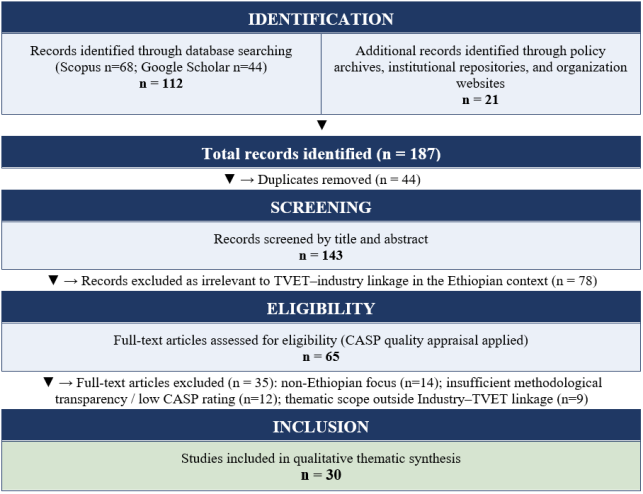
During the Identification stage, a total of 187 records were identified through database searches (Scopus: 112; Google Scholar: 54; Policy and institutional sources: 21). After automated and manual de-duplication, 143 unique records remained. During Screening, titles and abstracts of all 143 records were reviewed independently against the inclusion and exclusion criteria, resulting in the exclusion of 78 records due to irrelevance to the TVET–industry linkage theme in the Ethiopian context. Sixty-five full-text articles were retrieved for Eligibility Assessment. Following full-text review and CASP quality appraisal, a further 35 studies were excluded — primarily due to insufficient methodological transparency (n=12), non-Ethiopian focus (n=14), or thematic scope falling outside Industry–TVET linkage (n=9). A final set of 30 studies was included in the synthesis.
3.5. Quality Appraisal
The methodological quality of all eligible studies was assessed using the Critical Appraisal Skills Programme (CASP) Qualitative Checklist, adapted where necessary for mixed-methods and quantitative studies included in the review. The CASP checklist evaluates studies across ten dimensions including clarity of research aims, appropriateness of methodology, rigor of data collection and analysis, reflexivity, ethical considerations, and the credibility of findings and conclusions.
Studies were rated as high quality (meeting 8–10 CASP criteria), moderate quality (5–7 criteria), or low quality (fewer than 5 criteria). Studies rated as low quality were excluded from the synthesis. The majority of included studies (n=22) were rated high or moderate quality. This quality distribution is consistent with the profile of studies found in emerging research contexts where methodological reporting standards are still evolving. Quality ratings informed the weight assigned to particular findings during thematic synthesis.
Table 4. Summarizes the distribution of CASP quality ratings across the five key appraisal dimensions.
CASP Criterion | High (n) | Moderate (n) | Low (n) |
Clear research aims and objectives | 24 | 5 | 1 |
Appropriate qualitative methodology | 20 | 8 | 2 |
Rigour of data collection and analysis | 18 | 9 | 3 |
Ethical considerations addressed | 22 | 6 | 2 |
Analytical rigour and credibility of findings | 19 | 9 | 2 |
Figure 1 below presents the PRISMA flowchart summarizing the four-stage study selection process, including the number of records excluded at each stage and the corresponding reasons.
Figure 1. PRISMA Flow Diagram of the Study Identification, Screening, Eligibility, and Inclusion Process.
3.6. Data Extraction and Thematic Synthesis
Data were extracted from all 30 included studies using a structured extraction matrix covering: citation and study design; geographical and institutional context; participant characteristics; linkage practices examined; implementation themes; challenges identified; governance and policy gaps; TVET and industry perspectives; key findings; and implications for the review. The extraction matrix was piloted on five studies and refined before full data extraction.
Thematic synthesis proceeded through three stages as described by Thomas and Harden
| [28] | Thomas, J., & Harden, A. (2008). Methods for the thematic synthesis of qualitative research in systematic reviews. BMC Medical Research Methodology, 8, 45. |
[28]
. First, free line-by-line coding of findings from all studies was conducted to generate descriptive codes. Second, related codes were grouped into descriptive themes by examining patterns, similarities, and contradictions across studies. Third, analytical themes were developed through interpretive reflection on descriptive themes, guided by the theoretical frameworks of Human Capital Theory and the Skill Mismatch Model. The final thematic structure was reviewed by both authors and refined through iterative discussion to ensure that interpretive claims were grounded in the evidence. The analytical process was inductive in orientation, meaning that themes emerged from the data rather than being imposed from pre-determined categories; however, the theoretical lenses of Human Capital Theory and the Skill Mismatch Model informed the interpretive framing of themes once identified.
4. Findings: Thematic Synthesis
The thematic synthesis of 30 included studies produced five major analytical themes. These themes are not mutually exclusive; they are deeply interconnected, and together they reveal a systemic pattern of governance fragmentation, institutional deficiency, and policy implementation gaps that collectively undermine effective Industry–TVET linkage in Ethiopia.
Table 5 summarizes the key characteristics of the included studies, and
Table 5 presents the frequency distribution of thematic evidence across studies. Each theme is presented below with supporting evidence drawn from the reviewed studies.
Table 5. Characteristics of Selected Included Studies (representative sample; full extraction matrix available on request).
Author (s) | Year | Region/Context | Study Design | Sample | Main Findings |
Wudneh et al. | 2022 | Amhara Region | Survey/Mixed | TVET colleges & companies | Company involvement is low and a large predictor of CT quality; binding regulations needed |
Guta | 2025 | Oromia Region | Survey (n=80 instructors) | TVET instructors | Multi-dimensional enterprise disengagement; limited understanding of CT goals; absent incentive structures |
Tekle, Areaya & Habtamu | 2024 | National (multi-site) | Phenomenological | Policy stakeholders | Only 17% of stakeholders engaged in policy; trainers and industries excluded; governance centralization identified |
Gebremeskel | 2023 | National (agro-food sector) | Quantitative survey | Graduates & trainers | Trainer competence and commitment major predictors of graduate competence; weak CT depresses outcomes |
Regassa & Desissa | 2025 | Sheger City | Quantitative survey | 5 TVET institutions | Technology adoption 61–81% across institutions; poor infrastructure primary barrier; digital literacy gaps |
Table 6. Frequency Distribution of Thematic Evidence Across Included Studies (n=30).
Analytical Theme | Number of Studies Supporting Theme |
Weak enterprise participation and cooperative training deficiencies | 24 |
Curriculum–labour market misalignment | 21 |
Governance fragmentation and exclusionary policy formulation | 18 |
Resource constraints and institutional capacity gaps | 19 |
Emerging digital transformation challenges | 12 |
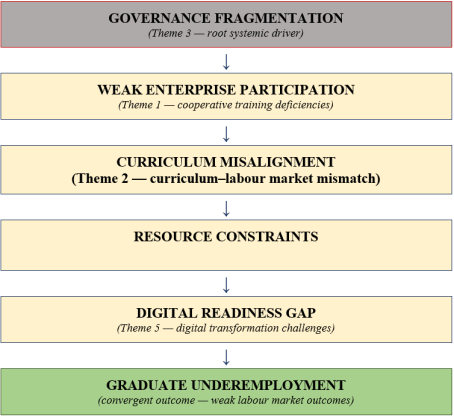
Figure 2. Thematic Map of Industry–TVET Linkage Failure Pathways in Ethiopia.
Note: The sequence illustrates the primary directional pathway of influence identified in the synthesis. In practice, the five themes are mutually reinforcing, and feedback loops (e.g., from graduate underemployment back to declining enterprise confidence in TVET) operate across all levels of the system.
Figure 2 presents a thematic map illustrating the sequential and reinforcing relationships among the five analytical themes identified in this review, and their convergence on the central outcome of graduate underemployment. The map depicts governance fragmentation as the root systemic driver, generating cascading effects through weak enterprise participation, curriculum misalignment, resource constraints, and digital readiness gaps, ultimately manifesting as weak labour market outcomes for TVET graduates.
Theme 1: Weak Enterprise Participation and Cooperative Training Deficiencies.
This theme was supported by 24 of the 30 included studies (80%), making it the most frequently reported finding across the reviewed literature. It concerns the limited and inadequate participation of enterprises and industries in cooperative training (CT) arrangements, the cornerstone mechanism of Ethiopia's TVET delivery model. Cooperative training, which requires regular alternation between institution-based instruction and enterprise-based workplace learning, presupposes active enterprise involvement in trainee supervision, assessment, and practical skills development. Evidence from the review indicates that this presupposition is rarely fulfilled in practice.
Wudneh, Seifu, and Dagnew
| [29] | Wudneh, L., Seifu, A., & Dagnew, A. (2022). Practices of cooperative training in the Amhara Regional State TVET colleges and companies, Ethiopia. Cogent Education, 9(1), 2020608. https://doi.org/10.1080/2331186X.2021.2020608 |
[29]
examined CT practices across Amhara Regional State TVET colleges and found that while CT practice and trainer engagement were at medium levels, company involvement in CT implementation was consistently low. Their analysis demonstrated that company involvement level was a large predictor of CT practice quality, meaning that wherever enterprise engagement was weak, the overall quality of cooperative training was compromised. The study called for binding regulations and accountability mechanisms to enforce stakeholder commitments.
Guta
surveyed 80 TVET instructors across Oromia Regional State and documented multiple dimensions of enterprise disengagement: limited knowledge of training objectives, failure to participate in learning activity planning, inadequate involvement in trainee assessment, minimal compensation for participation, and absence of formal damage-coverage mechanisms. Instructors reported that enterprises lacked not only motivation but also the basic understanding of cooperative training goals necessary for effective mentorship. Dehnie, Kidane, and Demissie
| [5] | Dehnie, F. A., Kidane, B. Z., & Demissie, M. M. (2025a). Cooperative training as a mediator between training materials and graduates' employability in the Ethiopian vocational education. International Journal of Training and Development.
https://doi.org/10.1111/ijtd.70014 |
[5]
, working in Addis Ababa Polytechnic Colleges, confirmed that cooperative training acts as a significant mediator in the relationship between training materials and graduate employability — underscoring the systemic cost of its weak implementation.
Industry resistance to cooperative training was documented by Dehnie, Kidane, and Demissie
| [6] | Dehnie, F. A., Kidane, B. Z., & Demissie, M. M. (2025b). Assessment of efforts of vocational providers in attracting trainees to the vocational education system in Ethiopia. Higher Education, Skills and Work-based Learning, 1–15.
https://doi.org/10.1108/HESWBL-02-2025-0071 |
[6]
, who found that industries showed active resistance to implementing CT arrangements, and that TVET councils — the institutional mechanism designed to promote cooperation — remained largely inactive. The study attributed this resistance partly to inadequate incentive structures and partly to a cultural disconnect between vocational education institutions and enterprise cultures
| [2] | Allais, S., & Ngcwangu, S. (2025). ‘I wanna die a slow death when I’m busy with that annual training report….’: Why employer engagement for skills planning in South Africa goes wrong. International Journal of Educational Development, 113, 103217. https://doi.org/10.1016/j.ijedudev.2025.103217 |
[2]
. Shiferaw
| [25] | Shiferaw, R. M. (2020). Effects of short-term training on pastoral community employment creation and livelihood improvement: A study on selected Ethiopian pastoral areas. Journal of Innovation and Entrepreneurship, 9(1), 17.
https://doi.org/10.1186/s13731-020-00128-2 |
[25]
, examining short-term TVET training in pastoral areas, found that the absence of effective employer linkages was the primary cause of unemployment among training graduates, demonstrating that CT failure has direct and measurable consequences for post-training outcomes.
These findings collectively reflect a governance failure: while Ethiopia's TVET policy framework mandates enterprise participation, no effective accountability, compensation, or enforcement mechanisms exist to translate policy intent into practice. The resulting gap between policy aspiration and implementation reality constitutes a central structural weakness of the Ethiopian TVET–industry linkage system.
Theme 2: Curriculum–Labour Market Misalignment.
This theme was supported by 21 of the 30 included studies (70%). It concerns the persistent misalignment between the content and orientation of TVET curricula and the skill demands of Ethiopia's evolving labour market. Evidence from multiple studies demonstrates that this misalignment operates at several levels: in the initial design of curricula, in the failure to update curricula in response to technological and market changes, and in the translation of intended curricula into enacted learning experiences.
Adam and Mengistie
| [1] | Adam, D. B., & Mengistie, B. M. (2026). Challenges and strategies in implementing technical and vocational education subjects in vocationalized secondary schools. Discover Education, 5(1), 228. https://doi.org/10.1007/s44217-026-01203-8 |
[1]
, studying secondary-school TVE implementation in Addis Ababa, identified curriculum misalignment with labour market needs as a central bottleneck. Their research pointed specifically to the absence of structured industry feedback mechanisms as a critical weakness: without formal channels through which employers can communicate their skill requirements to curriculum developers, curricula tend to reflect outdated frameworks rather than current workplace realities. Demissie
, in a qualitative study of TVET effectiveness across multiple institutions, found that resource and curriculum deficiencies were the primary causes of TVET programmes' limited responsiveness to labour market expectations, with employers perceiving graduates as not consistently meeting workplace skill requirements.
Melesse, Haley, and Warvik
| [19] | Melesse, S., Haley, A., & Warvik, G.-B. (2023). Bridging the skills gap in TVET: A study on private-public development partnership in Ethiopia. International Journal of Training Research, 21(3), 171–186.
https://doi.org/10.1080/14480220.2022.2159854 |
[19]
examined curriculum development within a Private–Public Development Partnership (PPDP) in Ethiopian TVET and found that while partnership-driven curriculum reform improved alignment with the needs of industries involved in the partnership, insufficient attention was given to implementation feasibility and to the interests of stakeholders outside the partnership. This created a form of selective alignment — curricula responsive to a narrow set of industry partners but potentially misaligned with broader sectoral needs.
The comparative study by Cvetkoska et al.
| [4] | Cvetkoska, V., Trpeski, P., Ivanovski, I., Peovski, F., Imrol, M. H., Babadogan, B., Ecer, H., Gorur, D. Z., Selvi, U., Hunde, A. B., Gemeda, F. T., Dubi, Y. B., Melnyk, S., Lytvynchuk, A., & Tereshchenko, H. (2025). Comparative analysis of skill shortages, skill mismatches, and the threats of migration in labor markets: A sectoral approach in North Macedonia, Turkiye, Ethiopia, and Ukraine. Social Sciences, 14(5), 294.
https://doi.org/10.3390/socsci14050294 |
[4]
across Ethiopia, North Macedonia, Turkey, and Ukraine identified education–industry misalignment as a root cause of skill shortages and workforce instability in Ethiopia's manufacturing, ICT, and hospitality sectors. Their findings indicated that internal conflicts had further intensified labour market instability, making curriculum–market alignment even more urgent.
From a Human Capital Theory perspective, curriculum–labour market misalignment directly reduces the return on investment in TVET training, producing graduates whose human capital is devalued by its irrelevance to employer demands. From a Skill Mismatch Model perspective, it represents a systemic failure of the coordination mechanisms — particularly industry involvement in curriculum governance — that are necessary for maintaining alignment between skill supply and demand.
Kebede, Asgedom, and Asfaw
| [13] | Kebede, A., Asgedom, A., & Asfaw, A. (2024). Is linking technical and vocational training with industry a bridge to employability? Lessons from a literature review for Ethiopia. Cogent Education, 11(1), 2406721.
https://doi.org/10.1080/2331186X.2024.2406721 |
[13]
, in a literature review of TVET–industry linkage with implications for Ethiopia, synthesized evidence indicating that effective linkage mechanisms, including joint qualification standard-setting, industry-driven curriculum development, internships, and apprenticeship programmes, were significantly underdeveloped in Ethiopia relative to international practice. They concluded that linkage is a structural necessity rather than a policy option for countries such as Ethiopia with limited training resources.
Theme 3: Governance Fragmentation and Exclusionary Policy Formulation.
This theme was supported by 18 of the 30 included studies (60%). Evidence from the reviewed literature reveals that governance fragmentation — characterized by the exclusion of key stakeholders from policy processes, weak inter-institutional coordination, and unclear accountability arrangements — constitutes a deep structural barrier to effective TVET–industry collaboration in Ethiopia.
Tekle, Areaya, and Habtamu
| [26] | Tekle, A., Areaya, S., & Habtamu, G. (2024). Enhancing stakeholders' engagement in TVET policy and strategy development in Ethiopia. Journal of Technical Education and Training, 16(1), 271–285. https://doi.org/10.30880/jtet.2024.16.01.019 |
[26]
conducted a phenomenological study of stakeholder engagement in TVET policy and strategy development and found that only 17% of interviewed stakeholders had been engaged in policy formulation, while none of the trainers in focus groups had participated in policy development. Major implementing actors — including industries, regional agencies, and associations — were largely absent from policy design processes. Trainers and industries lacked awareness of current TVET policies and strategies, creating a fundamental disconnect between policy intent and implementation capacity. These findings reveal a highly centralized and insufficiently participatory policy process that leaves frontline implementers and industry partners without ownership of the frameworks they are expected to enact.
Tekle, Areaya, and Habtamu
| [27] | Tekle, A., Areaya, S., & Habtamu, G. (2026). Alignment of TVET occupational competency assessment practices with strategic goals in Ethiopia. International Journal of Training Research, 24(1), 54–76.
https://doi.org/10.1080/14480220.2025.2492624 |
[27]
extended this analysis to the Occupational Competency Assessment (CoC) system, identifying governance weaknesses including limited autonomy for CoC agencies, poor feedback loops between assessment agencies and TVET institutions, mismatch between occupational standards and labour market demand, and quality concerns from single-assessor practices. These findings demonstrate that governance fragmentation extends beyond policy formulation into the quality assurance and certification dimensions of the TVET system.
The governance challenges identified in public–private partnerships were examined by Lie
| [14] | Lie, J. H. S. (2024). Public–private development cooperation: Interface and conflicting logics in the formation of a strategic partnership. Journal of Development Studies, 60(9), 1313–1328. https://doi.org/10.1080/00220388.2024.2323016 |
[14]
, whose case study of a Norwegian NGO and multinational company collaboration to renovate a vocational college in Ethiopia revealed how different institutional logics, accountability systems, and organizational rationales can create interface tensions that ultimately undermine partnership effectiveness. Crucially, Lie argues that these outcomes are not the result of bad intentions but of the structural misalignments inherent in how public–private partnerships are constituted. This finding has significant implications for how Ethiopia designs and governs future TVET–industry partnerships.
Melesse, Haley, and Warvik
| [18] | Melesse, S., Haley, A., & Warvik, G.-B. (2022). Interventions for inclusion in TVET through private-public development partnership in Ethiopia and Zambia. Nordic Journal of Comparative and International Education, 6(4).
https://doi.org/10.7577/njcie.4811 |
[18]
similarly identified tensions within PPDP arrangements in Ethiopia, noting misalignments between global education policy agendas promoted by development partners and local labour market realities. These findings collectively suggest that Ethiopian TVET governance is characterized by vertical fragmentation (between federal policy and institutional implementation), horizontal fragmentation (across ministries and regulatory bodies), and external fragmentation (between donor-driven reforms and local contextual needs).
Theme 4: Resource Constraints and Institutional Capacity Gaps.
This theme was supported by 19 of the 30 included studies (63%). Resource constraints and institutional capacity deficiencies constitute a fourth major theme in the literature, operating as both independent barriers to effective TVET–industry linkage and as amplifying factors that worsen the impact of governance and curriculum failures.
Gebremeskel
| [8] | Gebremeskel, M. M. (2023). Antecedents of graduates' competence in the agro-food processing technical and vocational training system of Ethiopia as perceived by graduates and their trainers. Heliyon, 9(6), e16569.
https://doi.org/10.1016/j.heliyon.2023.e16569 |
[8]
examined antecedents of graduate competence in the agro-food processing TVET sub-sector and found that trainer competence, trainer commitment, and trainee characteristics were significant predictors of graduate competence, while material resource supply had weak predictive power. This suggests that while physical resources matter, human capacity — particularly trainer quality — is the more critical determinant of training effectiveness. Poor cooperative training implementation, linked to weak industry engagement, was found to further depress graduate competence. An inverse relationship between employment status and graduate competence was also identified, indicating that even competent graduates face structural labour market barriers.
Gebremeskel
| [9] | Gebremeskel, M. M. (2025). Why is there a fallacious association between competence and wage employment among graduates in Ethiopia? The case of agro-food processing graduates. Cogent Social Sciences, 11(1), 2544058.
https://doi.org/10.1080/23311886.2025.2544058 |
[9]
deepened this analysis by investigating the fallacious association between competence and wage employment. Findings revealed that nepotism, cronyism, and bribery in recruitment practices significantly undermined competent graduates' access to employment, suggesting that labour market governance failures compound the effects of TVET delivery deficiencies. This represents a particularly sobering finding: even where TVET graduates acquire genuine competencies, corrupt employment practices can negate the human capital returns of training investment.
Park and Park
| [20] | Park, S., & Park, H. (2025). Capacity building of TVET trainers in a developing country through practice-oriented curriculum implementation. Journal of Technical Education and Training, 17(4), 135–147. https://doi.org/10.30880/jtet.2025.17.04.011 |
[20]
documented the institutional capacity-building efforts of KOICA's support to the Federal TVET Institute (FTVTI) in Ethiopia, demonstrating that targeted trainer capacity-building through practice-oriented curriculum revision could improve TVET delivery quality. However, they also noted that limited national investment in trainer development and the absence of sustainable capacity-building mechanisms constrained the long-term impact of such interventions. The dependence on external development assistance for capacity-building highlights a structural vulnerability in Ethiopia's TVET institutional ecosystem.
Across the reviewed literature, resource constraints manifest in multiple forms: inadequate physical infrastructure and workshop facilities; shortages of qualified and industry-experienced trainers; insufficient training materials and equipment; limited institutional budgets for cooperative training coordination; and weak monitoring and evaluation systems. These material deficiencies interact with governance gaps to create a self-reinforcing cycle in which institutions lack the capacity to build effective industry partnerships, while industries lack confidence in the institutions' ability to deliver relevant training.
Theme 5: Emerging Digital Transformation Challenges.
This theme was supported by 12 of the 30 included studies (40%), making it the least frequently reported theme — consistent with its status as an emerging rather than long-established concern in the literature. It concerns the growing gap between the digital transformation demands of Ethiopian industries and the technological readiness of TVET institutions. As Ethiopia’s economy undergoes structural transformation and as sectors such as ICT, manufacturing, and hospitality increasingly require digitally competent workers, TVET institutions face mounting pressure to integrate digital technologies into their curricula and delivery practices.
Regassa and Desissa
, drawing on a quantitative study across five TVET institutions in Sheger City, found that technology adoption rates varied substantially across institutions (61–81%), reflecting significant disparities in institutional readiness. Poor infrastructure was identified by 67.8% of respondents as a primary barrier to technology integration, alongside limited access to industry-standard software and low digital literacy among both instructors and trainees. Critically, technical disciplines such as automotive and construction technology experienced the greatest integration challenges, suggesting that digital transformation is not uniform across occupational areas.
Regassa and Desissa
extended this analysis to instructor digital competencies, finding that while most TVET colleges had digital infrastructure, significant gaps existed in its effective utilization. Instructors' TPACK (Technological Pedagogical Content Knowledge) scores indicated moderate competency levels, with technological knowledge exhibiting the strongest correlation with overall teaching effectiveness. These findings point to an instructor capacity dimension of the digital transformation challenge that cannot be addressed through infrastructure investment alone requiring systematic professional development programmes targeting the integration of digital tools with content knowledge and pedagogical practice.
Note: TPACK (Technological Pedagogical Content Knowledge) is a teacher knowledge framework developed by Mishra and Koehler
. It describes the intersection of three knowledge domains required for effective technology-integrated teaching:
Content Knowledge (CK) — mastery of the subject matter;
Pedagogical Knowledge (PK) — knowledge of effective teaching methods and strategies; and
Technological Knowledge (TK) — ability to use digital tools and platforms. TPACK measures the degree to which instructors can meaningfully integrate all three domains — that is, teach their specific technical subject more effectively
because of technology, rather than merely using technology as a peripheral addition to conventional instruction
.
Ye
, examining Africa–China digital talent development cooperation in Ethiopia, identified four distinct collaboration models through which university–industry–government partnerships have supported digital skills development. While these partnerships have contributed to specific digital capacity gains, the study argued that African governments — including Ethiopia — need to take a more proactive role in facilitating and sustaining university–industry linkages for digital talent development.
From a Skill Mismatch Model perspective, digital transformation intensifies existing mismatches by accelerating the pace of skill change, making it even more difficult for curriculum development processes to keep pace with evolving industry requirements in the absence of strong real-time feedback mechanisms between institutions and employers.
Cross-Cutting Finding: Systemic Interdependence of Challenges.
A critical insight emerging from the thematic synthesis is that the five identified themes do not operate in isolation. They are deeply interconnected in ways that create reinforcing cycles of underperformance. Governance fragmentation and exclusionary policy processes make it difficult to establish the accountability mechanisms needed to compel enterprise participation (Theme 1) or to co-design relevant curricula (Theme 2). Curriculum misalignment, in turn, discourages industry engagement, as enterprises are reluctant to invest in training processes they perceive as irrelevant to their workforce needs. Resource constraints (Theme 4) limit institutions' capacity to respond to governance reforms or curriculum updating demands, while digital transformation gaps (Theme 5) further widen the relevance deficit.
This systemic interdependence implies that isolated interventions addressing only one theme are unlikely to produce sustainable improvement. The evidence supports the conclusion that meaningful change requires a multi-dimensional, governance-anchored reform strategy that addresses linkage practices, curriculum governance, institutional capacity, incentive systems, and digital readiness as an integrated whole.
5. Discussion
5.1. Interpretation of Findings Through Theoretical Lenses
When viewed through the lens of Human Capital Theory, the findings of this review reveal a systemic impairment of the human capital formation process. Ethiopia's TVET system is making substantial investments in training provision, yet the returns on these investments — measured in graduate competence, employability, and labour market productivity — are significantly undermined by the failures documented in this review. Weak cooperative training means that graduates exit training with theoretical knowledge but limited practical competency. Curriculum misalignment means that even well-delivered training may not produce the human capital configurations that the labour market values. Corrupt employment practices mean that even where competent graduates are produced, the human capital returns of training may not be captured in individual labour market outcomes.
Human Capital Theory also highlights the importance of the institutional environment in which training occurs. The theory predicts that firms will underinvest in general training where they cannot capture the returns on that investment. This prediction is borne out in the Ethiopian evidence: enterprises resist cooperative training participation because they do not perceive adequate returns — whether in the form of well-prepared recruits, reduced recruitment costs, or reputational benefits. Resolving this underinvestment problem requires governance mechanisms that create appropriate incentives, reduce costs, and distribute returns more equitably between enterprises and training institutions.
The Skill Mismatch Model offers additional interpretive insight by drawing attention to the structural mechanisms through which mismatches are produced and perpetuated. The Ethiopian evidence reveals multiple mismatch-generating mechanisms: centralized, exclusionary curriculum development that is insulated from industry input; inadequate occupational standards development; weak CoC assessment systems that fail to provide credible signals of graduate competence; and the absence of structured industry feedback channels. The Skill Mismatch Model implies that resolving these mismatches requires sustained institutional mechanisms — not one-time curriculum reforms — that continuously align skill supply with evolving demand.
A deeper critical question raised by these two theoretical lenses, but not yet fully answered in the existing literature, concerns the underlying political economy of linkage failure. Disaggregating this political economy into its constituent causal mechanisms clarifies why the system’s observed failures are structural rather than incidental.
Why do enterprises disengage? The evidence points not simply to a lack of awareness but to a rational calculation in which enterprises weigh costs against uncertain benefits. Three interlocking factors drive this calculation:
1) High participation costs: mentoring, supervising, and accommodating trainees imposes direct supervisory time and production-disruption costs on enterprises that are rarely offset by any compensating mechanism.
2) Limited incentives: in the absence of training levies, tax relief, or subsidized compensation schemes, enterprises capture little of the long-term return on their training investment, particularly where trained graduates are free to seek employment elsewhere.
3) Weak accountability mechanisms: cooperative training obligations exist in policy but are rarely enforced; with no meaningful consequence for non-participation, enterprises that withdraw face no institutional or reputational penalty.
Why does curriculum misalignment persist despite repeated policy commitments to reform? The evidence suggests this is not a technical problem of curriculum writing but a governance problem of power and information, rooted in two structural conditions:
1) Centralized curriculum governance: curriculum approval authority is concentrated at the federal level, insulated from the day-to-day knowledge of regional industries and leaving little structural room for industry practitioners to shape what is taught.
2) Limited labour market intelligence systems: the absence of reliable, regionally disaggregated, and sector-specific labour market data means curriculum developers lack the evidentiary basis to detect and respond to evolving skill demand signals, even where the institutional will to reform exists.
Why do reforms repeatedly fail to take hold? The synthesis indicates that reform initiatives in Ethiopia have largely addressed symptoms — individual capacity-building projects, equipment donations, short-term consultancies — rather than two underlying structural conditions:
1) Fragmented governance structures: responsibility for TVET–industry linkage is dispersed across multiple ministries, regional bureaus, and institutions without a clear coordinating authority, so reform efforts launched in one part of the system are rarely matched by complementary action elsewhere.
2) Weak implementation capacity: even where reform policies are well designed, institutions frequently lack the staffing, financing, and technical capacity to translate policy intent into consistent practice, particularly at the regional and institutional level where implementation actually occurs.
Reforms introduced without restructuring accountability relationships, enforcement mechanisms, and incentive systems are unlikely to produce sustainable change regardless of their technical quality. These analytical observations carry significant implications not only for Ethiopia but for TVET systems in other developing economies facing comparable structural challenges.
5.2. Comparison with International Evidence
The patterns identified in this review are not unique to Ethiopia. Comparative evidence from Cvetkoska et al.
| [4] | Cvetkoska, V., Trpeski, P., Ivanovski, I., Peovski, F., Imrol, M. H., Babadogan, B., Ecer, H., Gorur, D. Z., Selvi, U., Hunde, A. B., Gemeda, F. T., Dubi, Y. B., Melnyk, S., Lytvynchuk, A., & Tereshchenko, H. (2025). Comparative analysis of skill shortages, skill mismatches, and the threats of migration in labor markets: A sectoral approach in North Macedonia, Turkiye, Ethiopia, and Ukraine. Social Sciences, 14(5), 294.
https://doi.org/10.3390/socsci14050294 |
[4]
, examining skill mismatches across Ethiopia, North Macedonia, Turkey, and Ukraine, suggests that education–industry misalignment, inadequate vocational training systems, and weak qualification frameworks are shared challenges across diverse developing and transitional economy contexts. However, the Ethiopian case is distinguished by the particular severity of governance fragmentation, the exclusion of key stakeholders from policy processes, and the prevalence of labour market governance failures such as corrupt recruitment practices.
Lessons from international best practice offer a compelling roadmap for Ethiopian reform. Germany’s dual TVET system, widely regarded as the gold standard, is built on legally binding enterprise participation, tripartite governance involving federal government, Länder authorities, and employer associations, and structured apprenticeship contracts that distribute training costs and benefits equitably between firms and the state. Swiss apprenticeship models similarly demonstrate that high-quality TVET outcomes depend on strong institutional frameworks that make enterprise participation both mandatory and financially rewarding for employers. Singapore’s SkillsFuture programme illustrates how a national lifelong learning infrastructure, underpinned by government co-funding mechanisms and regular skills forecasting, can maintain dynamic alignment between workforce competencies and industry demands. South Korea’s industry–TVET partnership model, meanwhile, shows how sector-specific industry councils can drive curriculum responsiveness and certification quality in rapidly industrializing economies. While direct transfer of these models to the Ethiopian context is not advisable given significant differences in institutional capacity, economic structure, and governance traditions, the common principles underlying their success — binding legal frameworks, financial incentive systems, multi-stakeholder governance structures, and regular labour market intelligence mechanisms — are directly applicable and are explicitly reflected in the IITLF proposed in this review
| [13] | Kebede, A., Asgedom, A., & Asfaw, A. (2024). Is linking technical and vocational training with industry a bridge to employability? Lessons from a literature review for Ethiopia. Cogent Education, 11(1), 2406721.
https://doi.org/10.1080/2331186X.2024.2406721 |
[13]
.
International best practice in TVET–industry linkage, as synthesized by Kebede et al.
| [13] | Kebede, A., Asgedom, A., & Asfaw, A. (2024). Is linking technical and vocational training with industry a bridge to employability? Lessons from a literature review for Ethiopia. Cogent Education, 11(1), 2406721.
https://doi.org/10.1080/2331186X.2024.2406721 |
[13]
, emphasizes binding legal frameworks for enterprise participation, tripartite governance structures involving government, industry, and training institutions, financial incentive mechanisms such as training levies and subsidies, regular labour market needs assessments, and joint curriculum development processes. The Ethiopian evidence suggests that most of these elements remain underdeveloped, providing a clear roadmap for reform priorities.
5.3. Policy Implications
The findings of this review carry substantial policy implications across multiple levels of the Ethiopian TVET governance system. At the legislative level, TVET Proclamation No. 1298/2023 represents a meaningful step forward in articulating enterprise obligations, but the evidence strongly suggests that proclamatory commitment alone is insufficient. Effective implementation requires secondary regulations that define enforceable participation standards, specify compensation mechanisms for enterprises, and establish monitoring and sanction procedures for non-compliance. Without these operational instruments, the proclamation may risk replicating the pattern of ambitious policy frameworks that fail at the implementation stage — a pattern well documented in the review.
At the institutional level, TVET colleges and institutes require greater autonomy to establish and maintain direct, responsive relationships with local industries. The current governance model, characterized by centralized curriculum control and limited institutional discretion, constrains the agility needed to adapt training provision to rapidly changing sector demands. Delegating curriculum adaptation authority to regional TVET bureaus and individual institutions — within a national quality assurance framework — may significantly improve alignment between training outputs and local labour market needs.
At the system level, investment in a national Labour Market Information System (LMIS) linked to TVET curriculum planning cycles would address a critical structural gap. The absence of reliable, sector-specific, and regionally disaggregated labour market data means that curriculum development processes lack the intelligence needed to respond to skill demand signals. International evidence from Germany, Singapore, and South Korea demonstrates that robust LMIS infrastructure is a foundational element of high-performing TVET–industry linkage systems. Ethiopia’s development partners may usefully direct technical assistance and financial support toward building this infrastructure as a priority prerequisite for broader TVET reform effectiveness.
5.4. Theoretical Contributions
This review makes several explicit theoretical contributions to the TVET, educational governance, and human resource development literatures. First, it integrates Human Capital Theory and Skill Mismatch Theory into a unified analytical framework, demonstrating that the two theories are not merely complementary but mutually constitutive: Human Capital Theory explains why linkage deficiencies generate suboptimal aggregate returns on training investment, while Skill Mismatch Theory operationalizes the specific institutional mechanisms through which those deficiencies arise and persist. Second, the review demonstrates that governance — not resources or curriculum content per se — is the central mechanism mediating TVET effectiveness in the Ethiopian context; this finding extends existing theory by foregrounding governance as a primary analytical category in TVET research, rather than treating it as a background condition. Third, the Integrated Industry–TVET Linkage Framework (IITLF) proposed by this review constitutes a multidimensional theoretical contribution that goes beyond descriptive findings to offer an evidence-grounded causal model of how governance reform, inclusive policy formulation, curriculum co-design, capacity systems, and digital readiness interact to produce improved linkage outcomes. Fourth, by applying and extending these frameworks to a developing-country context, the review contributes to the broader project of decentring TVET theory from its predominantly European and East Asian origins and building more globally inclusive theoretical accounts of vocational education governance.
5.5. Practical Contributions
The review also generates distinct practical contributions for different stakeholder groups. For the Ministry of Labor and Skills, the findings provide an evidence base for establishing legally binding enterprise participation obligations under TVET Proclamation No. 1298/2023, developing national labour market information systems to support curriculum responsiveness, and designing financial incentive mechanisms — including training levy systems and enterprise co-funding arrangements — to encourage sustained industry engagement. For TVET institutions, the evidence supports strengthening industry advisory boards, institutionalizing structured curriculum review cycles co-designed with industry partners, and investing in trainer capacity-building programmes that address both technical and digital competencies. For industry and employer associations, the review highlights the strategic importance of moving from passive to active participation: engaging in curriculum design processes, expanding workplace learning opportunities for trainees, and participating in structured apprenticeship and mentorship programmes. For development partners, the findings suggest that aid effectiveness in Ethiopian TVET may be enhanced by prioritizing governance reform and institution-building over input provision, and by aligning interventions with the IITLF’s five interdependent pillars rather than addressing isolated system components.
5.6. Limitations of the Review
This review has several limitations that should be acknowledged in interpreting the findings. First, the search was limited to English-language publications, which may have excluded relevant evidence produced in Amharic or other local languages, potentially introducing a linguistic bias toward the perspectives of internationally published researchers. Second, the quality of primary studies included in the review is variable: some findings rest on relatively small or non-representative samples, and methodological reporting quality varies across the included studies. Third, as a synthesis of existing evidence, the review cannot account for very recent policy developments or institutional changes that may have occurred after individual studies were published, including early implementation of TVET Proclamation No. 1298/2023. Fourth, the PRISMA-guided selection process, while systematic, involves screening and eligibility judgments that introduce a degree of subjectivity despite efforts to apply criteria consistently. Fifth, the thematic synthesis approach involves interpretive processes shaped by the researchers’ theoretical perspectives; the explicit use of Human Capital Theory and the Skill Mismatch Model makes these assumptions transparent but does not eliminate their influence on how themes were constructed and interpreted. Finally, both authors are located within the Ethiopian TVET system, which may introduce insider bias; this was mitigated through systematic adherence to CASP appraisal criteria and iterative cross-checking of emerging themes between the two researchers.
An Integrated Framework for Strengthening Industry–TVET Linkage in Ethiopia.
Drawing on the synthesized evidence and guided by Human Capital Theory and the Skill Mismatch Model, this review proposes an Integrated Industry–TVET Linkage Framework (IITLF) for Ethiopia. The framework is organized around five interdependent pillars, each addressing one or more of the thematic challenges identified in the synthesis.
Table 7. Integrated Industry–TVET Linkage Framework (IITLF) for Ethiopia.
Framework Pillar | Core Components | Evidence Basis |
Pillar 1: Governance Reform | Binding legal frameworks; tripartite governance bodies; inter-ministerial coordination; accountability mechanisms; enforceable enterprise obligations | Tekle et al. | [26] | Tekle, A., Areaya, S., & Habtamu, G. (2024). Enhancing stakeholders' engagement in TVET policy and strategy development in Ethiopia. Journal of Technical Education and Training, 16(1), 271–285. https://doi.org/10.30880/jtet.2024.16.01.019 |
[26, | [14] | Lie, J. H. S. (2024). Public–private development cooperation: Interface and conflicting logics in the formation of a strategic partnership. Journal of Development Studies, 60(9), 1313–1328. https://doi.org/10.1080/00220388.2024.2323016 |
[14] | [29] | Wudneh, L., Seifu, A., & Dagnew, A. (2022). Practices of cooperative training in the Amhara Regional State TVET colleges and companies, Ethiopia. Cogent Education, 9(1), 2020608. https://doi.org/10.1080/2331186X.2021.2020608 |
[29] |
Pillar 2: Inclusive Policy Formulation | Multi-stakeholder policy development; industry representation on policy committees; decentralized regional policy adaptation; policy communication and awareness campaigns | Tekle et al. | [26] | Tekle, A., Areaya, S., & Habtamu, G. (2024). Enhancing stakeholders' engagement in TVET policy and strategy development in Ethiopia. Journal of Technical Education and Training, 16(1), 271–285. https://doi.org/10.30880/jtet.2024.16.01.019 |
[26] | [18] | Melesse, S., Haley, A., & Warvik, G.-B. (2022). Interventions for inclusion in TVET through private-public development partnership in Ethiopia and Zambia. Nordic Journal of Comparative and International Education, 6(4).
https://doi.org/10.7577/njcie.4811 |
[18, | [14] | Lie, J. H. S. (2024). Public–private development cooperation: Interface and conflicting logics in the formation of a strategic partnership. Journal of Development Studies, 60(9), 1313–1328. https://doi.org/10.1080/00220388.2024.2323016 |
[14] |
Pillar 3: Curriculum Co-Design Mechanisms | Industry-education councils; structured labour market needs assessments; regular curriculum review cycles; occupational standard updating processes; industry feedback channels | Adam & Mengistie | [1] | Adam, D. B., & Mengistie, B. M. (2026). Challenges and strategies in implementing technical and vocational education subjects in vocationalized secondary schools. Discover Education, 5(1), 228. https://doi.org/10.1007/s44217-026-01203-8 |
[1] | [13] | Kebede, A., Asgedom, A., & Asfaw, A. (2024). Is linking technical and vocational training with industry a bridge to employability? Lessons from a literature review for Ethiopia. Cogent Education, 11(1), 2406721.
https://doi.org/10.1080/2331186X.2024.2406721 |
[13] | [19] | Melesse, S., Haley, A., & Warvik, G.-B. (2023). Bridging the skills gap in TVET: A study on private-public development partnership in Ethiopia. International Journal of Training Research, 21(3), 171–186.
https://doi.org/10.1080/14480220.2022.2159854 |
[19] | [27] | Tekle, A., Areaya, S., & Habtamu, G. (2026). Alignment of TVET occupational competency assessment practices with strategic goals in Ethiopia. International Journal of Training Research, 24(1), 54–76.
https://doi.org/10.1080/14480220.2025.2492624 |
[27] |
Pillar 4: Incentive and Capacity Systems | Enterprise compensation mechanisms; training levy systems; trainer capacity-building programmes; infrastructure investment; monitoring and quality assurance systems | Guta ; Park & Park | [20] | Park, S., & Park, H. (2025). Capacity building of TVET trainers in a developing country through practice-oriented curriculum implementation. Journal of Technical Education and Training, 17(4), 135–147. https://doi.org/10.30880/jtet.2025.17.04.011 |
[20] | [8] | Gebremeskel, M. M. (2023). Antecedents of graduates' competence in the agro-food processing technical and vocational training system of Ethiopia as perceived by graduates and their trainers. Heliyon, 9(6), e16569.
https://doi.org/10.1016/j.heliyon.2023.e16569 |
[8, | [25] | Shiferaw, R. M. (2020). Effects of short-term training on pastoral community employment creation and livelihood improvement: A study on selected Ethiopian pastoral areas. Journal of Innovation and Entrepreneurship, 9(1), 17.
https://doi.org/10.1186/s13731-020-00128-2 |
[25] |
Pillar 5: Digital Readiness Integration | TPACK-aligned instructor development; digital infrastructure investment; industry-standard technology access; university–industry–government digital partnership models | Regassa & Desissa (2025, 2026); Ye ; Cvetkoska et al. | [4] | Cvetkoska, V., Trpeski, P., Ivanovski, I., Peovski, F., Imrol, M. H., Babadogan, B., Ecer, H., Gorur, D. Z., Selvi, U., Hunde, A. B., Gemeda, F. T., Dubi, Y. B., Melnyk, S., Lytvynchuk, A., & Tereshchenko, H. (2025). Comparative analysis of skill shortages, skill mismatches, and the threats of migration in labor markets: A sectoral approach in North Macedonia, Turkiye, Ethiopia, and Ukraine. Social Sciences, 14(5), 294.
https://doi.org/10.3390/socsci14050294 |
[4] |
The five pillars are conceived as mutually reinforcing rather than sequential. Governance reform (Pillar 1) creates the structural conditions for inclusive policy formulation (Pillar 2) and for binding curriculum co-design mechanisms (Pillar 3). Incentive and capacity systems (Pillar 4) sustain enterprise participation and institutional quality. Digital readiness (Pillar 5) ensures that the framework remains future-oriented and responsive to the technological demands of an evolving economy. Implementation of the framework requires coordinated action across the Ministry of Labor and Skills, regional TVET bureaus, industry associations, TVET institutions, and development partners.
To enhance the operational applicability and practical utility of the IITLF,
Table 8 presents each of the five pillars as a complete logic model, specifying the inputs required, the activities to be undertaken, the immediate outputs, the longer-term outcomes expected, and the performance indicators that can be used to monitor and evaluate progress. This logic-model structure follows standard practice in programme evaluation and is intended to support policymakers, institutional leaders, and development partners in translating the IITLF from a conceptual framework into an operational implementation and monitoring tool.
Table 8. IITLF Pillar Logic Models: Inputs, Activities, Outputs, Outcomes, and Performance Indicators.
Pillar 1: Governance Reform |
Inputs | Existing TVET Proclamation No. 1298/2023; Ministry of Labor and Skills mandate; regional TVET bureau structures; baseline enterprise registry data |
Activities | Drafting secondary regulations operationalizing enterprise obligations; establishing tripartite governance councils at national and regional levels; defining enforcement and sanction procedures for non-compliance; building inter-ministerial coordination mechanisms |
Outputs | Secondary regulations enacted; tripartite councils established and operational; compliance monitoring system in place |
Outcomes | Increased enterprise participation in cooperative training; improved inter-institutional coordination; strengthened accountability for linkage commitments |
Performance Indicators | Number of active tripartite councils; percentage of enterprises meeting CT obligations; rate of regulatory compliance per region |
Pillar 2: Inclusive Policy Formulation |
Inputs | Existing stakeholder registries (industry associations, trainer unions, regional bureaus); policy consultation budgets; communication infrastructure |
Activities | Convening multi-stakeholder policy development forums; establishing formal industry representation on policy committees; decentralizing policy adaptation authority to regions; running policy awareness and communication campaigns |
Outputs | Policy committees with documented industry, trainer, and regional representation; regionally adapted policy guidance documents; published awareness materials |
Outcomes | Greater stakeholder ownership of TVET policy; policies better reflect regional and sectoral realities; improved trainer and industry awareness of policy obligations |
Performance Indicators | Percentage of stakeholder categories represented in policy development; number of regional policy adaptation processes; trainer and industry awareness levels of TVET policies |
Pillar 3: Curriculum Co-Design Mechanisms |
Inputs | Existing occupational standards; curriculum development budgets; industry-education council structures (where present); labour market data sources |
Activities | Establishing industry-education councils at sector level; conducting structured labour market needs assessments; running regular curriculum and occupational standard review cycles; creating industry feedback channels |
Outputs | Industry-education councils operational; updated occupational standards; revised curricula reflecting industry input; functioning feedback channels |
Outcomes | Improved curriculum–labour market alignment; higher graduate competence as assessed by employers; reduced skill mismatch |
Performance Indicators | Number of joint curriculum revisions per year; number of occupational standards updated with industry input; percentage of programmes with active industry advisory boards |
Pillar 4: Incentive and Capacity Systems |
Inputs | Training levy or co-financing mechanisms (to be established); trainer development budgets; institutional infrastructure baseline assessments |
Activities | Designing and piloting enterprise compensation and training levy mechanisms; delivering trainer certification and continuous professional development (CPD) programmes; investing in institutional infrastructure upgrades; establishing quality assurance and monitoring systems |
Outputs | Functioning compensation/levy mechanisms; certified trainers; upgraded institutional infrastructure; operational quality assurance system |
Outcomes | Increased enterprise willingness to participate in CT; improved trainer competence and retention; higher institutional capacity to deliver quality training |
Performance Indicators | Trainer certification rates; enterprise compensation rates; percentage of institutions meeting infrastructure standards; trainer CPD hours per year |
Pillar 5: Digital Readiness Integration |
Inputs | Existing ICT infrastructure baseline; instructor digital competency baseline; industry technology requirements data; development partner digital investment programmes |
Activities | Delivering TPACK-aligned instructor development programmes; investing in digital infrastructure and industry-standard software access; establishing university–industry–government digital partnership models; piloting digital learning content |
Outputs | Trained instructors with TPACK competency; upgraded digital infrastructure; active digital partnership agreements; piloted digital learning modules |
Outcomes | Improved digital readiness of TVET graduates; stronger alignment with digitalizing industry sectors; enhanced institutional reputation for technological currency |
Performance Indicators | Technology integration index per institution; instructor TPACK scores; percentage of programmes with industry-standard software access; number of active university–industry digital partnerships |
6. Conclusion
This qualitative systematic review has synthesized evidence from 30 peer-reviewed studies to develop a comprehensive understanding of Industry–TVET linkage practices, challenges, and policy gaps in Ethiopia. The review identified five major analytical themes: weak enterprise participation and cooperative training deficiencies; curriculum–labour market misalignment; governance fragmentation and exclusionary policy formulation; resource constraints and institutional capacity gaps; and emerging digital transformation challenges. These themes are deeply interconnected, forming a systemic pattern of governance failure, institutional underperformance, and policy–practice gaps that collectively undermine the effectiveness of Industry–TVET partnerships.
Interpreted through Human Capital Theory and the Skill Mismatch Model, these findings suggest that the Ethiopian TVET system may be producing suboptimal human capital returns because the structural conditions necessary for effective training investment — strong industry linkage, relevant curricula, capable trainers, and responsive governance — appear insufficiently developed across much of the system. The consequence may be a self-reinforcing cycle of weak training quality, graduate underemployment, and limited industry confidence in TVET institutions.
The Integrated Industry–TVET Linkage Framework proposed in this review may provide a useful foundation for guiding policy development, institutional action, and development partner engagement, though its practical applicability will require contextual adaptation and empirical validation through future implementation studies.
Several areas require prioritized action. First, the Ministry of Labor and Skills should revise cooperative training regulations to include binding enterprise obligations, clear compensation mechanisms, and enforceable accountability provisions. Second, TVET policy development processes must be substantially broadened to include industries, regional agencies, trainers, and other frontline stakeholders as genuine co-designers rather than token consultees. Third, institutionalized curriculum co-design mechanisms — including industry-education councils and regular occupational standard reviews — must be established as routine governance features rather than ad hoc initiatives. Fourth, sustained investment in trainer capacity-building, digital infrastructure, and institutional quality assurance systems is essential for improving delivery quality. Fifth, labour market governance reforms — including measures to address corrupt recruitment practices — are necessary to ensure that TVET human capital investments translate into fair and merit-based employment outcomes.
Future research should investigate the implementation dynamics of TVET Proclamation No. 1298/2023 to assess how recent legislative changes translate into practice; examine TVET–industry linkage outcomes in emerging industrial sectors such as ICT, renewable energy, and agro-processing; explore the gender dimensions of cooperative training participation and graduate employment outcomes; and evaluate the effectiveness of specific partnership models across different regional and sectoral contexts. A longitudinal perspective on linkage reform outcomes would be particularly valuable in building the evidence base for effective policy implementation. In addition, future studies may consider empirical validation of the IITLF proposed in this review through pilot implementation in selected TVET institutions and regions; development of an Industry–TVET Linkage Index to enable systematic comparative measurement of linkage quality across institutions and regions; systematic comparative studies across Ethiopian regions to examine how regional governance structures, economic profiles, and institutional capacities shape linkage outcomes differentially; longitudinal tracking of graduate employability outcomes to assess the long-term returns of TVET investment under different linkage conditions; and mixed-method evaluation studies examining how TVET Proclamation No. 1298/2023 is being interpreted and implemented at institutional level, including an assessment of whether the proclamation’s enterprise obligations are generating measurable changes in cooperative training participation rates.
Ultimately, strengthening Industry–TVET linkage in Ethiopia is not merely a technical challenge but a governance imperative. It may require sustained political commitment, multi-stakeholder collaboration, and an evidence-based approach to building the institutional foundations for a more responsive, inclusive, and productive skills development ecosystem — one that could better support Ethiopia’s ambitious economic transformation agenda.
Abbreviations
TVET | Technical and Vocational Education and Training |
CT | Cooperative Training |
PRISMA | Preferred Reporting Items for Systematic Reviews and Meta-Analyses |
CASP | Critical Appraisal Skills Programme |
IITLF | Integrated Industry–TVET Linkage Framework |
CoC | Competency-based Occupational Certificate |
TPACK | Technological Pedagogical Content Knowledge |
FTVTI | Federal Technical and Vocational Teachers Training Institute |
MoLS | Ministry of Labor and Skills |
PPDP | Private–Public Development Partnership |
Author Contributions
Seblewongel Haregewein: Conceptualization, Data curation, Formal Analysis, Investigation, Methodology, Writing – original draft, Writing – review & editing
Srinivasa Chakravarthy Mekapotula: Supervision, Validation, Writing – review & editing
Conflicts of Interest
The authors declare no conflicts of interest.
References
| [1] |
Adam, D. B., & Mengistie, B. M. (2026). Challenges and strategies in implementing technical and vocational education subjects in vocationalized secondary schools. Discover Education, 5(1), 228.
https://doi.org/10.1007/s44217-026-01203-8
|
| [2] |
Allais, S., & Ngcwangu, S. (2025). ‘I wanna die a slow death when I’m busy with that annual training report….’: Why employer engagement for skills planning in South Africa goes wrong. International Journal of Educational Development, 113, 103217.
https://doi.org/10.1016/j.ijedudev.2025.103217
|
| [3] |
Becker, G. S. (1964). Human capital: A theoretical and empirical analysis, with special reference to education. University of Chicago Press.
|
| [4] |
Cvetkoska, V., Trpeski, P., Ivanovski, I., Peovski, F., Imrol, M. H., Babadogan, B., Ecer, H., Gorur, D. Z., Selvi, U., Hunde, A. B., Gemeda, F. T., Dubi, Y. B., Melnyk, S., Lytvynchuk, A., & Tereshchenko, H. (2025). Comparative analysis of skill shortages, skill mismatches, and the threats of migration in labor markets: A sectoral approach in North Macedonia, Turkiye, Ethiopia, and Ukraine. Social Sciences, 14(5), 294.
https://doi.org/10.3390/socsci14050294
|
| [5] |
Dehnie, F. A., Kidane, B. Z., & Demissie, M. M. (2025a). Cooperative training as a mediator between training materials and graduates' employability in the Ethiopian vocational education. International Journal of Training and Development.
https://doi.org/10.1111/ijtd.70014
|
| [6] |
Dehnie, F. A., Kidane, B. Z., & Demissie, M. M. (2025b). Assessment of efforts of vocational providers in attracting trainees to the vocational education system in Ethiopia. Higher Education, Skills and Work-based Learning, 1–15.
https://doi.org/10.1108/HESWBL-02-2025-0071
|
| [7] |
Demissie, M. M. (2026). Effectiveness of TVET program in manpower development in Ethiopia: Implications for policy and practice. Sustainable Futures, 101755.
https://doi.org/10.1016/j.sftr.2026.101755
|
| [8] |
Gebremeskel, M. M. (2023). Antecedents of graduates' competence in the agro-food processing technical and vocational training system of Ethiopia as perceived by graduates and their trainers. Heliyon, 9(6), e16569.
https://doi.org/10.1016/j.heliyon.2023.e16569
|
| [9] |
Gebremeskel, M. M. (2025). Why is there a fallacious association between competence and wage employment among graduates in Ethiopia? The case of agro-food processing graduates. Cogent Social Sciences, 11(1), 2544058.
https://doi.org/10.1080/23311886.2025.2544058
|
| [10] |
Gough, D., Oliver, S., & Thomas, J. (Eds.). (2017). An introduction to systematic reviews (2nd ed.). SAGE Publications.
|
| [11] |
Guta, K. S. (2025). Perceptions of TVET instructors on the involvement of enterprises in cooperative training. Discover Education, 4(1), 397.
https://doi.org/10.1007/s44217-025-00850-7
|
| [12] |
Guta, M. D., Gebre-Egziabher, K. A., & Kassahun, M. (2025). The ramifications of youth unemployment in the Gurage Zone, Central Ethiopia (economic, social, and political). Discover Global Society, 3(1), 108.
https://doi.org/10.1007/s44282-025-00250-0
|
| [13] |
Kebede, A., Asgedom, A., & Asfaw, A. (2024). Is linking technical and vocational training with industry a bridge to employability? Lessons from a literature review for Ethiopia. Cogent Education, 11(1), 2406721.
https://doi.org/10.1080/2331186X.2024.2406721
|
| [14] |
Lie, J. H. S. (2024). Public–private development cooperation: Interface and conflicting logics in the formation of a strategic partnership. Journal of Development Studies, 60(9), 1313–1328.
https://doi.org/10.1080/00220388.2024.2323016
|
| [15] |
Lincoln, Y. S., & Guba, E. G. (1985). Naturalistic inquiry. SAGE Publications.
|
| [16] |
McGrath, S. (2012). Vocational education and training for development: A policy in need of a theory? International Journal of Educational Development, 32(5), 623–631.
https://doi.org/10.1016/j.ijedudev.2011.12.001
|
| [17] |
McGuinness, S. (2006). Overeducation in the labour market. Journal of Economic Surveys, 20(3), 387–418.
|
| [18] |
Melesse, S., Haley, A., & Warvik, G.-B. (2022). Interventions for inclusion in TVET through private-public development partnership in Ethiopia and Zambia. Nordic Journal of Comparative and International Education, 6(4).
https://doi.org/10.7577/njcie.4811
|
| [19] |
Melesse, S., Haley, A., & Warvik, G.-B. (2023). Bridging the skills gap in TVET: A study on private-public development partnership in Ethiopia. International Journal of Training Research, 21(3), 171–186.
https://doi.org/10.1080/14480220.2022.2159854
|
| [20] |
Park, S., & Park, H. (2025). Capacity building of TVET trainers in a developing country through practice-oriented curriculum implementation. Journal of Technical Education and Training, 17(4), 135–147.
https://doi.org/10.30880/jtet.2025.17.04.011
|
| [21] |
Regassa, M. S., & Desissa, T. D. (2025). Technology integration status in TVET colleges: Evidence from Sheger City, Ethiopia. Discover Education, 4(1), 507.
https://doi.org/10.1007/s44217-025-00949-x
|
| [22] |
Regassa, M. S., & Desissa, T. D. (2026). TPACK competency status among TVET instructors in Sheger City, Ethiopia. Discover Sustainability, 7(1), 461.
https://doi.org/10.1007/s43621-026-02871-0
|
| [23] |
Sattinger, M. (1993). Assignment models of the distribution of earnings. Journal of Economic Literature, 31(2), 831–880.
|
| [24] |
Schultz, T. W. (1961). Investment in human capital. American Economic Review, 51(1), 1–17.
|
| [25] |
Shiferaw, R. M. (2020). Effects of short-term training on pastoral community employment creation and livelihood improvement: A study on selected Ethiopian pastoral areas. Journal of Innovation and Entrepreneurship, 9(1), 17.
https://doi.org/10.1186/s13731-020-00128-2
|
| [26] |
Tekle, A., Areaya, S., & Habtamu, G. (2024). Enhancing stakeholders' engagement in TVET policy and strategy development in Ethiopia. Journal of Technical Education and Training, 16(1), 271–285.
https://doi.org/10.30880/jtet.2024.16.01.019
|
| [27] |
Tekle, A., Areaya, S., & Habtamu, G. (2026). Alignment of TVET occupational competency assessment practices with strategic goals in Ethiopia. International Journal of Training Research, 24(1), 54–76.
https://doi.org/10.1080/14480220.2025.2492624
|
| [28] |
Thomas, J., & Harden, A. (2008). Methods for the thematic synthesis of qualitative research in systematic reviews. BMC Medical Research Methodology, 8, 45.
|
| [29] |
Wudneh, L., Seifu, A., & Dagnew, A. (2022). Practices of cooperative training in the Amhara Regional State TVET colleges and companies, Ethiopia. Cogent Education, 9(1), 2020608.
https://doi.org/10.1080/2331186X.2021.2020608
|
| [30] |
Ye, W. (2024). Digital talent development cooperation between China and Africa. In Examining the Rapid Advance of Digital Technology in Africa (pp. 26–44). IGI Global.
https://doi.org/10.4018/978-1-6684-9962-7.ch002
|
| [31] |
Mishra, P., & Koehler, M. J. (2006). Technological pedagogical content knowledge: A framework for teacher knowledge. Teachers College Record, 108(6), 1017–1054.
https://doi.org/10.1111/j.1467-9620.2006.00684.x
|
Cite This Article
-
APA Style
Haregewein, S., Mekapotula, S. C. (2026). Strengthening Industry–TVET Linkage in Ethiopia:
A Qualitative Systematic Review and Integrated Governance Framework. American Journal of Engineering and Technology Management, 11(4), 53-72. https://doi.org/10.11648/j.ajetm.20261104.11
 Copy
|
Copy
|
 Download
ACS Style
Haregewein, S.; Mekapotula, S. C. Strengthening Industry–TVET Linkage in Ethiopia:
A Qualitative Systematic Review and Integrated Governance Framework. Am. J. Eng. Technol. Manag. 2026, 11(4), 53-72. doi: 10.11648/j.ajetm.20261104.11
Copy
|
Download
AMA Style
Haregewein S, Mekapotula SC. Strengthening Industry–TVET Linkage in Ethiopia:
A Qualitative Systematic Review and Integrated Governance Framework. Am J Eng Technol Manag. 2026;11(4):53-72. doi: 10.11648/j.ajetm.20261104.11
Copy
|
Download
-
@article{10.11648/j.ajetm.20261104.11,
  author = {Seblewongel Haregewein and Srinivasa Chakravarthy Mekapotula},
  title = {Strengthening Industry–TVET Linkage in Ethiopia:
A Qualitative Systematic Review and Integrated Governance Framework},
  journal = {American Journal of Engineering and Technology Management},
  volume = {11},
  number = {4},
  pages = {53-72},
  doi = {10.11648/j.ajetm.20261104.11},
  url = {https://doi.org/10.11648/j.ajetm.20261104.11},
  eprint = {https://article.sciencepublishinggroup.com/pdf/10.11648.j.ajetm.20261104.11},
  abstract = {Industry–TVET linkage remains a persistent policy challenge in Ethiopia, driven by a continuing mismatch between technical and vocational education outcomes and evolving labour market demands. Although successive policy reforms and legal frameworks, most recently TVET Proclamation No. 1298/2023, mandate active collaboration between Technical and Vocational Education and Training (TVET) institutions and industries, these partnerships continue to be fragmented, informal, and inconsistently implemented across institutions and regions. As a result, challenges related to graduate employability, practical skills acquisition, workforce readiness, and cooperative training effectiveness persist. This study undertakes a qualitative systematic review to synthesize existing evidence on TVET–industry linkage practices, challenges, governance arrangements, and policy gaps in Ethiopia. The review is guided by Human Capital Theory and the Skill Mismatch Model to explain the relationship between training quality, industry engagement, and graduate employability outcomes. A total of 30 peer-reviewed articles and relevant policy documents, retrieved from Scopus and Google Scholar, were selected through systematic database searches following PRISMA guidelines and appraised using the Critical Appraisal Skills Programme (CASP) checklist. Thematic synthesis involving coding, categorization, and interpretive analysis was employed to identify recurring themes across studies. The synthesis reveals five major thematic clusters: (1) weak enterprise participation and cooperative training deficiencies; (2) curriculum–labour market misalignment; (3) governance fragmentation and exclusionary policy formulation; (4) resource constraints and institutional capacity gaps; and (5) emerging digital transformation challenges. Cross-cutting findings indicate that these challenges are systemic and mutually reinforcing rather than isolated. The review proposes an evidence-based integrated framework for strengthening TVET–industry partnerships in Ethiopia, emphasizing binding governance mechanisms, inclusive policy development, curriculum co-design, institutionalized incentive systems, and digital capacity-building.},
 year = {2026}
}
Copy
|
Download
-
TY  - JOUR
T1  - Strengthening Industry–TVET Linkage in Ethiopia:
A Qualitative Systematic Review and Integrated Governance Framework
AU  - Seblewongel Haregewein
AU  - Srinivasa Chakravarthy Mekapotula
Y1  - 2026/08/18
PY  - 2026
N1  - https://doi.org/10.11648/j.ajetm.20261104.11
DO  - 10.11648/j.ajetm.20261104.11
T2  - American Journal of Engineering and Technology Management
JF  - American Journal of Engineering and Technology Management
JO  - American Journal of Engineering and Technology Management
SP  - 53
EP  - 72
PB  - Science Publishing Group
SN  - 2575-1441
UR  - https://doi.org/10.11648/j.ajetm.20261104.11
AB  - Industry–TVET linkage remains a persistent policy challenge in Ethiopia, driven by a continuing mismatch between technical and vocational education outcomes and evolving labour market demands. Although successive policy reforms and legal frameworks, most recently TVET Proclamation No. 1298/2023, mandate active collaboration between Technical and Vocational Education and Training (TVET) institutions and industries, these partnerships continue to be fragmented, informal, and inconsistently implemented across institutions and regions. As a result, challenges related to graduate employability, practical skills acquisition, workforce readiness, and cooperative training effectiveness persist. This study undertakes a qualitative systematic review to synthesize existing evidence on TVET–industry linkage practices, challenges, governance arrangements, and policy gaps in Ethiopia. The review is guided by Human Capital Theory and the Skill Mismatch Model to explain the relationship between training quality, industry engagement, and graduate employability outcomes. A total of 30 peer-reviewed articles and relevant policy documents, retrieved from Scopus and Google Scholar, were selected through systematic database searches following PRISMA guidelines and appraised using the Critical Appraisal Skills Programme (CASP) checklist. Thematic synthesis involving coding, categorization, and interpretive analysis was employed to identify recurring themes across studies. The synthesis reveals five major thematic clusters: (1) weak enterprise participation and cooperative training deficiencies; (2) curriculum–labour market misalignment; (3) governance fragmentation and exclusionary policy formulation; (4) resource constraints and institutional capacity gaps; and (5) emerging digital transformation challenges. Cross-cutting findings indicate that these challenges are systemic and mutually reinforcing rather than isolated. The review proposes an evidence-based integrated framework for strengthening TVET–industry partnerships in Ethiopia, emphasizing binding governance mechanisms, inclusive policy development, curriculum co-design, institutionalized incentive systems, and digital capacity-building.
VL  - 11
IS  - 4
ER  -
Copy
|
Download





 Share This Article
 Twitter
 Linked In
 Facebook