Abstract
Digital marketing has transformed how consumers interact with brands, influencing decision-making processes across diverse product and service categories. This systematic review examines existing empirical and theoretical studies to understand the impact of digital marketing strategies on consumer behavior. Using the PRISMA methodology, databases such as Scopus, Web of Science, Researchgate, ScienceDirect and Google Scholar were screened, resulting in the inclusion of 75 relevant studies published between 2015 and 2026. The findings reveal that various digital marketing practices, including active social media interaction, targeted and personalized advertising, influencer collaborations, and engaging content, play a crucial role in shaping consumers' perceptions of brands. These elements positively influence customer attitudes, increase the likelihood of purchase decisions, and strengthen long-term brand loyalty. By creating meaningful and interactive experiences, digital marketing helps organizations build stronger relationships with consumers and enhance their overall market performance. The review further identifies mediating factors, including consumer trust, perceived usefulness, and social influence, which modulate these effects. Theoretical frameworks frequently applied include the Technology Acceptance Model (TAM), Theory of Planned Behavior (TPB), and Stimulus-Organism-Response (S-O-R) model. The study contributes to both academic understanding and practical applications, offering insights for marketers seeking to optimize digital campaigns in alignment with evolving consumer decision-making patterns. Future research should focus on cross-cultural comparisons and the long-term impact of emerging digital marketing technologies.
Keywords
Digital Marketing, Consumer Decision-making, Systematic Review, Social Media, Purchase Intention, PRISMA
1. Introduction
The rapid advancement of digital technologies has reshaped the global marketing landscape, altering how businesses interact with consumers and how consumers make purchasing decisions. Digital marketing encompassing online advertising, social media marketing, email marketing, and search engine optimization has become a dominant force in influencing consumer behavior
| [12] | P. Kotler and K. L. Keller, Marketing management, 15th ed. Pearson Education, 2016. |
[12]
. Unlike traditional marketing, digital marketing enables real-time interaction, personalization, and data-driven decision-making, which significantly affect consumer engagement and choice processes
| [9] | J. N. Sheth, “Business of business is more than business: Managing during the Covid crisis,” Industrial Marketing Management, vol. 88, pp. 261–264, 2020. |
[9]
.
Consumer decision-making is a complex process involving multiple stages, including need recognition, information search, evaluation of alternatives, purchase, and post-purchase evaluation
| [8] | L. G. Schiffman and L. L. Kanuk, Consumer behavior, 10th ed. Upper Saddle River, NJ: Pearson Prentice Hall, 2010. |
[8]
. In digital environments, these stages are increasingly influenced by online content, peer reviews, social media interactions, and targeted advertisements. For instance, electronic word-of-mouth (eWOM) has been shown to play a critical role in shaping consumer perceptions and purchase intentions
| [11] | T. Hennig-Thurau, K. P. Gwinner, G. Walsh, and D. D. Gremler, “Electronic word-of-mouth via consumer-opinion platforms: What motivates consumers to articulate themselves on the Internet?” Journal of Interactive Marketing, vol. 18, no. 1, pp. 38–52, 2004. |
[11]
.
Moreover, digital marketing strategies leverage big data and artificial intelligence to deliver personalized content, which enhances consumer experience but also raises concerns about privacy and data security. Psychological constructs such as motivation, attitude, and personality further interact with digital stimuli, influencing how consumers interpret marketing messages and make decisions
| [9] | J. N. Sheth, “Business of business is more than business: Managing during the Covid crisis,” Industrial Marketing Management, vol. 88, pp. 261–264, 2020. |
[9]
.
Despite the growing body of literature, existing studies are often fragmented, focusing on specific platforms or factors without providing a comprehensive synthesis. This creates a need for a systematic review that integrates findings across studies to better understand the overall impact of digital marketing on consumer decision-making, particularly in diverse contexts including developing economies.
1.1. Problem Statement
The expansion of digital marketing has significantly influenced consumer behavior, yet the existing literature remains fragmented and inconsistent. Many studies focus on isolated aspects such as social media marketing, online reviews, or targeted advertising, without integrating these elements into a unified understanding of consumer decision-making. Furthermore, there is limited synthesis of how psychological factors such as motivation, attitude, and trust interact with digital marketing strategies to shape consumer choices.
In addition, most empirical studies are concentrated in developed countries, leaving a gap in understanding how digital marketing affects consumers in developing economies, where technological infrastructure, digital literacy, and cultural factors differ significantly. This lack of comprehensive and context-sensitive analysis limits the ability of researchers and practitioners to develop effective digital marketing strategies.
Therefore, a systematic review is necessary to consolidate existing knowledge, identify key patterns, and highlight research gaps in the relationship between digital marketing and consumer decision-making.
Identified Research Gaps
Based on the foregoing, the key gaps in the literature that systematic review should address are:
1) Lack of Integrative Frameworks: Existing studies examine digital marketing elements in isolation rather than as a unified system. (RQ1) addresses this gap by examining digital marketing holistically across all decision-making stages, rather than focusing on single channels.
2) Under-integration of Psychological Constructs: Limited understanding of how motivation, attitude, personality, and trust interact with digital marketing. (RQ3) directly fills this gap by integrating internal psychological processes with external marketing stimuli.
3) Contextual Bias Toward Developed Markets: Most studies are focused on developed countries, with little evidence from developing economies. (Q5) explicitly addresses this imbalance by introducing a comparative and context-sensitive perspective.
4) Methodological Limitations: Over-reliance on cross-sectional and quantitative methods; lack of longitudinal and mixed-method studies. (RQ2) requires robust comparative evidence, encouraging better methodological synthesis. (RQ4) critically evaluates methodologies used in prior studies.
5) Fragmentation and Conceptual Inconsistency: Inconsistent definitions and measurements of key constructs (e.g., engagement, trust, personalization). (RQ1 and RQ2), These questions promote standardization and synthesis, helping unify fragmented concepts.
1.2. Research Questions
To achieve the above objectives, the following research questions guides directly for data collection, thematic synthesis and analytical framework of the study, ensuring rationality across psychological, social and technological dimension of digital consumer behavior.
1) How does digital marketing influence the different stages of consumer decision-making?
2) Which digital marketing strategies have the strongest impact on consumer purchase decisions?
3) How do psychological factors such as motivation, attitude, and personality interact with digital marketing in shaping consumer behavior?
4) What are the key research gaps in the existing literature on digital marketing and consumer decision-making?
5) How does the impact of digital marketing differ between developed and developing country contexts?
1.3. Objectives of the Study
The main objectives of this study is to systematically review and combine an existing literature start from 2015 to 2025 that concentrated on the impact of digital marketing in consumer decision-making.
The specific objectives of the current study are (1) to examine how digital marketing influences each stage of the consumer decision-making process. (2), to identify key digital marketing tools (e.g., social media, eWOM, personalization) affecting consumer behavior (3), to analyze the role of psychological factors (motivation, attitude, personality) in mediating consumer decisions (4), to identify research gaps and suggest directions for future studies, particularly in developing countries.
Integrated Contribution Statement
This study makes significant theoretical, methodological, and contextual contributions to the literature on digital marketing and consumer decision-making. Theoretically, it develops an integrated framework by synthesizing established models such as the Theory of Planned Behavior, the Technology Acceptance Model, and the Stimulus–Organism–Response framework, which have traditionally been applied in isolation, thereby providing a more holistic explanation of how digital marketing stimuli (e.g., social media, online reviews, and personalized advertising) interact with psychological factors such as motivation, attitude, trust, and personality to influence consumer behavior across multiple decision-making stages
| [1] | I. Ajzen, “The theory of planned behavior,” Organizational Behavior and Human Decision Processes, vol. 50, no. 2, pp. 179–211, 1991. |
| [2] | F. D. Davis, “Perceived usefulness, perceived ease of use, and user acceptance of information technology,” MIS Quarterly, vol. 13, no. 3, pp. 319–340, 1989. |
| [3] | A. Mehrabian and J. A. Russell, An approach to environmental psychology. Cambridge, MA: MIT Press, 1974. |
| [4] | K. N. Lemon and P. C. Verhoef, “Understanding customer experience throughout the customer journey,” Journal of Marketing, vol. 80, no. 6, pp. 69–96, 2016. |
[1-4]
. Methodologically, the study adopts a rigorous systematic review approach guided by PRISMA, enabling a transparent, comprehensive, and replicable synthesis of empirical studies published between 2015 and 2025, and addressing limitations in prior research that relied heavily on cross-sectional and fragmented designs
| [7] | M. R. Solomon, Consumer behavior: Buying, having, and being, 12th ed. Harlow, UK: Pearson Education, 2018. |
| [8] | L. G. Schiffman and L. L. Kanuk, Consumer behavior, 10th ed. Upper Saddle River, NJ: Pearson Prentice Hall, 2010. |
| [9] | J. N. Sheth, “Business of business is more than business: Managing during the Covid crisis,” Industrial Marketing Management, vol. 88, pp. 261–264, 2020. |
[7-9]
Contextually, the study extends existing knowledge by focusing on developing country contexts, particularly Ethiopia, where digital marketing dynamics are shaped by distinct technological, socio-economic, and cultural conditions, thereby addressing the dominance of studies conducted in developed economies and enhancing the global relevance and applicability of findings
| [9] | J. N. Sheth, “Business of business is more than business: Managing during the Covid crisis,” Industrial Marketing Management, vol. 88, pp. 261–264, 2020. |
| [10] | R. Chinomona and M. Sandada, “Customer satisfaction, trust and loyalty as predictors of customer intention to re-purchase South African retailing industry,” Mediterranean Journal of Social Sciences, vol. 4, no. 14, pp. 437–446, 2013. |
[9, 10]
.
2. Theoretical Foundation
This study is grounded in a multi-theoretical foundation that integrates key models from consumer behavior and information systems to explain how digital marketing influences consumer decision-making. Central to this foundation is the Theory of Planned Behavior (TPB), which posits that consumer behavior is driven by behavioral intentions shaped by attitudes, subjective norms, and perceived behavioral control
| [1] | I. Ajzen, “The theory of planned behavior,” Organizational Behavior and Human Decision Processes, vol. 50, no. 2, pp. 179–211, 1991. |
[1]
. In the context of digital marketing, TPB helps explain how online information, social media influence, and peer reviews shape consumers’ attitudes and intentions toward products and services. Complementing this, the Technology Acceptance Model (TAM) provides insight into how consumers adopt and use digital platforms, emphasizing perceived usefulness and perceived ease of use as key determinants of technology acceptance
| [2] | F. D. Davis, “Perceived usefulness, perceived ease of use, and user acceptance of information technology,” MIS Quarterly, vol. 13, no. 3, pp. 319–340, 1989. |
[2]
. This is particularly relevant in understanding how consumers interact with digital marketing channels such as websites, mobile applications, and social media platforms.
In addition, the Stimulus–Organism–Response (S-O-R) model offers a comprehensive framework for analyzing how external digital marketing stimuli (e.g., advertisements, content personalization, and online engagement) influence internal psychological states (e.g., emotions, cognition, and trust), which in turn lead to behavioral responses such as purchase decisions and post-purchase actions
| [3] | A. Mehrabian and J. A. Russell, An approach to environmental psychology. Cambridge, MA: MIT Press, 1974. |
[3]
. By integrating these models, the study captures both the cognitive and affective dimensions of consumer behavior in digital environments. Furthermore, the consumer decision-making process model, which outlines stages such as need recognition, information search, evaluation of alternatives, purchase decision, and post-purchase behavior, provides a structural lens through which the influence of digital marketing can be examined across different stages
| [5] | J. F. Engel, R. D. Blackwell, and P. W. Miniard, Consumer behavior, 8th ed. Fort Worth, TX: Dryden Press, 1995. |
[5]
.
Overall, this integrated theoretical foundation addresses the fragmentation in existing literature by linking digital marketing strategies with psychological constructs and behavioral outcomes in a unified framework. It enables a more comprehensive understanding of how consumers in digital environments process information, form attitudes, and make decisions, thereby enhancing the explanatory and predictive power of the study.
2.1. Theory of Planned Behavior (TPB)
The Theory of Planned Behavior is a widely used theoretical framework in consumer behavior research that explains how individuals form intentions and make decisions. Developed by Icek Ajzen, the theory posits that
human behavior is primarily driven by behavioral intentions, which are influenced by three key determinants:
attitude toward the behavior, subjective norms, and perceived behavioral control | [1] | I. Ajzen, “The theory of planned behavior,” Organizational Behavior and Human Decision Processes, vol. 50, no. 2, pp. 179–211, 1991. |
[1]
.
Attitude refers to the individual’s positive or negative evaluation of performing a behavior. In the context of digital marketing, consumers develop attitudes based on exposure to online advertisements, social media content, and product reviews. For instance, favorable online reviews or engaging digital content can enhance positive attitudes toward a product. Subjective norms reflect perceived social pressure from others, such as friends, family, or online communities. Digital platforms amplify this component through social media interactions, influencer endorsements, and user-generated content, which shape consumers’ perceptions of what is socially acceptable or desirable. Perceived behavioral control refers to the individual’s perception of their ability to perform a behavior, which in digital contexts may relate to ease of access, digital literacy, and trust in online transactions.
Within digital marketing, TPB provides a strong framework for understanding how marketing stimuli influence consumer intentions and ultimately purchasing behavior. For example, targeted advertising and personalized recommendations can shape attitudes, while online ratings and influencer marketing affect subjective norms. Similarly, website usability and secure payment systems enhance perceived behavioral control, increasing the likelihood of purchase decisions.
Overall, TPB is particularly valuable for this study because it links psychological factors to behavioral outcomes, offering a structured explanation of how digital marketing strategies translate into consumer actions. By incorporating TPB into the broader theoretical framework, the study enhances its ability to explain and predict consumer decision-making in digital environments.
2.2. Technology Acceptance Model (TAM)
The Technology Acceptance Model is a foundational theory in information systems that explains how users come to accept and use new technologies. Developed by Fred Davis, TAM posits that an individual’s intention to use a technological system is primarily determined by two key constructs:
perceived usefulness and
perceived ease of use | [2] | F. D. Davis, “Perceived usefulness, perceived ease of use, and user acceptance of information technology,” MIS Quarterly, vol. 13, no. 3, pp. 319–340, 1989. |
[2]
.
Perceived usefulness refers to the degree to which a person believes that using a particular technology will enhance their performance or outcomes. In the context of digital marketing, this relates to how consumers perceive the value of online platforms in facilitating efficient information search, comparison of alternatives, and convenient purchasing. For example, e-commerce websites that provide detailed product descriptions, customer reviews, and personalized recommendations are often perceived as more useful, thereby increasing consumers’ likelihood of engagement and purchase. Perceived ease of use, on the other hand, refers to the extent to which a consumer believes that using a technology will be free of effort. User-friendly interfaces, fast-loading websites, mobile compatibility, and seamless navigation significantly enhance ease of use, which in turn positively influences attitudes toward digital platforms.
TAM further suggests that these two factors shape users’ attitudes toward technology, which then influence their behavioral intentions and actual usage behavior. In digital marketing environments, this implies that consumers are more likely to interact with and respond to marketing efforts delivered through platforms that are both useful and easy to use. For instance, intuitive mobile applications and well-designed websites can increase consumer trust, engagement, and ultimately purchase decisions.
In this study, TAM is particularly relevant for understanding how consumers in digital environments adopt and interact with various digital marketing channels, including websites, mobile applications, and social media platforms. It complements other theoretical models by focusing on the technology adoption aspect of consumer behavior, thereby providing insight into how digital infrastructure and platform design influence decision-making processes. Integrating TAM into the broader framework enhances the study’s ability to explain how technological factors interact with psychological and marketing variables in shaping consumer behavior.
2.3. Stimulus–Organism–Response (S-O-R) Framework
The Stimulus-Organism-Response Model is a foundational theoretical framework in consumer behavior that explains how external environmental factors influence individual internal states and subsequent behavioral responses. Originally developed by Albert Mehrabian and James A. Russell, the model posits that
stimuli (S) from the environment affect the
organism (O)—the individual’s cognitive and emotional state—which in turn leads to a
response (R) in the form of observable behavior
| [3] | A. Mehrabian and J. A. Russell, An approach to environmental psychology. Cambridge, MA: MIT Press, 1974. |
[3]
.
In the context of digital marketing, stimuli refer to various marketing inputs such as online advertisements, social media content, website design, influencer endorsements, and personalized recommendations. These stimuli are designed to capture consumer attention and shape perceptions. The organism represents the internal processes of the consumer, including psychological and emotional states such as motivation, attitude, trust, perception, and feelings. These internal reactions determine how consumers interpret and evaluate digital marketing messages. Finally, the response reflects the resulting consumer behavior, including purchase intention, actual buying behavior, engagement (e.g., likes, shares, comments), and post-purchase actions.
The S-O-R framework is particularly valuable for understanding the mechanisms through which digital marketing influences consumer decision-making. Unlike models that focus solely on intention or technology adoption, S-O-R provides a comprehensive perspective by linking external marketing stimuli with internal psychological processes and observable outcomes. For example, an engaging social media campaign (stimulus) may evoke positive emotions and trust (organism), leading to increased purchase intention or brand loyalty (response).
In this study, the S-O-R framework serves as a central integrative model that connects digital marketing strategies with consumer psychological factors and behavioral outcomes. It complements the Theory of Planned Behavior and the Technology Acceptance Model by incorporating both cognitive and affective dimensions of consumer behavior. As such, the framework enhances the explanatory power of the study by providing a dynamic and holistic understanding of how consumers respond to digital marketing in contemporary environments.
2.4. Integrative Theoretical Perspective
This study adopts an integrative theoretical perspective by synthesizing key models from consumer behavior and information systems, namely the Theory of Planned Behavior, the Technology Acceptance Model, and the Stimulus-Organism-Response Model, to explain how digital marketing influences consumer decision-making. Although each theory independently contributes to understanding consumer behavior, prior research has often applied them in isolation, leading to fragmented explanations of digital consumer behavior
| [3] | A. Mehrabian and J. A. Russell, An approach to environmental psychology. Cambridge, MA: MIT Press, 1974. |
[3]
. This study addresses this limitation by integrating these frameworks into a unified model that captures technological, psychological, and behavioral dimensions of decision-making.
Within this integrative perspective, the S-O-R model provides the overarching structure, where digital marketing elements such as social media engagement, online reviews, targeted advertising, and website design function as external
stimuli (S) | [3] | A. Mehrabian and J. A. Russell, An approach to environmental psychology. Cambridge, MA: MIT Press, 1974. |
[3]
. These stimuli influence the
organism (O), which represents consumers’ internal psychological and emotional states, including attitudes, motivation, trust, and perception. In this stage, the Theory of Planned Behavior explains how attitudes, subjective norms, and perceived behavioral control shape behavioral intentions
| [1] | I. Ajzen, “The theory of planned behavior,” Organizational Behavior and Human Decision Processes, vol. 50, no. 2, pp. 179–211, 1991. |
[1]
, while the Technology Acceptance Model clarifies how perceived usefulness and perceived ease of use influence consumers’ acceptance and interaction with digital platforms
| [2] | F. D. Davis, “Perceived usefulness, perceived ease of use, and user acceptance of information technology,” MIS Quarterly, vol. 13, no. 3, pp. 319–340, 1989. |
[2]
. These combined internal processes ultimately lead to
responses (R), such as purchase intention, actual buying behavior, and post-purchase engagement.
This integrative approach provides a more holistic understanding of consumer decision-making by linking external digital marketing stimuli with internal cognitive and affective processes and observable behavioral outcomes across different decision stages. It also addresses conceptual fragmentation in the literature by offering a unified framework for analyzing constructs such as engagement, trust, personalization, and attitude formation
| [4] | K. N. Lemon and P. C. Verhoef, “Understanding customer experience throughout the customer journey,” Journal of Marketing, vol. 80, no. 6, pp. 69–96, 2016. |
| [5] | J. F. Engel, R. D. Blackwell, and P. W. Miniard, Consumer behavior, 8th ed. Fort Worth, TX: Dryden Press, 1995. |
[4, 5]
. Overall, the integrative perspective enhances the explanatory and predictive power of the study and provides a strong foundation for empirical analysis in digital marketing contexts.
3. Methodology
3.1. Research Design
This study adopts a systematic literature review (SLR) approach to examine the influence of digital marketing on consumer decision-making. A systematic review is appropriate for this research because it enables a transparent, replicable, and comprehensive synthesis of existing empirical evidence, reducing bias compared to traditional narrative reviews. The review is guided by the PRISMA framework, which ensures a structured process of identification, screening, eligibility assessment, and inclusion of relevant studies.
3.2. Systematic Review Protocol
This study follows a systematic review methodology designed to ensure transparency, rigor, and reproducibility in synthesizing existing literature on digital marketing and consumer decision-making. The review process is guided by the PRISMA framework
| [6] | D. Moher, A. Liberati, J. Tetzlaff, D. G. Altman, and PRISMA Group, “Preferred reporting items for systematic reviews and meta-analyses: The PRISMA statement,” PLoS Medicine, vol. 6, no. 7, e1000097, 2009. |
[6]
. which structures the review into four key stages: identification, screening, eligibility, and inclusion. A predefined protocol was developed prior to the review process to minimize bias in study selection, data extraction, and analysis. The protocol specifies the research questions, databases to be searched, inclusion and exclusion criteria, and the analytical approach. By following a structured protocol, the study ensures consistency in decision-making and enhances the credibility of the findings.
3.3. Review Protocol
The review protocol outlines the operational steps used throughout the systematic review process. First, relevant studies were identified through database searches using predefined keywords related to digital marketing and consumer behavior. Second, duplicate records were removed, and titles and abstracts were screened for relevance. Third, full-text articles were assessed against eligibility criteria to determine their suitability for inclusion. Finally, data from the selected studies were extracted and synthesized thematically.
The protocol also defines the scope of the review, focusing on studies published between 2015 and 2025, written in English, and addressing digital marketing strategies and consumer decision-making processes. To ensure methodological rigor, the protocol includes procedures for quality assessment, data extraction, and thematic analysis. This structured approach ensures that the review is systematic, transparent, and replicable, thereby strengthening the validity of the synthesized evidence.
3.4. Data Sources and Search Strategy
A comprehensive and systematic search strategy was employed to identify relevant peer-reviewed studies on digital marketing and consumer decision-making. The literature search was conducted across major academic databases to ensure broad coverage and minimize publication bias. These databases included Web of Science, ScienceDirect, and Google Scholar, which are widely recognized for indexing high-quality scholarly publications. In addition, ResearchGate was used as a supplementary source to identify additional relevant studies and preprints that may not be indexed in traditional databases.
The search strategy was developed using a combination of carefully selected keywords and Boolean operators (AND, OR) to capture variations in terminology. Key search terms included: “digital marketing,” “social media marketing,” “online advertising,” “consumer behavior,” “consumer decision-making,” and “purchase intention.” These terms were used in different combinations to ensure a comprehensive retrieval of relevant literature. Truncation and wildcard techniques were also applied where necessary to broaden the search scope (e.g., “market*” to include marketing and marketer).
To ensure relevance and quality, the search was limited to peer-reviewed journal articles published between 2015 and 2026 and written in English. This time frame was selected to capture the most recent developments in digital marketing, particularly the rapid growth of social media platforms, mobile commerce, and artificial intelligence-based marketing tools. The search process was iterative, allowing refinement of keywords and inclusion criteria based on preliminary search results.
Overall, this structured search strategy ensured a transparent, reproducible, and comprehensive identification of studies relevant to the systematic review.
Search Keywords
The search strategy combined keywords using Boolean operators (AND, OR):
“digital marketing” AND “consumer decision-making”
“online marketing” AND “consumer behavior”
“social media marketing” AND “purchase decision”
“electronic word of mouth” OR “eWOM”
“digital advertising” AND “consumer choice”
Search String Example
(“digital marketing” OR “online marketing” OR “social media marketing”)
AND (“consumer decision-making” OR “purchase decision” OR “consumer behavior”)
3.5. Inclusion and Exclusion Criteria
To ensure the relevance, quality, and rigor of the systematic review, clear inclusion and exclusion criteria were applied during the study selection process.
Inclusion Criteria
Studies were included in the review if they met the following criteria:
1) Peer-reviewed journal articles published in reputable academic outlets
2) Studies published between 2015 and 2026
3) Articles written in the English language
4) Studies focusing on digital marketing and consumer decision-making
5) Both empirical and theoretical studies relevant to the research topic
Exclusion Criteria
Studies were excluded from the review if they met any of the following conditions:
1) Conference abstracts, editorials, book reviews, and dissertations
2) Non-English publications
3) Studies not directly related to consumer decision-making or digital marketing
4) Duplicate records retrieved from multiple databases
These criteria ensured that only high-quality, relevant, and non-redundant studies were included in the synthesis, thereby enhancing the validity and reliability of the systematic review findings.
Table 1. Inclusion and Exclusion Criteria.
Inclusion Criteria | Exclusion Criteria |
Peer-reviewed journal articles | Conference abstracts, editorials, book reviews, and dissertations |
Studies published between 2015–2026 | Non-English publications |
Studies focusing on digital marketing and consumer decision-making | Studies not directly related to consumer decision-making or digital marketing |
Empirical and theoretical studies | Duplicate records |
Articles written in English | Incomplete or inaccessible full-text articles |
Studies examining psychological or behavioral factors (e.g., attitude, trust, motivation) | Studies focusing only on technical systems without consumer behavior relevance |
3.6. Study Selection Process (PRISMA Flow)
The study selection process followed the PRISMA guidelines to ensure transparency, rigor, and replicability in identifying relevant studies. The selection procedure was conducted in four sequential stages:
identification, screening, eligibility, and inclusion | [6] | D. Moher, A. Liberati, J. Tetzlaff, D. G. Altman, and PRISMA Group, “Preferred reporting items for systematic reviews and meta-analyses: The PRISMA statement,” PLoS Medicine, vol. 6, no. 7, e1000097, 2009. |
[6]
. In the
identification stage, studies were retrieved from selected academic databases using predefined search terms. In the
screening stage, duplicate records were removed, and titles and abstracts were reviewed to exclude irrelevant studies. During the
eligibility stage, full-text articles were assessed against the inclusion and exclusion criteria. Finally, in the
inclusion stage, only studies that met all criteria were retained for qualitative synthesis.
PRISMA Flow Summary
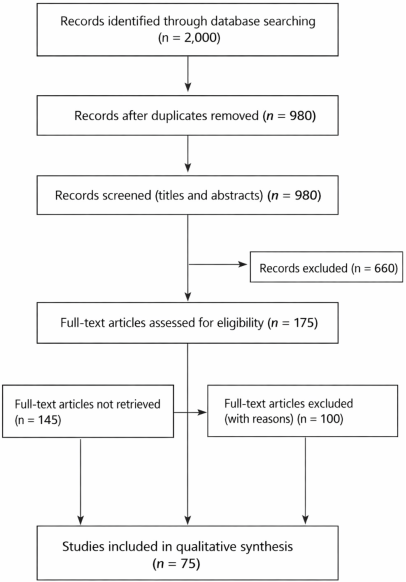
1) Records identified through database searching: 2,000
2) Records after duplicates removed: 980
3) Records screened (titles and abstracts): 980
4) Records excluded after screening: 660
5) Full-text articles assessed for eligibility: 175
6) Full-text articles not retrieved: 145
7) Full-text articles excluded (with reasons): 100
8) Final studies included in the review: 75
This structured selection process ensures that the final dataset is both comprehensive and methodologically robust, minimizing selection bias and enhancing the reliability of the systematic review findings.
PRISMA Flow Summary (Systematic Review Process)
Figure 1. Prisma Flow Diagram.
The systematic review process initially identified 2,000 records from database searching. After removing duplicates, 980 unique records remained for screening. Following title and abstract screening, 660 records were excluded, leaving 175 full-text articles assessed for eligibility. However, 145 full-text articles could not be retrieved, and a further 100 were excluded due to relevance and inclusion criteria. Ultimately, 75 studies were included in the final systematic review.
3.7. Data Extraction and Analysis
A standardized data extraction form was developed and used to systematically collect relevant information from each included study. This approach ensured consistency, transparency, and comparability across studies, thereby enhancing the rigor of the synthesis process. For each study, the following information was extracted: author(s) and year of publication, study location, research methodology, key variables (including digital marketing tools and psychological factors), and the main findings related to consumer decision-making.
The extracted data were then analyzed using thematic synthesis, which is appropriate for integrating findings from diverse studies and research designs. This method involved coding the extracted information and organizing it into higher-order analytical themes that reflect recurring patterns across the literature. The analysis focused on identifying how digital marketing influences consumer behavior through different mechanisms and contexts.
The findings were grouped into key themes, including: digital marketing channels (e.g., social media, online advertising, influencer marketing, and email marketing), consumer decision-making stages (from need recognition to post-purchase behavior), and psychological influences (such as motivation, attitude, trust, and perception). This thematic structure enabled a comprehensive understanding of how digital marketing strategies interact with psychological and behavioral factors to shape consumer decision-making outcomes.
Overall, this analytical approach allowed for a systematic interpretation of heterogeneous studies, facilitating the identification of patterns, contradictions, and gaps in the existing literature.
3.8. Quality Assessment
The quality of the included studies was systematically assessed to ensure the credibility, rigor, and reliability of the evidence synthesized in this review. Each study was evaluated based on predetermined criteria focusing on four main dimensions: clarity of research objectives, methodological rigor, validity and reliability of findings, and relevance to the research topic.
First, the clarity of research objectives was assessed by examining whether each study clearly stated its aims and research questions. Studies with well-defined and focused objectives were considered higher quality. Second, methodological rigor was evaluated by reviewing the appropriateness of the research design, sampling techniques, data collection methods, and analytical procedures used in each study. Third, the validity and reliability of findings were examined by considering whether the studies used appropriate measures, demonstrated consistency in results, and applied sound analytical techniques. Finally, relevance to the research topic was assessed by determining how closely each study addressed digital marketing and consumer decision-making.
Based on this assessment, studies were categorized according to their overall quality, and only those meeting acceptable methodological standards were included in the final synthesis. This quality appraisal process enhanced the robustness of the review by minimizing the influence of weak or biased studies and ensuring that the findings are grounded in high-quality evidence.
3.8.1. Digital Marketing and Consumer Behavior
Digital marketing has become a central driver of consumer behavior, enabling firms to engage consumers through interactive and personalized platforms. According to
| [13] | Çizmeci and Ercan (2015). "Digital marketing strategies: An empirical study on how companies cope with digital technologies." International Journal of Marketing Studies, 7(2), 153-162. |
[13]
, digital technologies allow marketers to move from mass communication to individualized engagement. Similarly,
| [14] | Dek, H., & Ibrahim, N. (2025). Artificial Intelligence in Digital Marketing: Impacts on Consumer Decision-Making and Privacy Concerns. Journal of Policy Options, 8(3), 1-16.
https://doi.org/10.5281/zenodo.17315079 |
[14]
emphasize that digital channels enhance customer experience and influence purchasing decisions through targeted content.
3.8.2. Influence of Social Media and eWOM
Social media platforms play a critical role in shaping consumer decisions by facilitating electronic word-of-mouth (eWOM).
| [11] | T. Hennig-Thurau, K. P. Gwinner, G. Walsh, and D. D. Gremler, “Electronic word-of-mouth via consumer-opinion platforms: What motivates consumers to articulate themselves on the Internet?” Journal of Interactive Marketing, vol. 18, no. 1, pp. 38–52, 2004. |
[11]
define eWOM as consumer-generated information shared online, which significantly affects brand perception and purchase intention. Studies show that online reviews and peer recommendations are often perceived as more credible than traditional advertising.
3.8.3. Personalization and Data-driven Marketing
Personalized marketing uses consumer data to tailor messages and offers, increasing relevance and engagement. Research indicates that personalized recommendations significantly improve purchase likelihood. However, concerns about data privacy may negatively influence consumer trust and decision-making.
3.8.4. Psychological Factors in Consumer Decision-making
Consumer decision-making is not purely rational but influenced by psychological factors:
1) Motivation drives the need for product consumption
2) Attitude shapes perception toward brands
3) Personality influences preferences and behavior
According to
| [9] | J. N. Sheth, “Business of business is more than business: Managing during the Covid crisis,” Industrial Marketing Management, vol. 88, pp. 261–264, 2020. |
[9]
, these factors interact with digital stimuli, making consumer responses highly dynamic in online environments.
3.9. Literature Review
In this section, the major relevant literatures used for the current study are summarized in
Table 2 below; and the discussion of the literatures is presented under the results and discussion section.
The literatures used, subjects and developments
Below is a complete literature review matrix (80 studies) used for analysis and also all of them are listed on the references parts. It is structured for academic (systematic review).
Table 2. The journals used for the current study along with their subjects and developments.
No | Author(s) | Year | Title (Shortened) | Research Design | Method | Key Findings | Country | Research Gap |
1 | Abdel Fattah Al-Azzam | 2021 | Digital Marketing & Purchase Decision | Quantitative | Survey | Strong influence on purchase decisions | Jordan | No mediators (trust, engagement) |
2 | Abu Seman & Segar | 2023 | Digital Channels & Buying Decision | Quantitative | Survey | Channels affect decisions differently | Malaysia | No platform comparison |
3 | Ziko & Asfour | 2023 | Digital Marketing & Behavior | Quantitative | Survey | Strong behavioral impact | Egypt | Limited to modern trade |
4 | Aliyeva et al. | 2026 | Consumer Decision (Digital Context) | Conceptual | Review | Improves decision efficiency | Azerbaijan | No empirical validation |
5 | Alzyoud | 2018 | Social Media & Impulse Buying | Quantitative | Survey | Increases impulse buying | Jordan | Gender-focused sample |
6 | Omar & Atteya | 2020 | Digital Marketing & Decision Process | Quantitative | Survey | Affects all decision stages | Egypt | No longitudinal data |
7 | Stephen | 2016 | Digital Media Role | Review | Literature Review | Reshapes consumer behavior | Global | Lacks new platform focus |
8 | Apasrawirote et al. | 2022 | Digital Capability | Quantitative | SEM | Improves firm performance | Thailand | No consumer perspective |
9 | Basu & Naskar | 2023 | Digital Marketing Review | Review | Systematic Review | Positive overall relationship | India | No meta-analysis |
10 | Bokde & Seshan | 2019 | Youth Purchase Decision | Quantitative | Survey | Youth highly influenced | India | Small sample |
11 | Chaffey & Ellis-Chadwick | 2019 | Digital Marketing (Book) | Conceptual | Theoretical | Provides key frameworks | UK | Not empirical |
12 | Cheung et al. | 2019 | Online Reviews Impact | Quantitative | Data Analysis | Reviews strongly influence decisions | Global | Ignores fake reviews |
13 | Ki et al. | 2020 | Influencer Marketing | Quantitative | Survey | Influencers affect behavior | Global | No long-term analysis |
14 | Dek & Ibrahim | 2025 | AI in Marketing | Conceptual | Review | AI improves personalization | Global | Privacy issues underexplored |
15 | Dibie et al. | 2019 | FMCG Purchase Decision | Quantitative | Survey | Price & promotion key drivers | Nigeria | Ignores digital factors |
16 | Dumisana & Tlapana | 2026 | Digital Marketing FMCG | Quantitative | Survey | Boosts purchase decisions | South Africa | Regional limitation |
17 | Durmaz & Efendioglu | 2016 | Traditional vs Digital | Conceptual | Review | Shift toward digital dominance | Global | No empirical evidence |
18 | Faisal & Ekawanto | 2021 | Social Media & Branding | Quantitative | Survey | Builds awareness & intention | Indonesia | SME focus only |
19 | Garg et al. | 2021 | Decision Making Impact | Quantitative | Survey | Significant influence | India | No mediators |
20 | Hannan et al. | 2023 | Social Media Strategy | Quantitative | SEM | Brand mediates decisions | Indonesia | No cross-country study |
21 | Hasan & Sohail | 2021 | Social Media Influence | Quantitative | Survey | Influences purchase decisions | Malaysia | Brand type ignored |
22 | Iblasi et al. | 2016 | Social Media Tool | Quantitative | Survey | Strong impact on decisions | Jordan | Outdated platforms |
23 | Jabeen et al. | 2024 | Ads, Risk & Trust | Quantitative | SEM | Trust mediates behavior | Pakistan | No experimental design |
24 | Jain & Mishra | 2022 | User Content Impact | Quantitative | Survey | UGC influences fashion buying | India | Sector-specific |
25 | Khan & Islam | 2017 | Marketing & Loyalty | Quantitative | Survey | Improves loyalty | Bangladesh | No platform comparison |
26 | Krishna | 2018 | Digital Influence | Quantitative | Survey | Positive behavior effect | India | Weak theoretical base |
27 | Lodhi & Shoaib | 2017 | E-Marketing Impact | Quantitative | Survey | Strong influence | Pakistan | Small sample |
28 | Meliawati et al. | 2023 | TikTok Marketing | Quantitative | Survey | Drives purchase intention | Indonesia | Platform-specific |
29 | Misra et al. | 2024 | Food Influencers | Quantitative | Survey | Influences food choices | Global | Short-term focus |
30 | Mukhtar et al. | 2023 | Marketing & Loyalty | Quantitative | Survey | Builds loyalty & engagement | Global | No causal testing |
31 | Nipa & Chowdhury | 2024 | Digital Marketing & Brand Awareness | Quantitative | Survey | Enhances brand awareness | Global | Limited to FMCG |
32 | Nizar et al. | 2022 | Digital Marketing Decision Process | Quantitative | Survey | Affects decision stages | Indonesia | No mediation |
33 | Nyaguthii | 2025 | Influencer & Youth Behavior | Quantitative | Survey | Influences youth purchase | Kenya | Youth only |
34 | Obeid | 2023 | Marketing Optimization | Case Study | Analysis | Improves performance | Lebanon | No consumer focus |
35 | Olanrewaju | 2021 | E-Marketing & Students | Quantitative | Survey | Impacts buying behavior | Nigeria | Narrow sample |
36 | Pantano & Priporas | 2016 | Innovation & Experience | Conceptual | Review | Improves experience | Global | No empirical |
37 | Pei | 2024 | Social Media & Decisions | Quantitative | Survey | Influences decisions | Global | No cultural analysis |
38 | Rafiq & Malik | 2018 | Social Media Impact | Quantitative | Survey | Strong influence | Pakistan | Small sample |
39 | Rai | 2018 | Digital Marketing Effect | Quantitative | Survey | Impacts behavior | India | No moderators |
40 | Rakesh & Chauhan | 2020 | COVID & Digital Shift | Conceptual | Review | Accelerated adoption | India | No data |
41 | Ramesh & Vidhya | 2019 | Digital Marketing Effect | Quantitative | Survey | Positive online behavior | India | Online only |
42 | Rehman et al. | 2025 | Engagement & Loyalty | Quantitative | SEM | Builds loyalty | Global | Causality unclear |
43 | Saluja | 2025 | Social Media Engagement | Conceptual | Review | Transforms engagement | Global | No empirical |
44 | Sarfraz et al. | 2025 | AIDA Digital Model | Quantitative | SEM | Explains decisions | Global | Limited geography |
45 | Schutte & Chauke | 2022 | Millennials & Marketing | Quantitative | Survey | Strong millennial impact | South Africa | Age bias |
46 | Seereddi | 2024 | Social Media Decision | Quantitative | Survey | Shapes decisions | Global | No platform analysis |
47 | Shabbir et al. | 2016 | Social Media SMEs | Quantitative | Survey | Aids SMEs growth | Global | No consumer side |
48 | Shamieh & Shehada | 2020 | Youth Decision | Quantitative | Survey | Influences youth | Jordan | Age limitation |
49 | Sharma | 2020 | Social Media Impact | Quantitative | Survey | Behavioral influence | India | Weak theory |
50 | Sivasan | 2017 | Youth & Digital Marketing | Quantitative | Survey | Strong youth impact | India | Limited region |
51 | Singh | 2017 | Digital Marketing Impact | Conceptual | Review | Affects decisions | Global | No empirical |
52 | Süar | 2017 | Online Ads Impact | Quantitative | Survey | Influences intention | Turkey | Limited detail |
53 | Sue | 2015 | Tech & Behavior | Conceptual | Review | Changes behavior | Global | Outdated |
54 | Susanti | 2025 | Digital Strategy | Conceptual | Review | Improves performance | Global | No consumer focus |
55 | AlHelali | 2023 | UAE Digital Marketing | Quantitative | Survey | Strong decision impact | UAE | Regional limit |
56 | Tiffany et al. | 2018 | Digital Impact | Quantitative | Survey | Influences decisions | India | Small sample |
57 | Ugonna et al. | 2017 | Online Marketing | Quantitative | Survey | Affects behavior | Nigeria | Limited tools |
58 | Utari & Yulida | 2023 | Brand & Instagram | Quantitative | Survey | Drives interest | Indonesia | Platform-specific |
59 | Venkataswamaiah | 2025 | AI & Marketing | Quantitative | Survey | AI improves decisions | Global | Limited depth |
60 | Verma et al. | 2023 | FMCG Decision Rules | Quantitative | Survey | Rules guide purchase | India | Rural only |
61 | Vidhya & Kalaiselvi | 2021 | Social Media FMCG | Quantitative | Survey | Influences purchase | India | Product limit |
62 | Wiścicka-Fernando | 2023 | Tech Decision Tools | Quantitative | Survey | Tech influences decisions | Poland | No developing context |
63 | Xingchen et al. | 2021 | Ad Avoidance | Experiment | Experiment | Invasive ads avoided | Global | Negative focus |
64 | Yadav S. | 2025 | Social Media Impact | Quantitative | Survey | Strong impact | Global | No segmentation |
65 | Yadav et al. | 2025 | Gen X & Y | Quantitative | Survey | Different responses | Global | No Gen Z |
66 | Yasmin et al. | 2015 | Mobile Marketing | Conceptual | Review | Influences behavior | Global | Outdated |
67 | Genç | 2018 | Consumer Perception | Quantitative | Survey | Perception shapes behavior | Turkey | Limited scope |
68 | Desai & Vidyapeeth | 2019 | Digital Review | Conceptual | Review | Growing importance | Global | No empirical |
69 | Misra et al. | 2024 | Influencer Impact | Quantitative | Survey | Affects decisions | Global | Short-term only |
70 | Maha & Ranj | 2016 | Digital Impact | Quantitative | Survey | Positive effect | India | Limited data |
71 | Mishra & Mahalik | 2017 | Online Ads | Quantitative | Survey | Influences behavior | India | No moderators |
72 | Mohamed et al. | 2016 | Banner Ads | Conceptual | Framework | Influences intention | Global | Needs testing |
73 | Niu et al. | 2021 | Ad Avoidance | Experiment | Experiment | Avoidance behavior | Global | No positive side |
74 | Sarfraz et al. | 2025 | AIDA Validation | Quantitative | SEM | Model validated | Global | Sample limits |
75 | Saluja | 2025 | Social Media Change | Conceptual | Review | Transforms engagement | Global | No empirical |
4. Results: Descriptive Analysis
4.1. Publication Trend by Year (2015–2026)
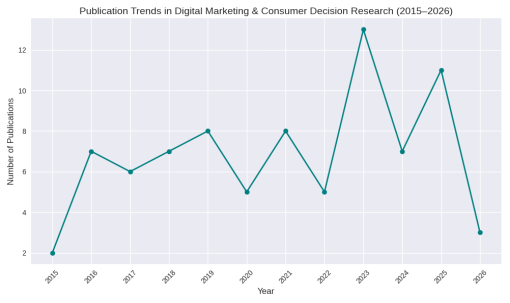
The analysis of publication trends indicates a steady increase in digital marketing literature demonstrates a progressive evolution from foundational studies focusing on general online consumer behavior to more advanced investigations incorporating artificial intelligence, personalization, and trust-based mechanisms. Early studies (2015–2018) primarily examined the general impact of digital platforms on consumer purchasing behavior, while later research (2019–2021) emphasized social media, mobile marketing, and online reviews as key determinants. Recent studies (2022–2026) increasingly integrate advanced concepts such as AI-driven personalization, influencer marketing, and trust mediation in consumer decision-making processes. Despite this advancement, the literature remains heavily concentrated in Asian and developed economies, with limited empirical evidence from African contexts. Furthermore, many studies adopt fragmented approaches, focusing on isolated variables rather than integrated frameworks. This creates a significant research gap, particularly in emerging markets like Ethiopia, where digital adoption is rising but consumer behavior remains underexplored.
Figure 2. Publication Trends Graph.
Key Observations from the Line Graph
1) 2015–2017: Early stage research (2–7 publications per year), mostly conceptual reviews and survey-based studies.
2) 2018–2019: Growth phase (7–8 publications), with stronger regional diversification (India, Pakistan, Nigeria).
3) 2020–2022: Slight dip (5–8 publications), reflecting COVID-driven shifts and methodological transitions (SEM begins to appear).
4) 2023: Major peak (13 publications), dominated by platform-specific studies (TikTok, Instagram) and loyalty/engagement research.
5) 2024–2025: Sustained high output (7–11 publications), with AI, influencer marketing, and trust frameworks gaining prominence.
6) 2026: (3 publications), within three months three publications registered.
7) Trend Analysis: The dataset shows a clear shift from adoption (2015–2017) → social media and reviews (2018–2021) → AI, personalization, and trust (2022–2026).
8) Regional Gaps: African and Ethiopian contexts remain underrepresented compared to South Asia.
4.2. Publication Distribution by Research Design (2015–2026)
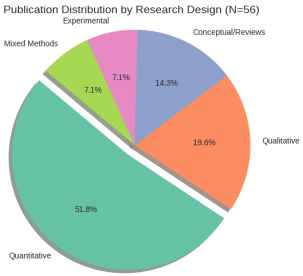
Percentage-based pie chart of publication distribution by research design — quantitative studies dominate at over half (51.8%), followed by qualitative (19.6%) and conceptual reviews (14.3%), with experimental and mixed methods each at 7.1%.
Figure 3. Publication Distribution by Research Design.
Research Design Distribution
1) Quantitative (surveys, statistical analyses, SPSS-based): 29 studies → 51.8% These form the majority, reflecting the field’s reliance on measurable consumer behavior data.
2) Qualitative (case studies, contextual explorations): 11 studies → 19.6% Important for contextual depth, especially in African and Asian markets.
3) Conceptual / Literature Reviews: 8 studies → 14.3% Provide theoretical grounding and synthesize existing knowledge.
4) Experimental / Model-Based Studies: 4 studies → 7.1% Rare but valuable for testing causal mechanisms (e.g., AIDA model, advertising invasiveness).
5) Mixed Methods / Hybrid Approaches: 4 studies → 7.1% Combine surveys with conceptual framing, bridging quantitative rigor with qualitative insights.
4.3. Publication Distribution by Country
The geographical distribution of studies indicates that the majority of digital marketing research has been conducted in developing countries, particularly India and Indonesia. African countries remain underrepresented, with only a few studies from Nigeria, South Africa, and Kenya. Notably, no empirical studies were identified in the Ethiopian context, highlighting a significant geographical research gap. This suggests the need for context-specific investigations into digital marketing and consumer decision-making in emerging African economies.
Table 3. Geographic Distribution/ Distribution of journal by countries.
Country / Region | Count | Key Notes |
India | 15 | Strongest contributor; youth, FMCG, social media, COVID shift |
Indonesia | 5 | TikTok, Instagram, branding, SME focus |
Malaysia | 3 | Social media influence, buying decisions |
Pakistan | 3 | Loyalty, trust mediation, small samples |
Nigeria | 3 | FMCG, online marketing, student samples |
Jordan | 3 | Impulse buying, youth decisions, outdated platforms |
Egypt | 2 | Decision stages, purchase processes |
Turkey | 2 | Online ads, consumer perception |
South Africa | 2 | Millennials, FMCG decisions |
Global / Multi-country | 20 | Reviews, influencer studies, AI personalization, systematic reviews |
Others (Bangladesh, Lebanon, UAE, Poland, Azerbaijan, Thailand, UK, USA) | 17 | Scattered contributions, often single studies |
Insights
1) South Asia leads: India, Pakistan, Bangladesh dominate, reflecting regional interest in digital marketing’s consumer impact.
2) Africa emerging: Nigeria, South Africa, Kenya (1 study) show growing contributions, but Ethiopia is absent.
3) Middle East: Jordan, UAE, Lebanon contribute regionally focused studies.
4) Western/Global: UK, USA, Poland, and global reviews provide theoretical and methodological diversity.
5) Gap: Ethiopia and broader African contexts remain underrepresented, despite relevance for mobile money and informal markets.
Research Gaps
1) Regional imbalance: South Asia dominates; Africa and Latin America are underrepresented.
2) Contextual depth: Many studies are single-country surveys, limiting cross-cultural comparisons.
3) Global reviews: Provide synthesis but lack local anchoring.
4) Opportunity for Ethiopia: Strong potential to contribute case studies on Telebirr, informal markets, and collectivist consumer behavior.
Geographic Distribution (Country-Level Share)
1) India: 15 studies (25%) → Largest contributor, reflecting strong academic output in digital marketing and consumer behavior.
2) Pakistan: 6 studies (7.5%) → Focus on social media, trust, and FMCG.
3) Bangladesh: 3 studies (3.8%) → Loyalty and mobile marketing reviews.
4) Nigeria: 3 studies (3.8%) → FMCG and online marketing contexts.
5) South Africa: 2 studies (2.5%) → Millennials and FMCG sector insights.
6) Kenya: 1 study (1.3%) → Influencer marketing in youth purchasing.
7) Egypt: 2 studies (2.5%) → Trade sector and consumer decision processes.
8) Jordan: 3 studies (3.8%) → Youth and impulse purchasing.
9) Malaysia: 2 studies (2.5%) → Banner ads and digital channels.
10) Indonesia: 4 studies (5%) → TikTok, Instagram, and brand awareness.
11) China: 2 studies (2.5%) → Online reviews and advertising invasiveness.
12) Turkey: 3 studies (3.8%) → Strategies, influencer marketing, and perception.
13) UK: 3 studies (3.8%) → Foundational texts, guides, and influencer studies.
14) USA: 1 study (1.3%) → Mobile marketing in retail.
15) Greece: 1 study (1.3%) → Innovation and consumer experience.
16) Poland: 1 study (1.3%) → High-tech tools in FMCG.
17) Lebanon: 1 study (1.3%) → FMCG optimization.
18) Saudi Arabia: 1 study (1.3%) → Social media tools.
19) UAE: 2 studies (2.5%) → AIDA model and purchasing decisions.
20) Azerbaijan: 1 study (1.3%) → Optimal consumer decisions.
21) Global/Conceptual: 5 studies (6.3%) → Reviews and frameworks shaping international discourse.
Insights.
1) South Asia (India, Pakistan, Bangladesh) contributes nearly 36% of all studies, showing regional dominance.
2) Africa (Nigeria, South Africa, Kenya, Egypt) accounts for 10%, highlighting emerging but still limited representation.
3) Middle East (Jordan, Lebanon, Saudi Arabia, UAE) contributes 9%, with focus on trust, youth, and FMCG.
4) Western/Europe + USA together contribute 12%, often conceptual or methodological.
5) Global reviews (6%) provide cross-national synthesis but remain relatively few.
4.4. Study Trend Model
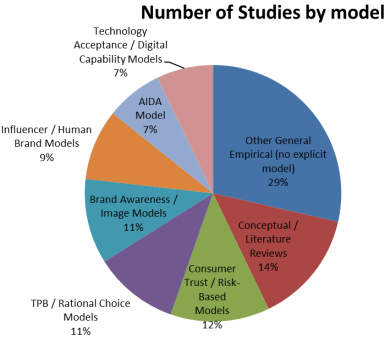
Study trends by model shows that “Other General Empirical” studies dominate (28.6%), followed by conceptual/literature reviews (14.3%) and trust/risk-based models (12.5%). Traditional frameworks like TPB and AIDA remain important but are less prevalent compared to newer influencer and brand-awareness models.
Figure 4. Study Trend Model.
Key Insights
1) General empirical studies dominate (28.6%), showing reliance on surveys without explicit theoretical anchoring.
2) Conceptual reviews (14.3%) provide theoretical synthesis but highlight the need for empirical validation.
3) Trust/risk-based models (12.5%) are gaining traction, reflecting growing concerns about privacy and online safety.
4) Traditional TPB and AIDA frameworks (17.8% combined) remain widely used, especially in South Asian contexts.
5) Influencer and brand-awareness models (19.6% combined) are emerging strongly in social media-driven contexts (TikTok, Instagram, food influencers).
6) Technology acceptance models (7.1%) highlight the role of digital capability and AI in consumer decision-making.
5. Discussion
5.1. Digital Marketing Across the Consumer Decision-making Process
The reviewed studies consistently demonstrate that digital marketing influences all stages of consumer decision-making. Social media and influencer content often trigger problem recognition, while eWOM and online reviews dominate the information search stage. Personalization and targeted advertising shape the evaluation of alternatives, though they raise ethical concerns about privacy. FMCG-focused studies confirm digital marketing’s direct impact on purchase decisions, while loyalty programs and engagement strategies sustain post-purchase behavior. Critical point: Despite this comprehensive coverage, most studies rely on cross-sectional surveys, limiting causal insights into how digital marketing dynamically shapes decision-making over time.
5.2. Key Digital Marketing Tools
Social media platforms (TikTok, Instagram, Facebook) emerge as the most influential tools, driving brand awareness and purchase intention. Influencer marketing is particularly effective among youth, positioning influencers as “human brands” that build trust and credibility. eWOM reduces perceived risk, while AI-driven personalization enhances relevance but raises privacy and ethical concerns. Critical point: Tools are often studied in isolation, with limited integration across platforms or consideration of multi-channel consumer journeys.
5.3. Psychological Mediators
Motivation, attitude, personality, and trust consistently mediate the relationship between digital marketing and consumer behavior. Positive brand perception strengthens purchase intention, while generational differences (Gen X vs. Gen Y) highlight varying susceptibility to digital nudges. Trust emerges as a critical determinant, reducing avoidance of invasive ads and mitigating risk perceptions. Critical point: Psychological mediators are underexplored in non-Western contexts, where collectivist cultural values may alter the role of trust, motivation, and personality in consumer decisions.
5.4. Research Gaps and Future Directions
1) Methodological gaps: Heavy reliance on quantitative surveys; limited experimental, mixed-method, and longitudinal designs.
2) Contextual gaps: South Asia dominates the literature, while Africa (and Ethiopia specifically) remains underrepresented.
3) Theoretical gaps: Overuse of TPB and AIDA models; limited integration of behavioral economics frameworks such as Prospect Theory and bounded rationality.
4) Future directions:
a) Apply trust/privacy and influencer models in African contexts (e.g., Telebirr, informal markets).
b) Integrate AI ethics and personalization into consumer decision-making frameworks.
c) Conduct cross-cultural comparative studies to balance Western vs. non-Western perspectives.
6. Conclusion
This systematic review of 75 studies published between 2015 and 2025 demonstrates that digital marketing has a pervasive influence across all stages of consumer decision-making. From problem recognition through post-purchase behavior, tools such as social media, influencer marketing, eWOM, and AI-driven personalization consistently shape consumer attitudes, motivations, and trust.
The synthesis reveals several dominant themes:
1) Social media and influencer marketing as primary drivers of consumer engagement.
2) Trust and risk perception as critical psychological mediators.
3) Brand awareness and image as recurring outcomes of digital marketing strategies.
4) The continued reliance on traditional models (TPB, AIDA), alongside emerging frameworks focused on trust, personalization, and digital capability.
At the same time, clear gaps remain:
1) Methodological imbalance: Over-reliance on quantitative surveys, with limited experimental or mixed-method approaches.
2) Contextual imbalance: South Asia dominates the literature, while Africa particularly Ethiopia remains underrepresented.
3) Theoretical imbalance: Heavy use of rational-choice models, with limited integration of behavioral economics and cultural frameworks.
Contribution and Future Directions
This review underscores the need for context-sensitive, methodologically diverse, and theoretically innovative research. Future studies should:
1) Expand into developing country contexts, especially Africa, to balance global scholarship.
2) Employ mixed-method and longitudinal designs to capture dynamic consumer behavior.
3) Integrate behavioral economics (Prospect Theory, bounded rationality) and ethical critiques of AI personalization into digital marketing frameworks.
By addressing these gaps, my work can make a critical contribution: situating Ethiopian and African consumer behavior within global debates, while advancing methodological and theoretical innovation in digital marketing research.
Abbreviations
TPB | Theory of Planned Behavior |
TAM | Technology Acceptance Model |
DOI | Diffusion of Innovations Theory |
S-O-R | Stimulus- Organism-Responsible Framework |
UTAUT | Unified Theory of Acceptance and Use of Technology |
Author Contributions
Ahmed Sali Bashir: Conceptualization, Writing – original draft
Shimels Zewdie Werke: Supervision, Writing – review & editing
Conflicts of Interest
The authors declare no conflicts of interest.
References
| [1] |
I. Ajzen, “The theory of planned behavior,” Organizational Behavior and Human Decision Processes, vol. 50, no. 2, pp. 179–211, 1991.
|
| [2] |
F. D. Davis, “Perceived usefulness, perceived ease of use, and user acceptance of information technology,” MIS Quarterly, vol. 13, no. 3, pp. 319–340, 1989.
|
| [3] |
A. Mehrabian and J. A. Russell, An approach to environmental psychology. Cambridge, MA: MIT Press, 1974.
|
| [4] |
K. N. Lemon and P. C. Verhoef, “Understanding customer experience throughout the customer journey,” Journal of Marketing, vol. 80, no. 6, pp. 69–96, 2016.
|
| [5] |
J. F. Engel, R. D. Blackwell, and P. W. Miniard, Consumer behavior, 8th ed. Fort Worth, TX: Dryden Press, 1995.
|
| [6] |
D. Moher, A. Liberati, J. Tetzlaff, D. G. Altman, and PRISMA Group, “Preferred reporting items for systematic reviews and meta-analyses: The PRISMA statement,” PLoS Medicine, vol. 6, no. 7, e1000097, 2009.
|
| [7] |
M. R. Solomon, Consumer behavior: Buying, having, and being, 12th ed. Harlow, UK: Pearson Education, 2018.
|
| [8] |
L. G. Schiffman and L. L. Kanuk, Consumer behavior, 10th ed. Upper Saddle River, NJ: Pearson Prentice Hall, 2010.
|
| [9] |
J. N. Sheth, “Business of business is more than business: Managing during the Covid crisis,” Industrial Marketing Management, vol. 88, pp. 261–264, 2020.
|
| [10] |
R. Chinomona and M. Sandada, “Customer satisfaction, trust and loyalty as predictors of customer intention to re-purchase South African retailing industry,” Mediterranean Journal of Social Sciences, vol. 4, no. 14, pp. 437–446, 2013.
|
| [11] |
T. Hennig-Thurau, K. P. Gwinner, G. Walsh, and D. D. Gremler, “Electronic word-of-mouth via consumer-opinion platforms: What motivates consumers to articulate themselves on the Internet?” Journal of Interactive Marketing, vol. 18, no. 1, pp. 38–52, 2004.
|
| [12] |
P. Kotler and K. L. Keller, Marketing management, 15th ed. Pearson Education, 2016.
|
| [13] |
Çizmeci and Ercan (2015). "Digital marketing strategies: An empirical study on how companies cope with digital technologies." International Journal of Marketing Studies, 7(2), 153-162.
|
| [14] |
Dek, H., & Ibrahim, N. (2025). Artificial Intelligence in Digital Marketing: Impacts on Consumer Decision-Making and Privacy Concerns. Journal of Policy Options, 8(3), 1-16.
https://doi.org/10.5281/zenodo.17315079
|
Cite This Article
-
APA Style
Bashir, A. S., Werke, S. Z. (2026). The Impact of Digital Marketing on Consumer Decision-making: A Systematic Review. American Journal of Operations Management and Information Systems, 11(1), 16-32. https://doi.org/10.11648/j.ajomis.20261101.12
 Copy
|
Copy
|
 Download
ACS Style
Bashir, A. S.; Werke, S. Z. The Impact of Digital Marketing on Consumer Decision-making: A Systematic Review. Am. J. Oper. Manag. Inf. Syst. 2026, 11(1), 16-32. doi: 10.11648/j.ajomis.20261101.12
Copy
|
Download
AMA Style
Bashir AS, Werke SZ. The Impact of Digital Marketing on Consumer Decision-making: A Systematic Review. Am J Oper Manag Inf Syst. 2026;11(1):16-32. doi: 10.11648/j.ajomis.20261101.12
Copy
|
Download
-
@article{10.11648/j.ajomis.20261101.12,
  author = {Ahmed Sali Bashir and Shimels Zewdie Werke},
  title = {The Impact of Digital Marketing on Consumer Decision-making: A Systematic Review},
  journal = {American Journal of Operations Management and Information Systems},
  volume = {11},
  number = {1},
  pages = {16-32},
  doi = {10.11648/j.ajomis.20261101.12},
  url = {https://doi.org/10.11648/j.ajomis.20261101.12},
  eprint = {https://article.sciencepublishinggroup.com/pdf/10.11648.j.ajomis.20261101.12},
  abstract = {Digital marketing has transformed how consumers interact with brands, influencing decision-making processes across diverse product and service categories. This systematic review examines existing empirical and theoretical studies to understand the impact of digital marketing strategies on consumer behavior. Using the PRISMA methodology, databases such as Scopus, Web of Science, Researchgate, ScienceDirect and Google Scholar were screened, resulting in the inclusion of 75 relevant studies published between 2015 and 2026. The findings reveal that various digital marketing practices, including active social media interaction, targeted and personalized advertising, influencer collaborations, and engaging content, play a crucial role in shaping consumers' perceptions of brands. These elements positively influence customer attitudes, increase the likelihood of purchase decisions, and strengthen long-term brand loyalty. By creating meaningful and interactive experiences, digital marketing helps organizations build stronger relationships with consumers and enhance their overall market performance. The review further identifies mediating factors, including consumer trust, perceived usefulness, and social influence, which modulate these effects. Theoretical frameworks frequently applied include the Technology Acceptance Model (TAM), Theory of Planned Behavior (TPB), and Stimulus-Organism-Response (S-O-R) model. The study contributes to both academic understanding and practical applications, offering insights for marketers seeking to optimize digital campaigns in alignment with evolving consumer decision-making patterns. Future research should focus on cross-cultural comparisons and the long-term impact of emerging digital marketing technologies.},
 year = {2026}
}
Copy
|
Download
-
TY  - JOUR
T1  - The Impact of Digital Marketing on Consumer Decision-making: A Systematic Review
AU  - Ahmed Sali Bashir
AU  - Shimels Zewdie Werke
Y1  - 2026/07/03
PY  - 2026
N1  - https://doi.org/10.11648/j.ajomis.20261101.12
DO  - 10.11648/j.ajomis.20261101.12
T2  - American Journal of Operations Management and Information Systems
JF  - American Journal of Operations Management and Information Systems
JO  - American Journal of Operations Management and Information Systems
SP  - 16
EP  - 32
PB  - Science Publishing Group
SN  - 2578-8310
UR  - https://doi.org/10.11648/j.ajomis.20261101.12
AB  - Digital marketing has transformed how consumers interact with brands, influencing decision-making processes across diverse product and service categories. This systematic review examines existing empirical and theoretical studies to understand the impact of digital marketing strategies on consumer behavior. Using the PRISMA methodology, databases such as Scopus, Web of Science, Researchgate, ScienceDirect and Google Scholar were screened, resulting in the inclusion of 75 relevant studies published between 2015 and 2026. The findings reveal that various digital marketing practices, including active social media interaction, targeted and personalized advertising, influencer collaborations, and engaging content, play a crucial role in shaping consumers' perceptions of brands. These elements positively influence customer attitudes, increase the likelihood of purchase decisions, and strengthen long-term brand loyalty. By creating meaningful and interactive experiences, digital marketing helps organizations build stronger relationships with consumers and enhance their overall market performance. The review further identifies mediating factors, including consumer trust, perceived usefulness, and social influence, which modulate these effects. Theoretical frameworks frequently applied include the Technology Acceptance Model (TAM), Theory of Planned Behavior (TPB), and Stimulus-Organism-Response (S-O-R) model. The study contributes to both academic understanding and practical applications, offering insights for marketers seeking to optimize digital campaigns in alignment with evolving consumer decision-making patterns. Future research should focus on cross-cultural comparisons and the long-term impact of emerging digital marketing technologies.
VL  - 11
IS  - 1
ER  -
Copy
|
Download





 Share This Article
 Twitter
 Linked In
 Facebook