Abstract
Nigeria faces a critical shortage of health workers, with a density of 1.95 per 1,000 population, well below the WHO threshold of 4.45. This study assessed the resilience of Nigeria's public health workforce and identified strategic approaches to strengthening workforce planning, leadership development, and health security preparedness. A convergent parallel mixed-methods design was employed. A cross-sectional survey of 384 health workers across Nigeria's six geopolitical zones was conducted from March to August 2024, using a structured questionnaire measuring three resilience domains: workforce planning, leadership development, and health security preparedness. Fifteen key informant interviews with senior policymakers and health leaders provided qualitative depth. Data were analyzed using descriptive statistics, ANOVA, correlation analysis, multiple linear regression, and thematic analysis. The overall workforce resilience score was 2.69 +/- 0.45 (moderate level), with 91.4% of respondents scoring in the low-to-moderate range. Domain scores were: workforce planning (2.54 +/- 0.54), leadership development (2.62 +/- 0.54), and health security preparedness (2.79 +/- 0.56). Multiple regression analysis showed all three domains were significant predictors of overall resilience (R-squared = 0.558, p < 0.001), with workforce planning as the strongest predictor (beta = 0.416, p < 0.001). Resilience was positively correlated with job satisfaction (r = 0.491, p < 0.001) and negatively correlated with intention to leave (r = -0.373, p < 0.001). No significant differences were found across geopolitical zones, gender, or work setting. Qualitative analysis identified six key themes: brain drain and retention crisis (92% of key informants), implementation and governance challenges (88%), workforce planning deficits (85%), financing constraints (82%), leadership development gaps (78%), and health security preparedness weaknesses (74%). Nigeria's public health workforce demonstrates moderate resilience with significant deficits across all measured domains. Strategic investments in workforce planning infrastructure, leadership development programs, and sustained health security preparedness are urgently needed. The findings provide evidence-based recommendations for the implementation of Nigeria's National Policy on Health Workforce Migration and alignment with the IHR 2024 amendments and National Action Plan for Health Security.
Keywords
Health Workforce Resilience, Human Resources for Health, Workforce Planning, Leadership Development,
Health Security Preparedness, Brain Drain, Mixed-methods
1. Introduction
1.1. Background
Nigeria, with an estimated population exceeding 220 million people, carries one of the largest burdens of disease in sub-Saharan Africa and faces a correspondingly massive demand for health services
| [1] | World Health Organization. (2024). State of Health of the Nation Report 2024: Nigeria. Federal Ministry of Health, Nigeria. |
[1]
. However, the country's health system is critically understaffed, with a health worker density of approximately 1.95 per 1,000 population, far below the World Health Organization (WHO) recommended threshold of 4.45 per 1,000 needed to achieve universal health coverage (UHC)
| [2] | World Health Organization. (2016). Global strategy on human resources for health: Workforce 2030. Geneva: WHO Press. |
[2]
. This deficit places Nigeria on the WHO Health Workforce Support and Safeguards List, alongside 55 other countries facing the most pressing health workforce challenges related to UHC
| [3] | World Health Organization. (2023). Health Workforce Support and Safeguards List 2023. Geneva: WHO. |
[3]
.
The crisis has been dramatically exacerbated by an unprecedented wave of health worker emigration, commonly termed 'brain drain.' According to the Nursing and Midwifery Council of Nigeria, over 42,000 nurses have left the country in the past three years, while the Ministry of Health reports that 16,000 doctors have emigrated, leaving approximately 55,000 licensed physicians to serve the entire population
| [4] | Ifediba, N. (2024, October 21). Nigeria has an ambitious plan for its health workforce, but can it afford it? Africa at LSE Blog. |
[4]
. The resulting ratio of 0.4 doctors per 1,000 population creates profound gaps in service delivery, particularly in underserved rural areas where over 48% of Nigerians reside. Beyond simple numerical shortages, the resilience of Nigeria's public health workforce is undermined by systemic deficiencies in three interrelated domains: workforce planning, leadership development, and health security preparedness. Workforce planning remains hampered by the absence of a comprehensive human resource information system (HRIS), outdated workforce data, and lack of evidence-based staffing norms
| [5] | Abimbola, S., Olanipekun, T., Schaaf, M., Negin, J., Jan, S., & Martiniuk, A. L. (2016). Where there is no policy: Governing the posting and transfer of primary health care workers in Nigeria. International Journal of Health Planning and Management, 32(2), e243-e261. https://doi.org/10.1002/hpm.2356 |
[5]
. Leadership development suffers from promotion practices based on clinical seniority rather than managerial competence, inadequate mentorship systems, and a widening gender gap in senior leadership positions
| [6] | Oleribe, O. O., Momoh, J., Uzochukwu, B. S., Mbofana, F., Adebiyi, A., et al. (2019). Identifying key challenges facing healthcare systems in Africa and potential solutions. International Journal of General Medicine, 12, 395-403.
https://doi.org/10.2147/IJGM.S223882 |
[6]
. Health security preparedness, though improved through the Nigeria Centre for Disease Control and Prevention (NCDC) and the Nigeria Field Epidemiology and Laboratory Training Programme (NFELTP), remains unevenly distributed, with many states lacking trained field epidemiologists and functional emergency operations centres
| [7] | Oyemakinde, A., Idris, J., Adeyemi, O., Ojo, O., Ugochukwu, C., Nguku, P., & Nsubuga, P. (2014). Building a public health workforce in Nigeria through experiential training. Pan African Medical Journal, 18 (Suppl 1), 9.
https://doi.org/10.11604/pamj.supp.2014.18.1.4920 |
[7]
.
1.2. Policy Context
Recognizing these challenges, Nigeria's Federal Ministry of Health released the National Policy on Health Workforce Migration in August 2024, marking the government's first comprehensive policy response to the brain drain crisis
| [4] | Ifediba, N. (2024, October 21). Nigeria has an ambitious plan for its health workforce, but can it afford it? Africa at LSE Blog. |
[4]
. The policy outlines incentives including tax holidays, health insurance, mortgage facilities, and career support pathways to retain existing staff and attract diaspora health workers. Additionally, the National Action Plan for Health Security (NAPHS) provides a framework for strengthening health security capacities, including workforce development as a core technical area
| [8] | Nigeria Centre for Disease Control. (2019). National Action Plan for Health Security: Federal Republic of Nigeria. Abuja: NCDC. |
[8]
. The 2024 amendments to the International Health Regulations (IHR) further compel Nigeria to strengthen core capacities at subnational levels, establish National Coordinating Authorities for multisectoral emergency coordination, and ensure sustained workforce preparedness
| [9] | World Health Organization. (2024). International Health Regulations (2005) Fourth Edition. Geneva: WHO. |
[9]
. Kano State's passage of the Public Health Security Bill in February 2024 represents a pioneering subnational effort to legislate health security preparedness
| [10] | Nigeria Health Watch. (2025, January 22). Kano's Public Health Security Bill sets a model for Nigeria's other states. Nigeria Health Watch. |
[10]
.
1.3. Conceptual Framework
This study adopts a multidimensional conceptualization of health workforce resilience, defined as the capacity of the public health workforce to anticipate, prepare for, respond to, and recover from health system shocks while maintaining essential services
. Building on Boniol and colleagues' framework for health workforce planning
| [12] | Boniol, M., Kunjumen, T., Nair, T. S., Siyam, A., Campbell, J., & Diallo, K. (2022). The global health workforce stock and distribution in 2020 and 2030: A threat to equity and ‘universal’ health coverage? BMJ Global Health, 7(6), e009316.
https://doi.org/10.1136/bmjgh-2022-009316 |
[12]
and the WHO's health systems strengthening building blocks
| [13] | World Health Organization. (2007). Everybody's business: Strengthening health systems to improve health outcomes: WHO's framework for action. Geneva: WHO Press. |
[13]
, we operationalize workforce resilience across three strategic pillars:
1) Workforce Planning: The systematic assessment, projection, and management of health workforce supply, demand, and distribution to meet population health needs.
2) Leadership Development: The cultivation of managerial and governance competencies across all levels of the health system, including mentorship, career pathways, and performance management.
3) Health Security Preparedness: The maintenance of core capacities for detecting, assessing, notifying, and responding to public health events and emergencies, aligned with IHR requirements.
2. Methods
2.1. Study Design
A convergent parallel mixed-methods design was employed, combining a quantitative cross-sectional survey with qualitative key informant interviews (KIIs). This design allowed for complementary data collection and integration, providing both statistical generalizability and contextual depth
| [14] | Creswell, J. W., & Plano Clark, V. L. (2018). Designing and conducting mixed methods research (3rd ed.). SAGE Publications. |
[14]
. The study was conducted from March to August 2024 across Nigeria's six geopolitical zones.
2.2. Study Setting
Nigeria is a lower-middle-income country in West Africa, comprising 36 states and the Federal Capital Territory (FCT), organized into six geopolitical zones: North-West, North-East, North-Central, South-West, South-East, and South-South. The public health system operates at three levels: federal (tertiary hospitals and national agencies), state (secondary hospitals and state ministries of health), and local government (primary health centres and local government health departments). The study sampled health workers from all three levels across all six geopolitical zones to ensure national representativeness.
2.3. Quantitative Component
2.3.1. Sample Size and Sampling
The minimum sample size for the quantitative survey was calculated using Cochran's formula for infinite populations
| [15] | Cochran, W. G. (1977). Sampling techniques (3rd ed.). John Wiley & Sons. |
[15]
. With Z = 1.96 (95% confidence level), p = 0.5 (maximum variability), and e = 0.05 (margin of error), the calculation yielded a minimum sample of 384 respondents. A stratified multistage sampling approach was employed. In the first stage, two states were randomly selected from each geopolitical zone (12 states total). In the second stage, health facilities were purposively selected to include tertiary, secondary, and primary health care levels, as well as local government health departments. In the final stage, health workers were randomly selected from staff registers at each facility, stratified by professional cadre.
2.3.2. Instrument and Data Collection
Data were collected using a structured self-administered questionnaire developed through an extensive literature review and expert panel validation. The instrument comprised 37 items across five sections: Section A (socio-demographic characteristics, 8 items), Section B (workforce planning, 5 items), Section C (leadership development, 5 items), Section D (health security preparedness, 5 items), and Section E (outcome variables, 7 items). All items in Sections B-E were measured on a 5-point Likert scale (1 = Strongly Disagree, 2 = Disagree, 3 = Neutral, 4 = Agree, 5 = Strongly Agree). Content validity was established through a panel of seven experts (CVI = 0.92). Reliability was assessed using Cronbach's alpha: workforce planning (0.84), leadership development (0.81), health security preparedness (0.86), and overall instrument (0.89).
2.3.3. Data Analysis
Quantitative data were analyzed using Stata 17.0. Descriptive statistics were computed for all variables. Domain composite scores were calculated as the mean of constituent items. Inferential statistics included one-way ANOVA, independent samples t-test, Pearson correlation analysis, and multiple linear regression. The regression model included the three domain composites, years of experience, workload adequacy, training history, and digital tools access as independent variables. Assumptions were tested and satisfied (VIF < 3.0 for all predictors). Statistical significance was set at p < 0.05.
2.4. Qualitative Component
2.4.1. Participant Selection
Fifteen key informants were purposively selected to provide diverse perspectives on health workforce resilience. Selection criteria included: (1) senior leadership position in health system governance, administration, or policy; (2) minimum of 10 years of experience in health sector management; and (3) direct involvement in workforce planning, health security preparedness, or leadership development initiatives.
2.4.2. Data Collection
Semi-structured interviews were conducted using a topic guide developed from the literature and piloted with two senior health managers. The guide explored perceptions of workforce planning effectiveness, leadership capacity, health security preparedness strengths and gaps, brain drain impacts, policy implementation barriers, and recommendations for building workforce resilience. Interviews lasted 45-75 minutes and were audio-recorded with consent.
2.4.3. Data Analysis
Audio recordings were transcribed verbatim and imported into NVivo 14 for thematic analysis following Braun and Clarke's six-phase framework
. Two researchers independently coded the transcripts, with inter-coder reliability assessed using Cohen's kappa (kappa = 0.87, indicating substantial agreement). Trustworthiness was enhanced through member checking, where three key informants reviewed theme summaries for accuracy.
2.5. Ethical Considerations
The study received ethical approval from the Nigerian Institute of Medical Research Institutional Review Board. Additional approvals were obtained from selected state health ministries and facility administrators. All participants provided written informed consent. Confidentiality was maintained through anonymous coding, secure data storage, and restricted access. The study adhered to the Declaration of Helsinki principles for research involving human subjects.
3. Results
3.1. Quantitative Findings
3.1.1. Demographic Characteristics
A total of 384 health workers participated in the survey, representing all six geopolitical zones.
Table 1 presents the demographic characteristics of the respondents. The mean age was 36.8 +/- 8.5 years, with an average of 12.3 +/- 7.0 years of professional experience. Females comprised 52.6% of the sample. The majority held bachelor degrees (45.1%), followed by master's degrees (29.4%). Nursing officers (21.1%) and medical officers (20.1%) were the largest professional cadres. Over one-third (36.5%) worked in rural settings, and 52.9% held permanent employment positions.
Table 1. Demographic Characteristics of Survey Respondents (n=384).
Variable | Category | n | % |
Geopolitical Zone | North-West | 91 | 23.7 |
| South-West | 86 | 22.4 |
| South-South | 65 | 16.9 |
| South-East | 51 | 13.3 |
| North-East | 51 | 13.3 |
| North-Central | 40 | 10.4 |
Gender | Female | 202 | 52.6 |
| Male | 182 | 47.4 |
Work Setting | Urban | 137 | 35.7 |
| Semi-urban | 107 | 27.9 |
| Rural | 140 | 36.5 |
Employment Type | Permanent | 203 | 52.9 |
| Contract | 132 | 34.4 |
| Temporary/Locum | 49 | 12.8 |
Education | Diploma | 74 | 19.3 |
| Bachelor Degree | 173 | 45.1 |
| Master Degree | 113 | 29.4 |
| Doctoral Degree | 24 | 6.2 |
Age (years) | Mean +/- SD: 36.8 +/- 8.5 (Range: 22-65) |
Years of Experience | Mean +/- SD: 12.3 +/- 7.0 (Range: 0.8-35.0) |
3.1.2. Workforce Resilience Domain Scores
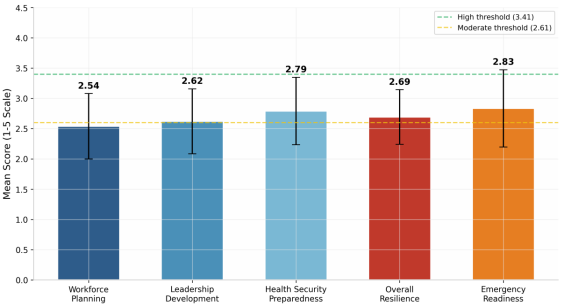
Table 2 presents the descriptive statistics for workforce resilience domain scores. The overall workforce resilience score was 2.69 +/- 0.45, indicating a moderate level of resilience. None of the domain scores reached the 'High' threshold (>=3.41). Health security preparedness recorded the highest mean score (2.79 +/- 0.56), followed by leadership development (2.62 +/- 0.54), and workforce planning (2.54 +/- 0.54).
Table 2. Workforce Resilience Domain Scores (n=384).
Domain | Mean | SD | Median | Range | Interp. |
Workforce Planning | 2.54 | 0.54 | 2.60 | 1.2-4.4 | Low-Mod |
Leadership Development | 2.62 | 0.54 | 2.60 | 1.2-4.2 | Low-Mod |
Health Security Preparedness | 2.79 | 0.56 | 2.80 | 1.0-4.2 | Moderate |
Overall Resilience | 2.69 | 0.45 | 2.69 | 1.7-3.9 | Moderate |
Job Satisfaction | 1.63 | 0.48 | 1.60 | 1.0-3.1 | Low |
Intention to Leave | 4.26 | 0.61 | 4.30 | 2.1-5.0 | Very High |
Emergency Readiness | 2.83 | 0.64 | 2.82 | 1.0-4.7 | Moderate |
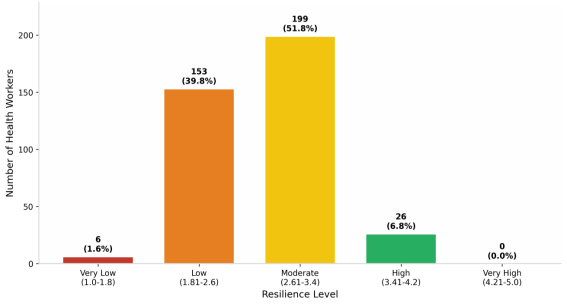
Figure 1. Distribution of workforce resilience scores among Nigerian public health workers (n=384).
Figure 1 illustrates the distribution of overall resilience scores. The majority of respondents (51.8%) scored in the moderate range, while 39.8% scored in the low range. Only 6.8% achieved high resilience scores, and none scored in the very high category. Notably, job satisfaction was very low (1.63 +/- 0.48), while intention to leave was very high (4.26 +/- 0.61), indicating a workforce under significant strain.
Figure 2. Mean scores across workforce resilience domains with standard deviation error bars (n=384). Dashed lines indicate interpretation thresholds.
3.1.3. Differences Across Demographic Groups
One-way ANOVA revealed no statistically significant differences in overall resilience scores across geopolitical zones (F = 0.595, p = 0.704), work settings (F = 0.163, p = 0.849), or employment types (F = 0.576, p = 0.563). Similarly, independent samples t-test showed no significant difference between male and female respondents (t = -0.095, p = 0.924). These findings suggest that workforce resilience deficits are systemic and pervasive across Nigeria's health system, rather than concentrated in specific regions or demographic groups.
3.1.4. Correlation Analysis
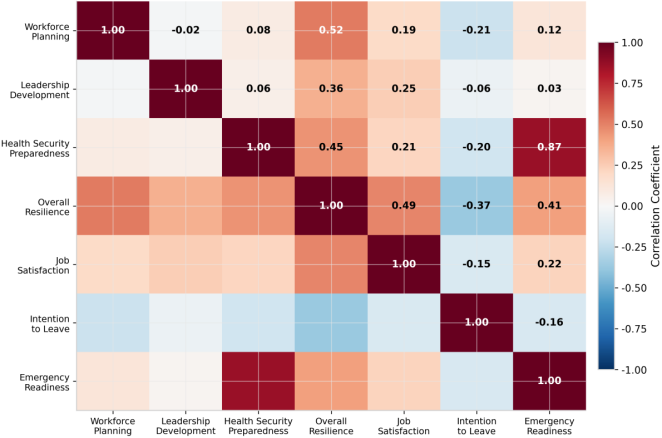
Figure 3 presents the Pearson correlation coefficients among key study variables. Overall resilience showed significant positive correlations with all three domain composites: workforce planning (r = 0.520, p < 0.001), leadership development (r = 0.357, p < 0.001), and health security preparedness (r = 0.449, p < 0.001). A strong positive correlation was found between resilience and job satisfaction (r = 0.491, p < 0.001), while a significant negative correlation was observed with intention to leave (r = -0.373, p < 0.001). Health security preparedness demonstrated a very strong correlation with emergency readiness (r = 0.866, p < 0.001).
Figure 3. Correlation matrix of workforce resilience variables (n=384). ***p < 0.001 for all correlations with |r| > 0.15.
3.1.5. Predictors of Workforce Resilience
Multiple linear regression analysis identified the three domain composites as significant independent predictors of overall workforce resilience (
Table 3). The model explained 55.8% of the variance in resilience scores (R-squared = 0.558, F(7,376) = 67.75, p < 0.001). Workforce planning was the strongest predictor (beta = 0.416, p < 0.001), followed by health security preparedness (beta = 0.312, p < 0.001) and leadership development (beta = 0.292, p < 0.001). Years of experience, workload adequacy, recent training, and digital tools access were not significant predictors.
Table 3. Multiple Linear Regression Predicting Workforce Resilience (n=384).
Predictor | B | SE | beta | t | p |
(Constant) | 0.049 | 0.141 | - | 0.346 | 0.729 |
Workforce Planning | 0.416 | 0.029 | 0.498 | 14.430 | <0.001 |
Leadership Development | 0.292 | 0.029 | 0.352 | 10.028 | <0.001 |
Health Security Preparedness | 0.312 | 0.028 | 0.389 | 11.089 | <0.001 |
Years of Experience | -0.001 | 0.002 | -0.009 | -0.258 | 0.797 |
Workload Adequacy | -0.011 | 0.013 | -0.013 | -0.835 | 0.404 |
Training (past 2 years) | 0.018 | 0.032 | 0.013 | 0.571 | 0.568 |
Digital Tools Access | -0.010 | 0.012 | -0.012 | -0.803 | 0.422 |
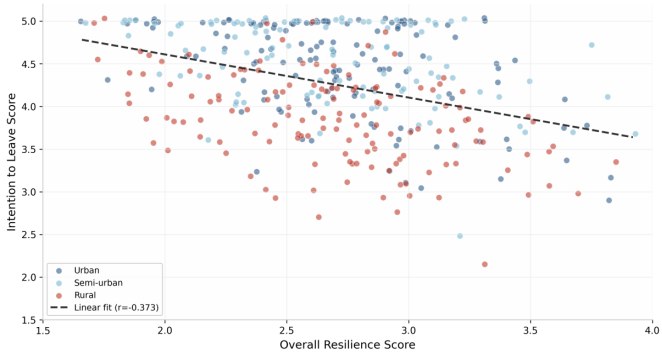
Figure 4. Scatter plot showing the relationship between workforce resilience and intention to leave among Nigerian public health workers (n=384), stratified by work setting.
3.2. Qualitative Findings
3.2.1. Thematic Analysis Overview
Thematic analysis of the 15 key informant interviews identified six overarching themes characterizing the challenges and opportunities for building a resilient public health workforce in Nigeria.
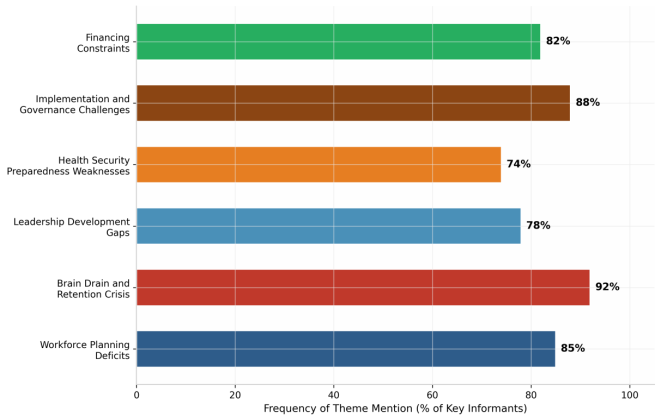
Figure 5 presents the frequency of theme mention across key informants.
Figure 5. Thematic analysis results showing the frequency of key challenge themes mentioned by key informants (n=15 KIIs).
3.2.2. Theme 1: Brain Drain and Retention Crisis
The most frequently cited challenge (92% of key informants) was the escalating brain drain crisis and associated retention challenges. Key informants described this as fundamentally undermining any workforce planning efforts:
Over 16,000 doctors have left Nigeria in the past five years. This is not just about remuneration - it is about working conditions, security, career progression, and hope. Our members do not see a future in the Nigerian health system.
President, National Association of Resident Doctors
The multidimensional nature of push factors was emphasized, with informants noting that financial incentives alone would be insufficient to reverse emigration trends. Security concerns, particularly in northern regions, inadequate diagnostic equipment, and lack of opportunities for specialization were identified as equally powerful drivers of health worker migration.
3.2.3. Theme 2: Implementation and Governance Challenges
Eighty-eight percent of key informants identified the gap between policy formulation and implementation as a critical barrier. The Nigerian health system's federal structure creates accountability fragmentation:
Nigeria has excellent health policies on paper. The challenge has always been implementation. The 2024 National Policy on Health Workforce Migration is commendable, but without dedicated funding and political will, it risks joining the long list of unimplemented policies.
WHO Country Office Representative
3.2.4. Theme 3: Workforce Planning Deficits
Eighty-five percent of key informants highlighted fundamental gaps in workforce planning capacity, rooted in the absence of reliable data systems:
We have not had a comprehensive national health workforce census since 2018. The data we rely on for planning is outdated, and this severely compromises our ability to project workforce needs. The migration crisis has accelerated beyond our modelling capacity.
Director of Health Planning, Federal Ministry of Health
3.2.5. Theme 4: Financing Constraints
Eighty-two percent of informants emphasized that inadequate and unpredictable financing represents a cross-cutting constraint:
Health workforce financing remains inadequate and unsustainable. The Abuja Declaration target of 15% of government expenditure on health has never been met. Without predictable financing, workforce planning becomes an academic exercise rather than an implementable strategy.
Director General, National Health Insurance Authority
3.2.6. Theme 5: Leadership Development Gaps
Seventy-eight percent of key informants identified critical gaps in leadership capacity:
There is a critical shortage of leadership training for health managers. Most of us were promoted based on clinical excellence or seniority, not leadership competence. We need structured leadership development programs specifically designed for the health sector.
Chief Medical Director, Tertiary Hospital
The qualitative data also revealed gender dimensions to leadership gaps:
Nursing is female-dominated but male-dominated at leadership levels. There are invisible barriers to women's advancement into senior leadership positions. We need deliberate mentorship programs and gender-responsive leadership development.
Director of Nursing Services
3.2.7. Theme 6: Health Security Preparedness Weaknesses
Seventy-four percent of key informants highlighted that health security preparedness remains uneven, with substantial capacity gaps at subnational levels:
Our emergency preparedness is event-driven rather than systematic. We respond to outbreaks but do not maintain readiness between events. The IHR 2024 amendments require sustained core capacities at all levels - this demands a paradigm shift in how we invest in workforce preparedness.
Emergency Operations Centre Coordinator
The One Health approach was described as more rhetoric than reality at the operational level:
Health security is still seen as the responsibility of NCDC and epidemiologists. But health security requires environmental health officers, veterinarians, laboratory scientists, and community health workers. The One Health approach remains more rhetoric than reality at the operational level.
Environmental Health Officer, LGA Level
4. Discussion
4.1. Summary of Key Findings
This nationally representative mixed-methods study provides the first comprehensive assessment of public health workforce resilience in Nigeria. Four key findings emerge that warrant policy attention. First, Nigeria's public health workforce exhibits moderate overall resilience (2.69/5.0), with the vast majority (91.4%) of health workers scoring in the low-to-moderate range. This finding confirms that workforce challenges extend far beyond numerical shortages to encompass systemic weaknesses in planning, leadership, and preparedness.
Second, workforce planning represents the weakest resilience domain (2.54/5.0) and the strongest predictor of overall resilience in regression analysis. This finding aligns with Abimbola and colleagues' observation that Nigeria lacks a national policy guiding the posting and transfer of health workers, resulting in gross inequity in workforce distribution
| [5] | Abimbola, S., Olanipekun, T., Schaaf, M., Negin, J., Jan, S., & Martiniuk, A. L. (2016). Where there is no policy: Governing the posting and transfer of primary health care workers in Nigeria. International Journal of Health Planning and Management, 32(2), e243-e261. https://doi.org/10.1002/hpm.2356 |
[5]
. The absence of a functional HRIS, identified consistently in qualitative interviews, emerges as the foundational infrastructure deficit undermining all planning efforts.
Third, leadership development (2.62/5.0) represents a critical but underinvested domain. The qualitative finding that clinical seniority rather than leadership competence drives promotion decisions resonates with Oleribe and colleagues' identification of poor healthcare leadership as the most common factor attributable to industrial actions by Nigerian health workers
| [17] | Oleribe, O. O., & Taylor-Robinson, S. D. (2016). Before Sustainable Development Goals (SDG): Why Nigeria failed to achieve the Millennium Development Goals (MDGs). Pan African Medical Journal, 24, 156.
https://doi.org/10.11604/pamj.2016.24.156.8447 |
[17]
. The gender dimension of leadership gaps, with female-majority cadres remaining male-dominated at leadership levels, demands targeted interventions.
Fourth, the absence of significant differences across geopolitical zones, gender, or work settings indicates that workforce resilience deficits are systemic and universal. This finding suggests that solutions must be national in scope rather than targeted to specific regions or demographic groups, while acknowledging that implementation strategies must be contextually adapted.
4.2. Implications for Workforce Planning
The study findings have direct implications for Nigeria's National Policy on Health Workforce Migration and the broader HRH strategic agenda. The low workforce planning scores suggest that the policy's well-intentioned incentives may be insufficient without parallel investments in planning infrastructure. Specifically, Nigeria should prioritize: (1) conducting a comprehensive national health workforce census within 12 months; (2) establishing functional HRIS at federal and state levels; (3) developing evidence-based staffing norms adapted to facility type and patient load; and (4) creating dedicated health workforce planning units in all 36 states.
The WHO's Health Workforce Planning and Projection tool, previously applied in Bauchi State with promising results
| [18] | World Health Organization. (2018). Health workforce strategic planning and management for UHC: Stories from the field - Nigeria. Geneva: WHO. |
[18]
, should be scaled nationally. The finding that no demographic group showed significantly higher resilience reinforces the comparative policy analysis conclusion that Nigeria's HRH challenges require 'strategic context-based policy solutions' rather than generic approaches
| [19] | Chukwu, O. A., & Essue, B. (2024). Addressing health workforce shortages as a precursor to attaining universal health coverage: A comparative policy analysis of Nigeria and Ghana. Social Science & Medicine, 355, 117095.
https://doi.org/10.1016/j.socscimed.2024.117095 |
[19]
.
4.3. Implications for Leadership Development
The NFELTP's success in developing field epidemiology capacity through experiential training
| [7] | Oyemakinde, A., Idris, J., Adeyemi, O., Ojo, O., Ugochukwu, C., Nguku, P., & Nsubuga, P. (2014). Building a public health workforce in Nigeria through experiential training. Pan African Medical Journal, 18 (Suppl 1), 9.
https://doi.org/10.11604/pamj.supp.2014.18.1.4920 |
[7]
provides a model that should be extended to health management and leadership. Nigeria should establish a National Health Leadership Academy offering tiered programs: foundational management skills for frontline supervisors, intermediate leadership development for middle managers, and advanced executive programs for senior health officials. Critically, leadership development must incorporate gender-transformative approaches, mentorship systems, and succession planning frameworks.
The qualitative finding that promotion practices prioritize clinical over managerial skills suggests a need to reform civil service rules to create distinct career tracks for clinician-managers. The UKHSA International Health Regulations Strengthening Project's laboratory leadership training initiative
| [20] | International Health Regulations Strengthening Project. (2023, December 6). Developing the next generation laboratory leaders' workforce. IHR Strengthening Project News. |
[20]
demonstrates how targeted leadership development can strengthen institutional capacity.
4.4. Implications for Health Security Preparedness
While health security preparedness recorded the highest domain score (2.79/5.0), the qualitative data revealed critical implementation gaps. The IHR 2024 amendments require Nigeria to establish National Coordinating Authorities and strengthen core capacities at subnational levels
| [9] | World Health Organization. (2024). International Health Regulations (2005) Fourth Edition. Geneva: WHO. |
[9]
. Current preparedness remains event-driven rather than systematic, with substantial variation between states.
Scaling the Frontline and Intermediate FETP programs to achieve at least one trained field epidemiologist per 200,000 population, as specified in the NAPHS
| [8] | Nigeria Centre for Disease Control. (2019). National Action Plan for Health Security: Federal Republic of Nigeria. Abuja: NCDC. |
[8]
, should be prioritized. The Kano State Public Health Security Bill provides a legislative template that other states should adapt
| [10] | Nigeria Health Watch. (2025, January 22). Kano's Public Health Security Bill sets a model for Nigeria's other states. Nigeria Health Watch. |
[10]
. Critically, health security preparedness must expand beyond epidemiologists to encompass environmental health officers, laboratory scientists, veterinarians, and community health workers in an integrated One Health approach.
4.5. Integration of Quantitative and Qualitative Findings
The convergent analysis reveals important convergence and divergence between quantitative and qualitative data. Both data sources confirmed moderate resilience with substantial deficits across all domains. The quantitative finding that workforce planning is the strongest resilience predictor aligns with qualitative accounts of planning infrastructure gaps. However, while quantitative data showed no demographic differences, qualitative interviews revealed important contextual variations - particularly security challenges in northern regions and infrastructure deficits in rural areas - that the survey instrument may not have captured adequately. The qualitative data also illuminated implementation barriers, governance weaknesses, and financing constraints that the quantitative instrument could not fully assess, reinforcing the value of mixed-methods approaches for health systems research.
4.6. Strengths and Limitations
This study offers several strengths. The nationally representative sample across all six geopolitical zones, three health system levels, and multiple professional cadres provides statistical generalizability rare in Nigerian health workforce research. The mixed-methods design allowed for both statistical rigor and contextual depth. The validated instrument with good psychometric properties enhances measurement reliability.
Limitations should be acknowledged. The cross-sectional design precludes causal inference. Self-reported data may introduce social desirability bias, particularly for items measuring perceived preparedness. The moderate Cronbach's alpha for some domains (0.81-0.84) suggests room for instrument refinement. Key informant interviews were conducted in English, potentially missing perspectives from non-English-speaking health workers. Finally, the study period (March-August 2024) may not capture seasonal variations in workforce perceptions.
5. Conclusion
This study provides robust empirical evidence that Nigeria's public health workforce operates at a moderate level of resilience, with substantial deficits in workforce planning, leadership development, and health security preparedness. The findings demonstrate that these deficits are systemic and pervasive rather than concentrated in specific regions or demographic groups, demanding comprehensive national responses.
Three strategic priorities emerge. First, Nigeria must invest in workforce planning infrastructure - particularly HRIS, workforce censuses, and evidence-based staffing norms - as the foundation for all other resilience-building efforts. Second, leadership development must be institutionalized through dedicated academies, gender-transformative programs, and civil service reform that values managerial competence alongside clinical excellence. Third, health security preparedness must transition from event-driven responses to sustained core capacities, aligned with IHR 2024 requirements and embedded at all health system levels through an integrated One Health approach.
The coincidence of the National Policy on Health Workforce Migration, the NAPHS implementation, and the IHR 2024 amendments creates an unprecedented policy window for coordinated action. The evidence presented in this study provides a roadmap for seizing this opportunity to build the resilient public health workforce that Nigeria urgently requires to achieve universal health coverage and health security.
6. Recommendations
6.1. For Policy Makers
1) Establish a National Health Workforce Observatory to conduct regular censuses, maintain real-time HRIS data, and produce annual workforce reports to inform evidence-based planning and policy decisions.
2) Allocate dedicated budget lines for workforce planning, leadership development, and health security preparedness in the national and state health budgets, with predictable multi-year financing.
3) Enact legislative frameworks at federal and state levels mandating health workforce planning, health security preparedness standards, and mandatory leadership training for health managers.
4) Implement comprehensive retention packages combining financial incentives (rural allowances, housing, hazard pay) with non-financial measures (career development, security provision, infrastructure improvement) aligned with the 2024 Migration Policy.
6.2. For Health System Managers
1) Develop facility-level workforce plans aligned with national and state strategies, incorporating annual needs assessments, competency mapping, and succession planning.
2) Establish mentorship programs pairing experienced leaders with emerging managers, with particular attention to supporting women into senior leadership roles.
3) Integrate health security preparedness into routine operations through regular training, simulation exercises, and maintenance of emergency supplies rather than event-driven preparation.
4) Create performance management systems that evaluate managerial and leadership competencies alongside clinical performance indicators.
6.3. For Development Partners
1) Support HRIS infrastructure development through technical assistance, technology transfer, and capacity building for data management and analytics.
2) Expand experiential training programs modeled on NFELTP to include health management, health security, and One Health competencies.
3) Facilitate knowledge exchange between Nigerian health leaders and counterparts in countries with successful workforce planning and leadership development systems.
Abbreviations
ANOVA | Analysis of Variance |
CI | Confidence Interval |
CVI | Content Validity Index |
EOC | Emergency Operations Centre |
FCT | Federal Capital Territory |
FETP | Field Epidemiology Training Programme |
HRH | Human Resources for Health |
HRIS | Human Resources Information System |
IHR | International Health Regulations |
KII | Key Informant Interview |
NAPHS | National Action Plan for Health Security |
NCDC | Nigeria Centre for Disease Control and Prevention |
NFELTP | Nigeria Field Epidemiology and Laboratory Training Programme |
NHIA | National Health Insurance Authority |
NIMR | Nigerian Institute of Medical Research |
SD | Standard Deviation |
UHC | Universal Health Coverage |
VIF | Variance Inflation Factor |
WHO | World Health Organization |
Author Contributions
Paul Imolemen Irabor: Conceptualization, Data curation, Formal Analysis, Funding acquisition, Investigation, Methodology, Project administration, Resources, Software, Supervision, Validation, Visualization, Writing – original draft, Writing – review & editing
Conflicts of Interest
The author declares no conflicts of interest.
References
| [1] |
World Health Organization. (2024). State of Health of the Nation Report 2024: Nigeria. Federal Ministry of Health, Nigeria.
|
| [2] |
World Health Organization. (2016). Global strategy on human resources for health: Workforce 2030. Geneva: WHO Press.
|
| [3] |
World Health Organization. (2023). Health Workforce Support and Safeguards List 2023. Geneva: WHO.
|
| [4] |
Ifediba, N. (2024, October 21). Nigeria has an ambitious plan for its health workforce, but can it afford it? Africa at LSE Blog.
|
| [5] |
Abimbola, S., Olanipekun, T., Schaaf, M., Negin, J., Jan, S., & Martiniuk, A. L. (2016). Where there is no policy: Governing the posting and transfer of primary health care workers in Nigeria. International Journal of Health Planning and Management, 32(2), e243-e261.
https://doi.org/10.1002/hpm.2356
|
| [6] |
Oleribe, O. O., Momoh, J., Uzochukwu, B. S., Mbofana, F., Adebiyi, A., et al. (2019). Identifying key challenges facing healthcare systems in Africa and potential solutions. International Journal of General Medicine, 12, 395-403.
https://doi.org/10.2147/IJGM.S223882
|
| [7] |
Oyemakinde, A., Idris, J., Adeyemi, O., Ojo, O., Ugochukwu, C., Nguku, P., & Nsubuga, P. (2014). Building a public health workforce in Nigeria through experiential training. Pan African Medical Journal, 18 (Suppl 1), 9.
https://doi.org/10.11604/pamj.supp.2014.18.1.4920
|
| [8] |
Nigeria Centre for Disease Control. (2019). National Action Plan for Health Security: Federal Republic of Nigeria. Abuja: NCDC.
|
| [9] |
World Health Organization. (2024). International Health Regulations (2005) Fourth Edition. Geneva: WHO.
|
| [10] |
Nigeria Health Watch. (2025, January 22). Kano's Public Health Security Bill sets a model for Nigeria's other states. Nigeria Health Watch.
|
| [11] |
Kruk, M. E., Myers, M. B., Varpilah, S. T., & Dahn, B. T. (2015). What is a resilient health system? Lessons from Ebola. The Lancet, 385(9980), 1910-1912.
https://doi.org/10.1016/S0140-6736(15)60755-3
|
| [12] |
Boniol, M., Kunjumen, T., Nair, T. S., Siyam, A., Campbell, J., & Diallo, K. (2022). The global health workforce stock and distribution in 2020 and 2030: A threat to equity and ‘universal’ health coverage? BMJ Global Health, 7(6), e009316.
https://doi.org/10.1136/bmjgh-2022-009316
|
| [13] |
World Health Organization. (2007). Everybody's business: Strengthening health systems to improve health outcomes: WHO's framework for action. Geneva: WHO Press.
|
| [14] |
Creswell, J. W., & Plano Clark, V. L. (2018). Designing and conducting mixed methods research (3rd ed.). SAGE Publications.
|
| [15] |
Cochran, W. G. (1977). Sampling techniques (3rd ed.). John Wiley & Sons.
|
| [16] |
Braun, V., & Clarke, V. (2006). Using thematic analysis in psychology. Qualitative Research in Psychology, 3(2), 77-101.
https://doi.org/10.1191/1478088706qp063oa
|
| [17] |
Oleribe, O. O., & Taylor-Robinson, S. D. (2016). Before Sustainable Development Goals (SDG): Why Nigeria failed to achieve the Millennium Development Goals (MDGs). Pan African Medical Journal, 24, 156.
https://doi.org/10.11604/pamj.2016.24.156.8447
|
| [18] |
World Health Organization. (2018). Health workforce strategic planning and management for UHC: Stories from the field - Nigeria. Geneva: WHO.
|
| [19] |
Chukwu, O. A., & Essue, B. (2024). Addressing health workforce shortages as a precursor to attaining universal health coverage: A comparative policy analysis of Nigeria and Ghana. Social Science & Medicine, 355, 117095.
https://doi.org/10.1016/j.socscimed.2024.117095
|
| [20] |
International Health Regulations Strengthening Project. (2023, December 6). Developing the next generation laboratory leaders' workforce. IHR Strengthening Project News.
|
Cite This Article
-
APA Style
Irabor, P. I. (2026). Building a Resilient Public Health Workforce in Nigeria: Strategic Approaches to Workforce Planning, Leadership Development, and Health Security Preparedness. Central African Journal of Public Health, 12(4), 249-260. https://doi.org/10.11648/j.cajph.20261204.14
 Copy
|
Copy
|
 Download
ACS Style
Irabor, P. I. Building a Resilient Public Health Workforce in Nigeria: Strategic Approaches to Workforce Planning, Leadership Development, and Health Security Preparedness. Cent. Afr. J. Public Health 2026, 12(4), 249-260. doi: 10.11648/j.cajph.20261204.14
Copy
|
Download
AMA Style
Irabor PI. Building a Resilient Public Health Workforce in Nigeria: Strategic Approaches to Workforce Planning, Leadership Development, and Health Security Preparedness. Cent Afr J Public Health. 2026;12(4):249-260. doi: 10.11648/j.cajph.20261204.14
Copy
|
Download
-
@article{10.11648/j.cajph.20261204.14,
  author = {Paul Imolemen Irabor},
  title = {Building a Resilient Public Health Workforce in Nigeria: Strategic Approaches to Workforce Planning, Leadership Development, and Health Security Preparedness},
  journal = {Central African Journal of Public Health},
  volume = {12},
  number = {4},
  pages = {249-260},
  doi = {10.11648/j.cajph.20261204.14},
  url = {https://doi.org/10.11648/j.cajph.20261204.14},
  eprint = {https://article.sciencepublishinggroup.com/pdf/10.11648.j.cajph.20261204.14},
  abstract = {Nigeria faces a critical shortage of health workers, with a density of 1.95 per 1,000 population, well below the WHO threshold of 4.45. This study assessed the resilience of Nigeria's public health workforce and identified strategic approaches to strengthening workforce planning, leadership development, and health security preparedness. A convergent parallel mixed-methods design was employed. A cross-sectional survey of 384 health workers across Nigeria's six geopolitical zones was conducted from March to August 2024, using a structured questionnaire measuring three resilience domains: workforce planning, leadership development, and health security preparedness. Fifteen key informant interviews with senior policymakers and health leaders provided qualitative depth. Data were analyzed using descriptive statistics, ANOVA, correlation analysis, multiple linear regression, and thematic analysis. The overall workforce resilience score was 2.69 +/- 0.45 (moderate level), with 91.4% of respondents scoring in the low-to-moderate range. Domain scores were: workforce planning (2.54 +/- 0.54), leadership development (2.62 +/- 0.54), and health security preparedness (2.79 +/- 0.56). Multiple regression analysis showed all three domains were significant predictors of overall resilience (R-squared = 0.558, p < 0.001), with workforce planning as the strongest predictor (beta = 0.416, p < 0.001). Resilience was positively correlated with job satisfaction (r = 0.491, p < 0.001) and negatively correlated with intention to leave (r = -0.373, p < 0.001). No significant differences were found across geopolitical zones, gender, or work setting. Qualitative analysis identified six key themes: brain drain and retention crisis (92% of key informants), implementation and governance challenges (88%), workforce planning deficits (85%), financing constraints (82%), leadership development gaps (78%), and health security preparedness weaknesses (74%). Nigeria's public health workforce demonstrates moderate resilience with significant deficits across all measured domains. Strategic investments in workforce planning infrastructure, leadership development programs, and sustained health security preparedness are urgently needed. The findings provide evidence-based recommendations for the implementation of Nigeria's National Policy on Health Workforce Migration and alignment with the IHR 2024 amendments and National Action Plan for Health Security.},
 year = {2026}
}
Copy
|
Download
-
TY  - JOUR
T1  - Building a Resilient Public Health Workforce in Nigeria: Strategic Approaches to Workforce Planning, Leadership Development, and Health Security Preparedness
AU  - Paul Imolemen Irabor
Y1  - 2026/08/20
PY  - 2026
N1  - https://doi.org/10.11648/j.cajph.20261204.14
DO  - 10.11648/j.cajph.20261204.14
T2  - Central African Journal of Public Health
JF  - Central African Journal of Public Health
JO  - Central African Journal of Public Health
SP  - 249
EP  - 260
PB  - Science Publishing Group
SN  - 2575-5781
UR  - https://doi.org/10.11648/j.cajph.20261204.14
AB  - Nigeria faces a critical shortage of health workers, with a density of 1.95 per 1,000 population, well below the WHO threshold of 4.45. This study assessed the resilience of Nigeria's public health workforce and identified strategic approaches to strengthening workforce planning, leadership development, and health security preparedness. A convergent parallel mixed-methods design was employed. A cross-sectional survey of 384 health workers across Nigeria's six geopolitical zones was conducted from March to August 2024, using a structured questionnaire measuring three resilience domains: workforce planning, leadership development, and health security preparedness. Fifteen key informant interviews with senior policymakers and health leaders provided qualitative depth. Data were analyzed using descriptive statistics, ANOVA, correlation analysis, multiple linear regression, and thematic analysis. The overall workforce resilience score was 2.69 +/- 0.45 (moderate level), with 91.4% of respondents scoring in the low-to-moderate range. Domain scores were: workforce planning (2.54 +/- 0.54), leadership development (2.62 +/- 0.54), and health security preparedness (2.79 +/- 0.56). Multiple regression analysis showed all three domains were significant predictors of overall resilience (R-squared = 0.558, p < 0.001), with workforce planning as the strongest predictor (beta = 0.416, p < 0.001). Resilience was positively correlated with job satisfaction (r = 0.491, p < 0.001) and negatively correlated with intention to leave (r = -0.373, p < 0.001). No significant differences were found across geopolitical zones, gender, or work setting. Qualitative analysis identified six key themes: brain drain and retention crisis (92% of key informants), implementation and governance challenges (88%), workforce planning deficits (85%), financing constraints (82%), leadership development gaps (78%), and health security preparedness weaknesses (74%). Nigeria's public health workforce demonstrates moderate resilience with significant deficits across all measured domains. Strategic investments in workforce planning infrastructure, leadership development programs, and sustained health security preparedness are urgently needed. The findings provide evidence-based recommendations for the implementation of Nigeria's National Policy on Health Workforce Migration and alignment with the IHR 2024 amendments and National Action Plan for Health Security.
VL  - 12
IS  - 4
ER  -
Copy
|
Download





 Share This Article
 Twitter
 Linked In
 Facebook