Abstract
Contemporary brand and product management is increasingly shaped by dynamic market conditions, digital transformation, and shifting consumer roles. Traditional debates such as standardization versus adaptation, firm control versus consumer co-creation, and product-centric versus experience-centric value creation remain central to understanding how brands build and sustain equity in complex environments. This study adopts a conceptual synthesis approach by critically reviewing and integrating ten major debates in branding and product management literature. It draws on foundational theories of brand equity, service-dominant logic, and contemporary perspectives on co-creation, digital branding, and platform ecosystems. The analysis contrasts competing theoretical positions and identifies emerging integrative themes. The findings indicate that most classical branding debates are no longer binary but exist along dynamic continuums influenced by digitalization, artificial intelligence, and evolving consumer participation. Brand success increasingly depends on “adaptive coherence,” where firms maintain a stable core identity while allowing flexible, context-specific expressions across channels and stakeholders. Digital ecosystems intensify consumer influence in brand meaning-making while also enabling firms to leverage data-driven personalization and algorithmic decision-making. The study contributes to branding theory by integrating fragmented debates into a unified conceptual framework and highlighting the transition from controlled brand management to co-created, data-enabled brand ecosystems. It offers managerial insights into balancing consistency and flexibility while addressing emerging ethical and strategic challenges in contemporary brand governance.
|
Published in
|
Innovation Business (Volume 1, Issue 3)
|
|
DOI
|
10.11648/j.ib.20260103.14
|
|
Page(s)
|
158-173 |
|
Creative Commons
|

This is an Open Access article, distributed under the terms of the Creative Commons Attribution 4.0 International License (http://creativecommons.org/licenses/by/4.0/), which permits unrestricted use, distribution and reproduction in any medium or format, provided the original work is properly cited.
|
|
Copyright
|
Copyright © The Author(s), 2026. Published by Science Publishing Group
|
Keywords
Brand Management, Product Management, Consumer Co-Creation, Brand Equity, Service-Dominant Logic, Digital Branding, Artificial Intelligence, Brand Ecosystems
1. Introduction
1.1. Background and Evolution of Product and Brand Management
Product and brand management represent two foundational and interconnected domains of marketing strategy that have evolved significantly in response to changing competitive conditions, technological developments, and shifting consumer expectations. Traditionally, product management was rooted in a product-centric philosophy that emphasized functional performance, quality improvement, innovation, and efficient market delivery. Firms primarily competed by developing superior products, optimizing product portfolios, managing product lifecycles, and responding to customer needs through incremental improvements. Within this perspective, products were viewed as tangible solutions designed to satisfy functional requirements and create customer value.
One of the most influential frameworks in product management has been the Product Life Cycle (PLC) model, which conceptualizes products as progressing through sequential stages of introduction, growth, maturity, and decline. The PLC framework provided managers with a structured approach for forecasting demand, allocating resources, and developing appropriate marketing strategies. However, contemporary market environments increasingly challenge the assumptions of linear product evolution. Digital technologies, agile development methods, platform ecosystems, and continuous innovation have transformed products from relatively stable market offerings into dynamic systems that evolve through frequent updates, user feedback, and ecosystem interactions.
In parallel, brand management has evolved from a narrow focus on product identification toward a strategic discipline concerned with differentiation, customer relationships, and the creation of symbolic meaning. Early branding practices primarily served to distinguish one seller’s products from competitors. However, as markets became increasingly competitive and functional product differences became easier to imitate, organizations began to recognize that sustainable advantage depended not only on product superiority but also on emotional connection, consumer trust, reputation, and brand identity
| [8] | Brown, T. J., Dacin, P. A., Pratt, M. G., & Whetten, D. A. (2006). Identity, intended image, construed image, and reputation: An interdisciplinary framework and suggested terminology. Journal of the Academy of Marketing Science, 34(2), 99–106.
https://doi.org/10.1177/0092070305284969 |
[8]
.
The emergence of brand equity theory represented a major shift in marketing thought by positioning brands as strategic intangible assets. The Resource-Based View (RBV) argues that firms achieve sustained competitive advantage through resources that are valuable, rare, difficult to imitate, and non-substitutable
Within this framework, strong brands represent strategic resources capable of generating customer loyalty, market differentiation, and long-term value creation.
| [1] | Aaker, D. A.(2020) Integrating Brand Communication and Brand Equity: a Systematic Review From 2000-2020. Journal of Content, Community and Communication. 2021; 13(7): 199-214. |
| [2] | Aaker, D. A. (1996). Building strong brands. Free Press. |
[1, 2]
conceptualized brand equity as a collection of assets linked to a brand name, including brand awareness, perceived quality, brand associations, and loyalty. Similarly,
| [26] | Keller, K. L. (2020). Consumer research insights on brands and branding: A JCR curation. Journal of Consumer Research, 46(5), 995–1001. |
[26]
Customer-Based Brand Equity (CBBE) framework emphasized that brand value exists in consumers’ knowledge structures, perceptions, and experiences.
Over time, the boundaries between product management and brand management have become increasingly interconnected. Modern organizations recognize that products are not merely functional objects but also carriers of experiences, meanings, and relationships. Product innovation without effective brand building may fail to generate sustained market value, while strong brands without continuous innovation may lose relevance. Consequently, competitive advantage increasingly depends on the integration of product capabilities, customer experiences, and brand meaning.
This evolution reflects a broader transformation in marketing thinking from managing products and brands as separate organizational activities toward understanding them as interconnected systems of value creation. Contemporary product and brand management therefore requires organizations to simultaneously manage innovation, customer relationships, symbolic meaning, and strategic adaptation.
1.2. Digital Transformation and Changing Marketing Environment
The contemporary marketing environment is characterized by rapid technological change, increasing market complexity, and the growing influence of digital ecosystems. Digital transformation has fundamentally altered how products are developed, launched, communicated, and experienced. Unlike traditional markets where firms maintained relatively strong control over product design and brand communication, digital environments enable continuous interaction among firms, consumers, platforms, algorithms, and communities
| [27] | Kotler, P., Kartajaya, H., & Setiawan, I. (2021). Marketing 5.0: Technology for humanity. Wiley. |
| [28] | Kotler, P., & Keller, K. L. (2022). Marketing management (16th ed.). Pearson. |
[27, 28]
.
A major consequence of digital transformation is the acceleration of innovation processes. Digital products, software platforms, and technology-enabled services no longer follow predictable development cycles; instead, they evolve through continuous improvement, experimentation, and real-time adaptation. This challenges traditional assumptions underlying conventional product management approaches and requires firms to develop dynamic capabilities that enable rapid learning and resource reconfiguration
| [41] | Teece, D. J. (2023). Dynamic capabilities and strategic management in the digital era. Industrial and Corporate Change, 32(2), 233–251. |
| [42] | Teece, D. J., Pisano, G., & Shuen, A. (1997). Dynamic capabilities and strategic management. Strategic Management Journal, 18(7), 509–533.
https://doi.org/10.1002/(SICI)1097-0266(199708)18:7<509::AID-SMJ882>3.0.CO;2-Z |
[41, 42]
.
Furthermore, platform-based business models have transformed the nature of value creation. In traditional marketing systems, firms were viewed as primary creators of value and consumers as recipients. However, digital ecosystems increasingly involve multiple actors including customers, developers, online communities, and technology providers in the creation and exchange of value. Service-Dominant Logic (SDL) challenges traditional goods-centered assumptions by arguing that value is not embedded within products but is co-created through interactions among actors
| [43] | Vargo, S. L., & Lusch, R. F. (2021). Service-dominant logic 2025. International Journal of Research in Marketing, 38(3), 623–636. |
[43]
.
Consumer behavior has also changed substantially due to digital connectivity. Consumers now actively participate in shaping brand meaning through online reviews, social media discussions, user-generated content, and digital communities. As a result, organizations have less absolute control over brand identity and must manage relationships, conversations, and stakeholder experiences rather than relying solely on traditional communication strategies
| [30] | Lemon, K. N., & Verhoef, P. C. (2016). Understanding customer experience throughout the customer journey. Journal of Marketing, 80(6), 69–96. https://doi.org/10.1509/jm.15.0420 |
[30]
.
The emergence of artificial intelligence (AI), big data analytics, and automation has introduced further transformation. AI enables firms to conduct predictive analysis, personalize customer experiences, optimize marketing decisions, and monitor brand performance in real time. However, these technologies also introduce strategic and ethical challenges related to privacy, transparency, authenticity, and the role of human creativity in marketing decision-making.
In addition, sustainability and social responsibility have become increasingly important components of contemporary brand strategy. Consumers increasingly evaluate brands based not only on product quality and price but also on environmental responsibility, ethical behavior, and alignment with social values. Consequently, brands are expected to create both economic and societal value. However, sustainability communication without genuine organizational commitment may damage credibility and trust.
Therefore, digital transformation has expanded the role of product and brand management beyond traditional activities. Contemporary firms must manage complex ecosystems where innovation, technology, consumer participation, and social expectations continuously interact
| [17] | Grewal, D., Hulland, J., Kopalle, P. K., & Karahanna, E. (2020). The future of technology and marketing: A multidisciplinary perspective. Journal of the Academy of Marketing Science, 48(1), 1–8. |
[17]
.
1.3. Theoretical Tensions in Contemporary Product and Brand Management
The transformation of product and brand management has created several unresolved theoretical tensions that challenge traditional marketing assumptions. These debates reflect competing explanations regarding how firms create value, maintain competitive advantage, and manage relationships with consumers.
The first tension concerns brand stability versus organizational adaptability. The Resource-Based View emphasizes the strategic importance of valuable intangible resources, particularly brand equity, reputation, and customer relationships
. Strong brands provide stability, differentiation, and protection against competitive imitation. However, Dynamic Capabilities Theory argues that competitive advantage in rapidly changing environments depends on continuous innovation, learning, and resource transformation
| [41] | Teece, D. J. (2023). Dynamic capabilities and strategic management in the digital era. Industrial and Corporate Change, 32(2), 233–251. |
| [42] | Teece, D. J., Pisano, G., & Shuen, A. (1997). Dynamic capabilities and strategic management. Strategic Management Journal, 18(7), 509–533.
https://doi.org/10.1002/(SICI)1097-0266(199708)18:7<509::AID-SMJ882>3.0.CO;2-Z |
[41, 42]
. This creates a tension between protecting established brand assets and continuously adapting to market changes.
The second tension involves product innovation versus brand equity as the primary source of competitive advantage. Product-oriented perspectives emphasize technological superiority, functionality, and innovation capability, whereas branding perspectives highlight emotional connection, symbolic meaning, and consumer loyalty. Contemporary markets suggest that sustainable advantage requires integration between innovative products and strong brand identities rather than reliance on either factor alone.
The third tension relates to managerial control versus consumer co-creation. Traditional branding approaches assume that organizations create brand identities and communicate desired meanings to consumers. However, SDL argues that brand value emerges through interactions among firms, customers, and other stakeholders
| [37] | Ramaswamy, V., & Ozcan, K. (2018). What Is Co-Creation? An Interactional Creation Framework and Its Implications for Value Creation. Journal of Business Research, 84, 196-205.
https://doi.org/10.1016/j.jbusres.2017.11.027 |
| [43] | Vargo, S. L., & Lusch, R. F. (2021). Service-dominant logic 2025. International Journal of Research in Marketing, 38(3), 623–636. |
[37, 43]
. Digital platforms have intensified this shift by enabling consumers to actively influence brand perceptions and meanings.
The fourth tension concerns human judgment versus artificial intelligence-driven decision-making. While AI improves efficiency, prediction, and personalization, concerns remain regarding whether algorithms can replace human creativity, empathy, cultural understanding, and ethical judgment. This creates a need for hybrid approaches that combine technological capabilities with human strategic oversight.
The fifth tension involves economic objectives versus social legitimacy. Traditional marketing theories have emphasized profitability, customer satisfaction, and competitive positioning. Contemporary perspectives increasingly emphasize sustainability, purpose, and stakeholder responsibility. Organizations must therefore balance financial performance with broader societal expectations.
These tensions demonstrate that product and brand management are no longer governed by a single dominant logic. Instead, contemporary marketing operates within a complex system where firms must balance continuity and change, innovation and identity, control and collaboration, technology and humanity, and profitability and responsibility
| [4] | Albert, S., & Whetten, D. A. (1985). Organizational identity. In L. L. Cummings & B. M. Staw (Eds.), Research in organizational behavior (Vol. 7, pp. 263–295). JAI Press. |
[4]
.
1.4. Integrated Research Gap, Purpose, Research Questions, Objectives, and Contribution
Although extensive research has examined individual aspects of product and brand management, existing knowledge remains fragmented across separate theoretical domains. Studies on brand equity primarily emphasize consumer perceptions and brand value, innovation research focuses on technological development and adoption, digital marketing literature examines platform interactions, and sustainability research explores ethical and societal dimensions of branding. However, limited conceptual integration exists regarding how these perspectives collectively explain contemporary product and brand management in dynamic, technology-driven environments.
Furthermore, traditional theories often reflect assumptions of relatively stable markets, firm-controlled value creation, and linear product evolution. These assumptions have become increasingly challenged by digital ecosystems, artificial intelligence, consumer co-creation, and sustainability expectations. Existing literature provides limited explanation of how organizations simultaneously maintain brand consistency while adapting products, technologies, and stakeholder relationships. Therefore, a comprehensive theoretical synthesis is required to understand how firms navigate competing demands and create sustainable value in contemporary marketing ecosystems.
To address this gap, this study aims to critically evaluate contemporary debates in product and brand management by synthesizing competing theoretical perspectives and developing an integrated conceptual understanding of value creation. The study seeks to answer three overarching research questions:
1) How do contemporary market transformations challenge traditional theories and practices of product and brand management?
2) How can competing perspectives on product innovation, brand equity, consumer co-creation, artificial intelligence, sustainability, and brand purpose be integrated into a coherent conceptual framework?
3) What strategic implications emerge for organizations seeking to build and sustain competitive advantage in increasingly complex marketing environments?
To address these questions, the study pursues the following objectives:
1) To examine major contemporary debates and theoretical perspectives shaping product and brand management.
2) To critically compare competing viewpoints related to innovation, brand equity, consumer participation, artificial intelligence, sustainability, and purpose-driven branding.
3) To analyze the implications of these debates for value creation, competitive advantage, and strategic brand management.
4) To develop an integrated conceptual framework explaining the interaction between products, brands, consumers, technologies, and societal forces.
5) To identify theoretical contributions, managerial implications, and future research directions emerging from the synthesis.
This study contributes to marketing scholarship by integrating previously fragmented theoretical perspectives including the Resource-Based View, Dynamic Capabilities Theory, Customer-Based Brand Equity Theory, Service-Dominant Logic, Diffusion of Innovations Theory, Crisis Communication Theory, and Social Identity Theory into a unified conceptual framework. The study advances the argument that contemporary competitive advantage depends not solely on superior products or powerful brands but on adaptive coherence, defined as the ability of organizations to maintain a consistent strategic identity while continuously adapting products, technologies, and stakeholder relationships in response to changing market conditions.
By offering an integrated perspective on ten contemporary debates in product and brand management, this study contributes to both theory and practice by explaining how organizations can navigate complexity and create sustainable value within increasingly interconnected marketing ecosystems.
2. Conceptual and Theoretical Foundations
Contemporary debates in product and brand management are rooted in several interrelated theoretical traditions in marketing and strategic management. These include the Resource-Based View (RBV), Dynamic Capabilities Theory, Customer-Based Brand Equity (CBBE), Service-Dominant Logic (SDL), Diffusion of Innovations Theory, and emerging perspectives on digital ecosystems, artificial intelligence, and sustainability-oriented marketing. This section synthesizes these theories to establish the conceptual foundation for analyzing the ten debates.
2.1. Resource-Based View and the Strategic Role of Brands
The Resource-Based View (RBV) conceptualizes firms as bundles of resources and capabilities that generate sustained competitive advantage when they are valuable, rare, inimitable, and non-substitutable
. Within this framework, brands are considered strategic intangible assets that accumulate value over time through consistent positioning, customer experience, and symbolic meaning.
Strong brands such as Apple, Coca-Cola, and Nike exemplify RBV logic, where brand equity functions as a barrier to imitation and a source of pricing power.
| [1] | Aaker, D. A.(2020) Integrating Brand Communication and Brand Equity: a Systematic Review From 2000-2020. Journal of Content, Community and Communication. 2021; 13(7): 199-214. |
| [2] | Aaker, D. A. (1996). Building strong brands. Free Press. |
[1, 2]
further reinforces this view by conceptualizing brand equity as a set of assets and liabilities linked to a brand name that add to or subtract from firm value. These include brand loyalty, perceived quality, brand associations, and brand awareness.
However, RBV has been criticized for its relatively static nature. It assumes resource stability in environments that are increasingly dynamic and technology-driven. This limitation becomes particularly important in digital markets where competitive advantage is not only derived from resource ownership but also from the ability to continuously reconfigure resources
| [24] | Kapferer, J.-N. (2012). The new strategic brand management: Advanced insights and strategic thinking (5th ed.). Kogan Page. |
[24]
.
2.2. Dynamic Capabilities and Continuous Innovation
Dynamic Capabilities Theory extends RBV by emphasizing the firm’s ability to integrate, build, and reconfigure internal and external competencies in response to rapidly changing environments
| [41] | Teece, D. J. (2023). Dynamic capabilities and strategic management in the digital era. Industrial and Corporate Change, 32(2), 233–251. |
| [42] | Teece, D. J., Pisano, G., & Shuen, A. (1997). Dynamic capabilities and strategic management. Strategic Management Journal, 18(7), 509–533.
https://doi.org/10.1002/(SICI)1097-0266(199708)18:7<509::AID-SMJ882>3.0.CO;2-Z |
[41, 42]
. Unlike RBV, which focuses on resource possession, dynamic capabilities focus on resource transformation.
In product and brand management, this theory highlights the importance of continuous product innovation, rapid iteration, and strategic flexibility. Firms that rely solely on strong brand equity without innovation risk stagnation. Conversely, firms that innovate without brand strength may fail to capture long-term value.
Therefore, sustainable competitive advantage emerges from the interaction between brand stability (RBV) and innovation adaptability (Dynamic Capabilities).
2.3. Evolution of Brand Equity Theory
Brand equity has evolved as a central construct in marketing theory. Keller’s Customer-Based Brand Equity (CBBE) model defines brand equity as the differential effect of brand knowledge on consumer response to marketing activities
| [26] | Keller, K. L. (2020). Consumer research insights on brands and branding: A JCR curation. Journal of Consumer Research, 46(5), 995–1001. |
[26]
. In this view, brand value resides in consumer perceptions rather than in firm-controlled assets.
Aaker’s model complements this by emphasizing multidimensional brand assets such as loyalty, awareness, and associations
| [1] | Aaker, D. A.(2020) Integrating Brand Communication and Brand Equity: a Systematic Review From 2000-2020. Journal of Content, Community and Communication. 2021; 13(7): 199-214. |
[1]
. Together, these models position brand equity as both psychological (consumer-based) and strategic (firm-managed).
However, contemporary perspectives challenge the linear causality implied in traditional models. Behavioral economics suggests that brand equity is also reinforced by cognitive biases such as familiarity, social proof, and loss aversion. This creates a recursive loop where brand equity is both an outcome of market success and a driver of future performance.
2.4. Service-Dominant Logic and Value Co-Creation
Service-Dominant Logic (SDL) represents a fundamental paradigm shift in marketing by moving away from the traditional Goods-Dominant (G-D) Logic, which views value as embedded in products, toward a service-centered perspective in which value is co-created through interactions among multiple actors. According to Vargo and Lusch
| [43] | Vargo, S. L., & Lusch, R. F. (2021). Service-dominant logic 2025. International Journal of Research in Marketing, 38(3), 623–636. |
[43]
, service, defined as the application of specialized knowledge and skills for the benefit of another, is the fundamental basis of exchange. Under SDL, firms do not create value independently; rather, they offer value propositions, while actual value is realized through customers' use and integration of resources, referred to as value-in-use rather than value-in-exchange
| [35] | Payne, A. F., Storbacka, K., & Frow, P. (2008). Managing the co-creation of value. Journal of the Academy of Marketing Science, 36(1), 83–96.
https://doi.org/10.1007/s11747-007-0070-0 |
| [43] | Vargo, S. L., & Lusch, R. F. (2021). Service-dominant logic 2025. International Journal of Research in Marketing, 38(3), 623–636. |
[35, 43]
.
A core principle of SDL is that customers are operant resources, meaning they actively participate in creating value instead of merely consuming products. Value emerges through the integration of resources, competencies, experiences, and knowledge contributed by firms, customers, suppliers, and other stakeholders. Consequently, organizations become facilitators of value creation rather than sole producers of value
| [35] | Payne, A. F., Storbacka, K., & Frow, P. (2008). Managing the co-creation of value. Journal of the Academy of Marketing Science, 36(1), 83–96.
https://doi.org/10.1007/s11747-007-0070-0 |
| [43] | Vargo, S. L., & Lusch, R. F. (2021). Service-dominant logic 2025. International Journal of Research in Marketing, 38(3), 623–636. |
[35, 43]
.
Recent developments in SDL further emphasize that value co-creation occurs within service ecosystems, which consist of interconnected actors linked through shared institutions, technologies, and resource integration. Akaka, et. al, argue that value creation should be understood from an actor-to-actor (A2A) perspective, where all participants including firms, customers, technology providers, platform owners, governments, and communities—continuously integrate resources and collaboratively create value within dynamic ecosystems. Their work highlights that institutional arrangements, social norms, digital infrastructures, and technological platforms shape how actors interact and jointly generate value. This ecosystem perspective extends SDL beyond the traditional firm–customer relationship and recognizes that value is continually negotiated and recreated through networks of interacting stakeholders
| [3] | Akaka, M. A., Vargo, S. L., & Lusch, R. F. (2021). The complexity of context: A service ecosystems approach. Journal of Service Research, 24(2), 147–162. |
[3]
.
The SDL perspective is particularly relevant in digital environments where consumers actively participate in branding through online reviews, social media engagement, electronic word-of-mouth, online communities, and user-generated content. These interactions enable customers to influence product development, service innovation, and brand reputation. Consequently, firms no longer exercise complete control over brand meaning; instead, brands evolve through ongoing interactions among organizations, consumers, influencers, and digital platforms
| [37] | Ramaswamy, V., & Ozcan, K. (2018). What Is Co-Creation? An Interactional Creation Framework and Its Implications for Value Creation. Journal of Business Research, 84, 196-205.
https://doi.org/10.1016/j.jbusres.2017.11.027 |
[37]
. Digital platforms such as social media, e-commerce marketplaces, and AI-enabled applications facilitate continuous dialogue, collaboration, and resource integration, making value co-creation an ongoing process rather than a one-time transaction.
The growing adoption of artificial intelligence (AI) and digital technologies has further strengthened SDL. AI-powered recommendation systems, conversational agents, predictive analytics, and generative AI enhance personalized interactions and facilitate continuous engagement between organizations and customers. Human–AI collaboration enables firms to integrate customer insights with organizational capabilities, improving service quality, innovation, and customer experiences
| [21] | Huang, M.-H., & Rust, R. T. (2021). A strategic framework for artificial intelligence in marketing. Journal of the Academy of Marketing Science, 49(1), 30–50. |
[21]
. Thus, digital technologies function as important operant resources that support value co-creation across service ecosystems.
In the context of digital marketing capability development, SDL provides a robust theoretical foundation for explaining how firms create competitive advantage under resource constraints. Organizations with strong digital marketing capabilities facilitate customer participation through interactive digital platforms, personalized communication, online communities, and data-driven engagement strategies. These capabilities enable firms to integrate customer knowledge, foster collaborative innovation, and strengthen long-term relationships. Consequently, digital marketing capability enhances value co-creation, customer engagement, brand equity, and organizational performance, making SDL an appropriate theoretical lens for understanding capability development in digital markets.
2.5. Diffusion of Innovations and Digital Market Dynamics
Rogers’ Diffusion of Innovations Theory
| [38] | Rogers, E. M. (2003). Diffusion of innovations (5th ed.). Free Press. |
[38]
explains how innovations spread through social systems over time based on adopter categories (innovators, early adopters, early majority, etc.). This theory remains relevant in explaining adoption patterns but assumes relatively stable product definitions.
In digital markets, however, products are continuously updated, modified, and redefined. Software applications, digital platforms, and AI systems do not follow static diffusion paths but rather iterative adoption cycles. Therefore, diffusion theory must be integrated with agile and continuous innovation models to explain modern product evolution.
2.6. Disruptive Innovation and Market Transformation
Disruptive Innovation Theory explains how simpler, more affordable, and accessible innovations can reshape industries by initially serving overlooked or underserved market segments before gradually challenging established market leaders
| [9] | Christensen, C. M. (1997). The innovator's dilemma: When new technologies cause great firms to fail. Harvard Business School Press. |
| [10] | Christensen, C. M., Raynor, M. E., & McDonald, R. (2015). What is disruptive innovation? Harvard Business Review, 93(12), 44–53. |
[9, 10]
. Although originally developed to explain technological disruption, the theory has become increasingly relevant in the context of digital transformation, platform economies, and AI-enabled business models, where innovation occurs through rapid experimentation, ecosystem orchestration, and continuous value creation rather than through incremental product improvements
| [19] | Hein, A., Schreieck, M., Riasanow, T., Soto Setzke, D., Wiesche, M., Böhm, M., & Krcmar, H. (2020). Digital platform ecosystems. Electronic Markets, 30(1), 87–98. |
| [23] | Jacobides, M. G., Cennamo, C., & Gawer, A. (2021). Towards a theory of ecosystems. Strategic Management Journal, 42(1), 15–37. |
[19, 23]
.
From a brand management perspective, disruptive innovation creates a strategic tension between leveraging existing brand equity and developing new market opportunities. Established brands benefit from accumulated trust, customer loyalty, and market recognition, which can accelerate the adoption of innovative products and reduce market uncertainty. However, introducing disruptive offerings under an existing brand may dilute premium positioning, confuse consumers, or cannibalize established product portfolios. Conversely, launching innovations through separate brands or sub-brands allows organizations to experiment with new technologies and business models while protecting the reputation and positioning of the parent brand. This strategic dilemma reflects the broader challenge of balancing brand continuity with innovation flexibility in rapidly evolving markets.
Digital platforms and ecosystem-based competition further intensify these trade-offs by enabling new entrants to leverage network effects, data-driven personalization, and collaborative innovation to challenge incumbent firms without relying on traditional resource advantages
| [19] | Hein, A., Schreieck, M., Riasanow, T., Soto Setzke, D., Wiesche, M., Böhm, M., & Krcmar, H. (2020). Digital platform ecosystems. Electronic Markets, 30(1), 87–98. |
| [23] | Jacobides, M. G., Cennamo, C., & Gawer, A. (2021). Towards a theory of ecosystems. Strategic Management Journal, 42(1), 15–37. |
[19, 23]
. Consequently, disruptive innovation should be viewed not only as a technological phenomenon but also as a strategic capability that requires organizations to align innovation portfolios, brand architecture, and dynamic capabilities. Firms that successfully integrate disruptive innovation with coherent brand strategies are better positioned to sustain competitive advantage while adapting to technological change and evolving customer expectations
| [41] | Teece, D. J. (2023). Dynamic capabilities and strategic management in the digital era. Industrial and Corporate Change, 32(2), 233–251. |
| [42] | Teece, D. J., Pisano, G., & Shuen, A. (1997). Dynamic capabilities and strategic management. Strategic Management Journal, 18(7), 509–533.
https://doi.org/10.1002/(SICI)1097-0266(199708)18:7<509::AID-SMJ882>3.0.CO;2-Z |
[41, 42]
.
2.7. Sustainability and Purpose-Driven Branding
Sustainability has evolved from a peripheral corporate responsibility initiative into a core strategic dimension of contemporary brand management. Rather than serving merely as a communication tool, sustainability is increasingly recognized as a source of competitive advantage, stakeholder trust, and long-term value creation. The shared value perspective proposed by Porter and Kramer
| [36] | Porter, M. E., & Kramer, M. R. (2011). Creating shared value. Harvard Business Review, 89(1–2), 62–77. |
[36]
suggests that organizations can simultaneously generate economic and societal value by addressing social and environmental challenges through their business strategies. More recent research extends this perspective by arguing that sustainability has become integral to brand differentiation, legitimacy, and resilience in increasingly transparent and digitally connected markets
| [18] | Gupta, S., Czinkota, M., Melewar, T. C., & Foroudi, P. (2023). Sustainable branding and ESG: New perspectives for marketing. Journal of Business Research, 157, 113567. |
| [29] | Kumar, V., & Christodoulopoulou, A. (2021). Sustainability and branding: A research agenda. Journal of Business Research, 122, 878–885. |
[18, 29]
.
Despite these opportunities, sustainability branding remains vulnerable to credibility challenges, particularly when firms' environmental or social claims are perceived as symbolic rather than substantive. Greenwashing and purpose-washing can undermine consumer trust and damage brand equity if sustainability communications are not supported by authentic organizational practices. From a signaling perspective, sustainability initiatives function as credible market signals only when they are transparent, verifiable, and consistently reflected in organizational behavior. Likewise, the brand purpose literature emphasizes that purpose-driven brands derive legitimacy only when their stated values are aligned with genuine corporate actions, stakeholder engagement, and responsible governance.
Consequently, sustainability and brand purpose should be viewed not as promotional messages but as strategic legitimacy mechanisms that strengthen organizational credibility, stakeholder relationships, and long-term brand resilience. In contemporary marketing ecosystems, authentic sustainability has become a fundamental capability for maintaining competitive advantage and sustaining consumer trust in dynamic and socially conscious markets.
2.8. Artificial Intelligence and Algorithmic Branding
The integration of artificial intelligence into marketing systems has transformed how brands are managed. AI enables predictive analytics, hyper-personalization, automated segmentation, and real-time brand monitoring.
The integration of artificial intelligence into marketing systems has fundamentally reshaped brand management by enabling predictive analytics, hyper personalization, automated segmentation, and real time monitoring of consumer sentiment. These capabilities allow firms to operate with unprecedented efficiency and precision, tailoring brand interactions at scale and responding instantly to market dynamics. Yet, this technological shift introduces theoretical tensions. While AI enhances decision accuracy and operational speed, it raises concerns about authenticity, privacy, and emotional detachment. From the lens of relationship marketing theory, long term brand loyalty depends on trust, empathy, and relational depth qualities that cannot be fully automated by algorithms. Thus, AI should be understood not as a replacement for human centered brand management but as an augmentation layer that strengthens analytical and operational capabilities while leaving the relational, ethical, and emotional dimensions firmly in the human domain. This hybrid approach ensures that brands remain both technologically adaptive and authentically connected to consumers. However, this technological shift introduces theoretical tensions. While AI enhances efficiency and decision accuracy, it raises concerns about authenticity, privacy, and emotional detachment. Relationship marketing theory emphasizes that long-term brand loyalty depends on trust, empathy, and relational depth, which cannot be fully automated
| [33] | Morhart, F., Malär, L., Guèvremont, A., Girardin, F., & Grohmann, B. (2021). Brand authenticity: An integrative framework and future research agenda. Journal of Brand Management, 28(3), 223–239. |
| [34] | Napoli, J., Dickinson-Delaporte, S., & Beverland, M. B. (2021). Brand authenticity: What consumers really perceive. Journal of Business Research, 134, 555–566. |
[33, 34]
.
Thus, AI represents an augmentation layer rather than a replacement of human-centered brand management.
2.9. Crisis Communication and Brand Resilience
Crisis Communication Theory explains how organizations manage reputational threats through strategic response mechanisms such as denial, apology, or corrective action
| [11] | Coombs, W. T. (2007). Protecting organization reputations during a crisis: The development and application of Situational Crisis Communication Theory. Corporate Reputation Review, 10(3), 163–176. https://doi.org/10.1057/palgrave.crr.1550049 |
[11]
. Attribution Theory further explains how consumers assign responsibility based on perceived controllability and severity.
Strong brands often benefit from reputational resilience, allowing them to recover more effectively from failures. However, repeated crises or perceived dishonesty can erode even strong brand equity over time.
Therefore, brand resilience is not only structural but also perceptual, shaped by prior brand strength and crisis response effectiveness.
2.10. Integrated Theoretical Perspective
Taken together, these theories reveal that product and brand management are no longer governed by a single dominant logic. Instead, they operate within a multi-theoretical environment characterized by tension between:
1) Stability (RBV) vs. change (Dynamic Capabilities).
2) Control (traditional branding) vs. co-creation (SDL).
3) Linear models (PLC, diffusion) vs. iterative systems (agile, digital platforms).
4) Human decision-making vs. algorithmic intelligence.
5) Economic value vs. social purpose.
This fragmentation highlights the need for integrative conceptual frameworks capable of explaining how firms navigate complexity in modern marketing ecosystems.
3. Methodology
This study adopts a qualitative conceptual review approach aimed at critically synthesizing and integrating existing theoretical and empirical literature on product and brand management. Rather than generating primary data, the study develops conceptual insights through structured interpretation of existing knowledge, consistent with established guidance for conceptual and literature-based research
| [22] | Jaakkola, E. (2020). Designing conceptual articles: Four approaches. AMS Review, 10(1–2), 18–26.
https://doi.org/10.1007/s13162-020-00161-0 |
| [31] | MacInnis, D. J. (2011). A framework for conceptual contributions in marketing. Journal of Marketing, 75(4), 136–154.
https://doi.org/10.1509/jmkg.75.4.136 |
| [44] | Webster, J., & Watson, R. T. (2002). Analyzing the past to prepare for the future: Writing a literature review. MIS Quarterly, 26(2), xiii–xxiii. |
[22, 31, 44]
.
3.1. Research Design
The research follows a qualitative, interpretive conceptual review design, appropriate for examining complex theoretical debates that lack empirical consensus. This design is particularly suited for domains such as branding and product management, where constructs are multi-dimensional, socially constructed, and evolving over time.
The objective is not hypothesis testing but theory synthesis, comparison, and integration across competing frameworks.
3.2. Literature Selection Strategy
The literature was selected based on three inclusion criteria:
1) Theoretical relevance: Articles and books addressing product management, brand management, innovation, digital marketing, and consumer behavior.
2) Academic rigor: Peer-reviewed journal articles from leading marketing and management journals (e.g., Journal of Marketing, IJRM, Journal of the Academy of Marketing Science).
3) Theoretical contribution: Works introducing, extending, or challenging major theoretical frameworks such as RBV, Dynamic Capabilities, CBBE, SDL, and Disruptive Innovation Theory.
Foundational conceptual works were prioritized over purely empirical studies to ensure theoretical depth.
3.3. Analytical Procedure
The analysis followed a structured three-stage process:
Stage 1: Theoretical Mapping
Key theories were identified and categorized into domains:
1) Strategic management (RBV, Dynamic Capabilities)
2) Marketing strategy (CBBE, brand equity theory)
3) Innovation (Diffusion of Innovations, Disruptive Innovation)
4) Consumer theory (SDL, Social Identity Theory)
5) Crisis and sustainability frameworks
Stage 2: Thematic Synthesis
Recurring themes were extracted across literature, including:
1) Product vs brand tension
2) Linear vs dynamic market models
3) Firm control vs consumer co-creation
4) Human vs AI decision-making
5) Profit vs purpose orientation
Stage 3: Comparative Interpretation
Theories were compared based on:
1) Explanatory power
2) Contextual relevance (digital vs traditional markets)
3) Managerial applicability
4) Limitations and contradictions
3.4. Research Quality and Rigor
To ensure conceptual rigor, the study applied the following principles:
1) Theoretical triangulation: Integration of multiple theories across disciplines.
2) Iterative refinement: Continuous comparison and refinement of conceptual categories.
3) Transparency in synthesis: Explicit explanation of how theories were grouped and interpreted.
4) Critical interpretation: Emphasis on contradictions and tensions rather than description alone.
3.5. Limitations of the Methodology
As a conceptual review, the study does not include primary empirical validation. Therefore, findings are interpretive and theory-driven rather than statistically generalizable. However, this limitation is consistent with the purpose of IJRM-style conceptual work, which prioritizes theory development over empirical testing.
4. Discussion of Ten Contemporary Debates
4.1. Product Versus Brand as the Primary Source of Competitive Advantage
One of the longest-standing debates in marketing concerns whether sustainable competitive advantage primarily originates from superior products or from strong brands. Traditional product management perspectives argue that innovation, technological superiority, product quality, and functional performance are the principal drivers of customer value. This perspective assumes that organizations achieve market success by continuously improving product attributes and introducing innovations that satisfy changing customer needs. Christensen's theory of disruptive innovation further supports this position by demonstrating how technological advances enable firms to reshape markets and create new customer segments.
In contrast, branding scholars argue that products can be imitated relatively quickly, whereas strong brands create intangible assets that competitors find considerably more difficult to replicate. According to the Resource-Based View (RBV), brands constitute strategic resources because they are valuable, rare, difficult to imitate, and non-substitutable, thereby generating sustained competitive advantage
.
| [1] | Aaker, D. A.(2020) Integrating Brand Communication and Brand Equity: a Systematic Review From 2000-2020. Journal of Content, Community and Communication. 2021; 13(7): 199-214. |
[1]
similarly conceptualizes brand equity as a strategic asset composed of brand awareness, perceived quality, brand associations, and customer loyalty. These assets create switching barriers, reduce consumers' perceived purchase risk, and allow firms to command premium prices.
However, neither perspective independently explains competitive success in highly dynamic digital markets. Dynamic Capabilities Theory argues that firms cannot rely solely on accumulated brand equity because changing technologies, customer expectations, and competitive environments require continuous adaptation
| [41] | Teece, D. J. (2023). Dynamic capabilities and strategic management in the digital era. Industrial and Corporate Change, 32(2), 233–251. |
| [42] | Teece, D. J., Pisano, G., & Shuen, A. (1997). Dynamic capabilities and strategic management. Strategic Management Journal, 18(7), 509–533.
https://doi.org/10.1002/(SICI)1097-0266(199708)18:7<509::AID-SMJ882>3.0.CO;2-Z |
[41, 42]
Even globally recognized brands such as Nokia, Kodak, and BlackBerry demonstrate that strong brand equity cannot compensate for declining innovation capabilities. Conversely, innovative startups frequently struggle to achieve sustainable growth because they lack trusted brand identities capable of attracting long-term customer loyalty.
Therefore, the debate should no longer be viewed as a choice between products and brands. Rather, competitive advantage increasingly emerges from their integration. Products generate functional value and innovation, while brands create symbolic value, trust, and emotional attachment. Modern competitive advantage therefore depends upon an organization's ability to simultaneously innovate products while reinforcing coherent brand meaning. This synthesis reflects the broader transition from isolated product management toward integrated value ecosystems where product performance and brand equity reinforce one another.
4.2. Relevance of the Product Life Cycle in Digital Markets
The Product Life Cycle (PLC) has traditionally served as one of the most influential frameworks in product management. It assumes that products pass through predictable stages of introduction, growth, maturity, and decline, with each stage requiring different marketing strategies. For decades, the PLC has guided managerial decisions concerning pricing, promotion, investment, and product portfolio management.
Nevertheless, contemporary digital markets increasingly challenge the assumptions underlying the PLC. Digital products rarely experience clear boundaries between lifecycle stages because software, mobile applications, artificial intelligence systems, and digital platforms evolve continuously through updates, feature enhancements, and user feedback. Products such as Google Search, Microsoft Office 365, or Spotify remain in perpetual development rather than progressing toward decline in the traditional sense.
Diffusion of Innovations Theory offers a more flexible explanation by emphasizing how innovations spread across adopter categories rather than assuming predetermined product stages
| [38] | Rogers, E. M. (2003). Diffusion of innovations (5th ed.). Free Press. |
[38]
. Yet even diffusion theory struggles to explain digital platforms where innovation and adoption occur simultaneously. Consumers actively influence ongoing product development through online communities, beta testing, and user-generated feedback, creating recursive innovation cycles rather than linear diffusion processes.
Agile development methodologies further challenge PLC assumptions by replacing long development cycles with continuous experimentation and incremental releases. Consequently, products increasingly function as evolving service systems rather than fixed market offerings.
The contemporary implication is that the PLC should not be discarded but reinterpreted as a strategic heuristic rather than a universal law. Organizations should complement lifecycle thinking with agile innovation, continuous learning, and ecosystem management to explain digital product evolution more effectively.
4.3. Nature and Directionality of Brand Equity
Brand equity remains one of the most influential constructs in marketing theory. Traditional Customer-Based Brand Equity (CBBE) models define brand equity as consumers' differential responses toward branded products resulting from accumulated brand knowledge
| [1] | Aaker, D. A.(2020) Integrating Brand Communication and Brand Equity: a Systematic Review From 2000-2020. Journal of Content, Community and Communication. 2021; 13(7): 199-214. |
| [26] | Keller, K. L. (2020). Consumer research insights on brands and branding: A JCR curation. Journal of Consumer Research, 46(5), 995–1001. |
[1, 26]
similarly conceptualizes brand equity as an accumulation of strategic assets that strengthen competitive performance.
These models generally assume that brand equity precedes market performance. Strong brands generate customer loyalty, reduce price sensitivity, encourage repeat purchases, and ultimately improve financial performance. Numerous empirical studies support this causal relationship.
However, recent perspectives challenge this one-directional assumption. Successful products often generate positive customer experiences that subsequently strengthen brand perceptions. As consumers repeatedly encounter satisfactory experiences, favorable brand associations increase, reinforcing brand equity. Thus, market success itself becomes a source of future brand strength.
Behavioral economics further explains this recursive relationship through cognitive biases such as familiarity effects, social proof, confirmation bias, and loss aversion. Consumers frequently interpret successful brands as inherently superior because repeated exposure reinforces perceptions of quality and trustworthiness.
Consequently, brand equity should be conceptualized as a dynamic feedback system rather than a static outcome. Market success strengthens brand equity, while stronger brand equity simultaneously enhances future market performance. This bidirectional perspective better reflects contemporary markets characterized by continuous customer interaction, online reviews, and real-time reputation formation.
4.4. Emotional Versus Rational Branding Logic
Branding scholars have long debated whether purchasing decisions are primarily driven by rational evaluation or emotional attachment. Emotional branding emphasizes feelings, identity, symbolism, and experiential consumption
| [16] | Gobé, M. (2001). Emotional branding: The new paradigm for connecting brands to people. Allworth Press. |
[16]
. Consumers frequently choose brands because they express lifestyles, social identities, aspirations, or personal values rather than purely functional benefits.
Examples include Apple, Nike, and Coca-Cola, whose marketing strategies emphasize belonging, inspiration, and emotional storytelling. Emotional branding strengthens long-term customer relationships by creating psychological attachment that extends beyond product functionality
| [39] | Schmitt, B. (1999). Experiential marketing: How to get customers to sense, feel, think, act, and relate to your company and brands. Free Press. |
[39]
.
Conversely, rational branding emphasizes objective product attributes such as quality, durability, reliability, price, and performance. In high-involvement categories including financial services, healthcare, industrial products, and business-to-business markets consumers often prioritize functional information over symbolic appeals.
Dual-process theories of decision-making suggest that consumers simultaneously employ intuitive emotional processing and deliberate cognitive evaluation. The relative importance of each depends upon product involvement, perceived risk, and purchasing context.
Therefore, emotional and rational branding should not be viewed as competing alternatives. Instead, successful brands integrate both approaches by combining strong functional performance with compelling emotional meaning. Emotional narratives attract customers, while superior product performance sustains long-term loyalty.
4.5. Disruption and Brand Architecture Trade-offs
Disruptive innovation introduces one of the most complex strategic dilemmas in brand management.
| [9] | Christensen, C. M. (1997). The innovator's dilemma: When new technologies cause great firms to fail. Harvard Business School Press. |
| [10] | Christensen, C. M., Raynor, M. E., & McDonald, R. (2015). What is disruptive innovation? Harvard Business Review, 93(12), 44–53. |
[9, 10]
argues that disruptive innovations frequently originate in overlooked market segments before eventually challenging established industry leaders.
Organizations introducing disruptive products must determine whether to leverage existing brand equity or establish independent brands. A branded-house strategy allows firms to capitalize on existing customer trust and reduce promotional costs. However, unsuccessful innovations may damage established brand reputations or cannibalize existing products.
Conversely, house-of-brands strategies isolate risk by introducing independent brands. This protects the parent brand while allowing experimentation with new technologies and market segments. Nevertheless, creating entirely new brands requires substantial investment and may reduce opportunities for equity transfer.
Digital transformation has intensified this dilemma because firms increasingly introduce platform services, subscription models, and artificial intelligence solutions alongside traditional offerings. Organizations must therefore balance innovation flexibility against brand consistency.
Rather than prescribing one universally superior architecture, the literature suggests that optimal brand architecture depends upon market uncertainty, customer overlap, innovation radicalness, and strategic objectives.
4.6. Co-Creation and the Decentralization of Brand Control
Traditional branding theories conceptualize brand management as a firm-centered process in which organizations design, communicate, and maintain brand identity through carefully coordinated marketing strategies. Within this perspective, consumers are primarily regarded as passive recipients of brand messages, while managers retain substantial control over brand positioning, communication, and meaning
.
However, Service-Dominant Logic (SDL) fundamentally challenges this assumption by arguing that value is not embedded within products but is co-created through interactions among multiple actors within a service ecosystem
| [43] | Vargo, S. L., & Lusch, R. F. (2021). Service-dominant logic 2025. International Journal of Research in Marketing, 38(3), 623–636. |
[43]
. From this perspective, consumers, firms, technology providers, online communities, and other stakeholders collectively participate in shaping brand value and meaning. Digital technologies have further strengthened this participatory process by enabling consumers to contribute through online reviews, social media interactions, user-generated content (UGC), brand communities, and collaborative innovation
| [3] | Akaka, M. A., Vargo, S. L., & Lusch, R. F. (2021). The complexity of context: A service ecosystems approach. Journal of Service Research, 24(2), 147–162. |
[3]
.
The rise of digital platforms such as YouTube, TikTok, Instagram, Reddit, and X (formerly Twitter) has substantially reduced firms' unilateral control over brand narratives. Consumers now create, evaluate, reinterpret, and disseminate brand-related content in real time, often influencing public perceptions as strongly as corporate communication departments. Consequently, brand meaning has become increasingly decentralized, emerging through continuous interactions among multiple ecosystem participants rather than through one-way organizational communication
| [19] | Hein, A., Schreieck, M., Riasanow, T., Soto Setzke, D., Wiesche, M., Böhm, M., & Krcmar, H. (2020). Digital platform ecosystems. Electronic Markets, 30(1), 87–98. |
| [23] | Jacobides, M. G., Cennamo, C., & Gawer, A. (2021). Towards a theory of ecosystems. Strategic Management Journal, 42(1), 15–37. |
[19, 23]
.
This transformation reflects a broader shift from centralized brand management toward collaborative brand governance. Rather than acting solely as creators and custodians of brand identity, managers increasingly serve as facilitators of stakeholder engagement, orchestrators of brand ecosystems, and moderators of brand communities. Their role extends beyond message control to fostering dialogue, encouraging customer participation, monitoring digital conversations, and integrating stakeholder feedback into strategic decision-making.
Accordingly, effective contemporary brand management depends on cultivating transparent, authentic, and responsive relationships with diverse stakeholders while balancing organizational consistency with consumer participation. Firms that successfully embrace co-creation are better positioned to enhance customer engagement, strengthen brand authenticity, and build resilient brands capable of adapting to rapidly evolving digital ecosystems
| [3] | Akaka, M. A., Vargo, S. L., & Lusch, R. F. (2021). The complexity of context: A service ecosystems approach. Journal of Service Research, 24(2), 147–162. |
| [20] | Hollebeek, L. D., Sprott, D. E., Andreassen, T. W., Costley, C., Klaus, P., Kuppelwieser, V.,... Karahasanović, A. (2020). Customer engagement in evolving technological environments. Journal of Service Management, 31(3), 429–456. |
| [43] | Vargo, S. L., & Lusch, R. F. (2021). Service-dominant logic 2025. International Journal of Research in Marketing, 38(3), 623–636. |
[3, 20, 43]
.
4.7. Artificial Intelligence as Augmentation Rather than Replacement
Artificial intelligence has transformed product and brand management through predictive analytics, customer segmentation, recommendation systems, dynamic pricing, sentiment analysis, and automated content generation. These capabilities significantly improve marketing efficiency and personalization.
Nevertheless, AI also introduces important theoretical concerns. Algorithms excel at identifying patterns within historical data but cannot fully replicate human creativity, empathy, ethical reasoning, or cultural sensitivity. Marketing relationships fundamentally depend upon trust, authenticity, and emotional understanding qualities that remain difficult to automate
| [13] | Dwivedi, Y. K., Hughes, L., Baabdullah, A. M., Ribeiro-Navarrete, S., Giannakis, M., Al-Debei, M. M., Dennehy, D., Metri, B., Buhalis, D., Cheung, C. M. K., Conboy, K., Doyle, R., Dubey, R., Dutot, V., Felix, R., Goyal, D. P., Gustafsson, A., Hinsch, C., Jebabli, I., ... Wright, R. (2021). Artificial intelligence (AI): Multidisciplinary perspectives on emerging challenges, opportunities, and agenda for research, practice and policy. International Journal of Information Management, 57, 101994. https://doi.org/10.1016/j.ijinfomgt.2019.08.002 |
[13]
.
Consequently, AI should be viewed as an augmentation technology rather than a replacement for human decision-makers. Hybrid intelligence models combining machine learning with managerial judgment provide a more balanced framework for contemporary brand management. Organizations should leverage AI for analytical tasks while retaining human oversight in strategic, ethical, and relationship-oriented decisions
| [14] | Dwivedi, Y. K., Hughes, L., Ismagilova, E., Aarts, G., Coombs, C., Crick, T., ... Williams, M. D. (2023). So what if ChatGPT wrote it? Multidisciplinary perspectives on opportunities, challenges and implications of generative conversational AI. International Journal of Information Management, 71, 102642. |
| [15] | Dwivedi, Y. K., Kshetri, N., Hughes, L., Slade, E. L., Jeyaraj, A., Kar, A. K., ... Wright, R. (2024). Opinion paper: “So what if ChatGPT wrote it?” Generative AI and the future of research, practice, and policy. International Journal of Information Management, 75, 102760. |
[14, 15]
.
4.8. Crisis Management and Brand Resilience
Brand crises represent critical tests of organizational resilience, challenging firms' ability to preserve stakeholder trust, protect brand equity, and maintain competitive legitimacy under adverse conditions. Situational Crisis Communication Theory (SCCT) argues that organizations can mitigate reputational damage through timely, transparent, and appropriate response strategies, including sincere apologies, corrective actions, and proactive stakeholder engagement
| [11] | Coombs, W. T. (2007). Protecting organization reputations during a crisis: The development and application of Situational Crisis Communication Theory. Corporate Reputation Review, 10(3), 163–176. https://doi.org/10.1057/palgrave.crr.1550049 |
[11]
. In today's digitally connected environment, where information spreads rapidly through social media and online communities, effective crisis communication has become an essential strategic capability rather than a reactive public relations function.
However, crisis outcomes depend not only on organizational responses but also on how stakeholders interpret the causes of the crisis. Attribution theory suggests that consumers evaluate whether negative events result from organizational negligence, uncontrollable external circumstances, or unforeseen environmental factors. These causal attributions influence perceptions of responsibility, trust recovery, forgiveness, and future purchase intentions. Consequently, identical crisis response strategies may produce different outcomes depending on consumers' perceptions of organizational accountability and prior brand relationships.
Strong brands often exhibit greater resilience because accumulated brand equity, customer loyalty, and organizational credibility serve as reputational "buffers" during periods of uncertainty. Long-standing trust can reduce negative consumer reactions and facilitate faster recovery following service failures or reputational threats. Nevertheless, this protective effect is not unlimited. Repeated crises, inconsistent communication, perceived dishonesty, or failures to address stakeholder concerns can gradually erode even highly established brands, diminishing both consumer confidence and long-term brand value
| [6] | Beverland, M. B., Wilner, S. J. S., & Micheli, P. (2022). Brand resilience: Managing brands during turbulent times. Journal of Brand Management, 29(5), 533–548. |
| [32] | Melewar, T. C., Gupta, S., & Foroudi, P. (2022). Brand resilience and organizational resilience: A systematic review. Journal of Business Research, 145, 573–588. |
[6, 32]
.
In increasingly complex digital ecosystems, brand resilience extends beyond effective crisis response to encompass organizational learning, strategic adaptability, and continuous stakeholder engagement. Organizations that integrate crisis preparedness, transparent communication, digital monitoring, and adaptive capabilities into their brand management processes are better positioned to anticipate disruptions, respond effectively, and sustain legitimacy over time. Therefore, brand resilience should be conceptualized as a dynamic capability emerging from the interaction of historical brand equity, stakeholder trust, organizational responsiveness, consumer attribution processes, and the firm's capacity to learn and adapt in rapidly changing market environments
| [33] | Morhart, F., Malär, L., Guèvremont, A., Girardin, F., & Grohmann, B. (2021). Brand authenticity: An integrative framework and future research agenda. Journal of Brand Management, 28(3), 223–239. |
| [34] | Napoli, J., Dickinson-Delaporte, S., & Beverland, M. B. (2021). Brand authenticity: What consumers really perceive. Journal of Business Research, 134, 555–566. |
[33, 34]
.
4.9. Sustainability as Strategic Signal
Sustainability has evolved from a peripheral corporate responsibility initiative into a central component of competitive strategy. Contemporary consumers increasingly evaluate organizations according to environmental responsibility, ethical sourcing, social justice, and long-term societal contributions.
Signaling theory suggests that sustainability initiatives communicate organizational quality and legitimacy. However, sustainability claims influence consumer perceptions only when supported by observable organizational behavior. Greenwashing creates credibility gaps that undermine trust and damage long-term brand equity.
Shared Value Theory further argues that firms create competitive advantage by simultaneously generating economic and societal value. Consequently, sustainability should not be treated merely as promotional communication but as an organizational capability integrated throughout operations, supply chains, and stakeholder relationships.
4.10. Brand Purpose and Identity Alignment
Brand purpose represents one of the most influential contemporary developments in strategic brand management. Rather than focusing exclusively on profits, organizations increasingly define broader societal missions that guide strategic decision-making and stakeholder relationships
| [7] | Bhattacharya, C. B., & Sen, S. (2003). Consumer–company identification: A framework for understanding consumers' relationships with companies. Journal of Marketing, 67(2), 76–88. https://doi.org/10.1509/jmkg.67.2.76.18609 |
[7]
.
Social Identity Theory explains why purpose-driven brands strengthen customer loyalty. Consumers often incorporate brands into their personal and social identities, selecting brands that reflect their values, beliefs, and aspirations. Shared values therefore reinforce long-term customer commitment.
However, purpose creates value only when organizational behavior consistently reflects stated commitments. Purpose-washing, symbolic activism, or inconsistencies between communication and practice generate skepticism and reputational damage.
Accordingly, brand purpose should function as a strategic identity anchor that aligns organizational culture, employee behavior, customer experience, innovation strategy, and corporate governance. In contemporary markets, authentic purpose increasingly differentiates organizations while strengthening stakeholder trust and long-term brand resilience
| [40] | Tajfel, H., & Turner, J. C. (1979). An integrative theory of intergroup conflict. In W. G. Austin & S. Worchel (Eds.), The social psychology of intergroup relations (pp. 33–47). Brooks/Cole. |
[40]
.
Overall synthesis: Across these ten debates, a common pattern emerges: traditional "either–or" perspectives (product vs. brand, control vs. co-creation, emotion vs. reason, human vs. AI) are giving way to integrative approaches. The most successful organizations combine complementary capabilities innovation with brand equity, analytics with human judgment, sustainability with profitability, and managerial direction with stakeholder participation. This integrative perspective provides the foundation for the adaptive, ecosystem-based model of product and brand management proposed in this study.
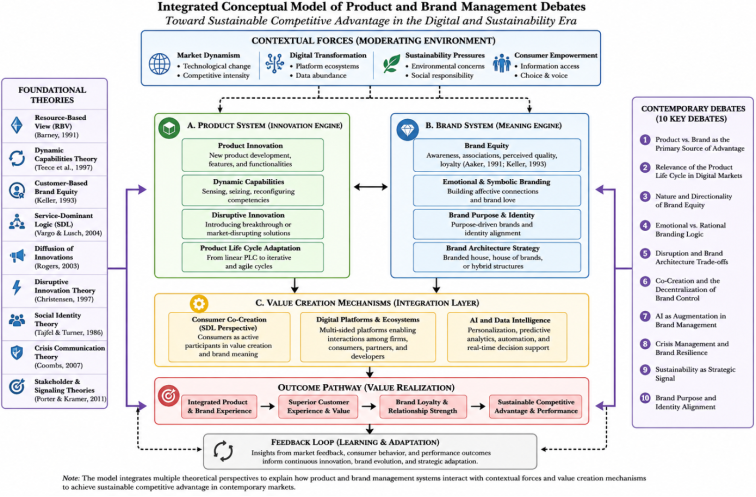
Figure 1. Conceptual Model of Product and Brand Management.
5. Integrated Conceptual Framework
The analysis of ten contemporary debates reveals that product and brand management is no longer governed by a single dominant theoretical logic. Instead, it operates within a multi-paradigmatic system in which competing logics interact dynamically.
At the center of this system lies the tension between:
1) Resource stability (RBV) and dynamic adaptation (Dynamic Capabilities)
2) Firm control (traditional branding) and consumer co-creation (SDL)
3) Linear progression (PLC, Diffusion) and iterative evolution (Agile, digital ecosystems)
4) Human-centered decision-making and algorithmic intelligence (AI-driven marketing)
5) Economic value creation and societal value creation (sustainability and purpose)
The study suggests that modern brand and product systems operate as adaptive value ecosystems, where:
1) Products function as dynamic innovation units
2) Brands function as meaning systems and relational assets
3) Consumers function as co-creators of value
4) Technology functions as an enabling intelligence layer
5) Sustainability and purpose function as legitimacy anchors
This results in a shift from traditional linear models to a systemic, co-evolutionary model of value creation.
6. Theoretical Contributions
This study contributes to marketing and strategic management literature in three main ways.
6.1. Integration of Fragmented Theories
The study integrates previously disconnected theoretical domains RBV, Dynamic Capabilities, CBBE, SDL, and Disruptive Innovation into a unified conceptual interpretation of product and brand management. This helps reduce fragmentation in marketing theory by demonstrating how these perspectives jointly explain value creation.
6.2. Reframing Product and Brand Dualism
The study challenges the traditional separation between product and brand management. Instead, it proposes that: Product innovation and brand meaning are interdependent processes rather than independent strategic functions.
This reframing aligns with contemporary digital ecosystems where product experience and brand perception are inseparable.
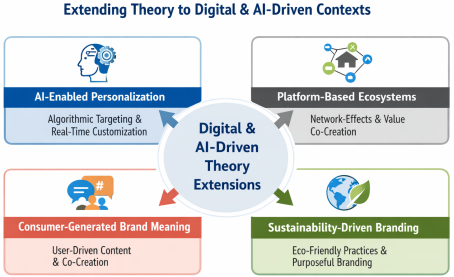
6.3. Extending Theory to Digital and AI-Driven Contexts
This study extends classical marketing theories into emerging contexts in four distinct ways. First, it advances theory by embedding AI-enabled personalization systems within consumer behavior and brand management frameworks. Personalization, traditionally explained through segmentation and targeting, is reconceptualized as an algorithmic capability that co-creates brand meaning with consumers in real time. This extension highlights how artificial intelligence transforms the locus of control in brand-consumer relationships.
Second, the study situates marketing theory within platform-based ecosystems, where value creation is distributed across multiple stakeholders rather than confined to firm–consumer dyads. By applying Service-Dominant Logic and ecosystem theory, it demonstrates how platforms orchestrate interactions, enabling resilience through network effects, data flows, and collaborative innovation.
Third, the study incorporates consumer-generated brand meaning into brand management theory. Classical models assumed managerial control over brand identity; however, digital environments empower consumers to construct, negotiate, and disseminate brand meaning. This extension challenges traditional ownership assumptions and positions brand meaning as socially co-created within digital communities.
Fourth, the study expands marketing theory into sustainability-driven branding environments. By integrating sustainability as a strategic brand purpose, it reframes resilience not only as adaptability but as legitimacy in the eyes of environmentally conscious consumers. This extension aligns with institutional theory and CSR branding, showing how sustainability imperatives reshape competitive advantage and consumer trust.
Collectively, these extensions demonstrate how classical theories such as RBV, Dynamic Capabilities, and Brand Equity must evolve to remain relevant in digital, AI-driven, and sustainability-oriented contexts. They position resilience as a multidimensional construct shaped by technology, platforms, consumer agency, and societal expectations. This extension highlights the need for hybrid theoretical models that combine human, technological, and institutional perspectives.
Figure 2. Extending Theory to Digital and AI-Driven Contexts.
1) AI-Enabled Personalization Classical segmentation → extended into algorithmic targeting and real-time customization.
2) Platform-Based Ecosystems Firm–consumer dyads → extended into multi-stakeholder value co-creation through network effects.
3) Consumer-Generated Brand Meaning Managerial brand control → extended into user-driven content, negotiation, and co-created meaning.
4) Sustainability-Driven Branding Competitive advantage → extended into legitimacy and trust through eco-friendly, purpose-driven branding.
Table 1. Conceptual Matrix.
Classical Theory | Digital/AI Extension | Theoretical Shift | Illustrative Focus | Key References |
Resource-Based View (RBV) | AI-Enabled Personalization Systems | From static resource advantage → to algorithmic learning and data-driven personalization | AI algorithms as dynamic resources enhancing consumer insight | | [5] | Barney, J. (1991). Firm resources and sustained competitive advantage. Journal of Management, 17(1), 99–120.
https://doi.org/10.1177/014920639101700108 | | [12] | Davenport, T. H., Guha, A., Grewal, D., & Bressgott, T. (2020). How artificial intelligence will change the future of marketing. Journal of the Academy of Marketing Science, 48(1), 24–42.
https://doi.org/10.1007/s11747-019-00696-0 | | [29] | Kumar, V., & Christodoulopoulou, A. (2021). Sustainability and branding: A research agenda. Journal of Business Research, 122, 878–885. |
[5, 12, 29] |
Dynamic Capabilities Theory | Platform-Based Ecosystems | From firm-level adaptability → to ecosystem-level orchestration and co-innovation | Platforms as adaptive systems enabling resilience through collaboration | -43] |
Brand Equity Theory | Consumer-Generated Brand Meaning | From managerial brand control → to participatory co-creation of brand narratives | Consumers as active meaning-makers shaping brand identity | | [26] | Keller, K. L. (2020). Consumer research insights on brands and branding: A JCR curation. Journal of Consumer Research, 46(5), 995–1001. |
[26] |
Institutional & CSR Branding Theory | Sustainability-Driven Branding Environments | From competitive differentiation → to legitimacy and trust through ethical branding | Sustainability as a strategic anchor for brand resilience | | [7] | Bhattacharya, C. B., & Sen, S. (2003). Consumer–company identification: A framework for understanding consumers' relationships with companies. Journal of Marketing, 67(2), 76–88. https://doi.org/10.1509/jmkg.67.2.76.18609 | | [29] | Kumar, V., & Christodoulopoulou, A. (2021). Sustainability and branding: A research agenda. Journal of Business Research, 122, 878–885. |
[7, 29] |
7. Managerial Implications
The findings of this study provide several actionable insights for marketing managers and strategic decision makers. First, firms must adopt a balanced investment strategy, avoiding the trap of privileging either product innovation or brand equity in isolation. Sustainable performance requires simultaneous investment in innovation capabilities and brand development systems, ensuring that technological progress is matched by symbolic and relational strength. Second, managers should design adaptive brand architectures that can accommodate disruptive innovation without diluting core equity. Hybrid approaches that combine branded house consistency with house of brands flexibility allow organizations to protect legacy value while experimenting with new offerings. Third, effective brand governance requires co creation management, recognizing that brand meaning is partially outside organizational control. Rather than attempting to impose fixed narratives, managers should facilitate consumer participation, guiding conversations and communities toward constructive engagement. Fourth, firms must pursue responsible AI integration, deploying algorithms as support systems for personalization and analytics while maintaining human oversight in relational and ethical dimensions. This hybrid approach ensures efficiency without sacrificing authenticity, empathy, or cultural sensitivity. Finally, managers should embed authentic sustainability strategies into operations rather than treating them as communication tools. In increasingly skeptical consumer markets, credibility depends on demonstrable commitments to environmental and social responsibility. Collectively, these implications highlight that competitive advantage in contemporary ecosystems depends not only on superior products or strong brands but on the ability to balance innovation, equity, co creation, technology, and purpose within an adaptive coherence framework.
8. Conclusion
This study critically examined ten contemporary debates in product and brand management through a qualitative conceptual review, demonstrating that while traditional marketing theories such as the Resource Based View, Dynamic Capabilities, and Customer Based Brand Equity remain foundational, they are insufficient on their own to explain the complexity of contemporary markets. The findings highlight a fundamental shift toward ecosystem based, co created, and technology enabled value systems, where product innovation, brand meaning, consumer participation, and sustainability are deeply interconnected.
Rather than replacing traditional theories, contemporary marketing requires their integration into a dynamic and adaptive conceptual framework. This synthesis underscores the importance of adaptive coherence the ability of firms to maintain a stable core identity while flexibly adapting to technological, social, and ethical pressures. In practice, this means that competitive advantage no longer derives solely from superior products or strong brands, but from the capacity to orchestrate innovation, consumer engagement, and purpose driven legitimacy across digital ecosystems.
Future research should extend this conceptual foundation by empirically examining how artificial intelligence reshapes decision making and personalization, how sustainability transitions redefine brand legitimacy, and how platform economies alter the boundaries of product and brand management. Such investigations will deepen our understanding of how organizations can balance continuity and change, control and co creation, profitability and responsibility in increasingly complex marketing environments.
Abbreviations
AI | Artificial Intelligence |
CBBE | Customer-Based Brand Equity |
CSR | Corporate Social Responsibility |
IJRM | International Journal of Research in Marketing |
PLC | Product Life Cycle |
RBV | Resource-Based View |
SCCT | Situational Crisis Communication Theory |
SDL | Service-Dominant Logic |
UGC | User-Generated Content |
Author Contributions
Ahmed Sali Bashir: Conceptualization, Writing – original draft
Shimalis Zewude Werke: Supervision, Writing – review & editing
Conflicts of Interest
The authors declare no conflicts of interest.
References
| [1] |
Aaker, D. A.(2020) Integrating Brand Communication and Brand Equity: a Systematic Review From 2000-2020. Journal of Content, Community and Communication. 2021; 13(7): 199-214.
|
| [2] |
Aaker, D. A. (1996). Building strong brands. Free Press.
|
| [3] |
Akaka, M. A., Vargo, S. L., & Lusch, R. F. (2021). The complexity of context: A service ecosystems approach. Journal of Service Research, 24(2), 147–162.
|
| [4] |
Albert, S., & Whetten, D. A. (1985). Organizational identity. In L. L. Cummings & B. M. Staw (Eds.), Research in organizational behavior (Vol. 7, pp. 263–295). JAI Press.
|
| [5] |
Barney, J. (1991). Firm resources and sustained competitive advantage. Journal of Management, 17(1), 99–120.
https://doi.org/10.1177/014920639101700108
|
| [6] |
Beverland, M. B., Wilner, S. J. S., & Micheli, P. (2022). Brand resilience: Managing brands during turbulent times. Journal of Brand Management, 29(5), 533–548.
|
| [7] |
Bhattacharya, C. B., & Sen, S. (2003). Consumer–company identification: A framework for understanding consumers' relationships with companies. Journal of Marketing, 67(2), 76–88.
https://doi.org/10.1509/jmkg.67.2.76.18609
|
| [8] |
Brown, T. J., Dacin, P. A., Pratt, M. G., & Whetten, D. A. (2006). Identity, intended image, construed image, and reputation: An interdisciplinary framework and suggested terminology. Journal of the Academy of Marketing Science, 34(2), 99–106.
https://doi.org/10.1177/0092070305284969
|
| [9] |
Christensen, C. M. (1997). The innovator's dilemma: When new technologies cause great firms to fail. Harvard Business School Press.
|
| [10] |
Christensen, C. M., Raynor, M. E., & McDonald, R. (2015). What is disruptive innovation? Harvard Business Review, 93(12), 44–53.
|
| [11] |
Coombs, W. T. (2007). Protecting organization reputations during a crisis: The development and application of Situational Crisis Communication Theory. Corporate Reputation Review, 10(3), 163–176.
https://doi.org/10.1057/palgrave.crr.1550049
|
| [12] |
Davenport, T. H., Guha, A., Grewal, D., & Bressgott, T. (2020). How artificial intelligence will change the future of marketing. Journal of the Academy of Marketing Science, 48(1), 24–42.
https://doi.org/10.1007/s11747-019-00696-0
|
| [13] |
Dwivedi, Y. K., Hughes, L., Baabdullah, A. M., Ribeiro-Navarrete, S., Giannakis, M., Al-Debei, M. M., Dennehy, D., Metri, B., Buhalis, D., Cheung, C. M. K., Conboy, K., Doyle, R., Dubey, R., Dutot, V., Felix, R., Goyal, D. P., Gustafsson, A., Hinsch, C., Jebabli, I., ... Wright, R. (2021). Artificial intelligence (AI): Multidisciplinary perspectives on emerging challenges, opportunities, and agenda for research, practice and policy. International Journal of Information Management, 57, 101994.
https://doi.org/10.1016/j.ijinfomgt.2019.08.002
|
| [14] |
Dwivedi, Y. K., Hughes, L., Ismagilova, E., Aarts, G., Coombs, C., Crick, T., ... Williams, M. D. (2023). So what if ChatGPT wrote it? Multidisciplinary perspectives on opportunities, challenges and implications of generative conversational AI. International Journal of Information Management, 71, 102642.
|
| [15] |
Dwivedi, Y. K., Kshetri, N., Hughes, L., Slade, E. L., Jeyaraj, A., Kar, A. K., ... Wright, R. (2024). Opinion paper: “So what if ChatGPT wrote it?” Generative AI and the future of research, practice, and policy. International Journal of Information Management, 75, 102760.
|
| [16] |
Gobé, M. (2001). Emotional branding: The new paradigm for connecting brands to people. Allworth Press.
|
| [17] |
Grewal, D., Hulland, J., Kopalle, P. K., & Karahanna, E. (2020). The future of technology and marketing: A multidisciplinary perspective. Journal of the Academy of Marketing Science, 48(1), 1–8.
|
| [18] |
Gupta, S., Czinkota, M., Melewar, T. C., & Foroudi, P. (2023). Sustainable branding and ESG: New perspectives for marketing. Journal of Business Research, 157, 113567.
|
| [19] |
Hein, A., Schreieck, M., Riasanow, T., Soto Setzke, D., Wiesche, M., Böhm, M., & Krcmar, H. (2020). Digital platform ecosystems. Electronic Markets, 30(1), 87–98.
|
| [20] |
Hollebeek, L. D., Sprott, D. E., Andreassen, T. W., Costley, C., Klaus, P., Kuppelwieser, V.,... Karahasanović, A. (2020). Customer engagement in evolving technological environments. Journal of Service Management, 31(3), 429–456.
|
| [21] |
Huang, M.-H., & Rust, R. T. (2021). A strategic framework for artificial intelligence in marketing. Journal of the Academy of Marketing Science, 49(1), 30–50.
|
| [22] |
Jaakkola, E. (2020). Designing conceptual articles: Four approaches. AMS Review, 10(1–2), 18–26.
https://doi.org/10.1007/s13162-020-00161-0
|
| [23] |
Jacobides, M. G., Cennamo, C., & Gawer, A. (2021). Towards a theory of ecosystems. Strategic Management Journal, 42(1), 15–37.
|
| [24] |
Kapferer, J.-N. (2012). The new strategic brand management: Advanced insights and strategic thinking (5th ed.). Kogan Page.
|
| [25] |
Keller, K. L. (1993). Conceptualizing, measuring, and managing customer-based brand equity. Journal of Marketing, 57(1), 1–22.
https://doi.org/10.1177/002224299305700101
|
| [26] |
Keller, K. L. (2020). Consumer research insights on brands and branding: A JCR curation. Journal of Consumer Research, 46(5), 995–1001.
|
| [27] |
Kotler, P., Kartajaya, H., & Setiawan, I. (2021). Marketing 5.0: Technology for humanity. Wiley.
|
| [28] |
Kotler, P., & Keller, K. L. (2022). Marketing management (16th ed.). Pearson.
|
| [29] |
Kumar, V., & Christodoulopoulou, A. (2021). Sustainability and branding: A research agenda. Journal of Business Research, 122, 878–885.
|
| [30] |
Lemon, K. N., & Verhoef, P. C. (2016). Understanding customer experience throughout the customer journey. Journal of Marketing, 80(6), 69–96.
https://doi.org/10.1509/jm.15.0420
|
| [31] |
MacInnis, D. J. (2011). A framework for conceptual contributions in marketing. Journal of Marketing, 75(4), 136–154.
https://doi.org/10.1509/jmkg.75.4.136
|
| [32] |
Melewar, T. C., Gupta, S., & Foroudi, P. (2022). Brand resilience and organizational resilience: A systematic review. Journal of Business Research, 145, 573–588.
|
| [33] |
Morhart, F., Malär, L., Guèvremont, A., Girardin, F., & Grohmann, B. (2021). Brand authenticity: An integrative framework and future research agenda. Journal of Brand Management, 28(3), 223–239.
|
| [34] |
Napoli, J., Dickinson-Delaporte, S., & Beverland, M. B. (2021). Brand authenticity: What consumers really perceive. Journal of Business Research, 134, 555–566.
|
| [35] |
Payne, A. F., Storbacka, K., & Frow, P. (2008). Managing the co-creation of value. Journal of the Academy of Marketing Science, 36(1), 83–96.
https://doi.org/10.1007/s11747-007-0070-0
|
| [36] |
Porter, M. E., & Kramer, M. R. (2011). Creating shared value. Harvard Business Review, 89(1–2), 62–77.
|
| [37] |
Ramaswamy, V., & Ozcan, K. (2018). What Is Co-Creation? An Interactional Creation Framework and Its Implications for Value Creation. Journal of Business Research, 84, 196-205.
https://doi.org/10.1016/j.jbusres.2017.11.027
|
| [38] |
Rogers, E. M. (2003). Diffusion of innovations (5th ed.). Free Press.
|
| [39] |
Schmitt, B. (1999). Experiential marketing: How to get customers to sense, feel, think, act, and relate to your company and brands. Free Press.
|
| [40] |
Tajfel, H., & Turner, J. C. (1979). An integrative theory of intergroup conflict. In W. G. Austin & S. Worchel (Eds.), The social psychology of intergroup relations (pp. 33–47). Brooks/Cole.
|
| [41] |
Teece, D. J. (2023). Dynamic capabilities and strategic management in the digital era. Industrial and Corporate Change, 32(2), 233–251.
|
| [42] |
Teece, D. J., Pisano, G., & Shuen, A. (1997). Dynamic capabilities and strategic management. Strategic Management Journal, 18(7), 509–533.
https://doi.org/10.1002/(SICI)1097-0266(199708)18:7<509::AID-SMJ882>3.0.CO;2-Z
|
| [43] |
Vargo, S. L., & Lusch, R. F. (2021). Service-dominant logic 2025. International Journal of Research in Marketing, 38(3), 623–636.
|
| [44] |
Webster, J., & Watson, R. T. (2002). Analyzing the past to prepare for the future: Writing a literature review. MIS Quarterly, 26(2), xiii–xxiii.
|
Cite This Article
-
APA Style
Bashir, A. S., Werke, S. Z. (2026). Contemporary Debates in Product and Brand Management: A Critical Evaluation of Theories, Strategies, and Emerging Trends. Innovation Business, 1(3), 158-173. https://doi.org/10.11648/j.ib.20260103.14
 Copy
|
Copy
|
 Download
ACS Style
Bashir, A. S.; Werke, S. Z. Contemporary Debates in Product and Brand Management: A Critical Evaluation of Theories, Strategies, and Emerging Trends. Innov. Bus. 2026, 1(3), 158-173. doi: 10.11648/j.ib.20260103.14
Copy
|
Download
AMA Style
Bashir AS, Werke SZ. Contemporary Debates in Product and Brand Management: A Critical Evaluation of Theories, Strategies, and Emerging Trends. Innov Bus. 2026;1(3):158-173. doi: 10.11648/j.ib.20260103.14
Copy
|
Download
-
@article{10.11648/j.ib.20260103.14,
  author = {Ahmed Sali Bashir and Shimalis Zewude Werke},
  title = {Contemporary Debates in Product and Brand Management: A Critical Evaluation of Theories, Strategies, and Emerging Trends},
  journal = {Innovation Business},
  volume = {1},
  number = {3},
  pages = {158-173},
  doi = {10.11648/j.ib.20260103.14},
  url = {https://doi.org/10.11648/j.ib.20260103.14},
  eprint = {https://article.sciencepublishinggroup.com/pdf/10.11648.j.ib.20260103.14},
  abstract = {Contemporary brand and product management is increasingly shaped by dynamic market conditions, digital transformation, and shifting consumer roles. Traditional debates such as standardization versus adaptation, firm control versus consumer co-creation, and product-centric versus experience-centric value creation remain central to understanding how brands build and sustain equity in complex environments. This study adopts a conceptual synthesis approach by critically reviewing and integrating ten major debates in branding and product management literature. It draws on foundational theories of brand equity, service-dominant logic, and contemporary perspectives on co-creation, digital branding, and platform ecosystems. The analysis contrasts competing theoretical positions and identifies emerging integrative themes. The findings indicate that most classical branding debates are no longer binary but exist along dynamic continuums influenced by digitalization, artificial intelligence, and evolving consumer participation. Brand success increasingly depends on “adaptive coherence,” where firms maintain a stable core identity while allowing flexible, context-specific expressions across channels and stakeholders. Digital ecosystems intensify consumer influence in brand meaning-making while also enabling firms to leverage data-driven personalization and algorithmic decision-making. The study contributes to branding theory by integrating fragmented debates into a unified conceptual framework and highlighting the transition from controlled brand management to co-created, data-enabled brand ecosystems. It offers managerial insights into balancing consistency and flexibility while addressing emerging ethical and strategic challenges in contemporary brand governance.},
 year = {2026}
}
Copy
|
Download
-
TY  - JOUR
T1  - Contemporary Debates in Product and Brand Management: A Critical Evaluation of Theories, Strategies, and Emerging Trends
AU  - Ahmed Sali Bashir
AU  - Shimalis Zewude Werke
Y1  - 2026/08/17
PY  - 2026
N1  - https://doi.org/10.11648/j.ib.20260103.14
DO  - 10.11648/j.ib.20260103.14
T2  - Innovation Business
JF  - Innovation Business
JO  - Innovation Business
SP  - 158
EP  - 173
PB  - Science Publishing Group
SN  - 3142-8681
UR  - https://doi.org/10.11648/j.ib.20260103.14
AB  - Contemporary brand and product management is increasingly shaped by dynamic market conditions, digital transformation, and shifting consumer roles. Traditional debates such as standardization versus adaptation, firm control versus consumer co-creation, and product-centric versus experience-centric value creation remain central to understanding how brands build and sustain equity in complex environments. This study adopts a conceptual synthesis approach by critically reviewing and integrating ten major debates in branding and product management literature. It draws on foundational theories of brand equity, service-dominant logic, and contemporary perspectives on co-creation, digital branding, and platform ecosystems. The analysis contrasts competing theoretical positions and identifies emerging integrative themes. The findings indicate that most classical branding debates are no longer binary but exist along dynamic continuums influenced by digitalization, artificial intelligence, and evolving consumer participation. Brand success increasingly depends on “adaptive coherence,” where firms maintain a stable core identity while allowing flexible, context-specific expressions across channels and stakeholders. Digital ecosystems intensify consumer influence in brand meaning-making while also enabling firms to leverage data-driven personalization and algorithmic decision-making. The study contributes to branding theory by integrating fragmented debates into a unified conceptual framework and highlighting the transition from controlled brand management to co-created, data-enabled brand ecosystems. It offers managerial insights into balancing consistency and flexibility while addressing emerging ethical and strategic challenges in contemporary brand governance.
VL  - 1
IS  - 3
ER  -
Copy
|
Download





 Share This Article
 Twitter
 Linked In
 Facebook