
Palm wine is a sweet, nutritious milky juice tapped from palm trees. In Southern Nigeria, especially the South East populated by the Igbo tribe; no ceremony, especially traditional marriage, can take place without palm wine. This has made palm wine tapping to become a lucrative trade. However, its production or tapping requires the tapper to climb tall trees to harvest the palm wine. This has made it unattractive to young people due to the fear of the tapper falling to death from such a scary height. Across the southern Nigeria and the middle-belt where this palm wine elixir is deeply appreciated, the population is over 150 million. This makes the palm wine tapping a huge business that needs modernization through innovative technology. Interestingly, the palm trees are littered in every community spanning from the Southern Nigeria to the middle-belt, making it a reliable raw material source, which makes the business certainly sustainable. In this innovative research, a vacuum-tubing technology (VTT) designed to suck the palm sap through the application of a suction force within a high pressure-versus-low pressure environment, between the tree trunk and the vacuum pump, is presented. This is intended to assist the tapper harvest the palm sap without climbing the tree.
| Published in | International Journal of Food Engineering and Technology (Volume 10, Issue 2) |
| DOI | 10.11648/j.ijfet.20261002.13 |
| Page(s) | 61-66 |
| Creative Commons |
This is an Open Access article, distributed under the terms of the Creative Commons Attribution 4.0 International License (http://creativecommons.org/licenses/by/4.0/), which permits unrestricted use, distribution and reproduction in any medium or format, provided the original work is properly cited. |
| Copyright |
Copyright © The Author(s), 2026. Published by Science Publishing Group |
Palm Wine, Palm Tree, Harvest, Vacuum-tubing, Vacuum Pump, Igbo Tribe, Nigeria, Technology
VTT | Vacuum-Tubing Technology |
| [1] | Quimbo, L. L. 1991. Increasing Nipa sap yield through improved mechanical tapping technology: PCARRD: The Philippines XIII (4); pp. 16. |
| [2] | Ruiz-Teran, F. (2013). Physiochemical and microbiological change during tapping of palm sap to produce an alcoholic beverage called “taberna”, which is produced in the south east of Mexico. Food control, 33(1): 58-66. |
| [3] | North American Maple Syrup Producers manual, 1 Edition, 1996st. |
| [4] | Uloneme, G. C, Opara, A. U, and Agu, G. C, (2014). Accommodation amplitude variations of the eye following consumption of fresh palm wine harvested in Igbo land, journal of science 4(12): 721-724. |
| [5] | Michael O. Obaji and Shiwu Zhang: 2013. Investigation into the force distribution mechanism of a soft robot gripper modeled for picking complex objects, using embedded SMA actuators. Proceedings of CIS-RAM 2013 International Conference in Manila, Philippines. |
| [6] | Rivas, M., Rosa, L. B. and Luciano, C. M. (2012). Plant breeding and in situ Utilization of palm trees. Ciência Rural, 42(2): 261-269. |
| [7] | Russel, T. A. (1965). The Raphia palms of west Africa. |
| [8] | Santiago-Urbina, J. A. and Ruiz-Teran, F. (2014). Microbiology and biochemistry of traditional palm wine produced around the world. International Food Research Journal, 21(4): 1261-1269. |
| [9] | Kew Bulletin, 19(2): 173-196Redhead J. 1989. Utilization of tropical foods, trees, in FAO Rome, pp. 52. |
| [10] | Paivoke, A. E. A 1985. Tapping practices and sap yields of the Nipa palm (nipa fruticans) in Papua New Guinea. Agriculture, Ecosystems and Environment 13: 59-72. |
| [11] | Obahiagbon, F. I., Ilori, G. E. and Erhabor, J. O. (2012). Assessment of the nutritional constituents of Elaeis guineensis Jacq exudates from different states of Nigeria. Journal of Applied Environmental Management, 16(3): 261-266. |
| [12] | Obahiagbon, F. I., Ukhun, M. E. and Oviawe, A. P. (2007b). The range of nutrients in the sap of Raphia hookeri palms. Chemical Technology Journal, 3: 610-619. |
| [13] | Ogbulie, T. E., Ogbulie, J. N. and Njoku, H. O. (2007). Comparative study on the microbiology and shelf life stability of palm wine from Elaeis guineensis and Raphia hookeri obtained from Okigwe, Nigeria African Journal of Biotechnology, 6(7): 914-922. |
| [14] | Walters, R. S and Smith, H. C. 1975. The vacuum system in Marple Sap yield. |
| [15] | Amadi, N. M (2022). Raffia palm and the oil Palm and test, the effects of pasteurization on palm wine and its ability to effect the Shell life. International Journal of Engineering Applied Sciences & Technology. 7(1). 51-58. |
| [16] | Onyewukwu, O. B, Diakparumre, O., Njideaka, O. T., Dibie, D. C., and Nwaiku, F. (2024). Palm wine: A review on its Composition, preservation, Health benefits, and market value. International Journal of Basic Science & Technology Vol. 10 Number 1 P. 71 – 80. |
| [17] | Agwuna, L. C., Umeh, S. O., and Egwuim, T. C (2019). Study on the wine production attributes of Saccharomyces Cerevisiae isolated from sucrose - enriched palm wine and non-sucrose enriched palm wine. International Journal of Agriculture and Bioscience, 8(5), 257-262. |
| [18] | Redhead. J. (1989): Utilization of tropical foods: trees. FAO food and Nutrition paper No. 47: 3. FAO Rome. PP. 52. |
APA Style
Obaji, M. O. (2026). Design of a Safe Way to Harvest Palm Wine Without Climbing Trees. International Journal of Food Engineering and Technology, 10(2), 61-66. https://doi.org/10.11648/j.ijfet.20261002.13
ACS Style
Obaji, M. O. Design of a Safe Way to Harvest Palm Wine Without Climbing Trees. Int. J. Food Eng. Technol. 2026, 10(2), 61-66. doi: 10.11648/j.ijfet.20261002.13
AMA Style
Obaji MO. Design of a Safe Way to Harvest Palm Wine Without Climbing Trees. Int J Food Eng Technol. 2026;10(2):61-66. doi: 10.11648/j.ijfet.20261002.13
@article{10.11648/j.ijfet.20261002.13,
  author = {Michael Okeke Obaji},
  title = {Design of a Safe Way to Harvest Palm Wine Without Climbing Trees},
  journal = {International Journal of Food Engineering and Technology},
  volume = {10},
  number = {2},
  pages = {61-66},
  doi = {10.11648/j.ijfet.20261002.13},
  url = {https://doi.org/10.11648/j.ijfet.20261002.13},
  eprint = {https://article.sciencepublishinggroup.com/pdf/10.11648.j.ijfet.20261002.13},
  abstract = {Palm wine is a sweet, nutritious milky juice tapped from palm trees. In Southern Nigeria, especially the South East populated by the Igbo tribe; no ceremony, especially traditional marriage, can take place without palm wine. This has made palm wine tapping to become a lucrative trade. However, its production or tapping requires the tapper to climb tall trees to harvest the palm wine. This has made it unattractive to young people due to the fear of the tapper falling to death from such a scary height. Across the southern Nigeria and the middle-belt where this palm wine elixir is deeply appreciated, the population is over 150 million. This makes the palm wine tapping a huge business that needs modernization through innovative technology. Interestingly, the palm trees are littered in every community spanning from the Southern Nigeria to the middle-belt, making it a reliable raw material source, which makes the business certainly sustainable. In this innovative research, a vacuum-tubing technology (VTT) designed to suck the palm sap through the application of a suction force within a high pressure-versus-low pressure environment, between the tree trunk and the vacuum pump, is presented. This is intended to assist the tapper harvest the palm sap without climbing the tree.},
 year = {2026}
}
TY  - JOUR
T1  - Design of a Safe Way to Harvest Palm Wine Without Climbing Trees
AU  - Michael Okeke Obaji
Y1  - 2026/08/20
PY  - 2026
N1  - https://doi.org/10.11648/j.ijfet.20261002.13
DO  - 10.11648/j.ijfet.20261002.13
T2  - International Journal of Food Engineering and Technology
JF  - International Journal of Food Engineering and Technology
JO  - International Journal of Food Engineering and Technology
SP  - 61
EP  - 66
PB  - Science Publishing Group
SN  - 2640-1584
UR  - https://doi.org/10.11648/j.ijfet.20261002.13
AB  - Palm wine is a sweet, nutritious milky juice tapped from palm trees. In Southern Nigeria, especially the South East populated by the Igbo tribe; no ceremony, especially traditional marriage, can take place without palm wine. This has made palm wine tapping to become a lucrative trade. However, its production or tapping requires the tapper to climb tall trees to harvest the palm wine. This has made it unattractive to young people due to the fear of the tapper falling to death from such a scary height. Across the southern Nigeria and the middle-belt where this palm wine elixir is deeply appreciated, the population is over 150 million. This makes the palm wine tapping a huge business that needs modernization through innovative technology. Interestingly, the palm trees are littered in every community spanning from the Southern Nigeria to the middle-belt, making it a reliable raw material source, which makes the business certainly sustainable. In this innovative research, a vacuum-tubing technology (VTT) designed to suck the palm sap through the application of a suction force within a high pressure-versus-low pressure environment, between the tree trunk and the vacuum pump, is presented. This is intended to assist the tapper harvest the palm sap without climbing the tree.
VL  - 10
IS  - 2
ER  -
Department of Electrical & Electronic Engineering, Ebonyi State University, Abakaliki, Nigeria
Biography: Michael Okeke Obaji possesses a Doctorate Degree in Precision Instrumentation Engineering and Precision Machinery, majoring in intelligent mechanics & robotics, obtained from the Prestigious University of Science and Technology of China. He installed the four production lines that birthed the Ebonyi Pipes Production Ltd, Ezzamgbo, Ebonyi State Nigeria, where he was later appointed as the General Manager. Michael Okeke Obaji was a Lecturer at the Department of Mechatronics Engineering, Federal University, Oye-Ekiti, Nigeria. He also recently had a stint as a lead-researcher with the Intelligent Mechanics laboratory of the PIPM, University of Science & Technology of China. He is currently with the Department of Electrical & Electronic Engineering, Ebonyi State University, Abakaliki, Nigeria. He has contributed immensely in authoring some high quality journal papers indexed and presented at international conferences. His area of interest includes Artificial Intelligence and Bionic Robots.

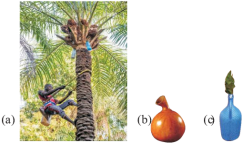
Figure 1. (a) Wine tapper (b) gourd (c) gallon.
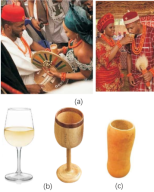
Figure 2. (a) Igbo tribe marriage ceremony (b) palm wine glass (c) palm wine gourds.
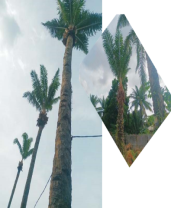
Figure 3. Palm trees.
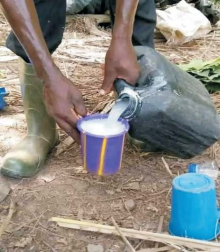
Figure 4. A man pouring palm wine into a cup.
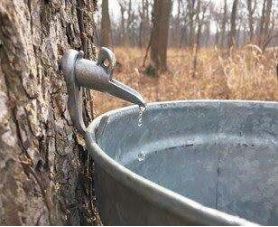
Figure 5. Sap from maple tree.
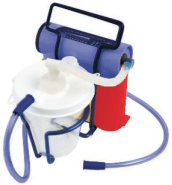
Figure 6. Vacuum-tubing system.
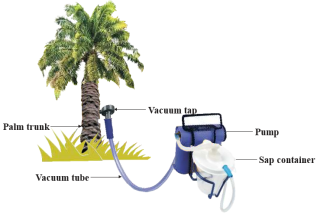
Figure 7. Vacuum-tubing experiment.
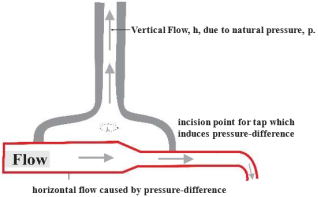
Figure 8. L-shape incision for tap to cause horizontal flow via pressure difference.

Information



 Share This Article
 Twitter
 Linked In
 Facebook
 Copy
Copy Download