
Chabazite is a microporous material widely studied due to its applications in heterogeneous catalysis. In this study, the authors synthesized a zeolite by the hydrothermal method at 125°C using tetrapropylammonium bromide as an organic template, which was removed by calcination at 800°C. The characterization of the synthesized product was carried out by X-ray diffraction, Fourier transform infrared spectroscopy, X-ray fluorescence, scanning electron microscopy coupled with energy-dispersive spectroscopy. X-ray diffraction showed the presence of a crystalline phase consisting of chabazite crystallizing in the rhombohedral lattice with lattice parameters a = 9.4250 Å and α = 94.060°. Fourier transform infrared spectroscopy revealed absorption bands located between 400 – 1000 cm-1, characteristic of zeolites. X-ray fluorescence highlighted the aluminosilicate nature with a Si/Al ratio of 4.5 for the synthesized product. The SEM coupled with EDS revealed the uniformity of the product, a hexagonal morphology or the symmetrical facets characteristic of rhombohedral symmetry. The protonated form of the synthesized zeolite, obtained by ion exchange, was used as a catalyst for the synthesis of isoamyl acetate with a yield of the impure product of 79.03%; this yield being close to the same product obtained (84.76%) from the same reaction catalyzed by sulfuric acid. The UV-visible spectral data validated the synthesis products.
| Published in | International Journal of Materials Science and Applications (Volume 15, Issue 3) |
| DOI | 10.11648/j.ijmsa.20261503.12 |
| Page(s) | 92-99 |
| Creative Commons |
This is an Open Access article, distributed under the terms of the Creative Commons Attribution 4.0 International License (http://creativecommons.org/licenses/by/4.0/), which permits unrestricted use, distribution and reproduction in any medium or format, provided the original work is properly cited. |
| Copyright |
Copyright © The Author(s), 2026. Published by Science Publishing Group |
Zeolite, Chabazite, Catalysis, Isoamyl Acetate, Esterification
XRD | X-ray Diffraction |
XRF | X-ray Fluorescence |
FTIR | Fourier Transform Spectroscopy |
SEM | Scanning Electron Microscopy |
EDS | Energy Dispersive Spectroscopy |
| [1] | Baerlocher C., McCusker L. B., Olsen D. H. (2007). Atlas of zeolite framework type. 6th revised edition. Elsevier, Amsterdam, 398 p. |
| [2] | Mortier W. J. (1982). Compilation of extra framework sites in zeolites. Butterworth Sientific Limited, London, 67 p. |
| [3] | Abdoulaye A., Konaté M., Harouna M., Yahaya M., Rumori P., Palomino G. T. (2007). Caractérisation des analcimolites du bassin de Tim Mersoï (Nord du Niger) par diffraction des rayons X. C. R. Chimie 10, 546 – 551. |
| [4] | Ren L. M., Wu Q. M., Yang C. G., Zhu L. F., Li C. J., Zhang P. L., Zhang H. Y., Meng X. J., Xiao F. S. (2012). Solvent-free synthesis of zeolites from solid raw materials. Journal of the American Chemical Society, 134, 15173 – 15176. |
| [5] | Zhang H., Samsudin I. B., Jaenicke S., Chuah G.-K. (2022). Zeolites in catalysis: substainable synthesis and impact on properties and application. Catalysis Science & Technology, 12, 6024. |
| [6] | He J., Liu Z., Yoneyama Y., Nishiyama N., Tsubaki N. (2006). Multiple-Functional Capsule Catalysts: A Tailor-Made Confined Reaction Environment for the Direct Synthesis of Middle Isoparaffins from Syngas. Chemistry European Journal, 12, 8296 – 8304. |
| [7] | Choi M., Na K., Kim J., Sakomoto Y., Terasaki O., Ryoo R. (2009). Stable single-unit-cell nanosheets of zeolite MFI as active and long-lived catalysts. Nature 461, 246 – 249. |
| [8] | Xie B., Zhang H. Y., Yang C. G., Liu S. Y., Ren L. M., Zhang L., Meng X. J, Yilmaz B., Muller U., Xiao F. S. (2011). Seed-directed synthesis of zeolites with enhanced. performance in the absence of organic templates. Chemical Communications, 47, 3945-3947. |
| [9] | Chen X., Todorova T., Vimont A., Ruaux V., Qin Z., Gilson J. P., Valtchev V. (2014). In situ and post-synthesis control of physicochemical properties of FER-type crystals. Microporous and Mesoporous Materials, 200, 334-342. |
| [10] | Du Y., Zheng G., Wang J., Wang L., Wu J., Dai H. (2014). Microporous and Mesoporous Materials, 200, 27-34. |
| [11] | Gao W., Amoo C. C., Zhang G., Javed M., Mazonde B., Lu C., Yang R., Xing C., Tsubaki N. (2019). Insight solvent-free synthesis of MOR zeolite and its laboratory scale production. Microporous and Mesoporous Materials, 280, 187-194. |
| [12] | Zhou L., Wang M., Yang S., Guo W., Pu X., He Y., Zhu J., Wang B., Zheng M., Liu S., Zhang Y. (2022). Facile synthesis of mesoporous ZSM-5 aided by sonication and application for VOCs capture. Ultrasonics Sonochemistry, 88, 106098. |
| [13] | Lodhi A., Maheria K. C. (2024). Zeolite-catalysed esterification of biomass-derived acids into high-value esters products: Toward sustainable chemistry. Catalysis communications, 187, 106883. |
| [14] | Pileids F. D., Titirici M. M. (2016). Luvulinic acid biorefineries: new challenges for efficient utilization of biomass. ChemSuschem 9, 562-582. |
| [15] | Maheria K. C., Lodhi A., Lankapati H., Krishna R. (2021). Solid acid-catalyzed esterification of levulinic acid for production of value-added chemicals. Catalysis for clean energy and environmental sustainability, Springer Cham, 345-382. |
| [16] | Dal Pozzo D. M., Dos Santos J. A. A., Seabra Junior E., Santos R. F., Feiden A., Melegani de Souza S. N., Burgardt I. (2019). Free fatty acids esterification catalyzed by acid faujasite type zeolite. RSC Advances, 9, 4900-4907. |
| [17] | Fechete L., Wang Y., Védrine J. C. (2012). The past, present and future of heterogenous catalysis. Catalysis Today, 189, 2-27. |
| [18] | Marso T. M. M., Kalpage C. S., Udugala-Ganehenege M. Y. (2017). Metal modified graphene oxide composite catalyst for production of biodiesel via pre-esterification of calophyllum inophyllum oil. Fuel, 199, 47-64. |
| [19] | Mardhiah H. H., Ong H. C., Masjuki H. H., Lim S., Lee H. V. (2017). A review on latest developments and futurs prospects of heterogenous catalyst in biodiesel production from non-edible oils. Renewable and Substainable Energy Reviews, 67, 1225-1236. |
| [20] | Bull I., Moini A., Rai M. (2023). Chabazite zeolite catalysts having low silica to alumina ratios (US 11, 660, 585 B2, 2023. |
| [21] | Van Speybroeck V., Hemelsoet K., De Wispelaere K., Qian Q., Van der Mynsbrugge J., De Sterck B., Weckhuysen B. M., Waroquier M. (2013). Mechanistic studies on chabazite-type methanol-to-olefin catalystes: insights time-resolved UV/Vis microspectroscopy combined with theoretical simulations. ChemCatChem, 5, 173-184. |
| [22] | Asmaly H. A., Elbager M. A., Ibrahim A. I., Nasser G. A. Abdelkreem S. S. E., Al-Suwaiyan, Elgzoly M. A. A. (2025). Synthesis of chabazite zeolite: a dual-function material for high-performance capture and para-nitrophenol removal from synthetic wastewater with comprehensive characterization and modeling. Chemical Engineering Science, 333, 121736. |
| [23] | Dang L. V., Le S. T, Lobo R. F., Pham T. D. (2020). Hydrothermal synthesis of alkali-free chabazite zeolites. Journal of Porous Materials, 27, 1481-1489. |
| [24] | Meng F., Wang Y., Wang S., Wang X., Wang S. (2017). Synthesis of ZSM-5 aggregates by a seed-induced method and catalytic performance in methanol-to-gasoline conversion. C. R. Chimie 20, 385-394. |
| [25] | Tao Y., Kanoh H., Kaneko K. (2003). ZSM-5 monolith of uniform mesoporous channels. Journal of American Chemistry Society, 125, 6044-6045. |
| [26] | Soualah A., Berkani M., Chater M. (2004). Synthèse et caractérisation des zéolithes de type ZSM-5. C. R. Chimie, 7, 713-720. |
| [27] | Dedecek J., Balgová V., Pashkova V., Klein P., Wichterlová B. (2012). Stnthesis of ZSM-5 zeolites with defined distribution of Al atoms in the framework and multinuclear MAS NMR analysis of the control of distribution. Chemistry Materials, 24, 3231-3239. |
| [28] | Li Y., Sun H., Feng R., Wang Y., Subhan F., Yan Z., Zhang Z., Liu Z. (2015). Synthesis of ZSM-5 zeolite from diatomite for fluid catalytic cracking (FCC) application. Appl Petrochem Res., 5, 347-353. |
| [29] | Torres S., Baigorí M. D., Swathy S. L. Pandey A., Castro G. R. (2009). Enzymatic synthesis of banana flavour (isoamyl acetate) by bacillus Licheniformis S-89 esterase. Food Research International, 42, 454-460. |
| [30] | Manzano Vela D. R. (2021). Esterification of artificial flavors. Synthesis of isoamyl acetate. International Journal of Innovative Science and Research Technology, 6(6), 1259-1263. |
| [31] | Alberti A., Galli E., Vezzalini G., Passaglia E., Zanazzi P. F. (1982). Position of cations and water molecules in hydrated chabazite. Natural and Na-, Ca-, Sr- and K-exchanged chabazites. Zeolites, 2(4), 303-309. |
| [32] | Flaningen E. M., Khatami H., Szymanski H. A. (1971). Infrared Structural Studies of Zeolite Frameworks. In: Flanigen, E. M. and Sand, L. B., Ed., Molecular Sieve Zeolites, Advances in Chemistry 101, American Chemical Society, Washington DC, 201-229. |
| [33] | Byrappa K., Suresh Kumar B. V. (2007). Characterization of zeolites by infrared spectroscopy. Asian Journal of chemistry, 19(6), 4933-4935. |
| [34] | Król M., Mozgawa W., Jastrzebski W., Barezyk K. (2012). Application of IR spectra in the studies of zeolite from D4R and D6R structural groups. Microporous and Mesoporous Materials, 156, 181-188. |
| [35] | Farro N. W, Reyes W., Wendoza J. L., Veleva L., Quintana P., Azamar J. A., Aguilar D. (2023). Characterization by XRD and FTIR of zeolite A and zeolite X obtained from fly ash. Chemical Engineering Transaction, 99, 679-689. |
| [36] | Jha B., Singh, D. N. (2011). A review on synthesis, characterization and industrial application of flyash zeolites. Journal of Materials Education, 33(1–2), 65–132. |
| [37] | Sato K., Sugimoto K., kikuchi K., Kyotani T., Kurato T. (2012). Development of practically available up-scaled hight-silicate CHA-type zeolite membranes for industrial purpose in dehydration of N-methyl pyrolidone solution. Journal of membrane science, 409-410, 82-95. |
| [38] | González-Crisostomo J. C., Lopèz-Juárez R., Yocupicio-Gasciola R. I., Villanuera E., Zavala-Flores E., Petranosvskii V. (2022). Chabazite synthesis and its exchange with Ti, Zn, Cu, Ag and Au for efficient photocatalylic degradation of methylene blue. International Journal of Molecular Sciences, 23(3), 1-18. |
| [39] | Skoog D. A, Holler F. J., Crouch S. R. (2017). Principles of instrumental analysis. 7th edition, Cengage Learning, Boston, United States, 959 p. |
| [40] | Pavia D. L., Lampman G. M., Kriz G. S. (2001). Introduction to spectroscopy: A guide for Organic chemistry. 3rd edition, Brooks/Cole, Thomson Learning, Victoria, United States, p. 992. |
| [41] | Sow I. S., Gelbcke M., Meyer F., Vandeput M., Marloye M., Basov S., Bael M. J. V., Berger G., Robeyns K., Hermans S., Yang D., V. Fontaine, Dufrasne F. (2023). Synthesis and biological activity of iron (II), iron (III), nickel (II), copper (II) and zinc (II) complexes of aliphatic hydroxamic acids. Journal of Coordination Chemistry, 76(1), 76–105. |
APA Style
Ngoro-Elenga, F., Ngopoh, F. A. I., Milandou, L. J. C. B., Nieme, P. E. N., Tchoumou, M., et al. (2026). Synthesis of Chabazite Zeolite and Evaluation of Its Catalytic Property During the Esterification Reaction of Acetic Acid and Isoamyl Alcohol. International Journal of Materials Science and Applications, 15(3), 92-99. https://doi.org/10.11648/j.ijmsa.20261503.12
ACS Style
Ngoro-Elenga, F.; Ngopoh, F. A. I.; Milandou, L. J. C. B.; Nieme, P. E. N.; Tchoumou, M., et al. Synthesis of Chabazite Zeolite and Evaluation of Its Catalytic Property During the Esterification Reaction of Acetic Acid and Isoamyl Alcohol. Int. J. Mater. Sci. Appl. 2026, 15(3), 92-99. doi: 10.11648/j.ijmsa.20261503.12
AMA Style
Ngoro-Elenga F, Ngopoh FAI, Milandou LJCB, Nieme PEN, Tchoumou M, et al. Synthesis of Chabazite Zeolite and Evaluation of Its Catalytic Property During the Esterification Reaction of Acetic Acid and Isoamyl Alcohol. Int J Mater Sci Appl. 2026;15(3):92-99. doi: 10.11648/j.ijmsa.20261503.12
@article{10.11648/j.ijmsa.20261503.12,
  author = {Ferland Ngoro-Elenga and Fernand Atipo Itoua Ngopoh and Longin Justin Clair Bonazaba Milandou and Prince Exauce Niama Nieme and Martin Tchoumou and Joseph-Marie Moutou},
  title = {Synthesis of Chabazite Zeolite and Evaluation of Its Catalytic Property During the Esterification Reaction of Acetic Acid and Isoamyl Alcohol},
  journal = {International Journal of Materials Science and Applications},
  volume = {15},
  number = {3},
  pages = {92-99},
  doi = {10.11648/j.ijmsa.20261503.12},
  url = {https://doi.org/10.11648/j.ijmsa.20261503.12},
  eprint = {https://article.sciencepublishinggroup.com/pdf/10.11648.j.ijmsa.20261503.12},
  abstract = {Chabazite is a microporous material widely studied due to its applications in heterogeneous catalysis. In this study, the authors synthesized a zeolite by the hydrothermal method at 125°C using tetrapropylammonium bromide as an organic template, which was removed by calcination at 800°C. The characterization of the synthesized product was carried out by X-ray diffraction, Fourier transform infrared spectroscopy, X-ray fluorescence, scanning electron microscopy coupled with energy-dispersive spectroscopy. X-ray diffraction showed the presence of a crystalline phase consisting of chabazite crystallizing in the rhombohedral lattice with lattice parameters a = 9.4250 Å and α = 94.060°. Fourier transform infrared spectroscopy revealed absorption bands located between 400 – 1000 cm-1, characteristic of zeolites. X-ray fluorescence highlighted the aluminosilicate nature with a Si/Al ratio of 4.5 for the synthesized product. The SEM coupled with EDS revealed the uniformity of the product, a hexagonal morphology or the symmetrical facets characteristic of rhombohedral symmetry. The protonated form of the synthesized zeolite, obtained by ion exchange, was used as a catalyst for the synthesis of isoamyl acetate with a yield of the impure product of 79.03%; this yield being close to the same product obtained (84.76%) from the same reaction catalyzed by sulfuric acid. The UV-visible spectral data validated the synthesis products.},
 year = {2026}
}
TY  - JOUR
T1  - Synthesis of Chabazite Zeolite and Evaluation of Its Catalytic Property During the Esterification Reaction of Acetic Acid and Isoamyl Alcohol
AU  - Ferland Ngoro-Elenga
AU  - Fernand Atipo Itoua Ngopoh
AU  - Longin Justin Clair Bonazaba Milandou
AU  - Prince Exauce Niama Nieme
AU  - Martin Tchoumou
AU  - Joseph-Marie Moutou
Y1  - 2026/05/16
PY  - 2026
N1  - https://doi.org/10.11648/j.ijmsa.20261503.12
DO  - 10.11648/j.ijmsa.20261503.12
T2  - International Journal of Materials Science and Applications
JF  - International Journal of Materials Science and Applications
JO  - International Journal of Materials Science and Applications
SP  - 92
EP  - 99
PB  - Science Publishing Group
SN  - 2327-2643
UR  - https://doi.org/10.11648/j.ijmsa.20261503.12
AB  - Chabazite is a microporous material widely studied due to its applications in heterogeneous catalysis. In this study, the authors synthesized a zeolite by the hydrothermal method at 125°C using tetrapropylammonium bromide as an organic template, which was removed by calcination at 800°C. The characterization of the synthesized product was carried out by X-ray diffraction, Fourier transform infrared spectroscopy, X-ray fluorescence, scanning electron microscopy coupled with energy-dispersive spectroscopy. X-ray diffraction showed the presence of a crystalline phase consisting of chabazite crystallizing in the rhombohedral lattice with lattice parameters a = 9.4250 Å and α = 94.060°. Fourier transform infrared spectroscopy revealed absorption bands located between 400 – 1000 cm-1, characteristic of zeolites. X-ray fluorescence highlighted the aluminosilicate nature with a Si/Al ratio of 4.5 for the synthesized product. The SEM coupled with EDS revealed the uniformity of the product, a hexagonal morphology or the symmetrical facets characteristic of rhombohedral symmetry. The protonated form of the synthesized zeolite, obtained by ion exchange, was used as a catalyst for the synthesis of isoamyl acetate with a yield of the impure product of 79.03%; this yield being close to the same product obtained (84.76%) from the same reaction catalyzed by sulfuric acid. The UV-visible spectral data validated the synthesis products.
VL  - 15
IS  - 3
ER  -
Laboratory of Inorganic and Applied Chemistry, Marien Ngouabi University, Brazzaville, Republic of Congo; Geological and Mining Research Centre, Ministry of Mining Industries and Geology, Brazzaville, Republic of Congo
Unit of Plant and Life Chemistry, Marien Ngouabi University, Brazzaville, Republic of Congo
Laboratory of Inorganic and Applied Chemistry, Marien Ngouabi University, Brazzaville, Republic of Congo
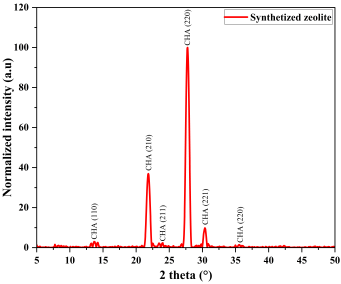
Figure 1. XRD pattern of the synthesized zeolite.
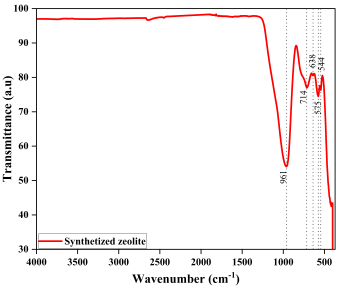
Figure 2. FTIR spectrum of the synthesized zeolite.
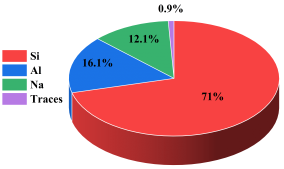
Figure 3. Percentage of element.
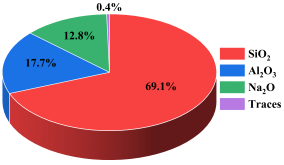
Figure 4. Percentage of oxide.
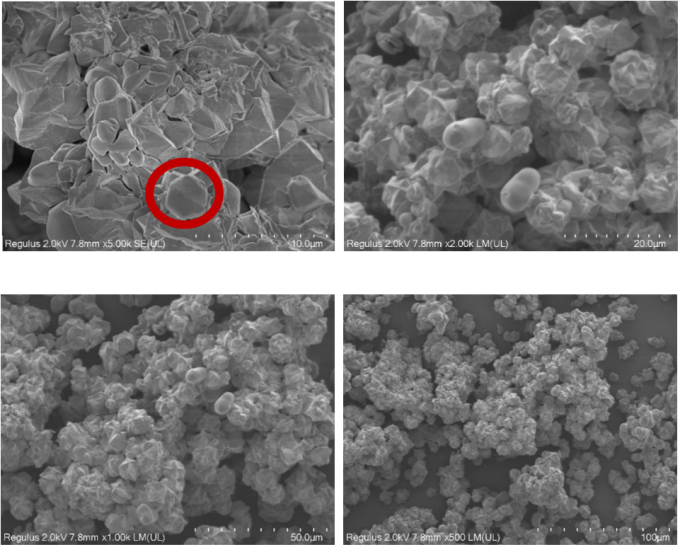
Figure 5. Scanning electron micrographs of the synthesized zeolite.
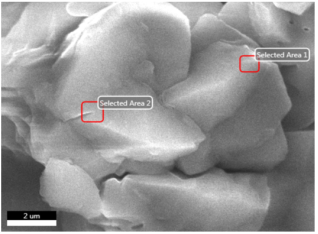
Figure 6. SEM images of the targeted zones.
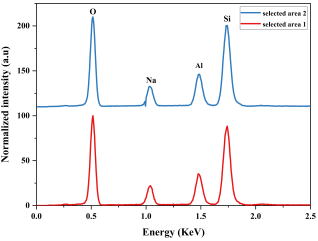
Figure 7. EDS spectrum of the synthesized product.
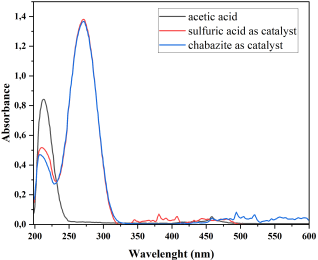
Figure 8. UV-vis spectra of acetic acid and of the esterification products.

Information



 Share This Article
 Twitter
 Linked In
 Facebook
 Copy
Copy Download