
Majority of matured and abandoned wells in depleted oil reservoirs in the Niger Delta are becoming economically unviable. Recently, application of geothermal well system has gained acceptance in the re-use of wells in depleted oil reservoirs. Unfortunately, there are limited studies in the conversion of matured and abandoned wells into geothermal well system in the Niger Delta. Therefore, this study evaluates the techno-economic feasibility of applying geothermal well systems (GWS) in wells in depleted oil reservoirs in the Niger Delta. In this study, characterization and screening of the gathered data from wells in depleted oil reservoirs were performed for GWS application, considering a reservoir temperature above 80°C (176°F) and a water cut of more than 85%. The screened well data were modelled using petroleum production software, PROSPER™, to evaluate their performances and estimate geothermal gradients. A model was developed from a simple regression technique in Microsoft Excel software to predict fluid flowing temperature gradient, using the simulated geothermal data. From the result, the temperature gradient varies by 0.011°F/ft. Estimation of overall heat recovery was then calculated with a simplified heat model, considering an open loop vertical coaxial single geothermal well system. The estimated overall heat recovery ranged from 0.1 MW to 8 MW, for the wells under study. Sensitivity analyses were also conducted to assess the impact of various operating parameters on the overall heat recovery. Finally, economic analyses were performed to evaluate the economic viability of converting matured and abandoned oil wells into geothermal well systems; the simplified economic analyses, considering net present value (NPV), showed geothermal well system with heat capacity above 5 MW to be economically viable. The study demonstrates that wells in depleted oil reservoirs in the Niger Delta can be effectively repurposed for geothermal electricity generation.
| Published in | International Journal of Oil, Gas and Coal Engineering (Volume 14, Issue 4) |
| DOI | 10.11648/j.ogce.20261404.13 |
| Page(s) | 88-107 |
| Creative Commons |
This is an Open Access article, distributed under the terms of the Creative Commons Attribution 4.0 International License (http://creativecommons.org/licenses/by/4.0/), which permits unrestricted use, distribution and reproduction in any medium or format, provided the original work is properly cited. |
| Copyright |
Copyright © The Author(s), 2026. Published by Science Publishing Group |
Geothermal Well Systems, Abandoned Wells, Niger Delta, Re-use of Oil Wells, Heat Recovery from Oil Wells
Well Properties | Well 1 | Well 2 | Well 3 | Well 4 | Well 5 | Well 6 | Well 7 | Well 8 | Well 9 | Well 10 |
|---|---|---|---|---|---|---|---|---|---|---|
Fluid Type | oil | oil | Oil | oil | oil | Oil | oil | oil | oil | oil |
Tubing Size (M) | 2.875 | 2.375 | 2.375 | 2.875 | 2.875 | 2.875 | 31/5’’ | 2.875 | 2.375 | 2.375 |
Current GOR (scf/bbl) | 418 | 1139 | 4258 | 1376 | 10938 | 1505 | 333 | 3500 | 2536 | 2142 |
APIo | 38.03 | 35.14 | 30.29 | 30.60 | 36.09 | 33.74 | 26.97 | 39.74 | 41.00 | 41.00 |
BSW (%) | 85.00 | 57.00 | 87.00 | 19.00 | 40.00 | 20.00 | 16.60 | 91.00 | 81.00 | 37.00 |
THP (psig) | 189 | 600 | 200 | 420 | 2000 | 725 | 305 | 290 | 232 | 1102 |
Current Reservoir Pressure (psia) | 4058 | 3352 | 3230 | 3230 | 3281 | 3401 | 4030 | 3585 | 3564.7 | 3250 |
Porosity (%) | 23 | 29 | 26 | 23 | 28 | 26 | 31 | 18 | 22 | 25 |
Permeability (md) | 423 | 526 | 662 | 436 | 511 | 605 | 431 | 220 | 453 | 395 |
Water Saturation (%) | 17 | 22 | 10 | 16 | 21 | 12 | 40 | 30 | 13 | 25 |
Thickness (ft) | 80 | 59 | 90 | 110 | 42 | 30 | 120 | 35 | 61 | 32 |
Casing Depth (ft) | 10510 | 7375 | 10908 | 7972 | 8820 | 8248 | 7,718 | 9507 | 9199 | 8566 |
Tubing Depth +0.5h (ft) | 10456 | 7362 | 10875 | 7959 | 8751 | 8225 | 7,702 | 9493 | 9181 | 8520 |
Reservoir Temperature (°F) | 218 | 162 | 221 | 182 | 168 | 152 | 150 | 194 | 190 | 182 |
Drainage Area (ft) | 31 | 32 | 22 | 17 | 52 | 54 | 19 | 72 | 34 | 94 |
Water cut (%) | Reservoir pressure (psig) | Tubing size (inches) | Liquid rate (stb/day) | Oil rate (stb/day) | Water rate (stb/day) | Gas rate (MMscf/day) | Node pressure (psig) |
|---|---|---|---|---|---|---|---|
60 | 4000 | 3 | 3922.4 | 1569 | 2353.5 | 0.65583 | 3910.7 |
60 | 4000 | 4 | 7368.3 | 2947.3 | 4421 | 1.232 | 3832.26 |
60 | 4000 | 5 | 10686.9 | 4274.7 | 6412.1 | 1.787 | 3756.71 |
WELL | Average Estimated Heat Recovery, from the stable operating conditions J/s | Standard deviation of the estimated Heat Recovery, from the stable operating conditions, J/s |
|---|---|---|
1 | 2137106.706 | 926383.6 |
2 | 3828415.673 | 1113605 |
3 | 8809371.794 | 2113289 |
4 | 5750277.777 | 1652454 |
5 | 85364.39235 | 11484.27 |
6 | 2625683.539 | 605983.2 |
7 | 2396355.487 | 269760.5 |
8 | 8073533.634 | 1487695 |
9 | 5604048.093 | 1522610 |
10 | 3537336.387 | 8200.522 |
Well | Total Cost ($) | Total Revenue ($) | Average Qrev (j/s) | NPV at 10%, ($) | NPV at 20%, ($) | NPV at 30% ($) | IRR (%) | Remarks |
|---|---|---|---|---|---|---|---|---|
Well 1 | 10729873 | 1797221.503 | 2137106.706 | 2110496.63 | -1397850.516 | -3376470.233 | 18 | Possible viable for Geothermal well system is greater than 12- 15% IRR |
well 2 | 16649455 | 3219544.444 | 3828415.673 | 6352796.333 | 67939.65556 | -3476561.737 | 20 | Possible viable for Geothermal well system is greater than 12- 15% IRR |
Well 3 | 34200553 | 7408329.304 | 8809371.794 | 18728752.85 | 4266990.111 | -3889081.031 | 25 | Possible viable for Geothermal well system is greater than 12- 15% IRR |
Well 4 | 23375972 | 4835753.599 | 5750277.777 | 6777254.461 | -2296251.089 | -7310105.602 | 20 | Possible viable for Geothermal well system is greater than 12- 15% IRR |
Well 5 | 3548775.4 | 71787.70944 | 85364.39235 | -3035883.293 | -3176019.723 | -3255053.151 | 0.5 | not economic viable for geothermal well system |
Well 6 | 12439892 | 2208094.829 | 2625683.539 | 3335989.681 | -974421.2384 | -3405384.79 | 19 | Possible viable for Geothermal well system is greater than 12- 15% IRR |
Well 7 | 11637244 | 2015239.11 | 2396355.487 | 2760767.058 | -1173171.174 | -3391813.58 | 19 | Possible viable for Geothermal well system is greater than 12- 15% IRR |
Well 8 | 23567921 | 6789518.845 | 8073533.634 | 24940252 | 11686466.08 | 4211663.533 | 40 | Possible viable for Geothermal well system is greater than 12- 15% IRR |
Well 9 | 22864168.33 | 4712780.284 | 5604048.093 | 10806606.67 | 1606811.742 | -3581641.647 | 25 | Possible viable for Geothermal well system is greater than 12- 15% IRR |
Well 10 | 15630677.36 | 2974758.408 | 3537336.387 | 5622683.709 | -184327.3651 | -3459335.834 | 20 | Possible viable for Geothermal well system is greater than 12- 15% IRR |
Author (s) | Depth (ft) | Temp. °C | Pressure (psia) | Fluid flow rate | Type of fluid used | Type of GWS | Heat generated |
|---|---|---|---|---|---|---|---|
Steward [31] | 6561.68 | 72 | Not stated | Not stated | CO2 | Deep geothermal single well | 1,800000 kWh |
Usuolori et al. [32] | 2438.4 | 96 | 3992 | Not stated | CO2 and Water vapour | Not stated | 59.39 J |
Sennaoui et al. [22] | 2500 | 178.26 | Not stated | 1-57Kg/s | Cool fluid | Coaxial close-loop (vertical & L-shape) | 1361.95 KW |
This study | 10211 | 90 | 3585 | 2890.3 stb/day | Oil and water | Vertical Coaxial open loop | 8073.53 KW (Well 8) |
AOFP | Absolute Open Flow Potential |
API | American Petroleum Institute |
BSW | Basic Sediment & Water |
CAPEX | Capital Expenditure |
DL | Deep Learning |
FV | Future Value |
GOR | Gas-Oil Ratio |
GSHP | Ground Source Heat Pump |
GWS | Geothermal Well Systems |
HIP | Heat In Place |
HSA | Hot Sedimentary Aquifer |
HT | High Temperature |
IPR | Inflow Performance Relationship |
IRR | Internal Rate of Return |
MT | Medium Temperature |
NN | Neural Network |
NPV | Net Present Value |
ORC | Organic Rankine Cycle |
NUPRC | Nigerian Upstream Petroleum Regulatory Commission |
PROSPER™ | Production System Performance Software |
PV | Present Value |
ROI | Return On Investment |
RNN | Recurrent Neural Network |
THP | Tubing Head Pressure |
VLP | Vertical Lift Performance |
Water cut (%) | Reservoir pressure (psig) | Tubing size (inches) | Liquid rate (stb/day) | Qrev, J/s; W |
|---|---|---|---|---|
60 | 4000 | 3 | 3922.4 | 1204965.301 |
60 | 4000 | 4 | 7368.3 | 2148731.654 |
60 | 4000 | 5 | 10686.9 | 3057623.162 |
Water cut (%) | Reservoir pressure (psig) | Tubing size (inches) | Liquid rate (stb/day) | Q, Heat Recovery, J/s.W |
|---|---|---|---|---|
60 | 3000 | 3 | 4409.4 | 2681158.18 |
60 | 3000 | 3.5 | 6035.9 | 2909024.631 |
60 | 3000 | 4 | 7613.3 | 3129980.379 |
60 | 3000 | 5 | 10266 | 3501570.793 |
60 | 4000 | 2 | 3622.5 | 2570937.123 |
60 | 4000 | 3 | 9859.8 | 3444674.221 |
60 | 4000 | 3.5 | 13900.9 | 4010768.263 |
60 | 4000 | 4 | 18293.3 | 4626054.375 |
60 | 4000 | 5 | 27122.7 | 5862883.59 |
70 | 3000 | 3 | 2483.8 | 2469424.487 |
70 | 3000 | 3.5 | 3184.1 | 2583871.346 |
70 | 3000 | 4 | 3912.4 | 2702894.211 |
70 | 3000 | 5 | 4541.9 | 2805760.972 |
70 | 4000 | 2 | 3476.8 | 2631685.945 |
70 | 4000 | 3 | 9454.3 | 3608593.315 |
70 | 4000 | 3.5 | 13260.8 | 4230696.743 |
70 | 4000 | 4 | 17311.2 | 4892630.107 |
70 | 4000 | 5 | 25177.3 | 6178184.453 |
80 | 4000 | 2 | 3241.6 | 2668947.713 |
80 | 4000 | 3 | 8784.2 | 3704152.473 |
80 | 4000 | 3.5 | 12152.8 | 4333353.381 |
80 | 4000 | 4 | 15634.4 | 4983613.259 |
80 | 4000 | 5 | 21959.3 | 6164946.719 |
90 | 4000 | 2 | 2788.5 | 2649429.644 |
90 | 4000 | 3 | 7356.3 | 3609223.683 |
90 | 4000 | 3.5 | 9972.2 | 4158881.456 |
90 | 4000 | 4 | 12488.7 | 4687667.036 |
90 | 4000 | 5 | 16443.1 | 5518562.439 |
95 | 4000 | 2 | 2443.7 | 2605490.642 |
95 | 4000 | 3 | 6206.4 | 3440051.52 |
95 | 4000 | 3.5 | 8181.8 | 3878180.806 |
95 | 4000 | 4 | 9951.6 | 4270713.454 |
95 | 4000 | 5 | 12444.8 | 4823709.844 |
Water cut (%) | Reservoir pressure (psig) | Tubing size (inches) | Liquid rate (stb/day) | Qrev, J/s.W |
|---|---|---|---|---|
60 | 1800 | 2 | 442 | 6252486.496 |
60 | 1800 | 3.5 | 2787.6 | 6911672.938 |
60 | 1800 | 4 | 4117.1 | 7285293.106 |
60 | 1800 | 5 | 7318.7 | 8184988.457 |
60 | 2000 | 2 | 630.6 | 6305506.181 |
60 | 2000 | 3 | 2362.9 | 6792331.809 |
60 | 2000 | 3.5 | 3645 | 7152603.381 |
60 | 2000 | 4 | 5220.9 | 7595448.898 |
60 | 2000 | 5 | 9105.1 | 8687036.167 |
60 | 2500 | 2 | 1103.5 | 6438383.255 |
60 | 2500 | 3 | 3719 | 7173399.088 |
60 | 2500 | 3.5 | 5580.3 | 7696476.691 |
60 | 2500 | 4 | 7827.6 | 8328029.198 |
60 | 2500 | 5 | 13329.2 | 9874077.604 |
60 | 3000 | 2 | 1578 | 6571728.701 |
60 | 3000 | 3 | 4916.4 | 7509877.374 |
60 | 3000 | 3.5 | 7304.5 | 8181007.297 |
60 | 3000 | 4 | 10194.3 | 8993117.125 |
60 | 3000 | 5 | 17307.7 | 10992127.88 |
60 | 4000 | 2 | 2427 | 6810317.285 |
60 | 4000 | 3 | 7038.6 | 8106301.998 |
60 | 4000 | 3.5 | 10407.8 | 9053115.55 |
60 | 4000 | 4 | 14468.7 | 10194303.39 |
60 | 4000 | 5 | 24645.9 | 13054321.98 |
70 | 1800 | 3.5 | 2461.4 | 6935278.876 |
70 | 1800 | 4 | 3674.9 | 7333113.865 |
70 | 1800 | 5 | 6684.4 | 8319832.692 |
70 | 2000 | 3 | 2187.4 | 6845445.168 |
70 | 2000 | 3.5 | 3378.9 | 7236067.232 |
70 | 2000 | 4 | 4893.9 | 7732775.504 |
70 | 2000 | 5 | 8603.9 | 8949137.015 |
70 | 2500 | 2 | 695.2 | 6356184.008 |
70 | 2500 | 3 | 3628.9 | 7318079.131 |
70 | 2500 | 3.5 | 5477.6 | 7924152.213 |
70 | 2500 | 4 | 7699.6 | 8652657.678 |
70 | 2500 | 5 | 13131.2 | 10433500.86 |
70 | 3000 | 2 | 1382.9 | 6581658.182 |
70 | 3000 | 3 | 4933.7 | 7745843.077 |
70 | 3000 | 3.5 | 7342.2 | 8535471.059 |
70 | 3000 | 4 | 10252.1 | 9489544.373 |
70 | 3000 | 5 | 17368.3 | 11822644.72 |
70 | 4000 | 2 | 2494.9 | 6946238.775 |
70 | 4000 | 3 | 7266.1 | 8510553.681 |
70 | 4000 | 3.5 | 10741.8 | 9650055.382 |
70 | 4000 | 4 | 14927.6 | 11022431.53 |
70 | 4000 | 5 | 25399.8 | 14455830.86 |
80 | 1800 | 5 | 4184.7 | 7696242.505 |
80 | 2000 | 3.5 | 2269.3 | 6978556.428 |
80 | 2000 | 4 | 3431.7 | 7414142.183 |
80 | 2000 | 5 | 6417.7 | 8532941.852 |
80 | 2500 | 3 | 3099.1 | 7289508.452 |
80 | 2500 | 3.5 | 4778.5 | 7918765.938 |
80 | 2500 | 4 | 6764 | 8662727.672 |
80 | 2500 | 5 | 11589.9 | 10470970.6 |
80 | 3000 | 3 | 4645.7 | 7868978.017 |
80 | 3000 | 3.5 | 6947.3 | 8731437.812 |
80 | 3000 | 4 | 9697 | 9761715.214 |
80 | 3000 | 5 | 16407.5 | 12276122.27 |
80 | 4000 | 2 | 2502.2 | 7065814.09 |
80 | 4000 | 3 | 7323.7 | 8872464.554 |
80 | 4000 | 3.5 | 10835.4 | 10188261.39 |
80 | 4000 | 4 | 15051.7 | 11768126.24 |
80 | 4000 | 5 | 25496.1 | 15681606.64 |
90 | 3000 | 3 | 2716 | 7273162.277 |
90 | 3000 | 3.5 | 4344.6 | 7959654.794 |
90 | 3000 | 4 | 6160.5 | 8725161.63 |
90 | 3000 | 5 | 10551.9 | 10576260.58 |
90 | 4000 | 2 | 2233.1 | 7069607.902 |
90 | 4000 | 3 | 6632.1 | 8923938.613 |
90 | 4000 | 3.5 | 9808.9 | 10263060.37 |
90 | 4000 | 4 | 13649.7 | 11882127.93 |
90 | 4000 | 5 | 22900.7 | 15781744.53 |
95 | 4000 | 3 | 4638.7 | 8192295.057 |
95 | 4000 | 3.5 | 6941.9 | 9217092.509 |
95 | 4000 | 4 | 9617.8 | 10407740.41 |
95 | 4000 | 5 | 15717 | 13121580.17 |
Water cut (%) | Reservoir pressure (psig) | Tubing size (inches) | Liquid rate (stb/day) | Qrev, J/s.W |
|---|---|---|---|---|
60 | 2500 | 3 | 3217.2 | 3867962.563 |
60 | 2500 | 3.5 | 4757.1 | 4157141.315 |
60 | 2500 | 4 | 6371.1 | 4460215.67 |
60 | 2500 | 5 | 9377.8 | 5024802.758 |
60 | 3000 | 3 | 5691.7 | 4332620.24 |
60 | 3000 | 3.5 | 8197.5 | 4803161.641 |
60 | 3000 | 4 | 10979.4 | 5325561.179 |
60 | 3000 | 5 | 16733.3 | 6406006.857 |
60 | 4000 | 2 | 3525.5 | 3925860.906 |
60 | 4000 | 3 | 9863.3 | 5115969.176 |
60 | 4000 | 3.5 | 14235.3 | 5936936.387 |
60 | 4000 | 4 | 19182.4 | 6865907.481 |
60 | 4000 | 5 | 30238.1 | 8941922.995 |
70 | 3000 | 3 | 4890.7 | 4335280.434 |
70 | 3000 | 3.5 | 7009.4 | 4799437.369 |
70 | 3000 | 4 | 9291.8 | 5299428.683 |
70 | 3000 | 5 | 13714.7 | 6268396.578 |
70 | 4000 | 2 | 3448 | 4019218.073 |
70 | 4000 | 3 | 9642.7 | 5376323.942 |
70 | 4000 | 3.5 | 13831.6 | 6293997.035 |
70 | 4000 | 4 | 18570.4 | 7332161.274 |
70 | 4000 | 5 | 29009.8 | 9619145.833 |
80 | 3000 | 3 | 2703.9 | 3940820.586 |
80 | 3000 | 3.5 | 3804.4 | 4216354.108 |
80 | 3000 | 4 | 4851.6 | 4478555.362 |
80 | 3000 | 5 | 6386.8 | 4862906.472 |
80 | 4000 | 2 | 3261.7 | 4080465.131 |
80 | 4000 | 3 | 9142.2 | 5552773.056 |
80 | 4000 | 3.5 | 13040.6 | 6528845.234 |
80 | 4000 | 4 | 17361.6 | 7610699.25 |
80 | 4000 | 5 | 26437.2 | 9882974.499 |
90 | 4000 | 2 | 2864.6 | 4070700.654 |
90 | 4000 | 3 | 7952.3 | 5503762.89 |
90 | 4000 | 3.5 | 11139 | 6401343.693 |
90 | 4000 | 4 | 14505.9 | 7349687.259 |
90 | 4000 | 5 | 20888.4 | 9147446.465 |
95 | 4000 | 2 | 2453.3 | 3993273.356 |
95 | 4000 | 3 | 6578.8 | 5219841.934 |
95 | 4000 | 3.5 | 8980 | 5933744.154 |
95 | 4000 | 4 | 11372.1 | 6644954.884 |
95 | 4000 | 5 | 15374 | 7834781.486 |
Water cut (%) | Reservoir pressure (psig) | Tubing size (inches) | Liquid rate (stb/day) | Qrev, J/s.W |
|---|---|---|---|---|
60 | 4000 | 2 | 86.2 | 66255.0972 |
60 | 4000 | 3 | 2672.4 | 77367.8264 |
60 | 4000 | 3.5 | 3990.1 | 83029.82531 |
60 | 4000 | 4 | 5418.2 | 89166.64148 |
60 | 4000 | 5 | 8621.3 | 102930.6128 |
70 | 4000 | 3 | 2611.7 | 78977.76487 |
70 | 4000 | 3.5 | 3843.2 | 85151.10545 |
70 | 4000 | 4 | 5175.6 | 91830.77454 |
70 | 4000 | 5 | 7910 | 105538.885 |
80 | 4000 | 4 | 2345.3 | 79321.52398 |
80 | 4000 | 5 | 2365.6 | 79438.25884 |
| [1] | Aladeitan, Y. M., Arinkoola, A. O. and Ogbe, D. O. Integrated reservoir management in a Niger Delta oil rim field, Cogent Engineering. 2020, 7(1): 1-16. |
| [2] | Axelsson, G. (2008). Production capacity of geothermal systems. the workshop for decision makers on direct heating use of geothermal resources in Asia, Tianjin, China, 11-18 May, 15 p. |
| [3] | Aydin, H., Yüksel, S. and Topuz C. (2024). Utilization of oil and gas wells for geothermal applications. Proceedings, 49th workshop on geothermal reservoir engineering Stanford University, Stanford, California, 12-14 February, 120-227. |
| [4] | Bennett, K., Li, K. and Horne, R. (2012). Power generation potential from coproduced fluids in the Los Angeles Basin, Proceedings, 37-The Workshop on Geothermal Reservoir Engineering, Stanford University, Stanford, California. |
| [5] | Bu, X., Ma, W. and Li, H. Geothermal energy production utilizing abandoned oil and gas wells. Renewable energy. 2012, 41: 80-85. |
| [6] | Davis, A. P. and Michaelides, E. E. Geothermal power production from abandoned oil wells. Energy. 2009, 34(7): 866-72. |
| [7] | Etu-Efeotor, J. O. (1997). Fundamentals of Petroleum Geology. First Edition. Paragraphics: An imprint of Jeson services, Port Harcourt. 62: 64-146. |
| [8] | Gabdrakhmanova K. F., Izmailova G. R., Larin P. A., Vasilyeva E. R., Madjidov M. A. and Marupov S. R. Nomogram method as means for resource potential efficiency predicative aid of petrothermal energy J. Phys. Conf. ser. 2018, 1015(3) 032036. |
| [9] | Gudmundsdottir, H. and Horne, R. N. (2020). Prediction modeling for geothermal reservoirs using deep learning. 45th Workshop on Geothermal Reservoir Engineering; Stanford University: Stanford, CA, 1-12. |
| [10] | Guzovic, Z., Majcen, B. and Cvetkovic, S. Possibilities of electricity generation in the republic of Croatia from medium-temperature geothermal sources, Applied Energy. 2012, 98: 404-414. |
| [11] | International Financial corporation (IFC) - World Bank Group, Nigerian CO2 Storage Atlas, March 2025, |
| [12] | Kalogirou, S. A., Florides, G. A., Pouloupatis, P. D., Panayides, I., Joseph-Stylianou, J. and Zomeni, Z. Artificial neural networks for the generation of geothermal maps of ground temperature at various depths by considering land configuration. Energy. 2012, 48: 233-240. |
| [13] | Karadaş, M. (2013). Performance assessment of a binary cycle geothermal power plant. |
| [14] | Li, K. and Zhang, L. (2008). Exceptional enhanced geothermal systems from oil and gas reservoirs. Proceedings, Thirty-third Workshop on Geothermal Reservoir Engineering, Stanford University, Stanford, California, 28-30th, January. |
| [15] | Livinus, A., Obot, R. M., Eyo, A., Koffi, I. U., Etuk, V. E. Evaluation of CO2 Storage Potential of Some Depleted Hydrocarbon Reservoirs: Niger Delta Case Study. Petroleum Science and Engineering. 2026, Vol. 10, No. 1, pp. 51-62 |
| [16] | McKenna, J., Blackwell, D., Moyes, C., and Patterson P. D. Geothermal electric power supply possible from Gulf Coast, midcontinent oil field waters. Oil and Gas Journal. 2005, 1(1): 4-40. |
| [17] | Mukhametshin, V. V. (2018). Rationale for trends in increasing oil reserves depletion in Western Siberia cretaceous deposits based on targets identification Bulletin of the Tomsk Polytechnic University. Geo Assets Engineering. 2018, 329(5): 117-24. |
| [18] | Noorollahi, Y., Pourarshad, M., Jalilinasrabady, S. and Yousefi, H. Numerical simulation of power production from abandoned oil wells in Ahwaz oil field in southern Iran. Geothermics. 2015, 55: 16-23. |
| [19] | Pan, C., Chávez, O., Romero, C. E., Levy, E. K., Aguilar-Corona, A. and Rubio-Maya, C. Heat mining assessment for geothermal reservoirs in Mexico using supercritical CO2 injection. Energy. 2016, 102: 148-160. |
| [20] | Raimi, D., Krupnick, A. J., Shah, J. S. and Thompson, A. Decommissioning orphaned and abandoned oil and gas wells: New estimates and cost drivers. Environmental Science and Technology. 2021, 55(15): 10224-10230. |
| [21] | Riney, T. D. (1992). Pleasant Bayou geopressured-geothermal reservoir analysis. Journal of Energy Resource Technology. 1992, 114(4): 315-322. |
| [22] | Sennaoui, B., Enab, K. and Mendez, C. (2025). Techno-economic analysis of repurposing depleted oil and gas wells for geothermal energy. Paper presented at the Society of Petroleum Engineers Annual Technical Conference and Exhibition held in Houston, Texas, USA, 20 - 22th October, 2025. |
| [23] | Soldo, E. and Alimonti, C. (2015). From an oilfield to a geothermal one: use of a selection matrix to choose between two extraction technologies. Proceedings World Geothermal Congress, Melbourne, Australia, 19-25 April 2015. |
| [24] | Topor, T., Słota-Valim, M. and Kudrewicz, R. Assessing the geothermal potential of selected depleted oil and gas reservoirs based on geological modeling and machine learning tools. Energies. 2023, 16(13), 5211. |
| [25] | Tuttle, M. L. W., Brownfield, M. E., and Charpentier, R. R. The Niger Delta Petroleum System. USGS Science for a changing world: Open-File Report. 1999, 65: 99-50. |
| [26] | Wight, N. M. and Bennett, N. S. Geothermal energy from abandoned oil and gas wells using water in combination with a closed wellbore. Applied Thermal Energy journal. 2015, 89: 908-915. |
| [27] | Wei, N. and Guo, B. Deliverable wellhead temperature: a feasibility study of converting abandoned oil/gas wells to geothermal energy wells. MDPI sustainability journals. 2023, 15(1) 729. |
| [28] | Wen-Long, C., Tong-Tong, L., Yong-Le, N. and Chang-Long, W. Studies on geothermal power generation using abandoned oil wells. Energy. 2013, 59: 248-54. |
| [29] | Wen-Long, C., Tong-Tong, L., Yong-Le, N. and Kun, X. Evaluation of working fluids for geothermal power generation from abandoned oil wells. Applied Energy, 2014, 118: 45-238. |
| [30] | Nigerian Upstream Petroleum Regulatory Commission (NUPRC). (2023). Annual petroleum reserves and production report. Federal Government of Nigeria. |
| [31] |
Stewart, I. (2016). Deep Geothermal Single Well (DGSW).
https://www.gov.scot/binaries/content/documents/govscot/publications/research-and-analysis/2016/03/ |
| [32] | Usuolori, N. C. I., Anthony, K., Ngozi, C. N. and Chukwuebuka, F. D. A study of geothermal energy prospect from abandoned oil and gas wells in Nigeria. Improved oil and Gas Recovery, 2025, 9: 1-10. |
| [33] | Wang, K., Liu, J. and Wu, X. (2018). Downhole geothermal power generation in oil and gas wells. Geothermics. 2018, 7(5): 76-141. |
| [34] | Yan, B., Gudala, M. and Sun, S. Robust optimization of geothermal recovery based on a generalized thermal decline model and deep learning. Energy Convers. Manage. 2023, 286: 117033. |
| [35] | Zhang, L., Chen, S. and Zhang, C. Geothermal Power Generation in China: Status and Prospects. Energy Science and Engineering journal. 2019, 7: 1428-1450. |
| [36] | Tester, J. W., Anderson, B. J., Batchelor, A. S., Blackwell, D. D., DiPippo, R., Drake, E. M., Veatch, R. W. (2016). The Future of Geothermal Energy. Idaho National Laboratory, U.S. Department of Energy National Laboratory operated by Battelle Energy Alliance. Idaho Falls: U.S. Department of Energy. |
APA Style
Itah, J. J., Livinus, A., Ouets, I. (2026). A Simulation Approach on the Techno-economic Feasibility of Wells in Depleted Oil Reservoirs for Geothermal Well Systems in the Niger Delta. International Journal of Oil, Gas and Coal Engineering, 14(4), 88-107. https://doi.org/10.11648/j.ogce.20261404.13
ACS Style
Itah, J. J.; Livinus, A.; Ouets, I. A Simulation Approach on the Techno-economic Feasibility of Wells in Depleted Oil Reservoirs for Geothermal Well Systems in the Niger Delta. Int. J. Oil Gas Coal Eng. 2026, 14(4), 88-107. doi: 10.11648/j.ogce.20261404.13
AMA Style
Itah JJ, Livinus A, Ouets I. A Simulation Approach on the Techno-economic Feasibility of Wells in Depleted Oil Reservoirs for Geothermal Well Systems in the Niger Delta. Int J Oil Gas Coal Eng. 2026;14(4):88-107. doi: 10.11648/j.ogce.20261404.13
@article{10.11648/j.ogce.20261404.13,
  author = {Joy Jumbo Itah and Aniefiok Livinus and Isaac Ouets},
  title = {A Simulation Approach on the Techno-economic Feasibility of Wells in Depleted Oil Reservoirs for Geothermal Well Systems in the Niger Delta},
  journal = {International Journal of Oil, Gas and Coal Engineering},
  volume = {14},
  number = {4},
  pages = {88-107},
  doi = {10.11648/j.ogce.20261404.13},
  url = {https://doi.org/10.11648/j.ogce.20261404.13},
  eprint = {https://article.sciencepublishinggroup.com/pdf/10.11648.j.ogce.20261404.13},
  abstract = {Majority of matured and abandoned wells in depleted oil reservoirs in the Niger Delta are becoming economically unviable. Recently, application of geothermal well system has gained acceptance in the re-use of wells in depleted oil reservoirs. Unfortunately, there are limited studies in the conversion of matured and abandoned wells into geothermal well system in the Niger Delta. Therefore, this study evaluates the techno-economic feasibility of applying geothermal well systems (GWS) in wells in depleted oil reservoirs in the Niger Delta. In this study, characterization and screening of the gathered data from wells in depleted oil reservoirs were performed for GWS application, considering a reservoir temperature above 80°C (176°F) and a water cut of more than 85%. The screened well data were modelled using petroleum production software, PROSPER™, to evaluate their performances and estimate geothermal gradients. A model was developed from a simple regression technique in Microsoft Excel software to predict fluid flowing temperature gradient, using the simulated geothermal data. From the result, the temperature gradient varies by 0.011°F/ft. Estimation of overall heat recovery was then calculated with a simplified heat model, considering an open loop vertical coaxial single geothermal well system. The estimated overall heat recovery ranged from 0.1 MW to 8 MW, for the wells under study. Sensitivity analyses were also conducted to assess the impact of various operating parameters on the overall heat recovery. Finally, economic analyses were performed to evaluate the economic viability of converting matured and abandoned oil wells into geothermal well systems; the simplified economic analyses, considering net present value (NPV), showed geothermal well system with heat capacity above 5 MW to be economically viable. The study demonstrates that wells in depleted oil reservoirs in the Niger Delta can be effectively repurposed for geothermal electricity generation.},
 year = {2026}
}
TY  - JOUR
T1  - A Simulation Approach on the Techno-economic Feasibility of Wells in Depleted Oil Reservoirs for Geothermal Well Systems in the Niger Delta
AU  - Joy Jumbo Itah
AU  - Aniefiok Livinus
AU  - Isaac Ouets
Y1  - 2026/08/20
PY  - 2026
N1  - https://doi.org/10.11648/j.ogce.20261404.13
DO  - 10.11648/j.ogce.20261404.13
T2  - International Journal of Oil, Gas and Coal Engineering
JF  - International Journal of Oil, Gas and Coal Engineering
JO  - International Journal of Oil, Gas and Coal Engineering
SP  - 88
EP  - 107
PB  - Science Publishing Group
SN  - 2376-7677
UR  - https://doi.org/10.11648/j.ogce.20261404.13
AB  - Majority of matured and abandoned wells in depleted oil reservoirs in the Niger Delta are becoming economically unviable. Recently, application of geothermal well system has gained acceptance in the re-use of wells in depleted oil reservoirs. Unfortunately, there are limited studies in the conversion of matured and abandoned wells into geothermal well system in the Niger Delta. Therefore, this study evaluates the techno-economic feasibility of applying geothermal well systems (GWS) in wells in depleted oil reservoirs in the Niger Delta. In this study, characterization and screening of the gathered data from wells in depleted oil reservoirs were performed for GWS application, considering a reservoir temperature above 80°C (176°F) and a water cut of more than 85%. The screened well data were modelled using petroleum production software, PROSPER™, to evaluate their performances and estimate geothermal gradients. A model was developed from a simple regression technique in Microsoft Excel software to predict fluid flowing temperature gradient, using the simulated geothermal data. From the result, the temperature gradient varies by 0.011°F/ft. Estimation of overall heat recovery was then calculated with a simplified heat model, considering an open loop vertical coaxial single geothermal well system. The estimated overall heat recovery ranged from 0.1 MW to 8 MW, for the wells under study. Sensitivity analyses were also conducted to assess the impact of various operating parameters on the overall heat recovery. Finally, economic analyses were performed to evaluate the economic viability of converting matured and abandoned oil wells into geothermal well systems; the simplified economic analyses, considering net present value (NPV), showed geothermal well system with heat capacity above 5 MW to be economically viable. The study demonstrates that wells in depleted oil reservoirs in the Niger Delta can be effectively repurposed for geothermal electricity generation.
VL  - 14
IS  - 4
ER  -
Petroleum Engineering Department, University of Uyo, Uyo, Nigeria
Petroleum Engineering Department, University of Uyo, Uyo, Nigeria
Drilling Engineering, Conoil Producing PLC, Lagos, Nigeria
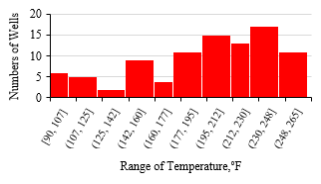
Figure 1. General distribution of temperature for gathered wells.
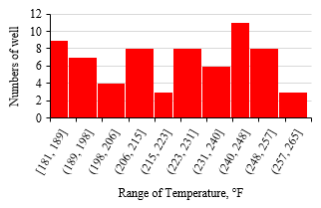
Figure 2. Temperature distribution for the gathered well above 176°F.
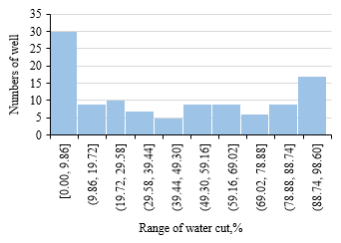
Figure 3. Water cut distributions for the gathered wells.
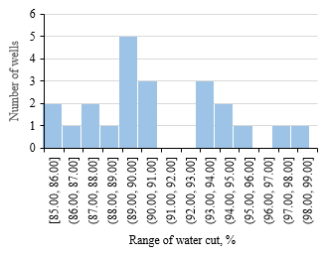
Figure 4. Water cut distributions for the gathered wells, above 85%.
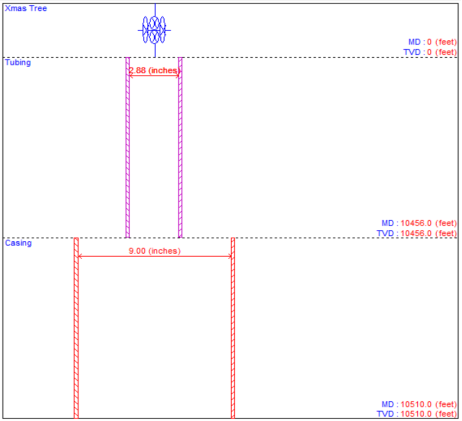
Figure 5. Typical wellbore schematic of one the modeled wells.
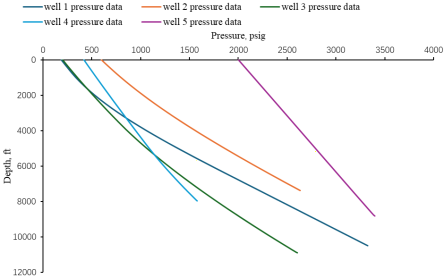
Figure 6. Combine pressure gradient curves for some selected 5 wells.
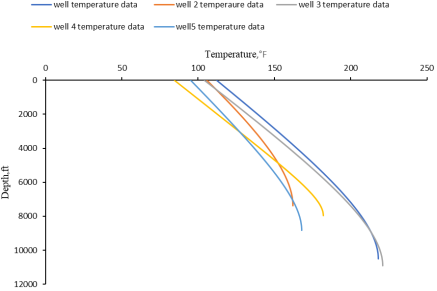
Figure 7. Combine temperature gradient curves for some 5 wells.
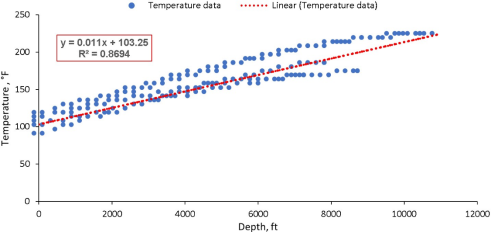
Figure 8. Regression analysis of the temperature gradients for the wells studied.
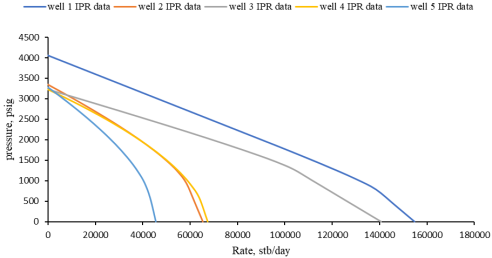
Figure 9. IPR curves for some selected wells.
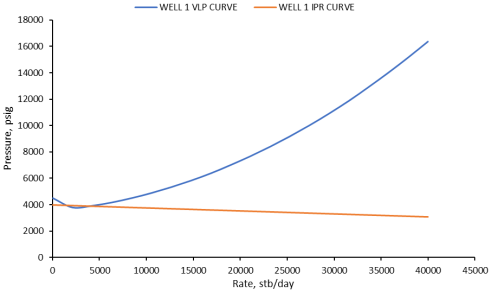
Figure 10. IPR/VLP curve for well 1.
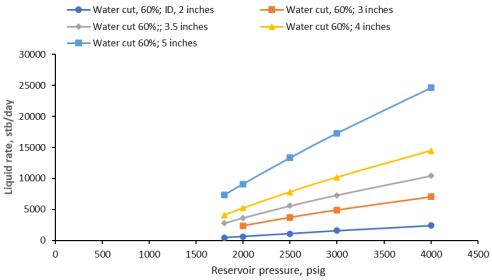
Figure 11. Sensitivity analysis for well 3 with 60% water cut.
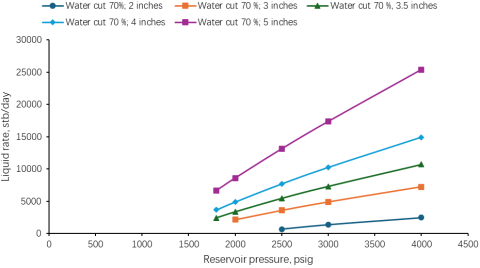
Figure 12. Sensitivity analysis for well 3 with 70% water cut.
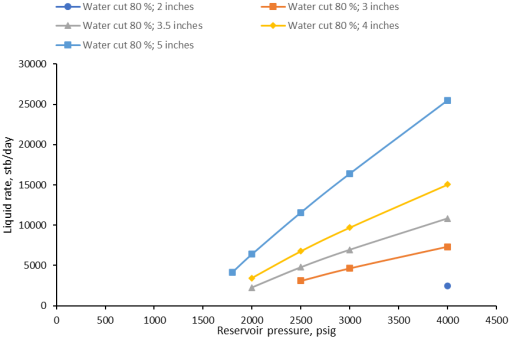
Figure 13. Sensitivity analysis for well 3 with 80% water cut.
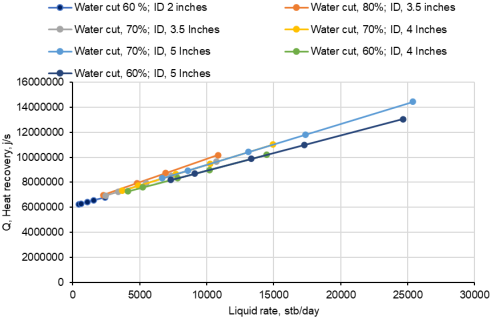
Figure 14. Thermal heat power for vertical coaxial system for well 3.
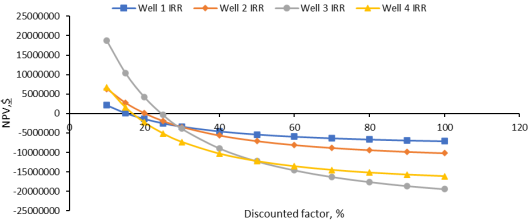
Figure 15. Combined NPV curve plot for selected wells.

Information



 Share This Article
 Twitter
 Linked In
 Facebook
 Copy
Copy Download