The study was conducted in Kofale District of west Arsi zone with the objectives of to demonstrate and evaluate the horizontal frame hive under frames conditions, to create awareness about this hive technology in the study area, and to assess farmers' perceptions and preferences of the new hive technology. The district was purposively selected based on potentiality for honey production. Two kebele’s were selected purposively based on potential of beekeeping. Selected farmers were organized into two Farmer Research and Extension Groups (FREGs) comprising 20 members. Awareness creation training and experience sharing field day was carried out to facilitate experience exchange among participants. The horizontal frame hive was demonstrated and evaluated alongside the traditional hive under actual farm conditions. Honeybee colonies were introduced at trial sites and routinely inspected to monitor their development. At maturity, honey was harvested and extracted using a mechanical extractor. The data collected were analyzed using simple descriptive statistics and partial budget analysis, while farmers' preferences and perceptions were analyzed using a five-point Likert scale rating method. The results of the analysis show that an average honey yield of 23.40 kg/hive and 6.21 kg/hive was obtained from horizontal frame hives and traditional hives, respectively. The result showed that there is a statistically significant difference (p<0.05) between horizontal frame hives and traditional hives. The cost benefit analysis also showed that the highest net benefit (12,490 ETB/hive) was obtained from horizontal frame hive as compared to traditional hive (2,150 ETB/hive). Moreover, farmers’ perception results also show that the horizontal frame hive was preferred by participant farmers for its ease of management and inspection, honey quantity and purity, savings in labor and time, and reduced colony disturbance and mortality. Therefore, the horizontal frame hive is recommended for further scaling up to reach a greater number of farmers with this beneficial technology.
This is an Open Access article, distributed under the terms of the Creative Commons Attribution 4.0 International License (http://creativecommons.org/licenses/by/4.0/), which permits unrestricted use, distribution and reproduction in any medium or format, provided the original work is properly cited.
Beekeeping is a vital livestock sub-sector that significantly enhances the livelihoods of people in many countries
[1]
FAO. (2012). Beekeeping and sustainable livelihoods by Martin Hilmi, Nicola Bradbear and Danilo Mejia, FAO Diversification booklet number 1 (2nd ed.). FAO, Rome.
[1]
. (FAO, 2012). It serves as a key strategy for poverty alleviation in developing nations
[2]
Amulen, D. R., D’Haene, M., D’Haene, E., OkweeAcai, J., Agea, J. G., Smagghe, G., & Cross, P. (2019). Estimating the potential of beekeeping to alleviate household poverty in rural Uganda. PLoS14(3), e0214113. Available at:
. At the household level, beekeeping provides nutritional benefits, income opportunities, and ecological security. Additionally, it supports increased crop production through honeybee pollination
[2]
Amulen, D. R., D’Haene, M., D’Haene, E., OkweeAcai, J., Agea, J. G., Smagghe, G., & Cross, P. (2019). Estimating the potential of beekeeping to alleviate household poverty in rural Uganda. PLoS14(3), e0214113. Available at:
Tarekegn, K., Haji, J., & Tegegne, B. (2017). Determinants of honey producer market outlet choice in Chena District, southern Ethiopia: A multivariate probit regression analysis. Agricultural and Food Economics, 5(1), 20. Available at:
. The sector tends to be most profitable when modern beekeeping technologies and their full applications are employed
[4]
Berhe, A., Asale, A., & Yewhalaw, D. (2016). Community perception on beekeeping practices, management, and constraints in Termaber and Basona Werena districts, central Ethiopia. Advances in Agriculture, 2016. Available at:
. Moreover, beekeeping contributes to economic activity by creating jobs for more than two million people
[5]
CSA. (2011). Key Findings of the 2008/2009-2010/11 agricultural sample surveys for all sectors and seasons country summary. Central Statistics Authority. Addis Ababa, Ethiopia.
[5]
. However, traditional methods, which result in low production, poor quality products, and limited marketing efforts, have kept the sector largely subsistence based
[6]
Meaza, G. (2010). Socio-economic analysis of market-oriented beekeeping in Atsbi Wemberta District of Eastern Zone, Tigray Region [M. A Thesis], Mekelle University.
[6]
.
Ethiopia possesses immense potential for beekeeping due to its suitable climate and diverse vegetation, providing abundant nectar and pollen sources for honeybees
[7]
Chala, K., Taye, T., & Kebede, D. (2013). Assessment of honey production and marketing system in Gomma District, Southwestern Ethiopia. Greener Journal of Business and Management Studies, 3(3), 099-107. Available at:
Teklu, G. (2016). Assessment of major honeybee flora resources on selected districts of Sidama and Gedeo zones of South Nations Nationalities and Peoples Regional State, Ethiopia. Journal of Agricultural Economics, Extension and Rural Development, 4(2), 368-381.
[7, 8]
. The country's favorable conditions support around 10 million bee colonies, with 5 to 7.5 million managed colonies and the remainder being feral
[9]
MoARD (2007) Ministry of Agriculture and Rural Development: Annual Report. Addis Ababa, Ethiopia.
[10]
CSA, (2009): Statistical Abstracts. Central Statistical Agency. Addis Ababa, Ethiopia.
[9, 10]
. This makes Ethiopia a leader in Africa in both honeybee colony population and honey production, ranking among the top ten honey-producing countries worldwide
[11]
Hilmi M, Bradbear N, Mejia D (2012). Bee keeping and sustainable livelihoods: Diversification booklet number 1, Second edition, Rural Infrastructure and Agro-Industries Division Food and Agriculture Organization of the United Nations Rome 2011.
[11]
. Estimates suggest Ethiopia’s annual honey production potential is approximately 500,000 tons of honey and 50,000 tons of beeswax
[12]
Birhan, M., Solomon, S., & Zebene, G. (2015). The Assessment of challenges and opportunities of beekeeping in and around Gondar. Academic Journal of Entomology, 8(3), 127-131.
Gobena, W. E. (2017). Pre-scaling up of transitional locally made beehive technology package West Shoa Zone, Oromia Region, Ethiopia. Journal of Agricultural Economics, Extension and Rural Development, 5(2), 600-605.
[14, 15]
. Traditional hives dominate the landscape, accounting for approximately 95.73% of all hives, while transitional and frame hives represent only 1.30% and 3.33%, respectively. However, traditional hives significantly constrain honeybee productivity and bee product quality, with average yields of merely 5 to 7 kg per hive
[16]
Nuru A, Edessa N (2004). Construction of Top Bar Hives from Locally Available Materials and Evolution of the Efficiency of these Hives. 13th Proceeding of Ethiopian Society of Animal Production.
[16]
. In contrast, transitional hives can produce approximately 15 kg per hive, while improved box hives yield 20 to 30 kg per hive per season
[17]
Sebeho HK (2015) Production and quality characteristics of Ethiopia honey: A Review. Academic Journal of Entomology 8: 168-173.
[17]
. Consequently, adopting improved beekeeping technologies and practices enables beekeepers to generate surplus honey production. To solve these problems, the Adami Tulu Agricultural Research Center (ATARC) has been conducting several research studies on the development and adaptation of beekeeping technologies. Among the innovations developed, the Tensheratach (horizontal frame hive) has shown superior productivity, with a potential honey yield of 24.81 kg per hive. It also offers advantages in terms of low cost, ease of management, and higher economic returns compared with both modern and traditional beehives
[18]
Taye Beyene, Mekonen Woldetsadik, Desta Abi. (2022). Comparative Evaluation of Horizontal and Vertical Frame Beehives at Adami Tulu Agricultural Research Center of Oromia, Ethiopia. Animal and Veterinary Sciences 2022; 10(2): 28-32. Available at:
. Despite these considerable advantages, this beehive technology has not yet been demonstrated to local beekeepers or evaluated under on-farm conditions with active farmer participation. This gap was mainly due to the lack of an appropriate demonstration approach based on the “learning by doing” principle. Therefore, this study was initiated to demonstrate and evaluate horizontal frame hive to the farming community, raise awareness of the technology in the study area, and assess farmers’ perceptions and preferences regarding the new hive technology.
2. Materials and Methods
2.1. Description of Study Area
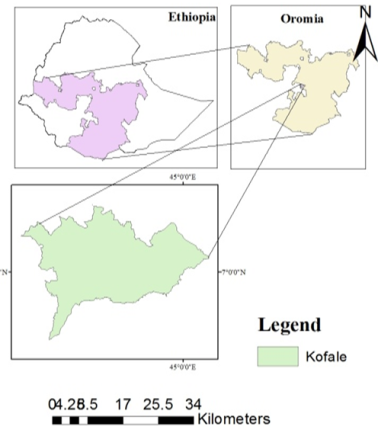
The study was conducted in Kofale district, which is located 279 km south of Addis Ababa. Geographically, the district is located between 7°9′60″N latitude and 38°49′59.99″E longitude. The district is bordered by Shashemene district to the northwest, Kokosa district to the south, the SNNP Region to the west, Gedeb Asassa district to the east, Kore district to the north, and Dodola district to the southeast
[19]
CSA (Central Statistics Agency). 2015. Agricultural sample survey report on area and production of crops (private peasant holdings, 'meher' season). Addis Ababa, Ethiopia, Volume 1 pp. 9-10.
[19]
. Most of its areas are highlands (90%) and mid highlands (10%) with an altitude ranging from 2,200 to 3,200 m-a-s-l. The mean annual rainfall of the district is 1,800 mm, which varies between 2,000 mm and 3,050 mm. The district experiences bi-modal rainfall distribution, characterized by small rains from March/April to May and the main rainy season extending from June to September/October. The average annual temperature is 19.5°C and it ranges from 17°C to 22°C
[20]
DOANR (District Office of Agriculture and Natural Resource). 2018. Reports of Kofale district office of agriculture, 2017. Kofale, Ethiopia.
The target district Kofale was selected purposively for the implementation of the experiments because of its potential in honey production. Two kebeles and 20 farmers (10 from each kebele) were selected based on accessibility, honey production potential, interest in accepting the technology and willingness to provide their colonies for the demonstration. In each kebele, one Farmer Research and Extension Group (FREG) comprising 10 farmers was established. Within each FREG, four hosting farmers were selected, with the remaining members serving as participant farmers. Farmer profiling was conducted with the participation of development agents (DAs) and community leaders.
2.3. Roles and Responsibilities of Stakeholders in Hive Technology Demonstration Process
The success of this project depends on it more than the efforts of researchers alone; it requires active participation and clear commitments from all relevant stakeholders. To ensure coordinated action, the main stakeholders were identified, and their respective roles and responsibilities were clearly defined and agreed upon. The demonstration platform included farmers, the research center, Development Agents (DAs), and district experts, with each group assigned specific tasks aligned with their capacity and mandate. A detailed overview of these stakeholders and their roles is summarized in Table 1.
Table 1. Roles and responsibilities of participants in technology demonstration process.
Stakeholders
Roles and responsibility
Participant farmers
Participating in training and field day, contributing colonies and managing, maintaining accurate records, teaching neighbour farmers about technology, honey harvesting and marketing and reporting emergencies
Agricultural office
Selecting farmers, monitoring colony development and participating in training and field day
Research centre
Preparing manuals and providing training for farmers and DAs, monitoring the technology implementation process, organizing field days with district agriculture offices and taking necessary data and writing scientific report
2.4. Training and Input Provision
Following the establishment of the Farmer Research and Extension Groups (FREGs), theoretical and practical training was provided to farmers, development agents, and district experts, as horizontal frame hives were new to beekeepers in the district. The training covered bee biology, beekeeping systems, routine colony management and inspection, colony transfers from traditional hives to horizontal frame hives, honey harvesting and post-harvest handling, bee product marketing, and the advantages of horizontal frame hives. The primary aim of the training was to create awareness among farmers, development agents, and district experts regarding improved beekeeping technologies. All necessary inputs were delivered to the trial farmers, including horizontal frame hives with frames, refined beeswax, queen excluders, smokers, water sprayers, hive chisels, bee brushes, honey sieves, and protective clothing. Experience-sharing sessions and a field day were organized to supplement theoretical training.
2.5. Honeybee Colony Establishment and Management
The horizontal frame hive was demonstrated alongside the traditional hive under actual farm conditions. Honeybee colonies were transferred from traditional hives to Tensheratach (horizontal frame) hives with the participation of researchers, experts, development agents (DAs), field assistants, and farmers at each site. These sites were in areas where bee forage plants were abundantly available. All colonies were maintained under shade within their respective apiaries, and routine seasonal management practices were applied. These practices included: feeding, regulation of hive temperature and shading and protection from pests and predators. During periods of forage shortage, honeybee colonies were provided with recommended supplementary feeds. The primary diet consisted of sugar syrup supplemented with flour from beans, chickpeas, and barley.
2.6. Data Collection and Analysis
Both qualitative and quantitative data were collected through personal observation, measurements and interview. The collected data were yield data, type and number of stakeholders participated by gender in training, field visits, farmer’s perception on the different attribute of the technology, costs and income gained. In addition, perception data were collected using focus group discussion during evaluation periods. The preference towards the technology have been collected from farmers participated on field day by interviewing and discussing with them another day after they have visited the technology. The collected quantitative data was analyzed using descriptive statistics in SPSS version 20. Farmers preference and perception were analyzed using five-point Likert scale rating method. Net income (NI) was used to assess the profitability of the improve beehive technology that was demonstrated.
TR=q*p (1)
Where q= yield obtained (kg/hive) and p farm gate price in birr/kg.
IN=TR-TVC-FC (2)
Where NI = Net income, TR= Total Revenue, TVC= Total Variable Cost and FC= Fixed Cost.
3. Results and Discussion
3.1. Capacity Building Training and Field Day
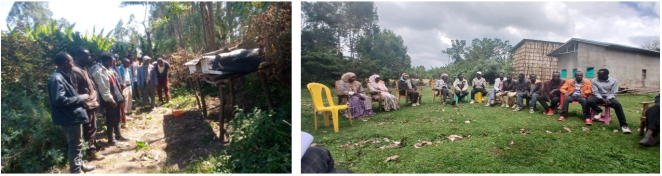
Training was provided to farmers, Development Agents (DAs), and agricultural experts by researchers. The training covered bee biology, beekeeping systems, routine colony management and inspection, colony transferring methods, honey harvesting and post-harvest handling, bee product marketing, and the advantages of horizontal frame hives. A total of 71 participants were trained, including 63 farmers, 3 DAs, 3 experts, and 2 supervisors (Table 2). Of the total trainees, 88.7% were male and 11.3% were female. A mini field day was also organized to create awareness and facilitate experience and knowledge sharing among farmers. At this field visit event, a total of 54 participants attended, including 46 farmers, 3 DAs, 3 agricultural experts, and 3 supervisors (Table 2). Most farmers demonstrated strong interest in the horizontal frame hives due to several advantages: better honey yield and earned income, easy colony inspection, simplified harvesting, greater durability, lower labor requirements, and improved swarm control.
Figure 2. Farmers field visiting (left side) and participants training (right side).
3.2. Honey Yield Performance of the Demonstrated Hives
The horizontal frame hive produced a significantly higher honey yield (23.40 kg/hive), than the traditional hive (6.21 kg/hive) (Table 3). These values are slightly higher than the national average honey yields of 5 kg for traditional hives and 15-20 kg for modern hives, indicating the relatively high production potential of beekeeping in the study area. The present results are also in close agreement with
[21]
Yemane N, Taye M (2013) Honeybee production in the three Agro-ecological districts of Gamo Gofa zone of southern Ethiopia with emphasis on constraints and opportunities. Agric Biol JN Am 4: 560-567.
[21]
who reported 5.88 kg and 20.64 kg per hive per year for traditional and modern hives, respectively. A study in western Ethiopia reported broader yield ranges: 3-15 kg per harvest for traditional hives, 10-35 kg for transitional hives, and 6.25-50 kg of crude honey for movable-frame hives, further highlighting the variability and potential of hive-based honey production across different systems and regions.
Table 3. Mean honey yield obtained from horizontal frame hives and traditional hives.
The cost benefit analysis result showed that the highest net benefit (12,490 ETB/hive) was obtained from horizontal frame hive as compared to traditional hive (2,150 ETBV/hive) (Table 4). This result agreed with the finding of
[22]
Belet, G., Berhanu, G., 2014. Perceptions of smallholder farmers on improved box hive technology and its profitability in northern Ethiopia. J. Agric. Extension Rural Dev. 6 (12), 393-402. Available at:
who reported that box hives significantly enhanced smallholder profitability over traditional hives, even when accounting for approximately 20% higher input costs and price variability.
[23]
Melaku G. 2005. Adoption and profitability of Kenyan top bar hive beekeeping technology: A study in Ambasel District. [Thesis]. Haramaya University, Haramaya, Ethiopia.
[23]
also reported that box hives generate higher returns and profitability compared to traditional hives.
Table 4. Costs and returns of horizontal frame hives and traditional hives.
Parameters
Horizontal frame hive
Traditional hive
Yield obtained kg/hive (Y)
23.40
6.21
Honey sale price kg/ETB (Q)
1,200
750
Total Revenue (TR) =TR=Y*Q
28,080
4,650
Beeswax cost/ETB
3,200
0.00
Hive stand cost/ETB
2,340
0.00
Feeding cost/ETB
3,650
1,100
Labor cost/ETB
5,200
1,200
Transportation costs/ETB
1,200
200
Total costs /ETB
15,590
2,500
Net benefit/ETB
12,490
2,150
3.4. Farmers’ Perception and Preference of the Demonstrated Hive Technology
The response of the farmers on the demonstrated hives was collected from 20 randomly selected farmers. Attributes such as ease of operation, honey yield and quality, durability, time and labor savings, ease of colony inspection and harvesting, and swarm control were used to compare the demonstrated beehives. Farmers were asked to rank each hive attribute from 1 to 5, where 1 = very poor, 2 = poor, 3 = neutral, 4 = good, and 5 = very good, based on the criteria they identified. Horizontal frame hive scored higher than the traditional hive for all selected criteria, including labor and time saving, ease of harvesting, ease of inspection, honey yield, honey quality, and reduced colony disturbance and death. The total score for the horizontal frame hive was 28, with a mean score of 4.7, while the traditional hive scored 17 with a mean score of 2.8. Accordingly, the horizontal frame hive ranked first, whereas the traditional hive ranked second (Table 5).
Table 5. Farmers’ perception and preference towards of the demonstrated hive technology (N = 20).
Parameters
Horizontal frame hive
Traditional hive
Labor and time saving
5
3
Easy for harvesting
4
3
Easy for inspecting
5
2
Honey yield
5
3
Purity of honey
5
3
Less colony disturbance and death
4
3
Total score
28
17
Mean score
4.7
2.8
Rank
1st
2nd
NB: 1. Very poor 2. Poor 3. Good 4. Very good 5. Excellent.
4. Conclusions and Recommendation
Pre-extension demonstration of the horizontal frame hive was conducted in Kofale District of West Arsi Zone. The demonstration result revealed that the horizontal frame hives were given better honey yield (23.40 kg/hive) as compared to the traditional hives (6.20 kg/hive). Profitability analysis results also revealed that using the horizontal frame hive is better for getting higher returns. Moreover, horizontal frame hive was preferred by participant farmers due to its ease of management and inspection, honey quantity and purity, savings in labor and time, and reduced colony disturbance and mortality. Therefore, the horizontal frame hive is recommended for wider scaling up to reach more farmers with this promising technology.
Abbreviations
ETB
Ethiopian Birr
N
Number
Kg
Kilogram
Std
Standard
Acknowledgments
The authors would like to express their sincere gratitude to the Food Security Resilience Project (FSRP) Program for funding this research and providing the essential facilities that enabled the successful implementation of the study. Special thanks are extended to all staff members involved and the Technician Assistance team for their invaluable technical support and continuous assistance during the trial activities.
Desta Abi: Investigation, Methodology, Supervision
Data Availability Statement
The data supporting this study's findings are available from the first and corresponding authors upon reasonable request.
Conflicts of Interest
The authors declare no conflicts of interest.
References
[1]
FAO. (2012). Beekeeping and sustainable livelihoods by Martin Hilmi, Nicola Bradbear and Danilo Mejia, FAO Diversification booklet number 1 (2nd ed.). FAO, Rome.
[2]
Amulen, D. R., D’Haene, M., D’Haene, E., OkweeAcai, J., Agea, J. G., Smagghe, G., & Cross, P. (2019). Estimating the potential of beekeeping to alleviate household poverty in rural Uganda. PLoS14(3), e0214113. Available at:
Tarekegn, K., Haji, J., & Tegegne, B. (2017). Determinants of honey producer market outlet choice in Chena District, southern Ethiopia: A multivariate probit regression analysis. Agricultural and Food Economics, 5(1), 20. Available at:
Berhe, A., Asale, A., & Yewhalaw, D. (2016). Community perception on beekeeping practices, management, and constraints in Termaber and Basona Werena districts, central Ethiopia. Advances in Agriculture, 2016. Available at:
CSA. (2011). Key Findings of the 2008/2009-2010/11 agricultural sample surveys for all sectors and seasons country summary. Central Statistics Authority. Addis Ababa, Ethiopia.
[6]
Meaza, G. (2010). Socio-economic analysis of market-oriented beekeeping in Atsbi Wemberta District of Eastern Zone, Tigray Region [M. A Thesis], Mekelle University.
[7]
Chala, K., Taye, T., & Kebede, D. (2013). Assessment of honey production and marketing system in Gomma District, Southwestern Ethiopia. Greener Journal of Business and Management Studies, 3(3), 099-107. Available at:
Teklu, G. (2016). Assessment of major honeybee flora resources on selected districts of Sidama and Gedeo zones of South Nations Nationalities and Peoples Regional State, Ethiopia. Journal of Agricultural Economics, Extension and Rural Development, 4(2), 368-381.
[9]
MoARD (2007) Ministry of Agriculture and Rural Development: Annual Report. Addis Ababa, Ethiopia.
[10]
CSA, (2009): Statistical Abstracts. Central Statistical Agency. Addis Ababa, Ethiopia.
[11]
Hilmi M, Bradbear N, Mejia D (2012). Bee keeping and sustainable livelihoods: Diversification booklet number 1, Second edition, Rural Infrastructure and Agro-Industries Division Food and Agriculture Organization of the United Nations Rome 2011.
[12]
Birhan, M., Solomon, S., & Zebene, G. (2015). The Assessment of challenges and opportunities of beekeeping in and around Gondar. Academic Journal of Entomology, 8(3), 127-131.
Gobena, W. E. (2017). Pre-scaling up of transitional locally made beehive technology package West Shoa Zone, Oromia Region, Ethiopia. Journal of Agricultural Economics, Extension and Rural Development, 5(2), 600-605.
[16]
Nuru A, Edessa N (2004). Construction of Top Bar Hives from Locally Available Materials and Evolution of the Efficiency of these Hives. 13th Proceeding of Ethiopian Society of Animal Production.
[17]
Sebeho HK (2015) Production and quality characteristics of Ethiopia honey: A Review. Academic Journal of Entomology 8: 168-173.
[18]
Taye Beyene, Mekonen Woldetsadik, Desta Abi. (2022). Comparative Evaluation of Horizontal and Vertical Frame Beehives at Adami Tulu Agricultural Research Center of Oromia, Ethiopia. Animal and Veterinary Sciences 2022; 10(2): 28-32. Available at:
CSA (Central Statistics Agency). 2015. Agricultural sample survey report on area and production of crops (private peasant holdings, 'meher' season). Addis Ababa, Ethiopia, Volume 1 pp. 9-10.
[20]
DOANR (District Office of Agriculture and Natural Resource). 2018. Reports of Kofale district office of agriculture, 2017. Kofale, Ethiopia.
[21]
Yemane N, Taye M (2013) Honeybee production in the three Agro-ecological districts of Gamo Gofa zone of southern Ethiopia with emphasis on constraints and opportunities. Agric Biol JN Am 4: 560-567.
[22]
Belet, G., Berhanu, G., 2014. Perceptions of smallholder farmers on improved box hive technology and its profitability in northern Ethiopia. J. Agric. Extension Rural Dev. 6 (12), 393-402. Available at:
Melaku G. 2005. Adoption and profitability of Kenyan top bar hive beekeeping technology: A study in Ambasel District. [Thesis]. Haramaya University, Haramaya, Ethiopia.
Beyene, T., Woldetsadik, M., Abi, D. (2026). Participatory Evaluation and Demonstration of Tensheratach (Horizontal Frame Hive) in Kofale District of West Arsi Zone of Oromia, Ethiopia. Science Discovery Animals, 1(2), 66-72. https://doi.org/10.11648/j.sdan.20260102.12
Beyene, T.; Woldetsadik, M.; Abi, D. Participatory Evaluation and Demonstration of Tensheratach (Horizontal Frame Hive) in Kofale District of West Arsi Zone of Oromia, Ethiopia. Sci. Discov. Anim.2026, 1(2), 66-72. doi: 10.11648/j.sdan.20260102.12
Beyene T, Woldetsadik M, Abi D. Participatory Evaluation and Demonstration of Tensheratach (Horizontal Frame Hive) in Kofale District of West Arsi Zone of Oromia, Ethiopia. Sci Discov Anim. 2026;1(2):66-72. doi: 10.11648/j.sdan.20260102.12
@article{10.11648/j.sdan.20260102.12,
  author = {Taye Beyene and Mekonen Woldetsadik and Desta Abi},
  title = {Participatory Evaluation and Demonstration of Tensheratach (Horizontal Frame Hive) in Kofale District of West Arsi Zone of Oromia, Ethiopia},
  journal = {Science Discovery Animals},
  volume = {1},
  number = {2},
  pages = {66-72},
  doi = {10.11648/j.sdan.20260102.12},
  url = {https://doi.org/10.11648/j.sdan.20260102.12},
  eprint = {https://article.sciencepublishinggroup.com/pdf/10.11648.j.sdan.20260102.12},
  abstract = {The study was conducted in Kofale District of west Arsi zone with the objectives of to demonstrate and evaluate the horizontal frame hive under frames conditions, to create awareness about this hive technology in the study area, and to assess farmers' perceptions and preferences of the new hive technology. The district was purposively selected based on potentiality for honey production. Two kebele’s were selected purposively based on potential of beekeeping. Selected farmers were organized into two Farmer Research and Extension Groups (FREGs) comprising 20 members. Awareness creation training and experience sharing field day was carried out to facilitate experience exchange among participants. The horizontal frame hive was demonstrated and evaluated alongside the traditional hive under actual farm conditions. Honeybee colonies were introduced at trial sites and routinely inspected to monitor their development. At maturity, honey was harvested and extracted using a mechanical extractor. The data collected were analyzed using simple descriptive statistics and partial budget analysis, while farmers' preferences and perceptions were analyzed using a five-point Likert scale rating method. The results of the analysis show that an average honey yield of 23.40 kg/hive and 6.21 kg/hive was obtained from horizontal frame hives and traditional hives, respectively. The result showed that there is a statistically significant difference (p<0.05) between horizontal frame hives and traditional hives. The cost benefit analysis also showed that the highest net benefit (12,490 ETB/hive) was obtained from horizontal frame hive as compared to traditional hive (2,150 ETB/hive). Moreover, farmers’ perception results also show that the horizontal frame hive was preferred by participant farmers for its ease of management and inspection, honey quantity and purity, savings in labor and time, and reduced colony disturbance and mortality. Therefore, the horizontal frame hive is recommended for further scaling up to reach a greater number of farmers with this beneficial technology.},
 year = {2026}
}
TY  - JOUR
T1  - Participatory Evaluation and Demonstration of Tensheratach (Horizontal Frame Hive) in Kofale District of West Arsi Zone of Oromia, Ethiopia
AU  - Taye Beyene
AU  - Mekonen Woldetsadik
AU  - Desta Abi
Y1  - 2026/08/18
PY  - 2026
N1  - https://doi.org/10.11648/j.sdan.20260102.12
DO  - 10.11648/j.sdan.20260102.12
T2  - Science Discovery Animals
JF  - Science Discovery Animals
JO  - Science Discovery Animals
SP  - 66
EP  - 72
PB  - Science Publishing Group
SN  - 3142-8983
UR  - https://doi.org/10.11648/j.sdan.20260102.12
AB  - The study was conducted in Kofale District of west Arsi zone with the objectives of to demonstrate and evaluate the horizontal frame hive under frames conditions, to create awareness about this hive technology in the study area, and to assess farmers' perceptions and preferences of the new hive technology. The district was purposively selected based on potentiality for honey production. Two kebele’s were selected purposively based on potential of beekeeping. Selected farmers were organized into two Farmer Research and Extension Groups (FREGs) comprising 20 members. Awareness creation training and experience sharing field day was carried out to facilitate experience exchange among participants. The horizontal frame hive was demonstrated and evaluated alongside the traditional hive under actual farm conditions. Honeybee colonies were introduced at trial sites and routinely inspected to monitor their development. At maturity, honey was harvested and extracted using a mechanical extractor. The data collected were analyzed using simple descriptive statistics and partial budget analysis, while farmers' preferences and perceptions were analyzed using a five-point Likert scale rating method. The results of the analysis show that an average honey yield of 23.40 kg/hive and 6.21 kg/hive was obtained from horizontal frame hives and traditional hives, respectively. The result showed that there is a statistically significant difference (p<0.05) between horizontal frame hives and traditional hives. The cost benefit analysis also showed that the highest net benefit (12,490 ETB/hive) was obtained from horizontal frame hive as compared to traditional hive (2,150 ETB/hive). Moreover, farmers’ perception results also show that the horizontal frame hive was preferred by participant farmers for its ease of management and inspection, honey quantity and purity, savings in labor and time, and reduced colony disturbance and mortality. Therefore, the horizontal frame hive is recommended for further scaling up to reach a greater number of farmers with this beneficial technology.
VL  - 1
IS  - 2
ER  -
Beyene, T., Woldetsadik, M., Abi, D. (2026). Participatory Evaluation and Demonstration of Tensheratach (Horizontal Frame Hive) in Kofale District of West Arsi Zone of Oromia, Ethiopia. Science Discovery Animals, 1(2), 66-72. https://doi.org/10.11648/j.sdan.20260102.12
Beyene, T.; Woldetsadik, M.; Abi, D. Participatory Evaluation and Demonstration of Tensheratach (Horizontal Frame Hive) in Kofale District of West Arsi Zone of Oromia, Ethiopia. Sci. Discov. Anim.2026, 1(2), 66-72. doi: 10.11648/j.sdan.20260102.12
Beyene T, Woldetsadik M, Abi D. Participatory Evaluation and Demonstration of Tensheratach (Horizontal Frame Hive) in Kofale District of West Arsi Zone of Oromia, Ethiopia. Sci Discov Anim. 2026;1(2):66-72. doi: 10.11648/j.sdan.20260102.12
@article{10.11648/j.sdan.20260102.12,
  author = {Taye Beyene and Mekonen Woldetsadik and Desta Abi},
  title = {Participatory Evaluation and Demonstration of Tensheratach (Horizontal Frame Hive) in Kofale District of West Arsi Zone of Oromia, Ethiopia},
  journal = {Science Discovery Animals},
  volume = {1},
  number = {2},
  pages = {66-72},
  doi = {10.11648/j.sdan.20260102.12},
  url = {https://doi.org/10.11648/j.sdan.20260102.12},
  eprint = {https://article.sciencepublishinggroup.com/pdf/10.11648.j.sdan.20260102.12},
  abstract = {The study was conducted in Kofale District of west Arsi zone with the objectives of to demonstrate and evaluate the horizontal frame hive under frames conditions, to create awareness about this hive technology in the study area, and to assess farmers' perceptions and preferences of the new hive technology. The district was purposively selected based on potentiality for honey production. Two kebele’s were selected purposively based on potential of beekeeping. Selected farmers were organized into two Farmer Research and Extension Groups (FREGs) comprising 20 members. Awareness creation training and experience sharing field day was carried out to facilitate experience exchange among participants. The horizontal frame hive was demonstrated and evaluated alongside the traditional hive under actual farm conditions. Honeybee colonies were introduced at trial sites and routinely inspected to monitor their development. At maturity, honey was harvested and extracted using a mechanical extractor. The data collected were analyzed using simple descriptive statistics and partial budget analysis, while farmers' preferences and perceptions were analyzed using a five-point Likert scale rating method. The results of the analysis show that an average honey yield of 23.40 kg/hive and 6.21 kg/hive was obtained from horizontal frame hives and traditional hives, respectively. The result showed that there is a statistically significant difference (p<0.05) between horizontal frame hives and traditional hives. The cost benefit analysis also showed that the highest net benefit (12,490 ETB/hive) was obtained from horizontal frame hive as compared to traditional hive (2,150 ETB/hive). Moreover, farmers’ perception results also show that the horizontal frame hive was preferred by participant farmers for its ease of management and inspection, honey quantity and purity, savings in labor and time, and reduced colony disturbance and mortality. Therefore, the horizontal frame hive is recommended for further scaling up to reach a greater number of farmers with this beneficial technology.},
 year = {2026}
}
TY  - JOUR
T1  - Participatory Evaluation and Demonstration of Tensheratach (Horizontal Frame Hive) in Kofale District of West Arsi Zone of Oromia, Ethiopia
AU  - Taye Beyene
AU  - Mekonen Woldetsadik
AU  - Desta Abi
Y1  - 2026/08/18
PY  - 2026
N1  - https://doi.org/10.11648/j.sdan.20260102.12
DO  - 10.11648/j.sdan.20260102.12
T2  - Science Discovery Animals
JF  - Science Discovery Animals
JO  - Science Discovery Animals
SP  - 66
EP  - 72
PB  - Science Publishing Group
SN  - 3142-8983
UR  - https://doi.org/10.11648/j.sdan.20260102.12
AB  - The study was conducted in Kofale District of west Arsi zone with the objectives of to demonstrate and evaluate the horizontal frame hive under frames conditions, to create awareness about this hive technology in the study area, and to assess farmers' perceptions and preferences of the new hive technology. The district was purposively selected based on potentiality for honey production. Two kebele’s were selected purposively based on potential of beekeeping. Selected farmers were organized into two Farmer Research and Extension Groups (FREGs) comprising 20 members. Awareness creation training and experience sharing field day was carried out to facilitate experience exchange among participants. The horizontal frame hive was demonstrated and evaluated alongside the traditional hive under actual farm conditions. Honeybee colonies were introduced at trial sites and routinely inspected to monitor their development. At maturity, honey was harvested and extracted using a mechanical extractor. The data collected were analyzed using simple descriptive statistics and partial budget analysis, while farmers' preferences and perceptions were analyzed using a five-point Likert scale rating method. The results of the analysis show that an average honey yield of 23.40 kg/hive and 6.21 kg/hive was obtained from horizontal frame hives and traditional hives, respectively. The result showed that there is a statistically significant difference (p<0.05) between horizontal frame hives and traditional hives. The cost benefit analysis also showed that the highest net benefit (12,490 ETB/hive) was obtained from horizontal frame hive as compared to traditional hive (2,150 ETB/hive). Moreover, farmers’ perception results also show that the horizontal frame hive was preferred by participant farmers for its ease of management and inspection, honey quantity and purity, savings in labor and time, and reduced colony disturbance and mortality. Therefore, the horizontal frame hive is recommended for further scaling up to reach a greater number of farmers with this beneficial technology.
VL  - 1
IS  - 2
ER  -





 Share This Article
 Twitter
 Linked In
 Facebook
 Copy
Copy Download