Case Report | | Peer-Reviewed

Green Exploration Practice Research on the Integration of Low-Load Flight Transportation and Drilling Technology

Received: 23 July 2026     Accepted: 4 August 2026     Published: 20 August 2026
Views:       Downloads:
Abstract

Driven by the dual constraints of surging resource demand and increasingly stringent ecological protection regulations, the structural drawbacks of conventional mineral exploration models that prioritize exploitation over environmental conservation have become prominent. Green and intelligent exploration have evolved into core trends for the high-quality development of the geological exploration industry. The fluorite ore concentration zones in southwestern Zhejiang feature rugged terrain and fragile ecosystems. Conventional drilling operations are plagued by cumbersome equipment transportation, low construction efficiency, and severe ecological degradation, which hinder the high-quality advancement of mineral exploration. To resolve the conflict between mountainous mineral exploration and ecological protection, this study takes fluorite exploration at the Maoyang Mining Area in Suichang County as an engineering case. Combining field tests, long-term monitoring, and benefit analysis, an integrated green exploration technical system incorporating UAV (Unmanned Aerial Vehicle) aerial hoisting, lightweight full-hydraulic drilling, recycled eco-friendly drilling fluid, and in-situ rapid ecological restoration is developed. Engineering practices demonstrate that this integrated construction scheme delivers outstanding performance: it cuts the preparation time for mountain drilling by over 70%, reduces surface ecological disturbance by more than 90%, and boosts monthly drilling efficiency by 25%-30%. The technology significantly curtails comprehensive costs associated with transportation, land occupation, and ecological restoration, thus achieving coordinated improvements in economic, environmental, and social benefits. This technical system fundamentally eliminates large-scale ecological damage induced by traditional exploration, adapts to extremely complex construction conditions including steep slopes and dense forests in southern mountainous regions, and ensures safe and stable exploration operations. The complete set of technologies and construction management experience summarized in this research can serve as demonstration references and technical support for green solid mineral exploration in analogous mountainous areas, bearing substantial practical value and industrial significance for advancing the green, intelligent, and efficient transformation of the geological exploration sector.

Published in Science Innovation (Volume 14, Issue 4)
DOI 10.11648/j.si.20261404.15
Page(s) 138-153
Creative Commons

This is an Open Access article, distributed under the terms of the Creative Commons Attribution 4.0 International License (http://creativecommons.org/licenses/by/4.0/), which permits unrestricted use, distribution and reproduction in any medium or format, provided the original work is properly cited.

Copyright

Copyright © The Author(s), 2026. Published by Science Publishing Group

Keywords

Low-load Flight Transportation, Full-hydraulic Drilling, Green Exploration, Fluorite Ore, Ecological Restoration, Digital-intelligent Exploration

1. Introduction
China ranks among the world’s leading countries in terms of fluorite reserves, production capacity, and consumption volume. As a critical strategic non-metallic mineral, fluorite is extensively applied in metallurgy, chemical engineering, building materials, optics, new energy, national defense, and military industries, occupying an irreplaceable position in safeguarding the stability and security of national industrial chains and supply chains . The mountainous regions of southwestern Zhejiang, covering Lishui, Jinhua, Quzhou and other prefecture-level cities, lie within a major fluorite metallogenic belt in eastern China. Characterized by densely distributed ore occurrences, continuous ore bodies, high-grade ores, and distinct structural ore-controlling features, this region constitutes a key priority area for Zhejiang’s new round of mineral prospecting breakthrough strategy and a vital base for guaranteeing stable fluorite supply in East China.
As ecological civilization construction advances in depth, the philosophy of lucid waters and lush mountains are invaluable assets has been fully integrated into all aspects of economic and social development, with ecological protection established as an unbreakable rigid redline for regional development. The Ministry of Natural Resources has issued a series of policy documents and industrial standards, including notices on accelerating green exploration and the Trial Technical Specifications for Green Exploration, explicitly mandating that all mineral exploration activities must be conducted under the premise of ecological protection . Exploration operations are required to minimize disturbances to landforms, vegetation, soil, and surface water by limiting land occupation, excavation, and ecological damage, while enabling rapid restoration, so as to realize harmonious and coordinated development of mineral exploration and ecological conservation .
Against this macro backdrop, conventional drilling construction modes reliant on haul roads, large-scale bench excavation, heavy vehicle equipment transport, and extensive surface disturbance can no longer comply with contemporary environmental policies, land use controls, and the inherent requirements for high-quality industrial development. A comprehensive green transformation of geological exploration has become an inevitable trend . Solid mineral exploration in the low and medium mountainous hilly areas of southwestern Zhejiang faces five prominent practical bottlenecks and technical challenges . First, formidable topographic barriers prevail: steep, undulating terrain with deep gullies and large relative elevation differences means most target exploration zones lack accessible roads, resulting in extremely difficult transportation of drilling rigs, pipes, consumables, and living supplies. Conventional manual haulage and makeshift road transport suffer from low efficiency and exorbitant costs . Second, stringent ecological constraints apply: forest coverage exceeds 90% across most areas, many of which fall within ecological protection redlines, public welfare forests, and water source conservation zones. Policies strictly prohibit large-scale surface excavation and vegetation clearance , rendering traditional construction models non-compliant. Third, construction efficiency remains low: bulky conventional drilling equipment involves complicated assembly and disassembly procedures with numerous auxiliary operations, leading to a low proportion of effective drilling time that fails to meet the construction schedules of large-scale detailed exploration projects. Fourth, overall costs remain high: expenditures on road construction, forest land occupation, crop compensation, manual transportation, and post-construction ecological restoration continue to surge, squeezing project profit margins. Fifth, elevated field safety risks exist: high-altitude installation, steep-slope material haulage, temporary power management, and wildfire/flood prevention pose prominent hazards that cannot be fully controlled under traditional management frameworks.
In recent years, extensive technological innovation, equipment upgrading, and engineering practices focused on green exploration have been carried out across China’s geological exploration industry. Lightweight full-hydraulic drilling rigs, wire-line coring drilling techniques, eco-friendly drilling fluid systems, and in-situ rapid ecological restoration technologies have matured and achieved large-scale application , laying equipment and technical foundations for the implementation of green exploration. Meanwhile, large-payload UAV technology has developed rapidly in fields including power line inspection, emergency rescue, and material logistics, with continuous improvements in low-altitude stable hoisting, precision delivery, and complex terrain adaptability . Several geological exploration institutions have begun testing UAVs for transporting geological exploration materials, yet such applications remain fragmented and auxiliary in nature . No systematic technical framework, standardized construction workflows, or large-scale application models have been established to deeply integrate low-load flight transportation technology with full-process drilling construction. Existing research predominantly analyzes the performance of single pieces of equipment or individual processes , lacking systematic research covering the full chain of low-altitude hoisting, rig deployment, green drilling, and ecological restoration. In particular, long-term tracking, complete data accumulation, multi-mode comparative analysis, and multi-dimensional comprehensive benefit evaluation based on large-scale detailed exploration projects are scarce, making it difficult to form mature schemes and standard systems for widespread industrial promotion.
In response to the above industry context and practical technical demands, this study takes fluorite exploration at the Maoyang Mining Area in Suichang County as a complete engineering case to systematically investigate integrated technologies combining low-load flight transportation and full-hydraulic drilling. The research aims to develop a complete green exploration technical suite adaptable to complex mountainous terrain in southern China, rigid ecological constraints, and efficient, safe construction, forming replicable and scalable construction workflows and management models. This research enriches the theoretical framework of green exploration while delivering practical integrated solutions for mineral prospecting in inaccessible, steep, densely forested, and ecologically sensitive mountainous zones. Industrially, it drives the transition of geological exploration from heavy conventional construction toward green, lightweight, digital-intelligent, and high-efficiency operations , providing robust support for national ecological civilization construction and mineral resource security strategies. The study adopts a complete technical route incorporating literature review, theoretical analysis, condition sorting, equipment configuration, process development, field implementation, data monitoring, comparative analysis, benefit evaluation, conclusions, and prospects, systematically summarizing experience, data outcomes, and innovative highlights from the full project lifecycle to form systematic research results.
2. Regional Geological Overview
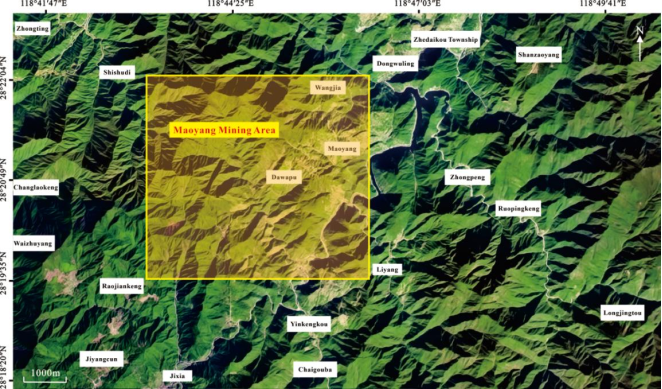
Suichang County is located in southwestern Zhejiang, central Lishui, within the upper reaches of the Qiantang and Oujiang Rivers. Dominated by low and medium mountainous hilly landforms, it represents a typical mountainous county in southwestern Zhejiang. The Maoyang Fluorite Mining Area lies within Suichang County, with convenient external access via county and township highways connecting to trunk transportation networks. The exploration zone spans longitudes 118°43′00″-118°46′45″ E and latitudes 28°19′30″-28°22′15″ N, geotectonically situated on the northern margin of the Zhejiang-Fujian Uplift. Intense regional tectonism and frequent magmatic activity create favorable geological conditions for fluorite mineralization (Figure 1).
Stratigraphically, the region is dominated by Mesozoic volcanic sequences, primarily Upper Jurassic Moshishan Group volcaniclastic rocks, rhyolites, and tuffs, with Precambrian metamorphic basement strata forming a complete stratigraphic succession and stable lithological assemblages that provide favorable host rocks for fluorite deposition. The regional tectonic framework is jointly controlled by NE- and NW-trending fault systems, featuring densely developed, active faults that serve as migration channels for ore-bearing hydrothermal fluids and accommodation spaces for orebody emplacement, representing the core factor governing the spatial distribution of fluorite deposits in the region. Intense Yanshanian volcanic-intrusive magmatism supplies consistent thermal energy and ore-forming materials for fluorite mineralization, forming a complete metallogenic system.
Figure 1. Satellite Image of Maoyang Mining Area, Suichang County, Zhejiang Province.
The southwestern Zhejiang fluorite metallogenic belt constitutes a major low-temperature hydrothermal fluorite ore concentration zone in eastern China, dominated by low-temperature hydrothermal fissure-filling deposits characterized by prominent structural ore control, vein-shaped orebodies, high-grade ores, moderate burial depths, and favorable development conditions. Dozens of medium and large fluorite deposits have been discovered and verified in the region, boasting substantial resource potential and high development value, occupying a pivotal position in Zhejiang’s and even China’s overall fluorite resource layout. Geological conditions within the Maoyang Mining Area align closely with regional metallogenic regularities. Outcropping strata mainly consist of Upper Jurassic volcanic rocks with hard, intact lithology and sound engineering geological conditions. Highly developed faults within the mining area are dominated by steeply dipping NE-trending ore-controlling fractures with moderate rock fragmentation and extensive alteration, providing favorable spaces for fluorite precipitation and enrichment. Fluorite orebodies within the mining area occur as veins, lenticles, and quasi-stratiform bodies with stable thicknesses ranging from 0.5 m to 5 m. Ore grades are high, with CaF2 contents mostly between 60% and 90%. The dominant industrial ore type is quartz-fluorite ore with excellent beneficiability and promising development prospects . Hydrogeological conditions are simple, with limited aquifer distribution and weak groundwater recharge, resulting in low water inflow risks during drilling and overall favorable geological conditions for large-scale detailed exploration drilling .
Topographically, the Maoyang Mining Area exhibits typical low and medium mountainous steep-slope landforms characteristic of southwestern Zhejiang, with dramatic terrain fluctuations at elevations of 400-1000 m and relative elevation differences of 300-600 m. Slope gradients across most hillsides range from 25° to 45°, locally exceeding 50°, creating complex topographic conditions with limited available construction space. The surface ecosystem is intact, with vegetation coverage exceeding 90% dominated by Chinese fir, masson pine, broad-leaved trees, and shrub communities. As a provincial key ecological public welfare forest zone, the area features a complete, stable ecosystem with high ecological sensitivity and strict environmental control requirements, making it an ideal site for green exploration practice . Superimposed constraints of topography, ecology, and transportation create prominent drilling construction difficulties and clear technical demands for the mining area:
Difficult transportation of drilling equipment and supplies: most drill holes are located on inaccessible steep slopes impassable by conventional vehicles, with manual haulage suffering low efficiency, high costs, and elevated safety risks.
Rigid ecological protection restrictions: haul road construction is prohibited, and bench excavation areas are strictly limited to achieve minimal-disturbance construction.
Tight project schedules and heavy exploration workloads requiring sustained improvements in drilling efficiency to ensure timely project delivery.
Stringent field operation safety requirements to eliminate high-altitude work, hazardous steep-slope material haulage, standardize power usage, and enforce strict wildfire prevention protocols.
Demand for eco-friendly drilling processes: non-toxic, biodegradable drilling fluid systems and rapid post-construction ecological restoration to recover original ecosystem functions.
These difficulties and requirements form the practical foundation for technological innovation and green exploration practice in this project.
3. Theoretical Basis and Technical System of Green Exploration
Green exploration represents an innovative mineral exploration development model guided by ecological civilization thought . Its core connotation prioritizes ecological protection, with implementation pathways centered on minimal human disturbance, closed-loop ecological restoration, and scientific, efficient exploration. Through equipment upgrading, construction process optimization, management model innovation, and digital-intelligent empowerment, green exploration forms a modern exploration system that realizes coordinated, harmonious development of mineral prospecting and ecological conservation. Its core requirements can be summarized as eight guiding principles: minimal land occupation, limited excavation, reduced ecological damage, controlled pollutant discharge, rapid restoration, high efficiency, enhanced safety, and low cost . These principles govern the full lifecycle of exploration projects spanning site selection, design, construction, monitoring, restoration, and site clearance, serving as fundamental industry standards for geological exploration in the new era.
Low-load flight transportation technology employs multi-rotor or helicopter UAV platforms equipped with precise flight control algorithms to enable stable low-altitude, low-speed flight for safe hoisting, precision delivery, and fixed-point unloading of designated payloads . This advanced aerial transport technology eliminates reliance on ground roads, generates zero surface ecological disturbance, boasts exceptional terrain adaptability and obstacle-crossing capacity, features flexible rapid deployment and fast operational response, and delivers low comprehensive costs . It perfectly addresses the core bottleneck of transporting drilling equipment and supplies to inaccessible mountainous sites .
Full-hydraulic drilling technology represents a rapidly evolving green drilling subfield in geological exploration, adopting modular, lightweight split structural designs driven by hydraulic power systems . Individual components weigh less and are suitable for aerial transportation, with rapid assembly and disassembly that eliminate high-altitude operations. The technology delivers high drilling efficiency, high core recovery rates, low energy consumption, low noise, and simple, safe operation, fully compatible with wire-line coring processes and meeting current national quality specifications for solid mineral exploration boreholes. It constitutes core equipment support for green exploration construction.
Deep integration of low-load flight transportation and full-hydraulic drilling follows clear internal mechanisms and efficient coordination logic: low-load flight transportation resolves upstream bottlenecks of transporting drilling equipment and supplies to mountainous sites; full-hydraulic drilling mitigates mid-stream issues of extensive ecological disturbance, high safety risks, and low construction efficiency ; eco-friendly drilling fluid technology controls water and soil pollution during construction; and in-situ closed-loop ecological restoration addresses downstream post-construction ecosystem recovery. These four components operate in tandem to form a closed-loop green exploration system covering the entire exploration workflow. The core collaborative logic lies in low-altitude hoisting supporting drilling construction, drilling rig design optimized for aerial transportation, green processes ensuring full-cycle environmental compliance, and closed-loop restoration enabling complete recovery of ecological functions, ultimately achieving simultaneous improvements in ecological, economic, and social benefits.
Throughout project implementation, all current national and industrial standards for green exploration were strictly followed, providing complete institutional and technical guidance for technology application, construction organization, quality control, safety management, and ecological restoration. Key specifications implemented include the Trial Technical Specifications for Green Exploration , DZ/T 0486-2024 Specifications for Borehole Quality in Solid Mineral Exploration , DZ/T 0487-2024 Operating Specifications for Wire-Line Coring Drill Rods , alongside national and industrial standards including Geological Drilling Safety Regulations and the Interim Regulations on the Administration of Civil Unmanned Aerial Vehicle Flight. This comprehensive standardization framework guaranteed full-cycle legal compliance, unified technical standards, and rigorous on-site control, enabling the practical implementation of green exploration concepts and laying a solid foundation for developing standardized, scalable technical solutions for future application.
4. Case Analysis of Typical Green Geological Exploration Implementation
4.1. Project Team and Support Capacity
Drilling construction for fluorite exploration at the Maoyang Mining Area was undertaken by the Digital Intelligent Exploration Branch of Nuclear Industry Jinhua Construction Group Co., Ltd., the sole formal professional drilling construction team under Zhejiang Mineral Resources Group Co., Ltd. Established in 2011, the team specializes in R&D and engineering application of geological drilling, green exploration, and digital-intelligent exploration technologies, having completed over 200,000 meters of total geological drilling workload covering mineral exploration, geothermal resource evaluation, environmental geological surveys, and geological disaster emergency prospecting. A fully integrated quality, safety, environmental, and occupational health management system has been implemented, with the team’s comprehensive technical strength, project management capabilities, and market performance ranking among Zhejiang’s industry leaders.
A project manager responsibility system was adopted throughout construction, establishing a well-structured, clearly divided, professionally complete, and highly efficient on-site management team totaling 42 personnel split into two core operational units: the drilling team and the UAV flight team.
Drilling team (35 personnel): 1 project manager, 1 drilling team leader, 7 rig foremen, 7 shift supervisors, and 20 auxiliary workers and logistics staff. The balanced staffing and graded skill distribution support simultaneous multi-rig operations.
UAV flight team (7 personnel): 1 flight captain, 2 squadron leaders, and 4 certified professional UAV operators, exclusively responsible for low-altitude hoisting of drilling rig modules, drill pipes, consumables, and living supplies within the mining area. Auxiliary duties include aerial surveying, construction monitoring, and safety patrols to realize specialized, standardized low-altitude operations.
All core technical personnel possess robust theoretical foundations, extensive field experience, and strong professional literacy. The fully certified UAV flight team boasts rich experience in complex mountain flight command and safety control. The team completed full upgrading to full-hydraulic drilling rigs in 2022 to realize green, lightweight drilling equipment, and introduced large-payload low-altitude UAV systems in 2025 to establish integrated drilling + low-altitude hoisting digital-intelligent exploration capacity. Supporting complementary green technologies including eco-friendly mud systems and ecological restoration, the team holds ISO9001 quality management, ISO45001 occupational health and safety, and ISO14001 environmental management system certifications, implementing refined full-staff, full-process, full-range control to deliver robust organizational, personnel, technical, and management guarantees for safe, high-quality, efficient, and green project delivery.
4.2. Construction of Low-Load Hoisting System
To achieve efficient integration of low-load flight transportation and full-hydraulic drilling, the project team systematically selected, matched, and integrated core equipment tailored to the Maoyang Mining Area’s topographic conditions, ecological constraints, drilling depth requirements, and efficiency targets, forming a complete collaborative system of lightweight drilling rigs and large-payload low-altitude hoisting UAVs.
Two models of portable full-hydraulic drilling rigs (HTZB-800C and HTZB-1000C) were deployed across seven complete rig sets. Adopting modular split designs, individual components weigh less than 80 kg, fully compatible with UAV low-load hoisting, with maximum drilling depths of 800-1000 m (expandable to 1500 m via technical upgrades) that fully satisfy the mining area’s detailed exploration depth requirements. Equipped with full-hydraulic control systems eliminating high-altitude assembly work, each rig can be rapidly installed, commissioned, and disassembled by two operators. Stable drilling performance supports wire-line coring with core recovery rates consistently exceeding 95% and precise borehole deviation control compliant with DZ/T 0486-2024. Additional green advantages include low operational noise, moderate energy consumption, and strong site adaptability.
A multi-model collaborative UAV configuration scheme was implemented to form a complementary system of primary heavy-lift aircraft and auxiliary task UAVs. Primary hoisting UAVs feature a rated safe payload of 260 kg, stable endurance, and a wind resistance rating of Level 6, delivering outstanding adaptability to complex mountain terrain, stable flight performance, and capacity for high-volume, long-distance material transportation . Auxiliary UAVs undertake aerial surveying, route patrols, rapid lightweight material transport, and construction monitoring to complement the primary fleet’s functions. Nuclear Industry Jinhua Construction Group Co., Ltd. signed a special strategic cooperation agreement with Kaibuwei Company to customize UAV systems for mountain low-altitude flight control, anti-interference performance, precision delivery, and safety protection, further improving compatibility between UAV fleets and drilling construction workflows.
Systematic hoisting scheme design was conducted based on payload characteristics, component weights, and route conditions. Hoisted cargo covers all drilling necessities including rig modules, drill pipes, casings, eco-friendly mud raw materials, tools, and living supplies, with single hoisting loads controlled between 80 kg and 260 kg to match UAV rated payloads . Flight routes were finalized following on-site reconnaissance, aerial simulation, and safety assessment, prioritizing low-altitude, open, obstacle-free paths while avoiding high-voltage power lines, dense forest, and steep unstable rock formations to guarantee full-flight safety stability. Standardized hoisting workflows were implemented following a complete sequence: pre-flight preparation, stable hovering, load hooking and lifting, steady flight, fixed-point precision delivery, and safe return. Full-time ground observers continuously monitored flight status, surrounding environments, and safety hazards throughout operations, achieving zero accidents, zero equipment damage, and zero hidden risks during hoisting activities.
To further enhance green exploration performance, the project introduced eco-friendly film-forming mud technology and green cross-linking gel plugging technology developed by the Beijing Institute of Exploration Engineering, China Geological Survey , paired with portable mud circulation systems enabling recycling of drilling fluid to reduce waste discharge. Eco-friendly film-forming mud delivers strong wellbore stabilization and inhibition performance, is non-toxic, and undergoes natural biodegradation , effectively stabilizing borehole walls while avoiding soil and surface water contamination. Green cross-linking gel plugging materials expand upon contact with water for rapid borehole sealing, are eco-friendly and biodegradable, and are particularly suited for drilling in fractured strata within ecologically sensitive zones . Continuous optimization of coordinated equipment workflows established an integrated collaborative mechanism covering hoisting, rig assembly, drilling, material supply, maintenance, site demobilization, and ecological restoration. UAVs pre-transported equipment and supplies to drill holes for rapid on-site rig assembly; consumables were replenished mid-drilling based on consumption rates; full-hole completion triggered rapid UAV equipment evacuation and immediate ecological restoration, enabling seamless process handoffs, highly efficient coordination, and substantially improved overall construction efficiency.
4.3. Integrated Technology and Green Exploration Practices
The integrated low-load flight transportation and full-hydraulic drilling technology formed a standardized full-process construction workflow at the Maoyang Mining Area, covering all stages: drill hole reconnaissance, high-precision positioning, bench layout, low-altitude hoisting, rig installation, green drilling, core logging, borehole sealing post-drilling, ecological restoration, site clearance, and equipment demobilization, realizing full-cycle green, standardized, and high-efficiency control.
Drill hole site selection and bench layout strictly adhered to ecological priority and minimal-disturbance principles. Drill holes were preferentially sited on relatively gentle slopes with exposed bedrock and sparse vegetation, with RTK (Real-Time Kinematic) high-precision positioning applied to confirm borehole coordinates and meet exploration accuracy specifications. Minimal excavation was implemented for drilling benches, with single-rig footprint limited to 5 m2, and no permanent haul roads constructed—only narrow footpaths for personnel access, minimizing surface disturbance and vegetation removal at the source.
Refined management governed UAV low-load hoisting operations, implementing a one-route-per-UAV and one-scheme-per-material management system. Specialized hoisting plans were formulated according to material type, weight, and volume. Hoisting activities in complex mountain terrain were restricted to windless or light-wind daylight hours with good visibility, with dedicated ground safety observers monitoring flight posture, load stability, and surrounding environments to ensure precision landings and avoid equipment collisions with trees or rock outcrops. The full-hydraulic green drilling process centered on wire-line coring, with real-time drilling parameter optimization adjusted to stratigraphic conditions. Smooth full-hydraulic operation reduced tripping frequency and improved drilling efficiency and core quality, eliminating high-altitude work and hazardous steep-slope material haulage to drastically lower labor intensity and elevate safety standards.
Eco-friendly mud systems were standardized throughout construction: film-forming mud suppressed stratum hydration and dispersion, stabilized borehole walls, and reduced fluid loss without toxic contaminants that would pollute local soil and water bodies. Green cross-linking gel plugging technology rapidly sealed fractured and highly fractured formations to sustain continuous drilling operations. Portable mud circulation systems recovered, purified, and reused drilling fluid to cut raw material consumption and waste discharge, further elevating environmental performance. Ecological restoration followed the principle of “whoever conducts construction undertakes restoration, with immediate restoration post-operation”. Following borehole completion and equipment evacuation, comprehensive site cleanup removed construction debris, oil stains, and residual consumables to restore clean site conditions. Topographic slopes were reconstructed via foreign soil backfilling to prevent soil erosion, followed by uniform sowing of native local grass seeds and laying of ecological vegetation blankets for soil moisture retention, soil stabilization, and accelerated plant growth. Simplified post-planting maintenance ensured rapid vegetation recovery and closed-loop restoration of original ecosystem functions .
A digital-intelligent exploration monitoring and management system was simultaneously deployed. UAV aerial surveying delivered real-time insights into construction progress, ecological disturbance extents, and on-site safety status to support data-driven project management decisions . Full digital recording of low-altitude flight operations enabled traceable flight trajectories, hoisting loads, operational durations, and energy consumption data. Key drilling parameters including penetration rate, drilling weight, footage speed, and core recovery rates were automatically collected and digitally managed to provide data support for quality control and efficiency optimization. Remote video monitoring was installed at key rig stations to enable real-time oversight by off-site management personnel, improving cross-regional collaborative management efficiency. Comprehensive integration of digital-intelligent tools transformed green exploration from traditional empirical management to data-driven, precise control, advancing standardized and refined project management.
4.4. Project Implementation Outcomes and Data Analysis
1) Comparative Analysis of Construction Phases and Overall Drilling Achievements
Construction for the Maoyang Mining Area exploration project commenced on October 16, 2024, and concluded on January 25, 2026, during which the integrated low-load flight transportation and full-hydraulic drilling technology was fully, stably, and extensively applied, delivering abundant overall construction outcomes with all core indicators meeting or exceeding projected targets (Tables 1 and 2).
To objectively evaluate the practical performance of the integrated technology, two distinct construction phases (conventional construction and integrated technology application) were established for comparative analysis under identical geological and topographic conditions (Table 1).
Conventional construction phase (October 16, 2024 - January 7, 2025): 3 drilling rigs deployed, 9 boreholes completed with total finished footage of 2,172.70 m, monthly rig efficiency of 268.23 m/rig.
Integrated technology full application phase (February 17, 2025 - December 31, 2025): 6 drilling rigs operating continuously, 64 boreholes completed with total finished footage of 23,610.61 m, monthly rig efficiency elevated to 374.77 m/rig, representing a 25%-30% efficiency improvement relative to conventional construction with highly evident technical benefits.
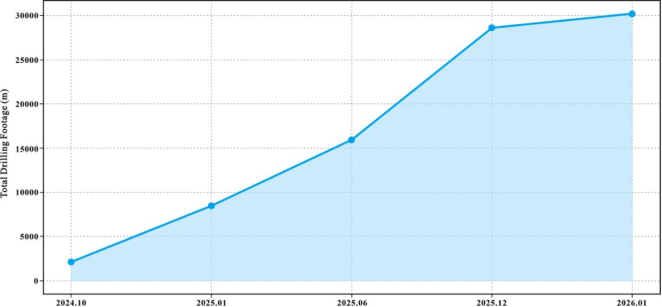
2025 constituted the core construction year with sustained, stable operation performance ranking among advanced levels for comparable Zhejiang projects: 64 boreholes completed with total drilling footage of 24,438.61 m. As of the statistical cutoff date (January 25, 2026), overall project outcomes were outstanding (Table 2): cumulative total drilling footage reached 30,190.67 m, 78 boreholes fully completed with cumulative finished footage of 28,613.27 m, and maximum single borehole depth of 1,021.66 m. All indicators including drilling depth, core quality, and borehole deviation complied fully with current industry specifications. Supplementary construction support outcomes were also prominent: seven full-hydraulic drilling rigs deployed alongside a seven-person fully certified UAV professional team, with construction preparation time reduced by over 70% and vegetation disturbance lowered by more than 90%, delivering simultaneous gains in drilling efficiency and ecological protection. At the time of statistical recording, five rigs maintained continuous normal drilling operations while two rigs had recently completed borehole finishing pending demobilization, reflecting highly organized, orderly construction and laying a solid foundation for timely project completion. Dynamic variations in cumulative drilling footage throughout the project are visualized in Figure 2, intuitively illustrating construction progress and overall performance.
Table 1. Construction Phase Data Comparison, Maoyang Mining Area Exploration Project.

Construction Phase

Timeframe

Number of Deployed Rigs

Completed Boreholes

Finished Footage (m)

Monthly Rig Efficiency (m/rig)

Efficiency Improvement Margin

Conventional Construction

2024.10.16-2025.01.07

3

9

2,172.70

268.23

Integrated Technology Application

2025.02.17-2025.12.31

6

64

23,610.61

374.77

25%-30%

Table 2. Overall Construction Outcome Statistics for Integrated Drilling Project, Maoyang Mining Area.

Indicator

Specific Data

Full Project Duration

2024.10.16 - 2026.01.25

Cumulative Total Drilling Footage

30,190.67 m

Total Completed Boreholes

78 units

Maximum Single Borehole Depth

1,021.66 m

Cumulative Finished Borehole Footage

28,613.27 m

Reduction in Construction Preparation Time

Over 70%

Reduction in Vegetation Disturbance

Over 90%

Monthly Rig Efficiency Improvement

25%-30%

Deployed Full-Hydraulic Drilling Rig Sets

7 sets

UAV Professional Team

7 fully certified personnel

Figure 2. Variation Trend of Cumulative Drilling Footage for Fluorite Mine Detailed Exploration Project in Maoyang Mining Area.
2) Construction of Full-Process Low-Disturbance Green Exploration Technical System
Targeting the mining area’s complex mountainous terrain and highly sensitive ecological baseline, a full-process low-disturbance green exploration technical system was innovatively constructed to implement the green exploration philosophy of “conduct prospecting within protection, realize protection through prospecting”. Combining refined construction techniques, lightweight equipment deployment, and full-cycle ecological restoration, the system achieved coordinated progress of exploration operations and ecological conservation, with key technical methods and core equipment applications summarized below:
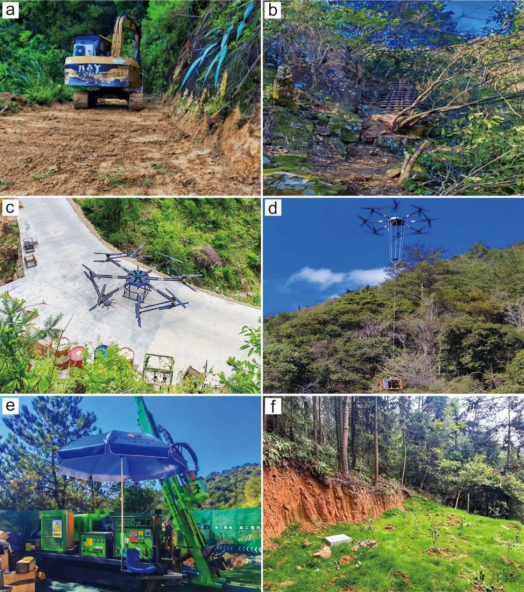
Low-disturbance earth excavation (Figure 3a): a source control core technology for green exploration. Pre-construction UAV aerial surveying, 3D terrain modeling, and precise field reconnaissance enabled refined construction boundary delineation to eliminate over-excavation and destructive unregulated construction. On-site construction deployed small specialized machinery paired with manual trimming to precisely control excavation depth, operational range, and construction rhythm, maximally preserving native vegetation root systems and original landform characteristics. Field measurements and comparative data confirmed vegetation damage and environmental disturbance reductions exceeding 90% relative to conventional large-scale excavation, meeting fundamental drilling construction demands while mitigating ecosystem structural and functional interference, forming quantifiable practical paradigms for green mountain exploration.
Minimalist pedestrian-only access construction (Figure 3b): a core technical measure to reduce surface disturbance, abandoning conventional wide, heavily excavated haul road construction for a minimalist design philosophy limited exclusively to pedestrian traffic. Adhering to minimal intervention and maximum preservation principles, no large-scale surface clearing, slope excavation, or soil disturbance was conducted; minor site trimming followed natural terrain contours to fully preserve native vegetation integrity and soil structural stability. Excavation volume and vegetation clearance were reduced by over 95% compared with heavy-duty transport roads, satisfying pedestrian transit and lightweight manual material transport requirements while fundamentally mitigating road construction-induced ecological connectivity disruption, biodiversity loss, and ecosystem fragmentation, embodying the green exploration concept of disturbance reduction via optimized access design.
Large-payload mountain transport UAV application (Figures 3c, 3d): a revolutionary upgrade to exploration transport models establishing a “transportation instead of road construction” green transport system that eliminates terrain barriers to material haulage. Multi-rotor modular UAVs feature rapid disassembly and assembly for flexible mountain deployment , equipped with high-load power systems and precise flight control algorithms to deliver robust mountain takeoff/landing capacity and stable transport performance (Figure 3c). Precisely planned flight paths and flight control enable direct aerial delivery of drilling rigs, construction materials, and all exploration supplies to mountain drill sites without paved mountain haul roads (Figure 3d), fundamentally eliminating soil erosion, vegetation loss, and habitat fragmentation triggered by road construction. This technology simultaneously shortens material transport cycles, boosts exploration efficiency, and achieves three core objectives: zero haul road construction, minimal environmental disturbance, and high transport efficiency, forming replicable, scalable technical pathways for green mountain exploration transportation.
Modular lightweight drilling rig deployment (Figure 3e): lightweight, low-disturbance upgrading for mountain exploration via split modular design optimized for low-interference mountain exploration requirements . Small-volume, low-weight individual rig modules can be transported to mountain drill sites via UAV hoisting or manual haulage without heavy machinery access, mitigating surface environmental disturbance during equipment transport and site entry at the source. Drilling rigs occupy minimal temporary bench space, limiting damage to surrounding vegetation and soil to the lowest feasible levels. Equipped with high-efficiency drilling power systems and precision sampling devices that meet geological core sampling and stratigraphic detection standards , the rigs drastically shorten single-hole drilling cycles and reduce sustained construction-induced ecological disturbance, balancing minimal construction interference with maximum exploration performance.
Exploration site ecological restoration and revegetation (Figure 3f): closed-loop terminal control for green exploration, breaking the traditional “destruction-first, restoration-later” model through a full-cycle ecological management framework of “simultaneous construction and restoration”. Following drilling completion, professional teams fully level drill sites and temporary construction zones, implementing foreign soil backfilling and soil remediation to restore disturbed surface structures. Native local plant species are scientifically selected for supplementary planting paired with post-restoration maintenance to rapidly recover vegetation coverage. Full-process ecological restoration eliminates residual environmental impacts from exploration activities, rapidly restoring original mountain landscape and ensuring ecosystem integrity and sustainability, delivering quantifiable, implementable practical models for ecologically sustainable mineral exploration.
Collectively, integrated application of the above innovative green exploration technologies established a full-process green exploration system spanning source control, mid-stream disturbance reduction, and closed-loop restoration at the Maoyang Mining Area, resolving conflicts between mountain mineral exploration and ecological protection and providing technical references and practical paradigms for green exploration across mountainous regions of South China.
a) Low-disturbance excavation construction, with vegetation damage rate reduced by more than 90%
b) Minimalist exploration access only for pedestrian passage
c) Large-load mountain transportation UAV
d) Mountain material hoisting operation by UAV
e) Modular lightweight drilling equipment
f) Ecological restoration and revegetation of exploration site
3) Benefit Analysis and Comprehensive Value of Integrated Technology Application
Large-scale deployment of integrated low-load flight transportation and full-hydraulic drilling technology not only elevated construction efficiency but also delivered prominent cost-reduction and efficiency-gain effects, achieving unified alignment of economic, environmental, and social benefits.
Figure 3. Construction Scenarios of Green Exploration and Application of Key Equipment in Maoyang Mining Area.
Economic Benefits: The integrated transport model drastically cut expenses on vehicle rental and manual haulage by over 60%. Minimalist low-disturbance construction reduced land occupation, crop compensation costs by more than 80%, and ecological restoration expenditures by over 70%. Improved drilling efficiency shortened total project schedules by more than 30%, lowering comprehensive management and capital occupancy costs. Overall project comprehensive costs were reduced by 25%-35%, demonstrating remarkable economic performance improvements.
To intuitively illustrate the advantages of integrated technology over conventional drilling, core performance indicators under identical geological and topographic conditions are compared in Table 3. The integrated technology outperforms conventional drilling across six critical dimensions: surface disturbance, construction preparation cycle, monthly drilling efficiency, on-site safety risks, overall project costs, and environmental performance. Key standout advantages include over 90% reduction in surface disturbance, 70%+ shorter preparation cycles, and 25%-30% higher monthly rig efficiency, fully verifying the technical advancement and practicality of the integrated solution.
Table 3. Performance Indicator Comparison.:Conventional Drilling vs. Integrated Technology Drilling.

Comparison Item

Conventional Drilling

Integrated Technology Drilling

Surface Disturbance

Extensive, severe ecological damage

Minimal disturbance, >90% reduction

Construction Preparation Cycle

Protracted, time-consuming

Highly efficient, shortened by over 70%

Monthly Rig Drilling Efficiency

Low, limited output

Significant performance gain, 25%-30% improvement

On-Site Safety Risks

Prominent hazards, high risk grade

Fully controlled, drastically reduced risks

Overall Project Costs

High investment, limited economic returns

Intensive cost reduction, 25%-35% lower total costs

Environmental Performance

Poor eco-compatibility, substantial ecological impacts

Green and low-carbon, superior environmental quality

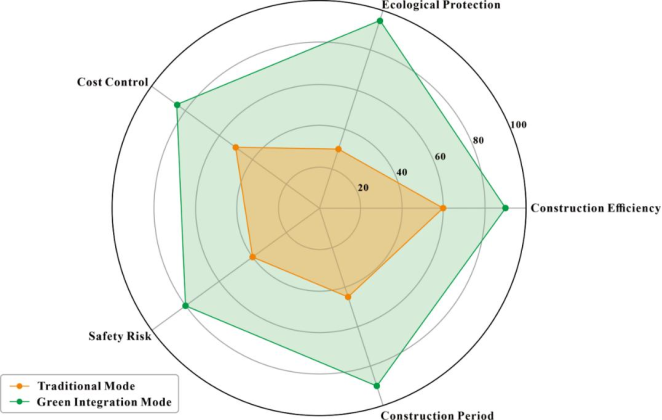
Unified coordination of three core benefit dimensions was realized through integrated technology deployment: economic benefits centered on cost reduction, efficiency improvement, and optimized capital utilization; environmental benefits highlighted ecological prioritization, low-carbon operations, and near-zero surface disturbance to fully protect native mining area ecosystems; social benefits embodied industry benchmarking for mountain green exploration, accelerated popularization of integrated technologies, and coordinated advancement of ecological security and mineral resource security. Figure 4 visually contrasts performance gaps between conventional and integrated green exploration modes across core benefit indicators, further validating the feasibility and superiority of integrated technology at the Maoyang Mining Area and forming replicable, scalable successful models for sustainable mountain green exploration.
Figure 4. Comprehensive Benefit Comparison of Green Exploration in Maoyang Mining Area.
4.5. Safety Production and Quality Control
Safety production and engineering quality were prioritized throughout the project lifecycle, establishing a three-tier safety and quality management system covering corporate headquarters, project departments, rig crews, and UAV flight teams. Full implementation of the safety production responsibility system required all personnel to sign safety responsibility documents to achieve comprehensive, gapless responsibility coverage. A dual prevention mechanism of graded safety risk control and hidden hazard inspection and remediation was established, with regular risk identification, assessment, and targeted control measure implementation. Key high-risk activities including UAV hoisting, drilling operations, temporary power management, wildfire and flood prevention, and steep-slope work were prioritized for rigorous control to eliminate all potential hazards.
Personnel training ran throughout project implementation: all on-site staff completed three-tier safety education (corporate, project, crew-level) and passed formal assessments prior to job entry. Regular weekly safety meetings, technical quality briefings, and safety knowledge contests continuously strengthened staff safety awareness and operational proficiency. Specialized systematic training covered UAV low-altitude hoisting and full-hydraulic rig operation to ensure operators fully mastered equipment performance, standard workflows, and emergency response protocols.
Robust emergency capacity development was prioritized through joint practical emergency drills with Suichang Red Cross Blue Sky Rescue Team covering fire response and wild mountain rescue to enhance on-site personnel emergency disposal and cross-team coordination capabilities. Standardized emergency supplies including fire extinguishers, fire sand, and first-aid kits were fully stocked at project camps and all drill benches with regular maintenance to guarantee functional readiness. Temporary power construction followed strict electrical specifications prohibiting unauthorized wiring and illegal power use. Rigorous wildfire control banned open flame activities, with mandatory full fire source elimination prior to personnel site departure and intensified patrols during high-risk winter fire prevention periods.
Engineering quality control strictly complied with the latest industrial specifications including DZ/T 0486-2024 Specifications for Borehole Quality in Solid Mineral Exploration and DZ/T 0487-2024 Operating Specifications for Wire-Line Coring Drill Rods. Full-process monitoring of core quality indicators including core recovery rate, borehole deviation, total drilling depth, and borehole sealing quality ensured all boreholes met excellent quality standards.
A comprehensive occupational health protection system was implemented: all incoming personnel completed pre-job occupational health examinations with full health files established to confirm physical fitness for field duties. All staff signed occupational health commitment letters clarifying personal health management responsibilities. Complete personal protective equipment was provided on-site with mandatory standardized use requirements, continuously improving field working conditions to reduce labor intensity and prevent occupational disease hazards. The rigorous integrated safety and quality control system enabled zero safety production accidents and zero substandard boreholes over the full project lifecycle, delivering solid guarantees for smooth green exploration implementation with stable safety and quality performance.
4.6. Technological Innovation and Demonstration Value
Successful application of integrated low-load flight transportation and full-hydraulic drilling technology at the Maoyang Mining Area delivered multi-dimensional technological and model innovations, forming a new industry-leading paradigm for green exploration:
Model Innovation: The first domestic full-chain integrated mountain green exploration model combining low-load flight transportation and full-hydraulic drilling, realizing full-process greenization spanning upstream transportation, mid-stream construction, and downstream ecological restoration to completely transform conventional exploration construction paradigms.
Equipment Innovation: Optimized matching of lightweight full-hydraulic drilling rigs and large-payload UAV fleets to resolve core bottlenecks of equipment transportation to inaccessible steep, densely forested mountain drill sites, enabling large-scale, high-efficiency mountain drilling operations.
Process Innovation: Minimal bench excavation paired with in-situ rapid ecological restoration processes to achieve near-zero disturbance exploration, reaching industry-leading ecological protection levels.
Management Innovation: Comprehensive integration of digital-intelligent monitoring, standardized workflows, and integrated collaborative management to shift exploration management from empirical experience toward data-driven precision digital governance.
Compared with conventional drilling processes, the integrated model delivers comprehensive advantages: surface ecological disturbance is reduced from extensive severe damage to near-zero levels; construction preparation durations are shortened from over one week to less than two days; monthly rig drilling efficiency rises by 25%-30%; safety risks are reduced from persistent high levels to fully controllable thresholds; overall project costs drop by 25%-35%; and environmental protection evolves from passive post-damage restoration to proactive source protection, delivering prominent holistic performance improvements.
The integrated technical model boasts broad applicability, particularly suited for mountainous, hilly, forested, ecologically protected, water source conservation, and inaccessible steep-slope zones where conventional exploration faces implementation barriers. It supports exploration for all solid mineral types including fluorite, lead-zinc, gold, silver, and molybdenum deposits, with expandable applications in geothermal exploration, environmental geological surveys, and geological disaster emergency prospecting, delivering high versatility and industrial promotion value.
The successful Maoyang Mining Area practice provides directly replicable typical demonstration cases for green exploration in southwestern Zhejiang mountainous regions, feasible technical pathways for new rounds of mineral prospecting breakthroughs across mountainous southern China, and important guiding effects for advancing the full geological exploration industry toward green, lightweight, digital-intelligent, and high-efficiency transformation. It carries substantial practical significance for supporting national ecological civilization construction strategies and safeguarding national mineral resource security.
4.7. Existing Deficiencies and Improvement Measures
Practical implementation of the integrated technology model revealed several areas requiring continuous optimization and refinement:
Extreme weather exerts significant constraints on UAV operations: strong wind, dense fog, and heavy rain suspend flight activities and disrupt construction continuity.
Long-distance and high-altitude hoisting capacity requires further improvement to boost transport efficiency for remote drill hole sites.
Precision delivery accuracy declines in dense forest zones due to vegetation obstruction, requiring further optimization of UAV positioning and delivery performance.
Standardization and normalization frameworks for integrated low-load flight transportation and drilling green exploration remain incomplete, requiring validation and summary from additional engineering projects to establish unified national industrial standards.
Targeted technical optimization and management enhancement strategies were formulated to address the above limitations:
Equipment Upgrading: Deploy UAV fleets with stronger wind resistance, larger payloads, extended endurance, and higher intelligence to enhance adaptability to complex environments; simultaneously develop lighter, intelligent, automated, remotely controlled drilling rigs to further reduce hoisting loads and assembly labor intensity.
Technical Optimization: Promote AI (Artificial Intelligence) intelligent flight path planning, automatic obstacle avoidance, and autonomous precision delivery technologies to improve UAV operation stability and delivery accuracy; continuously refine eco-friendly mud systems and ecological restoration material suites to form mature, stable green process packages.
Standardized Management: Accelerate the formulation of construction specifications, operation guidelines, and standardized manuals for integrated low-load flight transportation and drilling green exploration to standardize and normalize technology application; develop digital-intelligent exploration control platforms supporting remote command, intelligent scheduling, and real-time data analysis to comprehensively improve management efficiency; strengthen industry exchange, technical training, and achievement promotion to accelerate widespread large-scale deployment of mature integrated technical models. Further integration of comprehensive geophysical prospecting technology with drilling will enhance exploration precision and efficiency in complex mining areas.
5. Conclusions
Systematic engineering practice and comprehensive research on fluorite exploration at the Maoyang Mining Area, Suichang County, yield the following core conclusions:
Deep integration of low-load flight transportation technology and full-hydraulic drilling technology represents an optimal, scientifically sound, high-efficiency, feasible technical solution to resolve mineral exploration challenges in complex mountainous terrain and ecologically sensitive zones of southwestern Zhejiang. The integrated system achieves the integrated goals of ultra-low surface disturbance, safe high-efficiency construction, eco-friendly operation, and cost reduction, fully aligning with contemporary green exploration policies and high-quality industrial development trends.
Field monitoring data fully validate the performance of the integrated technical model: mountain drilling construction preparation time is reduced by over 70%, vegetation and surface ecological disturbance are lowered by more than 90%, monthly rig drilling efficiency rises by 25%-30%, and overall project costs decline by 25%-35%, delivering prominent unified ecological, economic, and social benefits.
The project successfully constructed a complete six-in-one green exploration system featuring specialized professional teams, green lightweight equipment, integrated composite technologies, standardized construction workflows, normalized safety management, and closed-loop ecological restoration. The complete system is replicable, scalable, and capable of iterative upgrading, satisfying preconditions for large-scale industrial promotion and application.
This integrated technical model delivers substantial theoretical value, practical engineering significance, and industrial demonstration value for advancing green mountain exploration across southern China, supporting new national mineral prospecting breakthrough strategies, and promoting the transformative development of the geological exploration industry.
For future research and application advancement, the project team will continue deepening technological innovation and iterative upgrading: develop and deploy larger-payload, higher-adaptability, more intelligent low-altitude exploration equipment, and accelerate the construction of an integrated digital-intelligent exploration system combining UAVs, drilling, geophysical prospecting, geochemical prospecting, and remote sensing to comprehensively elevate overall exploration efficiency and result quality. Efforts will be accelerated to compile unified national industrial standards, specifications, and technical manuals for green exploration to drive standardized, large-scale promotion of integrated green exploration technologies. Application scope will be expanded from fluorite exploration to all solid mineral categories, and from mountainous exploration to all ecologically sensitive prospecting zones nationwide, delivering stronger technical support for national green mineral exploration. Adhering to the core development philosophies of green development, innovation-driven progress, harmonious win-win collaboration, and standardized management, the project team will continuously advance technological innovation to support national ecological civilization construction and mineral resource security strategies, contributing to the high-quality development of China’s geological exploration industry.
Abbreviations

UAV

Unmanned Aerial Vehicle

RTK

Real-Time Kinematic

AI

Artificial Intelligence

Acknowledgments
This research was supported by the Zhejiang Natural Resources Science and Technology Project (Grant No. 2025ZJDZ028).
Author Contributions
Jingya Wang: Writing – original draft
Yimin Ning: Conceptualization
Yongxiang Liu: Data curation
Shunwei Hou: Formal Analysis
Jiulin Feng: Investigation
Xuefeng Ma: Validation
Changhuan Xiang: Software
Zhidong Li: Resources
Zhiyu Liu: Supervision
Ruolin Wang: Visualization
Hai Xiao: Resources
Tao Zhang: Methodology
Conflicts of Interest
The authors declare no conflicts of interest.
References
[1] Ministry of Natural Resources of China. Trial Technical Specifications for Green Exploration [S]. Beijing: China Standards Press, 2019.
[2] Ministry of Natural Resources of China. DZ/T 0486-2024 Specifications for Borehole Quality in Solid Mineral Exploration [S]. Beijing: China Standards Press, 2024a.
[3] Shu S Q, Zhang H T, Pei R F, et al. Quaternion mineral sustainable exploration-development model (QMM)[J]. Geological Bulletin of China, 2017, 36(8): 1476-1482.
[4] Lai C Y. New paths for mineral resource utilization in China from the perspective of sustainable development [J]. Northern Economy and Trade, 2018, 6: 133-134.
[5] Zhang F L, Xue Y X, Ma C, et al. Green geological prospecting: a new mineral prospecting model for the new era [J]. China Natural Resources Economics, 2018, 31(8): 11-15.
[6] Cui Z Q, Xu Z L, Meng Q M. The features of the main airborne geophysical flying-platforms in China and the development trend [J]. Geophysical and Geochemical Exploration, 2014, 38(6): 1107-1113.
[7] Xiao K Y, Xing S W, Ding J H, et al. Division of major metallogenic belts of key solid mineral resources and their resource potential in China [J]. Acta Geologica Sinica, 2016, 90(7): 1269-1280.
[8] Jiang B, Zhang T D, Wu J S, et al. Research progress of geological drilling waste slurry treatment equipment and technology [J]. West-China Exploration Engineering, 2023, 35(12): 81-87.
[9] Parshin A V, Morozov V A, Blinov A V, et al. Low-altitude geophysical magnetic prospecting based on multirotor UAV as a promising replacement for traditional ground survey [J]. Geo-Spatial Information Science, 2018, 21(1): 67-74.
[10] Song J W, Zhang H C, Ran F, et al. Slim-hole directional branch drilling technology in Zhexiang (II) Gold Deposit, Guizhou Province [J]. Guizhou Geology, 2022, 39(2): 167-180.
[11] Gao M S, Wang C L, Xue S Z, et al. Development and application of XY-5DB electric drive vertical shaft drilling rig [J]. Geotechnical Engineering Equipment, 2020, 21(5): 11-14.
[12] Feng M G, Jiang R, Xu J, et al. Application of mud non-landing system in geological core drilling [J]. Geological Review, 2023, 69(S1): 518-520.
[13] Feng Q Z, He G L, Xu B C, et al. SDC series full hydraulic truck-mounted drilling rig [J]. Drilling Engineering, 2025, 52(5): 158-159.
[14] Li F L, Wang H C, Xin Z C, et al. Research and application of key technologies for long-distance wire-line coring in horizontal boreholes [J]. Drilling Engineering, 2025, 52(6): 77-85.
[15] Dai J H, Xue L F, Li Z T, et al. Application of UAV remote sensing technology in geological mapping in Beishan area, Gansu Province [J]. Journal of Jilin University (Earth Science Edition), 2021, 51(6): 1908-1920.
[16] Guo H, Wang M, Yao Y Y, et al. Research of CH4 UAV airborne three-component magnetic detection system [J]. Chinese Journal of Geophysics, 2022, 65(11): 4485-4494.
[17] Zweig C L, Burgess M A, Percival H F, et al. Use of unmanned aircraft systems to delineate fine-scale wetland vegetation communities [J]. Wetlands, 2015, 35(2): 303-309.
[18] Wang Z Q. Application of UAVs in geological work [J]. Science and Technology Information, 2017(19): 83-85.
[19] Tan C L, Yue Y D, Qu H J, et al. Research and practice of shallow drilling technology based on green exploration [J]. China Mining Magazine, 2024, 33(S1): 599-604.
[20] Zhao Z F, Zhang X L, Chen Q, et al. Alteration mineral mapping and prospecting potential analysis of Pulang porphyry copper deposit based on Ziyuan-102D satellite remote sensing data [J]. Sedimentary Geology and Tethyan Geology, 2022, 42(1): 17-29.
[21] Barnard J. Use of unmanned air vehicles in oil, gas and mineral exploration activities [R]. AUVSI Unmanned Systems North America 2010 Conference, 2010: 1-48.
[22] Park K, Ewing R. The usability of unmanned aerial vehicles (UAVs) for measuring park-based physical activity [J]. Landscape and Urban Planning, 2017, 167: 157-164.
[23] Qu H J, Lu M, Tan C L, et al. Experimentation and application of green exploration by drilling instead of trenching based on structural analysis and borehole imaging technology [J]. Drilling Engineering, 2025, 52(4): 103-110.
[24] Zheng J, Zhang F L, Li X Y, et al. Application prospect of trench-replacing drilling technology in green exploration [J]. Geology and Exploration, 2021, 57(5): 1158-1165.
[25] Zhang F M, Wen J L, Zhao X H, et al. Development and application of unmanned helicopter aeromagnetic measurement system [J]. Progress in Geophysics, 2019, 34(4): 1694-1699.
[26] Saari H, Pellikka I, Pesonen L, et al. UAV-operated spectral camera system for forest and agriculture applications [C]//Remote Sensing for Agriculture, Ecosystems, and Hydrology XIII. SPIE, 2011, 8174: 170-184.
[27] Bai Y, Zheng Z Z, Xiu L C, et al. UAV hyperspectral remote sensing technology and its application progress in natural resources survey [J]. East China Geology, 2022, 43(4): 527-538.
[28] Liu B, Zhang C, Yang K, et al. Application of portable full hydraulic drill in geological drilling in Qinling Mountains [J]. Drilling Engineering, 2021, 48(11): 94-103.
[29] Liu B, Kou S L, Zhu Z T, et al. Practical application of portable modular drill in green geological exploration [J]. Drilling Engineering, 2022, 49(2): 30-39.
[30] Gao M S, Shen H P, Zang C K. Development of XD-800 portable full hydraulic core drilling rig [J]. Geotechnical Engineering Equipment, 2018, 19(3): 3-6.
[31] Liang J, Li X Y, Zhou H J. Development status and trend of geological core drilling equipment in China during the 14th Five-Year Plan period [J]. Drilling Engineering, 2025, 52(6): 1-14.
[32] He G L, Feng Q Z, Xu B C, et al. Design and application of SDC-2500 full hydraulic truck mounted rig [J]. Exploration Engineering (Rock & Soil Drilling), 2016, 43(6): 44-48.
[33] Ministry of Natural Resources of China. DZ/T 0487-2024 Operating Specifications for Wire-Line Coring Drill Rods [S]. Beijing: China Standards Press, 2024b.
[34] Zhang X P, Shi S Y, Liang J J, et al. Research and demonstration of wire-line coring directional deviation correction drilling and logging technology for ultra-long horizontal boreholes [J]. Drilling Engineering, 2023, 50(S1): 211-217.
[35] Hruska R, Mitchell J, Anderson M, et al. Radiometric and geometric analysis of hyperspectral imagery acquired from an unmanned aerial vehicle [J]. Remote Sensing, 2012, 4(9): 2736-2752.
[36] Wang W B, Long A, Wu R H, et al. Research and application of UAV hoisting modular drill technology [J]. Drilling Engineering, 2024, 51(S1): 208-215.
[37] Wen D Q, Feng M G, Li B, et al. Research and application of intelligent small integrated mud non-landing system [J]. Drilling Engineering, 2022, 49(4): 49-54.
[38] Wang L, Sun Q B, Zhao Y L, et al. Design of mobile mud purification equipment for uranium geological drilling [J]. Modern Mining, 2024, 40(4): 162-169.
[39] Li Z G, Liu Q, Liu Z, et al. Application of geotextile tube dewatering technology in pile foundation waste slurry treatment [J]. Building Technology Development, 2021, 48(11): 100-101.
[40] Booysen R, Jackisch R, Lorenz S, et al. Detection of REEs with lightweight UAV based hyper spectral imaging [J]. Scientific Reports, 2020, 10(1): 1-12.
[41] Fossi A P, Ferrec Y, Coudrain C, et al. Compact hyperspectral camera in the mid-infrared for small UAVs [C]//Proceedings of SPIE, Algorithms and Technologies for Multi-Spectral, Hyperspectral, and Ultraspectral Imagery XXII. SPIE, 2016, 9840: 482-490.
[42] Yang Y K. Research on UAV rapid detection technology in complex environments [D]. Beijing: China University of Geosciences (Beijing), 2020.
[43] Fang G Q, Wang J, Wang H, et al. Application and analysis of multi-rotor drones in drilling equipment relocation [J]. Drilling Engineering, 2025, 52(2): 72-79.
[44] Lin G L, Tan C L, Yue Y D, et al. Application of TGQ-50 portable drilling rig in geological mapping of shallow overburden area [J]. West-China Exploration Engineering, 2017, 29(9): 31-33.
[45] Huang D N, Yu P, Di Q Y, et al. Development status and trend of key instruments and technologies for deep earth exploration [J]. Journal of Jilin University (Earth Science Edition), 2012, 42(5): 1485-1496.
Cite This Article
  • APA Style

    Wang, J., Ning, Y., Liu, Y., Hou, S., Feng, J., et al. (2026). Green Exploration Practice Research on the Integration of Low-Load Flight Transportation and Drilling Technology. Science Innovation, 14(4), 138-153. https://doi.org/10.11648/j.si.20261404.15

    Copy | Download

    ACS Style

    Wang, J.; Ning, Y.; Liu, Y.; Hou, S.; Feng, J., et al. Green Exploration Practice Research on the Integration of Low-Load Flight Transportation and Drilling Technology. Sci. Innov. 2026, 14(4), 138-153. doi: 10.11648/j.si.20261404.15

    Copy | Download

    AMA Style

    Wang J, Ning Y, Liu Y, Hou S, Feng J, et al. Green Exploration Practice Research on the Integration of Low-Load Flight Transportation and Drilling Technology. Sci Innov. 2026;14(4):138-153. doi: 10.11648/j.si.20261404.15

    Copy | Download

  • @article{10.11648/j.si.20261404.15,
      author = {Jingya Wang and Yimin Ning and Yongxiang Liu and Shunwei Hou and Jiulin Feng and Xuefeng Ma and Changhuan Xiang and Zhidong Li and Zhiyu Liu and Ruolin Wang and Hai Xiao and Tao Zhang and Wenwen Deng},
      title = {Green Exploration Practice Research on the Integration of Low-Load Flight Transportation and Drilling Technology},
      journal = {Science Innovation},
      volume = {14},
      number = {4},
      pages = {138-153},
      doi = {10.11648/j.si.20261404.15},
      url = {https://doi.org/10.11648/j.si.20261404.15},
      eprint = {https://article.sciencepublishinggroup.com/pdf/10.11648.j.si.20261404.15},
      abstract = {Driven by the dual constraints of surging resource demand and increasingly stringent ecological protection regulations, the structural drawbacks of conventional mineral exploration models that prioritize exploitation over environmental conservation have become prominent. Green and intelligent exploration have evolved into core trends for the high-quality development of the geological exploration industry. The fluorite ore concentration zones in southwestern Zhejiang feature rugged terrain and fragile ecosystems. Conventional drilling operations are plagued by cumbersome equipment transportation, low construction efficiency, and severe ecological degradation, which hinder the high-quality advancement of mineral exploration. To resolve the conflict between mountainous mineral exploration and ecological protection, this study takes fluorite exploration at the Maoyang Mining Area in Suichang County as an engineering case. Combining field tests, long-term monitoring, and benefit analysis, an integrated green exploration technical system incorporating UAV (Unmanned Aerial Vehicle) aerial hoisting, lightweight full-hydraulic drilling, recycled eco-friendly drilling fluid, and in-situ rapid ecological restoration is developed. Engineering practices demonstrate that this integrated construction scheme delivers outstanding performance: it cuts the preparation time for mountain drilling by over 70%, reduces surface ecological disturbance by more than 90%, and boosts monthly drilling efficiency by 25%-30%. The technology significantly curtails comprehensive costs associated with transportation, land occupation, and ecological restoration, thus achieving coordinated improvements in economic, environmental, and social benefits. This technical system fundamentally eliminates large-scale ecological damage induced by traditional exploration, adapts to extremely complex construction conditions including steep slopes and dense forests in southern mountainous regions, and ensures safe and stable exploration operations. The complete set of technologies and construction management experience summarized in this research can serve as demonstration references and technical support for green solid mineral exploration in analogous mountainous areas, bearing substantial practical value and industrial significance for advancing the green, intelligent, and efficient transformation of the geological exploration sector.},
     year = {2026}
    }
    

    Copy | Download

  • TY  - JOUR
    T1  - Green Exploration Practice Research on the Integration of Low-Load Flight Transportation and Drilling Technology
    AU  - Jingya Wang
    AU  - Yimin Ning
    AU  - Yongxiang Liu
    AU  - Shunwei Hou
    AU  - Jiulin Feng
    AU  - Xuefeng Ma
    AU  - Changhuan Xiang
    AU  - Zhidong Li
    AU  - Zhiyu Liu
    AU  - Ruolin Wang
    AU  - Hai Xiao
    AU  - Tao Zhang
    AU  - Wenwen Deng
    Y1  - 2026/08/20
    PY  - 2026
    N1  - https://doi.org/10.11648/j.si.20261404.15
    DO  - 10.11648/j.si.20261404.15
    T2  - Science Innovation
    JF  - Science Innovation
    JO  - Science Innovation
    SP  - 138
    EP  - 153
    PB  - Science Publishing Group
    SN  - 2328-787X
    UR  - https://doi.org/10.11648/j.si.20261404.15
    AB  - Driven by the dual constraints of surging resource demand and increasingly stringent ecological protection regulations, the structural drawbacks of conventional mineral exploration models that prioritize exploitation over environmental conservation have become prominent. Green and intelligent exploration have evolved into core trends for the high-quality development of the geological exploration industry. The fluorite ore concentration zones in southwestern Zhejiang feature rugged terrain and fragile ecosystems. Conventional drilling operations are plagued by cumbersome equipment transportation, low construction efficiency, and severe ecological degradation, which hinder the high-quality advancement of mineral exploration. To resolve the conflict between mountainous mineral exploration and ecological protection, this study takes fluorite exploration at the Maoyang Mining Area in Suichang County as an engineering case. Combining field tests, long-term monitoring, and benefit analysis, an integrated green exploration technical system incorporating UAV (Unmanned Aerial Vehicle) aerial hoisting, lightweight full-hydraulic drilling, recycled eco-friendly drilling fluid, and in-situ rapid ecological restoration is developed. Engineering practices demonstrate that this integrated construction scheme delivers outstanding performance: it cuts the preparation time for mountain drilling by over 70%, reduces surface ecological disturbance by more than 90%, and boosts monthly drilling efficiency by 25%-30%. The technology significantly curtails comprehensive costs associated with transportation, land occupation, and ecological restoration, thus achieving coordinated improvements in economic, environmental, and social benefits. This technical system fundamentally eliminates large-scale ecological damage induced by traditional exploration, adapts to extremely complex construction conditions including steep slopes and dense forests in southern mountainous regions, and ensures safe and stable exploration operations. The complete set of technologies and construction management experience summarized in this research can serve as demonstration references and technical support for green solid mineral exploration in analogous mountainous areas, bearing substantial practical value and industrial significance for advancing the green, intelligent, and efficient transformation of the geological exploration sector.
    VL  - 14
    IS  - 4
    ER  - 

    Copy | Download

Author Information
  • Zhejiang Mineral Resources Group Co., Ltd., Hangzhou, China
  • Zhejiang Mineral Resources Group Co., Ltd., Hangzhou, China

  • Zhejiang Mineral Resources Group Co., Ltd., Hangzhou, China

  • Zhejiang Mineral Resources Group Co., Ltd., Hangzhou, China

  • Zhejiang Mineral Resources Group Co., Ltd., Hangzhou, China

  • Zhejiang Mineral Resources Group Co., Ltd., Hangzhou, China

  • Zhejiang Mineral Resources Group Co., Ltd., Hangzhou, China

  • Zhejiang Mineral Resources Group Co., Ltd., Hangzhou, China

  • Zhejiang Mineral Resources Group Co., Ltd., Hangzhou, China

  • Zhejiang Mineral Resources Group Co., Ltd., Hangzhou, China

  • Zhejiang Mineral Resources Group Co., Ltd., Hangzhou, China

  • Zhejiang Mineral Resources Group Co., Ltd., Hangzhou, China

  • Zhejiang Mineral Resources Group Co., Ltd., Hangzhou, China