Abstract
Background: Chronic kidney disease (CKD) represents a major public health challenge due to its silent progression, the severity of its complications, and its often late diagnosis. Prevention relies primarily on a better understanding of the disease among the general population. However, the level of CKD knowledge varies among populations and may be influenced by their sociodemographic characteristics and access to medical information. The determinants of CKD knowledge remain poorly documented in Benin. Identifying groups at higher risk of poor CKD knowledge could help guide health education strategies. Objective: To identify the factors associated with the poor level of knowledge of CKD in the population of the municipality of Abomey-Calavi in 2026. Methods: An analytical cross-sectional study was conducted in February 2026 among adults over 18 years of age residing in the municipality of Abomey-Calavi. Participants were selected using a three-stage probability sampling method. The level of CKD knowledge was assessed using a score that included anatomical, functional, diagnostic, therapeutic, and preventive knowledge. Factors associated with poor knowledge were investigated using bivariate analysis followed by multivariate logistic regression. Associations were expressed as crude and adjusted Odds Ratios (OR) with 95% Confidence Intervals (CI). Oral informed consent was obtained from participants before inclusion in the study. Results: Of the 612 residents surveyed, 559 (91.34%) had a poor level of knowledge about CKD. After adjustment, only occupation, religion, and certain sources of information remained significantly associated with a poor level of knowledge. Participants of animist religion had higher odds ratios for poor knowledge (OR = 18.19 [1.71-193.04]) compared to atheists. Workers (OR = 16.87 [3.81-74.66]) and merchants (OR = 11.38 [2.26-57.34]) had higher odds ratios than participants with intellectual professions. Lack of exposure to information from social media (OR = 19.73 [7.27-53.54]) and the education system (OR = 15.24 [5.76-40.29]) was strongly associated with poor knowledge levels. Conclusion: Knowledge of CKD was poor among the study population. Strengthening education and awareness strategies, particularly among less informed groups, could improve knowledge of CKD and contribute to earlier detection.
Keywords
Chronic Kidney Disease, Knowledge, Associated Factors, Population, Abomey-Calavi, Benin
1. Introduction
CKD is an irreversible, non-communicable disease whose global incidence increased by an average of approximately 0.63% each year between 1990 and 2021
| [1] | Hill NR, Fatoba ST, Oke JL, Hirst JA, O’Callaghan CA, Lasserson DS, et al. Global prevalence of chronic kidney disease - a systematic review and meta-analysis. PLoS One. 2016, 11(7), 18. https://doi.org/10.1371/journal.pone.0158765 |
| [2] | Li Z, He R, Wang Y, Qu Z, Liu J, Yu R, et al. Global trends of chronic kidney disease from 1990 to 2021: a systematic analysis for the global burden of disease study 2021. BMC Nephrol. 2025, 26(1), 385. https://doi.org/10.1186/s12882-025-04309-7 |
[1, 2].
Because it often progresses for a long time without symptoms, CKD frequently escapes early detection, making it a major public health challenge. CKD is responsible for a growing number of deaths and years of life lost and represents an economic burden on healthcare systems
| [3] | Shahbazi F, Doosti-Irani A, Soltanian A, Poorolajal J. Global forecasting of chronic kidney disease mortality rates and numbers with the generalized additive model. BMC Nephrology. 2024, 25(1), 286. https://doi.org/10.1186/s12882-024-03720-w |
[3].
Despite advances in its management, a significant proportion of patients are still diagnosed at an advanced stage, reducing the possibilities for effective preventive and therapeutic interventions
| [4] | Olszewski M, Bjurström K, Lingman M, Henrohn D, Shojaiyan P, Garell M, et al. Differences in chronic kidney disease management based on identification and diagnosis in a population-based observational study. J Nephrol. 2025, 38(9), 2809‑20. https://doi.org/10.1007/s40620-025-02414-2 |
| [5] | Nie S, Zhou S, Cabrera C, Chen S, Jia M, Zhang S, et al. Characteristics of patients with undiagnosed stage 3 chronic kidney disease: results from an observational study (REVEAL-CKD) in China. Lancet Reg Health West Pac. 2025, 54(101275), 12. https://doi.org10.1016/j.lanwpc.2024.101275 |
[4, 5].
Improving public knowledge about CKD is essential for promoting preventive behaviors and encouraging early access to care
| [6] | Tuot DS, Velasquez A, McCulloch CE, Banerjee T, Zhu Y, Hsu C yuan, et al. The Kidney Awareness Registry and Education (KARE) study: protocol of a randomized controlled trial to enhance provider and patient engagement with chronic kidney disease. BMC Nephrol. 2015, 16(1), 166.
https://doi.org/10.1186/s12882-015-0168-4 |
[6].
The level of knowledge of CKD varies across countries, healthcare settings, and populations, but remains insufficient in many areas. Several studies conducted in different countries have reported low levels of CKD knowledge in the general population
| [7] | Stanifer JW, Turner EL, Egger JR, Thielman N, Karia F, Maro V, et al. Knowledge, attitudes, and practices associated with chronic kidney disease in Northern Tanzania: a community-based study. PLoS One. 2016, 11(6), 14.
https://doi.org/10.1371/journal.pone.0156336 |
| [8] | Mahmoud A. M, Ibrahim A, Fadil AH, Alalawi AM, Alnezary FS, Alahmadi Y, et al. Assessment of public knowledge about chronic kidney disease and factors influencing knowledge levels: a cross-sectional study. Medicina. 2023, 59(12), 2072.
https://doi.org/10.3390/medicina59122072 |
[7, 8].
Beyond assessing knowledge levels, several authors have investigated factors that may influence this knowledge. Data from the literature show that knowledge levels can be influenced by sociodemographic, sociocultural, and economic characteristics, as well as access to information and health services
| [9] | Chu CD, Chen MH, McCulloch CE, Powe NR, Estrella MM, Shlipak MG, et al. Patient Awareness of CKD: a systematic review and meta-analysis of patient-oriented questions and study setting. Kidney Med. 2021, 3(4), 576‑85.
https://doi.org/10.1016/j.xkme.2021.03.014 |
[9].
For example, Alobaidi reported that age, education level, and marital status were significantly associated with CKD knowledge, while sex showed no significant association
| [10] | Alobaidi S. Knowledge of chronic kidney disease among the population of Saudi Arabia evaluated using a validated questionnaire: a cross-sectional study. Patient Prefer Adherence. 2021, 15, 1281‑8. https://doi.org/10.2147/PPA.S315369 |
[10].
Conversely, Gök and Şahin observed that age and profession were not associated with knowledge level
For their part, Gheewala
et al. showed that participants with a family history of CKD had better knowledge of the disease
| [12] | Gheewala PA, Peterson GM, Zaidi TR, José MD, Castelino RL. Public knowledge of chronic kidney disease evaluated using a validated questionnaire: a cross-sectional study. BMC Public Health. 2018, 18(371), 12.
https://doi.org/10.1186/s12889-018-5301-4 |
[12].
In Jordan, Al-Momany
et al. highlighted the role of exposure to awareness campaigns via television, social media, and healthcare professionals in improving knowledge about CKD
| [13] | Al-Momany AM, Almomani EY, Al-Omari L, Qablan AM, Almomani HY. The assessment of public perception towards chronic kidney disease in Jordan: a cross-sectional study. Annals of Medicine. 2024, 56(1), 2386044.
https://doi.org/10.1080/07853890.2024.2386044 |
[13].
These results illustrate the heterogeneity of factors associated with the level of CKD knowledge across geographic and sociocultural contexts, underscoring the need for context-specific data.
In Benin, to our knowledge, no study has explored the determinants of the general population's level of knowledge about CKD. This gap hinders the identification of groups most vulnerable to poor knowledge, making it difficult to target public health interventions.
The present study therefore aimed to determine the factors associated with the poor level of knowledge of CKD among the inhabitants of the commune of Abomey-Calavi.
2. Materials and Methods
2.1. Study Design, Type and Duration
An analytical cross-sectional study was conducted in the municipality of Abomey-Calavi in southern Benin. Data collection took place from February 18 to 28, 2026.
2.2. Study Population and Selection Criteria
The study population consisted of the inhabitants of the commune of Abomey-Calavi.
Included were individuals aged 18 or over, residing in the municipality and having given their informed consent.
Excluded were those who met the inclusion criteria but were unable to complete the questionnaire, as well as those who withdrew their consent during the interview.
2.3. Sampling and Sample Size
The sampling technique was a three-stage random sampling method. First, three of the municipality's nine districts were randomly selected to obtain a geographically distributed sample while taking into account logistical constraints and the resources available for the study. Within each selected district, half of the neighborhoods (or half plus one when the number was odd) were randomly selected. A proportional allocation of the sample size for each neighborhood was then determined based on its adult population (according to data from the French National Institute of Statistics and Demography (INStaD)). Finally, within each selected neighborhood, the first household was randomly selected, and subsequent households were included at a sampling interval of five. All eligible and consenting adults residing in the selected households were included in the study.
The minimum sample size was estimated at 571 participants using Schwartz's formula, assuming a prevalence of good knowledge of CKD (p = 0.145)
, a confidence level of 95%, a precision of 5% and a cluster effect of 3. At the end of data collection, 612 participants meeting the inclusion criteria were recruited.
2.4. Data Collection
Data were collected using a structured questionnaire, digitized via KoboToolbox. It was developed based on tools used in the literature review and then adapted to the study objectives and the Beninese context. The questionnaire included a section on participant characteristics (sociodemographic characteristics, medical history, sources of information) and a second section on their knowledge of chronic kidney disease (CKD). It was pre-tested with ten students from the Faculty of Health Sciences (FSS) in Cotonou who were not part of the study population to assess its feasibility, administration time, clarity, and question flow. No missing data were recorded, as the questions were set to mandatory in the digital questionnaire.
2.5. Variables Studied
The dependent variable in our study was the level of knowledge of CKD. This was assessed using a score comprising 11 items, with a maximum score of 38 points. Each correct answer was scored as 1 point, while a no answer or an incorrect answer received 0 points. For multiple-choice questions, each correctly identified option contributed to the score calculation. The total score was then categorized into three levels (poor = 0-12 points, moderate = 13-25 points, and good = 26-38 points).
The independent variables included:
1) Sociodemographic characteristics (age, sex, level of education, place of residence, profession, marital status, religion);
2) Medical history (personal chronic illness and family history of chronic disease);
3) Sources of information about CKD (website, education system, traditional media, social networks, relatives, health professionals).
2.6. Statistical Analysis
Data quality control was ensured through regular supervision of the interviewers, daily verification of completed questionnaires, and data consistency checks before analysis. The data were exported from KoboToolbox, then cleaned and analyzed using Epi Info version 7.2.7 and Stata version 15 (model fit).
1) Descriptive analysis: Qualitative variables were described by their frequencies and percentages. Age, the only quantitative variable, was grouped into categories for the analysis and then described by its mean and standard deviation or its median and interquartile range, according to its distribution.
CKD knowledge level score was categorized (poor, moderate or good knowledge level).
2) Bivariate analysis: The initially triadic dependent variable was dichotomized into poor and good knowledge of CKD (good and moderate level). This choice was made to distinguish participants with insufficient knowledge from those with at least an acceptable level. Factors associated with poor knowledge of CKD were investigated using a bivariate analysis with Pearson's chi-squared test. A simple logistic regression was then used to estimate the crude ORs and their 95% confidence intervals.
3) Multivariate analysis: Variables with a p-value ≤ 0.20 in the bivariate analysis were included in a stepwise backward multivariate logistic regression model to determine factors independently associated with poor knowledge of chronic kidney disease (CKD). The final model was obtained after adjusting for significant variables (adjusted ORs with 95% confidence intervals). The goodness of fit of the final model was assessed using Stata 15 with the Hosmer-Lemeshow test. The threshold for statistical significance was defined as p < 0.05.
2.7. Ethical Considerations
The study was conducted in accordance with ethical research principles. The research protocol received a favorable ethical opinion from the Local Ethics Committee for Biomedical Research of the University of Parakou (CLERB-UP) (ref: 09/26CLERB-UP/P/SP/R/SA). The necessary administrative authorizations were obtained from the relevant authorities. Participation in the study was voluntary, and oral informed consent was obtained before any questions were asked. Anonymity and data confidentiality were strictly maintained.
3. Results
3.1. Level of CKD Knowledge
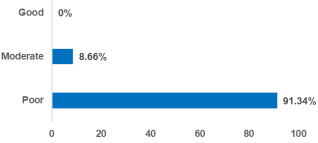
Our study included 612 participants. Among them, 559 (91.34%) had a poor level of knowledge about CKD, while 53 (8.66%) had an moderate level of knowledge. No participant had a good level of knowledge about chronic kidney disease (
Figure 1).
Figure 1. Distribution of respondents in Abomey-Calavi in 2026 according to their level of knowledge about CKD.
3.2. Factors Associated with Poor CKD Knowledge Level
The results of the bivariate analysis are presented in
Table 1.
No statistically significant association was observed between sex and poor knowledge. The OR for education level could not be calculated because, for some categories of this variable, all participants had poor knowledge of CKD. In contrast, age was associated with poor knowledge of CKD, and the risk of having poor knowledge was higher among participants in older age groups compared to those aged 18 to 24. Animists were 5.64 times more likely to have poor knowledge than atheists. Regarding occupation, workers and merchants were approximately 23 times more likely to have poor knowledge than those in intellectual professions.
Family history of CKD was significantly associated with poor knowledge; participants without a family history of CKD were 2.23 times more likely to have poor knowledge than those with a family history of CKD.
The lack of exposure to certain sources of information was strongly associated with poor knowledge of CKD, including the lack of information from social networks (ORb = 14.36 [6.84-30.15]) and the education system (ORb = 16.81 [8.33-33.93]).
Table 1. Association between participant characteristics and poor knowledge of CKD among respondents in Abomey-Calavi in 2026.
Variable | Total sample | Poor level of knowledge n (%) | OR b [IC 95%] | p-value |
Sociodemographic characteristics |
Age groups | | | | |
18-24 years old | 154 | 128 (83.12) | 1.00 | - |
25-34 years old | 218 | 203 (93.12) | 2.75 [1.40 - 5.39] | 0.003 |
35-44 years old | 128 | 122 (95.31) | 4.13 [1.64 - 10.38] | 0.003 |
45-54 years old | 72 | 69 (95.83) | 4.67 [1.36 - 15.99] | 0.014 |
≥ 55 years | 40 | 37 (92.50) | 2.51 [0.72 - 8.74] | 0.150 |
Sex | | | | |
Male | 271 | 243 (89.67) | 1.00 | - |
Female | 341 | 316 (92.67) | 1.46 [0.83 - 2.56] | 0.192 |
Marital status | | | | |
Single | 205 | 175 (85.37) | 1.00 | - |
Married, common-law relationship | 396 | 374 (94.44) | 2.91 [1.63 - 5.20] | <0.001 |
Widowed, divorced | 11 | 10 (90.91) | 1.71 [0.21 - 13.88] | 0.614 |
Education level | | | | |
None | 118 | 118 (100.00) | - | |
Primary | 149 | 149 (100.00) | - | |
Secondary | 247 | 227 (91.90) | - | |
Superior | 98 | 65 (66.33) | - | |
Living environment | | | | |
Urban | 376 | 334 (88.83) | 1.00 | - |
Rural | 236 | 225 (95.34) | 2.57 [1.30 - 5.10] | 0.007 |
Religion | | | | |
Atheism | 17 | 3 (17.65) | 1.00 | - |
Animism | 82 | 79 (96.34) | 5.64 [1.03 - 30.83] | 0.046 |
Christianity | 466 | 422 (90.56) | 2.06 [0.57 - 7.43] | 0.272 |
Islam | 47 | 44 (93.62) | 3.14 [0.57 - 17.37] | 0.189 |
Occupation | | | | |
Intellectual profession | 25 | 15 (60.00) | 1.00 | |
Worker, craftsman | 180 | 175 (97.22) | 23.14 [7.72 - 69.36] | <0.001 |
Merchant, entrepreneur | 250 | 243 (97.20) | 23.33 [7.06 -77.16] | <0.001 |
Student, pupil, apprentice | 101 | 73 (72.28) | 1.74 [0.70 - 4.32] | 0.234 |
Unemployed | 56 | 53 (94.64) | 11.78 [2.87 -48.33] | 0.001 |
Medical history |
Personal history of chronic disease | | | | |
Yes | 67 | 63 (94.03) | 1.00 | - |
No | 545 | 496 (91.01) | 1.56 [0.55-4.46] | 0.410 |
Family ATCD of CKD | | | | |
Yes | 56 | 47 (83.93) | 1.00 | - |
No | 556 | 512 (92.09) | 2.23 [1.02 - 4.85] | 0.043 |
Sources of information |
Traditional media | | | | |
Yes | 94 | 79 (84.04) | 1.00 | - |
No | 518 | 480 (92.66) | 2.40 [1.26 - 4.56] | 0.008 |
Websites | | | | |
Yes | 22 | 17 (77.27) | 1.00 | - |
No | 590 | 542 (91.86) | 3.32 [1.17 - 9.40] | 0.024 |
Social media | | | | |
Yes | 186 | 142 (76.34) | 1.00 | - |
No | 426 | 417 (97.89) | 14.36 [6.84 -30.15] | <0.001 |
Healthcare professionals | | | | |
Yes | 22 | 14 (63.64) | 1.00 | - |
No | 590 | 545 (92.37) | 6.92 [2.76 - 17.37] | <0.001 |
Relatives | | | | |
Yes | 149 | 131 (87.92) | 1.00 | - |
No | 463 | 428 (92.44) | 1.68 [0.92 - 3.07] | 0.091 |
Education system | | | | |
Yes | 42 | 21 (50.00) | 1.00 | - |
No | 570 | 538 (94.34) | 16.81 [8.33 -33.93] | <0.001 |
Other | | | | |
No | 585 | 533 (91.11) | 1.00 | - |
Yes | 27 | 26 (96.30) | 2.54 [0.34 - 19.07] | 0.366 |
3.3. Factors Independently Associated with Poor CKD Knowledge Level
The factors independently associated with poor knowledge of CKD after multivariate logistic regression are presented in
Table 2. The adequacy of the final model was verified by the Hosmer and Lemeshow test which showed no significant difference between the observed and predicted values (p = 0.832).
After adjusting for other variables introduced into the model, religion, profession and sources of information (social networks, education system, websites, health professionals, relatives) remained significantly associated with poor knowledge of CKD.
Workers (ORa = 16.87; 95% CI [3.81-74.66]) and merchant (ORa = 11.38; 95% CI [2.26-57.34]) had a higher probability of poor knowledge compared to those in intellectual professions. Animists, on the other hand, were 18.19 times more likely to have poor knowledge than atheists.
Lack of exposure to information sources was also associated with poor knowledge levels. Respondents not informed by social media (ORa = 19.73 [7.27 - 53.54]) and the education system (ORa = 15.24 [5.76 - 40.29]) were more likely to have a poor level of knowledge of CKD. Lack of exposure to information shared by healthcare professionals (ORa = 9.07 [2.23 - 36.86]) and websites (ORa = 7.39 [1.89 - 28.82]) was significantly associated with a poor level of knowledge.
Table 2. Multivariate analysis of Factors associated with the poor level of knowledge of CKD among respondents in Abomey-Calavi in 2026 (final model).
| OR a | IC 95% | p-value |
Religion | |
Atheism | 1 | - | - |
Animism | 18.19 | 1.71-193.04 | 0.016 |
Christianity | 5.12 | 0.75-34.88 | 0.095 |
Islam | 3.82 | 0.43-33.95 | 0.229 |
Occupation | |
Intellectual profession | 1 | - | - |
Worker, craftsman | 16.87 | 3.81-74.66 | <0.001 |
Merchant, entrepreneur | 11.38 | 2.26-57.34 | 0.003 |
Student, pupil, apprentice | 2.72 | 0.70-10.57 | 0.149 |
Unemployed | 7.45 | 1.27-43.51 | 0.026 |
Social networks | | |
Yes | 1 | - | - |
No | 19.73 | 7.27 - 53.54 | <0.001 |
Education system | | |
Yes | 1 | - | - |
No | 15.24 | 5.76 - 40.29 | <0.001 |
Healthcare professionals | | |
Yes | 1 | - | - |
No | 9.07 | 2.23 - 36.86 | 0.002 |
Websites | | |
Yes | 1 | - | - |
No | 7.39 | 1.89 - 28.82 | 0.004 |
Relatives | | |
Yes | 1 | - | - |
No | 3.11 | 1.27 - 7.62 | 0.013 |
4. Discussion
The results of our study show a very poor level of knowledge of CKD in the municipality of Abomey-Calavi. Indeed, 91.34% of participants had a poor level of knowledge of CKD. This proportion is higher than those reported by several other studies. In Nigeria, Okwuonu
et al. reported a proportion of 61.1%
| [15] | Okwuonu CG, Chukwuonye II, Ogah SO, Abali C, Adejumo OA, Oviasu E. Awareness level of kidney functions and diseases among adults in a Nigerian population. Indian J Nephrol. 2015, 25(3), 158‑63.
https://doi.org/10.4103/0971-4065.139096 |
[15]
; while Isijola and Olubiyi found that 59.1% of participants had a poor level of knowledge of CKD
| [16] | Isijola B, Olubiyi S. Knowledge and risk factors of chronic kidney disease among Ebira Community in Irasa, Ado-Ekiti. Int J Med Nurs Health Sci. 2021, 2(6), 25‑40.
https://doi.org/10.5281/zenodo.5780057 |
[16].
In Indonesia, Zaim
et al. found that 42.9% of participants had a poor level of knowledge
| [17] | Zaim S, Bahar MuhA, Muzakkir AR, Anggriani A, Sarifah LM, Ibrahim N, et al. Public knowledge, interest, and perception of chronic kidney disease educational content in Indonesia: a cross-sectional survey. Pharmacia. 2026, 73, 1‑9.
https://doi.org/10.3897/pharmacia.73.e172489 |
[17].
The differences observed between studies may be related to the assessment methods and thresholds used to define a poor level of knowledge. Differences in socioeconomic contexts, awareness programs, and access to health information may also explain these variations.
Occupation was one of the factors independently associated with poor knowledge of CKD in our study. After adjustment, unemployed respondents had a 7.45 times higher odds ratio for having poor knowledge compared to those in intellectual professions. Similarly, Younes
et al., in a 2022 study conducted in Saudi Arabia, found that students were 2.497 times more likely to have good knowledge than unemployed individuals
| [18] | Younes S, Mourad N, Safwan J. Chronic kidney disease awareness among the general population: tool validation and knowledge assessment in a developing country. BMC Nephrology. 2022, 23(266), 11.
https://doi.org/10.1186/s12882-022-02889-2 |
[18].
Assiry
et al. had also reported this result in Saudi Arabia (OR
a = 16.48 [1.30 - 2028.57])
| [19] | Assiry A, Alshahrani S, Banji D, Banji OJF, Syed NK, Alqahtani SS. Public Awareness of Chronic Kidney Disease in Jazan Province, Saudi Arabia—A Cross-Sectional Survey. Healthcare. 2022, 10(8), 1377.
https://doi.org/10.3390/healthcare10081377 |
[19].
The profession may reflect other dimensions such as level of education, socioeconomic status and social environment which may indirectly influence access to information.
In our study, participants of indigenous religion were 18.19 times more likely to have poor knowledge than atheists. Few studies have investigated the association between religion and poor knowledge. This association could reflect sociocultural representations of the disease, but its interpretation must be qualified by the wide confidence interval, indicating a less precise estimate.
In our study, several sociodemographic characteristics explored were not associated with poor knowledge levels after multivariate regression, including age, sex, education level, marital status, and place of residence. Regarding age, our results corroborate those of several authors who found no association between age and knowledge level: Gheewala
et al. (Australia, 2018); Al-Momany
et al. (Jordan, 2024) and Assiry
et al. (Saudi Arabia, 2022)
| [12] | Gheewala PA, Peterson GM, Zaidi TR, José MD, Castelino RL. Public knowledge of chronic kidney disease evaluated using a validated questionnaire: a cross-sectional study. BMC Public Health. 2018, 18(371), 12.
https://doi.org/10.1186/s12889-018-5301-4 |
| [13] | Al-Momany AM, Almomani EY, Al-Omari L, Qablan AM, Almomani HY. The assessment of public perception towards chronic kidney disease in Jordan: a cross-sectional study. Annals of Medicine. 2024, 56(1), 2386044.
https://doi.org/10.1080/07853890.2024.2386044 |
| [19] | Assiry A, Alshahrani S, Banji D, Banji OJF, Syed NK, Alqahtani SS. Public Awareness of Chronic Kidney Disease in Jazan Province, Saudi Arabia—A Cross-Sectional Survey. Healthcare. 2022, 10(8), 1377.
https://doi.org/10.3390/healthcare10081377 |
[12, 13, 19].
This relationship, however, was found by Mahmoud
et al. in Saudi Arabia where participants aged 18 to 27 were five times more likely to have good knowledge
| [8] | Mahmoud A. M, Ibrahim A, Fadil AH, Alalawi AM, Alnezary FS, Alahmadi Y, et al. Assessment of public knowledge about chronic kidney disease and factors influencing knowledge levels: a cross-sectional study. Medicina. 2023, 59(12), 2072.
https://doi.org/10.3390/medicina59122072 |
[8].
The multivariate analysis conducted in our study did not reveal any association between knowledge level and sex. This observation is consistent with some studies that found no differences between men and women
| [7] | Stanifer JW, Turner EL, Egger JR, Thielman N, Karia F, Maro V, et al. Knowledge, attitudes, and practices associated with chronic kidney disease in Northern Tanzania: a community-based study. PLoS One. 2016, 11(6), 14.
https://doi.org/10.1371/journal.pone.0156336 |
| [19] | Assiry A, Alshahrani S, Banji D, Banji OJF, Syed NK, Alqahtani SS. Public Awareness of Chronic Kidney Disease in Jazan Province, Saudi Arabia—A Cross-Sectional Survey. Healthcare. 2022, 10(8), 1377.
https://doi.org/10.3390/healthcare10081377 |
[7, 19].
However, Awad
et al. reported better knowledge among women (OR
a = 1.65 [1.05-2.60]; p= 0.031)
| [20] | Awad MYH, Warasna HJM, Awad BYH, Shaaban MEA, Sultan S, Awad IYH, et al. Knowledge and awareness factors affecting kidney function and chronic kidney disease among the general population in the West Bank, Palestine: an online cross-sectional study. Ann Med. 2025, 57(1), 16.
https://doi.org/10.1080/07853890.2025.2583328 |
[20]
, possibly due to greater involvement of women in family health issues.
Our study revealed that marital status was not associated with poor CKD knowledge. These findings are similar to those of Mahmoud
et al. in Saudi Arabia
| [8] | Mahmoud A. M, Ibrahim A, Fadil AH, Alalawi AM, Alnezary FS, Alahmadi Y, et al. Assessment of public knowledge about chronic kidney disease and factors influencing knowledge levels: a cross-sectional study. Medicina. 2023, 59(12), 2072.
https://doi.org/10.3390/medicina59122072 |
[8].
Conversely, Alobaidi
et al. in Saudi Arabia (p
= 0.023) found an association between the level of knowledge of CKD and marital status
| [10] | Alobaidi S. Knowledge of chronic kidney disease among the population of Saudi Arabia evaluated using a validated questionnaire: a cross-sectional study. Patient Prefer Adherence. 2021, 15, 1281‑8. https://doi.org/10.2147/PPA.S315369 |
[10].
This difference could be explained by the use of different analytical approaches, our study using multivariate analysis while theirs was based on univariate analysis which does not allow control for the effect of confounding factors.
In contrast to our findings, several authors have shown that a high level of education is associated with better knowledge of CKD
| [7] | Stanifer JW, Turner EL, Egger JR, Thielman N, Karia F, Maro V, et al. Knowledge, attitudes, and practices associated with chronic kidney disease in Northern Tanzania: a community-based study. PLoS One. 2016, 11(6), 14.
https://doi.org/10.1371/journal.pone.0156336 |
| [19] | Assiry A, Alshahrani S, Banji D, Banji OJF, Syed NK, Alqahtani SS. Public Awareness of Chronic Kidney Disease in Jazan Province, Saudi Arabia—A Cross-Sectional Survey. Healthcare. 2022, 10(8), 1377.
https://doi.org/10.3390/healthcare10081377 |
[7, 19].
This difference could be explained by the distribution of knowledge levels in our population, particularly the absence of participants with an moderate or good level of knowledge in certain education categories, making analysis of this category impossible.
In our study, place of residence was not associated with poor knowledge of CKD. Conversely, Stanifer
et al. in Tanzania (OR
a = 0.47 [0.03 - 0.99])
| [7] | Stanifer JW, Turner EL, Egger JR, Thielman N, Karia F, Maro V, et al. Knowledge, attitudes, and practices associated with chronic kidney disease in Northern Tanzania: a community-based study. PLoS One. 2016, 11(6), 14.
https://doi.org/10.1371/journal.pone.0156336 |
[7]
and Assiry
et al. in Saudi Arabia (OR
a = 0.01 [0.006 - 0.04])
| [19] | Assiry A, Alshahrani S, Banji D, Banji OJF, Syed NK, Alqahtani SS. Public Awareness of Chronic Kidney Disease in Jazan Province, Saudi Arabia—A Cross-Sectional Survey. Healthcare. 2022, 10(8), 1377.
https://doi.org/10.3390/healthcare10081377 |
[19]
found an association between education level and level of knowledge of CKD. This could be explained by the easy access of people in urban areas to medical information.
A personal history of chronic disease and a family history of CKD were not associated with poor CKD knowledge. Contrary to our findings, Assiry
et al. showed that respondents with a personal history of chronic disease had a better level of CKD knowledge (OR
a = 0.39 [0.19-0.78]; p = 0.007)
| [19] | Assiry A, Alshahrani S, Banji D, Banji OJF, Syed NK, Alqahtani SS. Public Awareness of Chronic Kidney Disease in Jazan Province, Saudi Arabia—A Cross-Sectional Survey. Healthcare. 2022, 10(8), 1377.
https://doi.org/10.3390/healthcare10081377 |
[19].
This could be explained by regular medical follow-up and more frequent exposure to prevention messages. Furthermore, Gheewala
et al. reported an association between a family history of CKD and greater CKD knowledge (OR
a = 0.08 [0.39-3.24] p = 0.01)
| [12] | Gheewala PA, Peterson GM, Zaidi TR, José MD, Castelino RL. Public knowledge of chronic kidney disease evaluated using a validated questionnaire: a cross-sectional study. BMC Public Health. 2018, 18(371), 12.
https://doi.org/10.1186/s12889-018-5301-4 |
[12]
, likely due to greater exposure to CKD-related information within the family, promoting information seeking. The difference with our results may be due to the level of data analysis in our study (modeling) or also to the higher proportion of individuals with a family history of CKD in those studies.
Access to information is a key determinant of health knowledge. After adjusting for other variables in the model, a lack of exposure to certain information sources was associated with poor knowledge of CKD. These sources included social media, the education system, healthcare professionals, family and friends, and websites. This highlights the crucial role of different communication channels in disseminating information about CKD. These results are partly consistent with those of Al-Momany
et al., who demonstrated, in univariate analysis, an association between exposure to information disseminated through social media and healthcare professionals and a higher level of CKD knowledge
| [13] | Al-Momany AM, Almomani EY, Al-Omari L, Qablan AM, Almomani HY. The assessment of public perception towards chronic kidney disease in Jordan: a cross-sectional study. Annals of Medicine. 2024, 56(1), 2386044.
https://doi.org/10.1080/07853890.2024.2386044 |
[13].
Due to the lack of direct comparative data, the interpretation of our results will rely on data from other health domains.
The observed association between social media and websites and poor knowledge levels is consistent with the evolution of access to health information. This result is consistent with the increasing role of these channels among young adults, who made up the majority of our sample. Our result aligns with the findings of Chen
et al. who also found an association between social media (OR
a = 0.8 [0.65-0.99]), websites (OR
a = 1.21 [1.01 - 1.45]) and health literacy
Conversely, people with limited exposure to these resources have fewer opportunities to acquire knowledge about silent diseases such as CKD. However, in the absence of guidance, social media can spread misinformation. It is therefore important to regulate the information disseminated on different platforms to ensure quality information about CKD.
The associations observed in our study highlight the importance of healthcare professionals and actors in the education system in disseminating reliable information on CKD. In this regard, Gök and Şahin in Turkey found that information via healthcare professionals was associated with good knowledge of CKD (
p = 0.006)
Relatives also represented sources of information associated with poor knowledge of CKD. The results of our study regarding the association between knowledge level and information provided by relatives are consistent with those of Inoue.
et al. found a significant association between knowledge level and information provided by relatives (
p = 0.02)
| [22] | Inoue M, Shimoura K, Nagai-Tanima M, Aoyama T. The relationship between information sources, health literacy, and COVID-19 knowledge in the COVID-19 infodemic : cross-sectional online study in Japan. J Med Internet Res. 2023, 24(7), 13. https://doi.org/10.2196/38332 |
[22].
Exchanges with relatives can facilitate the sharing of experiences. Therefore, it is important that quality information be made available so that interpersonal exchanges relay quality information.
In our study, no association was found between poor knowledge of CKD and traditional media. However, Li
et al. in 2022 found an association between health knowledge and traditional media (OR
a = 10.577 [7.588 - 13.567])
| [23] | Li C, Liu M, Zhou J, Zhang M, Liu H, Wu Y, et al. Do Health Information Sources Influence Health Literacy among Older Adults: A Cross-Sectional Study in the Urban Areas of Western China. Int J Environ Res Public Health. 2022, 19(20), 19.
https://doi.org/10.3390/ijerph192013106 |
[23].
This is partly explained by the demographic contrast between the two populations: while their study focuses on an aging population that is a heavy consumer of traditional media, our study population is significantly younger.
The use of multi-stage probability sampling and the inclusion of a sample size larger than the minimum planned enhance the representativeness and accuracy of our study's estimates. Electronic data collection minimized data entry errors and missing data. Furthermore, it provides data on factors associated with poor knowledge of CKD in Benin, where such data remains poorly documented.
The lack of psychometric validation of the questionnaire constitutes a primary limitation of the study. Furthermore, the absence of participants with a high level of knowledge could be linked not only to the population's low level of knowledge but also to the demanding nature of the rating system and the various dimensions explored by the questionnaire. Finally, the small sample sizes observed in certain categories may have led to inaccuracies in the estimates, and information biases related to the self-reported nature of the data must be taken into account.
5. Conclusion and Implications
Our study revealed that poor knowledge of chronic kidney disease was associated with several individual characteristics of the participants and their exposure to information sources. Occupation, religion, and information sources (social media, education system, healthcare professionals, websites, relatives) remained independently associated with poor knowledge of CKD.
These results highlight the need to develop targeted information and education interventions on CKD, leveraging social media and the education system. Interventions should prioritize multimodal approaches, drawing on educational institutions, healthcare professionals, and digital media, while specifically targeting groups most at risk of low levels of knowledge (workers, merchants, and those practicing indigenous religions). Such approaches could improve public awareness and promote the adoption of preventive behaviors, thereby reducing the burden of CKD in Benin. Future studies should confirm these findings in other contexts and assess the effectiveness of interventions aimed at improving CKD knowledge.
Abbreviations
ATCD | Antecedent |
CLERB-UP | Local Ethics Committee for Biomedical Research of the University of Parakou |
CKD | Chronic Kidney Disease |
FSS | Faculty of Health Sciences |
IC | Confidence Interval |
INStaD | National Institute of Statistics and Demography |
OR | Odds Ratio |
Author Contributions
Neema-Marie Dos Santos: Conceptualization, Data curation, Formal Analysis, Investigation, Methodology, Resources, Software, Supervision, Validation, Visualization, Writing – original draft, Writing – review & editing
Giovanna Zossoungbo: Supervision, Validation, Visualization, Writing – review & editing
Bella Hounkpe: Conceptualization, Data curation, Formal Analysis, Methodology, Resources, Software, Supervision, Validation, Writing – review & editing
Jacques Vigan: Conceptualization, Methodology, Supervision, Validation, Writing – review & editing
Conflicts of Interest
The authors declare no conflict of interest.
References
| [1] |
Hill NR, Fatoba ST, Oke JL, Hirst JA, O’Callaghan CA, Lasserson DS, et al. Global prevalence of chronic kidney disease - a systematic review and meta-analysis. PLoS One. 2016, 11(7), 18.
https://doi.org/10.1371/journal.pone.0158765
|
| [2] |
Li Z, He R, Wang Y, Qu Z, Liu J, Yu R, et al. Global trends of chronic kidney disease from 1990 to 2021: a systematic analysis for the global burden of disease study 2021. BMC Nephrol. 2025, 26(1), 385.
https://doi.org/10.1186/s12882-025-04309-7
|
| [3] |
Shahbazi F, Doosti-Irani A, Soltanian A, Poorolajal J. Global forecasting of chronic kidney disease mortality rates and numbers with the generalized additive model. BMC Nephrology. 2024, 25(1), 286.
https://doi.org/10.1186/s12882-024-03720-w
|
| [4] |
Olszewski M, Bjurström K, Lingman M, Henrohn D, Shojaiyan P, Garell M, et al. Differences in chronic kidney disease management based on identification and diagnosis in a population-based observational study. J Nephrol. 2025, 38(9), 2809‑20.
https://doi.org/10.1007/s40620-025-02414-2
|
| [5] |
Nie S, Zhou S, Cabrera C, Chen S, Jia M, Zhang S, et al. Characteristics of patients with undiagnosed stage 3 chronic kidney disease: results from an observational study (REVEAL-CKD) in China. Lancet Reg Health West Pac. 2025, 54(101275), 12.
https://doi.org10.1016/j.lanwpc.2024.101275
|
| [6] |
Tuot DS, Velasquez A, McCulloch CE, Banerjee T, Zhu Y, Hsu C yuan, et al. The Kidney Awareness Registry and Education (KARE) study: protocol of a randomized controlled trial to enhance provider and patient engagement with chronic kidney disease. BMC Nephrol. 2015, 16(1), 166.
https://doi.org/10.1186/s12882-015-0168-4
|
| [7] |
Stanifer JW, Turner EL, Egger JR, Thielman N, Karia F, Maro V, et al. Knowledge, attitudes, and practices associated with chronic kidney disease in Northern Tanzania: a community-based study. PLoS One. 2016, 11(6), 14.
https://doi.org/10.1371/journal.pone.0156336
|
| [8] |
Mahmoud A. M, Ibrahim A, Fadil AH, Alalawi AM, Alnezary FS, Alahmadi Y, et al. Assessment of public knowledge about chronic kidney disease and factors influencing knowledge levels: a cross-sectional study. Medicina. 2023, 59(12), 2072.
https://doi.org/10.3390/medicina59122072
|
| [9] |
Chu CD, Chen MH, McCulloch CE, Powe NR, Estrella MM, Shlipak MG, et al. Patient Awareness of CKD: a systematic review and meta-analysis of patient-oriented questions and study setting. Kidney Med. 2021, 3(4), 576‑85.
https://doi.org/10.1016/j.xkme.2021.03.014
|
| [10] |
Alobaidi S. Knowledge of chronic kidney disease among the population of Saudi Arabia evaluated using a validated questionnaire: a cross-sectional study. Patient Prefer Adherence. 2021, 15, 1281‑8.
https://doi.org/10.2147/PPA.S315369
|
| [11] |
Gök E, Şahin M. Chronic kidney disease awareness: a cross-sectional study in primary care settings in Türkiye. J Nephrol. 2025, 38(3), 979‑88.
https://doi.org/10.1007/s40620-025-02210-y
|
| [12] |
Gheewala PA, Peterson GM, Zaidi TR, José MD, Castelino RL. Public knowledge of chronic kidney disease evaluated using a validated questionnaire: a cross-sectional study. BMC Public Health. 2018, 18(371), 12.
https://doi.org/10.1186/s12889-018-5301-4
|
| [13] |
Al-Momany AM, Almomani EY, Al-Omari L, Qablan AM, Almomani HY. The assessment of public perception towards chronic kidney disease in Jordan: a cross-sectional study. Annals of Medicine. 2024, 56(1), 2386044.
https://doi.org/10.1080/07853890.2024.2386044
|
| [14] |
Dada AS, Awobusuyi JO, Ajayi AO, Adeoti AO, Ajayi EA, Fadare JO. Awareness of chronic kidney disease: a community survey in Ado Ekiti, South Western Nigeria. Trop J Nephrol. 2015, 10(1), 19‑25.
https://www.researchgate.net/publication/355476275_Awareness_of_chronic_kidney_disease_a_community_survey_in_Ado_Ekiti_South_Western_Nigeria
|
| [15] |
Okwuonu CG, Chukwuonye II, Ogah SO, Abali C, Adejumo OA, Oviasu E. Awareness level of kidney functions and diseases among adults in a Nigerian population. Indian J Nephrol. 2015, 25(3), 158‑63.
https://doi.org/10.4103/0971-4065.139096
|
| [16] |
Isijola B, Olubiyi S. Knowledge and risk factors of chronic kidney disease among Ebira Community in Irasa, Ado-Ekiti. Int J Med Nurs Health Sci. 2021, 2(6), 25‑40.
https://doi.org/10.5281/zenodo.5780057
|
| [17] |
Zaim S, Bahar MuhA, Muzakkir AR, Anggriani A, Sarifah LM, Ibrahim N, et al. Public knowledge, interest, and perception of chronic kidney disease educational content in Indonesia: a cross-sectional survey. Pharmacia. 2026, 73, 1‑9.
https://doi.org/10.3897/pharmacia.73.e172489
|
| [18] |
Younes S, Mourad N, Safwan J. Chronic kidney disease awareness among the general population: tool validation and knowledge assessment in a developing country. BMC Nephrology. 2022, 23(266), 11.
https://doi.org/10.1186/s12882-022-02889-2
|
| [19] |
Assiry A, Alshahrani S, Banji D, Banji OJF, Syed NK, Alqahtani SS. Public Awareness of Chronic Kidney Disease in Jazan Province, Saudi Arabia—A Cross-Sectional Survey. Healthcare. 2022, 10(8), 1377.
https://doi.org/10.3390/healthcare10081377
|
| [20] |
Awad MYH, Warasna HJM, Awad BYH, Shaaban MEA, Sultan S, Awad IYH, et al. Knowledge and awareness factors affecting kidney function and chronic kidney disease among the general population in the West Bank, Palestine: an online cross-sectional study. Ann Med. 2025, 57(1), 16.
https://doi.org/10.1080/07853890.2025.2583328
|
| [21] |
Chen X, Hay JL, Waters EA, Kiviniemi MT, Biddle C, Schofield E, et al. Health literacy and use and trust in health information. J Health Commun. 2018, 23(8), 724‑34.
https://doi.org/10.1080/10810730.2018.1511658
|
| [22] |
Inoue M, Shimoura K, Nagai-Tanima M, Aoyama T. The relationship between information sources, health literacy, and COVID-19 knowledge in the COVID-19 infodemic : cross-sectional online study in Japan. J Med Internet Res. 2023, 24(7), 13.
https://doi.org/10.2196/38332
|
| [23] |
Li C, Liu M, Zhou J, Zhang M, Liu H, Wu Y, et al. Do Health Information Sources Influence Health Literacy among Older Adults: A Cross-Sectional Study in the Urban Areas of Western China. Int J Environ Res Public Health. 2022, 19(20), 19.
https://doi.org/10.3390/ijerph192013106
|
Cite This Article
-
APA Style
Santos, N. D., Zossoungbo, G., Hounkpe, B., Vigan, J. (2026). Factors Associated with Poor Knowledge of Chronic Kidney Disease in the General Population of
Abomey-Calavi (Benin): A Cross-Sectional Study. Science Journal of Public Health, 14(4), 202-210. https://doi.org/10.11648/j.sjph.20261404.16
 Copy
|
Copy
|
 Download
ACS Style
Santos, N. D.; Zossoungbo, G.; Hounkpe, B.; Vigan, J. Factors Associated with Poor Knowledge of Chronic Kidney Disease in the General Population of
Abomey-Calavi (Benin): A Cross-Sectional Study. Sci. J. Public Health 2026, 14(4), 202-210. doi: 10.11648/j.sjph.20261404.16
Copy
|
Download
AMA Style
Santos ND, Zossoungbo G, Hounkpe B, Vigan J. Factors Associated with Poor Knowledge of Chronic Kidney Disease in the General Population of
Abomey-Calavi (Benin): A Cross-Sectional Study. Sci J Public Health. 2026;14(4):202-210. doi: 10.11648/j.sjph.20261404.16
Copy
|
Download
-
@article{10.11648/j.sjph.20261404.16,
  author = {Neema-Marie Dos Santos and Giovanna Zossoungbo and Bella Hounkpe and Jacques Vigan},
  title = {Factors Associated with Poor Knowledge of Chronic Kidney Disease in the General Population of
Abomey-Calavi (Benin): A Cross-Sectional Study},
  journal = {Science Journal of Public Health},
  volume = {14},
  number = {4},
  pages = {202-210},
  doi = {10.11648/j.sjph.20261404.16},
  url = {https://doi.org/10.11648/j.sjph.20261404.16},
  eprint = {https://article.sciencepublishinggroup.com/pdf/10.11648.j.sjph.20261404.16},
  abstract = {Background: Chronic kidney disease (CKD) represents a major public health challenge due to its silent progression, the severity of its complications, and its often late diagnosis. Prevention relies primarily on a better understanding of the disease among the general population. However, the level of CKD knowledge varies among populations and may be influenced by their sociodemographic characteristics and access to medical information. The determinants of CKD knowledge remain poorly documented in Benin. Identifying groups at higher risk of poor CKD knowledge could help guide health education strategies. Objective: To identify the factors associated with the poor level of knowledge of CKD in the population of the municipality of Abomey-Calavi in 2026. Methods: An analytical cross-sectional study was conducted in February 2026 among adults over 18 years of age residing in the municipality of Abomey-Calavi. Participants were selected using a three-stage probability sampling method. The level of CKD knowledge was assessed using a score that included anatomical, functional, diagnostic, therapeutic, and preventive knowledge. Factors associated with poor knowledge were investigated using bivariate analysis followed by multivariate logistic regression. Associations were expressed as crude and adjusted Odds Ratios (OR) with 95% Confidence Intervals (CI). Oral informed consent was obtained from participants before inclusion in the study. Results: Of the 612 residents surveyed, 559 (91.34%) had a poor level of knowledge about CKD. After adjustment, only occupation, religion, and certain sources of information remained significantly associated with a poor level of knowledge. Participants of animist religion had higher odds ratios for poor knowledge (OR = 18.19 [1.71-193.04]) compared to atheists. Workers (OR = 16.87 [3.81-74.66]) and merchants (OR = 11.38 [2.26-57.34]) had higher odds ratios than participants with intellectual professions. Lack of exposure to information from social media (OR = 19.73 [7.27-53.54]) and the education system (OR = 15.24 [5.76-40.29]) was strongly associated with poor knowledge levels. Conclusion: Knowledge of CKD was poor among the study population. Strengthening education and awareness strategies, particularly among less informed groups, could improve knowledge of CKD and contribute to earlier detection.},
 year = {2026}
}
Copy
|
Download
-
TY  - JOUR
T1  - Factors Associated with Poor Knowledge of Chronic Kidney Disease in the General Population of
Abomey-Calavi (Benin): A Cross-Sectional Study
AU  - Neema-Marie Dos Santos
AU  - Giovanna Zossoungbo
AU  - Bella Hounkpe
AU  - Jacques Vigan
Y1  - 2026/08/20
PY  - 2026
N1  - https://doi.org/10.11648/j.sjph.20261404.16
DO  - 10.11648/j.sjph.20261404.16
T2  - Science Journal of Public Health
JF  - Science Journal of Public Health
JO  - Science Journal of Public Health
SP  - 202
EP  - 210
PB  - Science Publishing Group
SN  - 2328-7950
UR  - https://doi.org/10.11648/j.sjph.20261404.16
AB  - Background: Chronic kidney disease (CKD) represents a major public health challenge due to its silent progression, the severity of its complications, and its often late diagnosis. Prevention relies primarily on a better understanding of the disease among the general population. However, the level of CKD knowledge varies among populations and may be influenced by their sociodemographic characteristics and access to medical information. The determinants of CKD knowledge remain poorly documented in Benin. Identifying groups at higher risk of poor CKD knowledge could help guide health education strategies. Objective: To identify the factors associated with the poor level of knowledge of CKD in the population of the municipality of Abomey-Calavi in 2026. Methods: An analytical cross-sectional study was conducted in February 2026 among adults over 18 years of age residing in the municipality of Abomey-Calavi. Participants were selected using a three-stage probability sampling method. The level of CKD knowledge was assessed using a score that included anatomical, functional, diagnostic, therapeutic, and preventive knowledge. Factors associated with poor knowledge were investigated using bivariate analysis followed by multivariate logistic regression. Associations were expressed as crude and adjusted Odds Ratios (OR) with 95% Confidence Intervals (CI). Oral informed consent was obtained from participants before inclusion in the study. Results: Of the 612 residents surveyed, 559 (91.34%) had a poor level of knowledge about CKD. After adjustment, only occupation, religion, and certain sources of information remained significantly associated with a poor level of knowledge. Participants of animist religion had higher odds ratios for poor knowledge (OR = 18.19 [1.71-193.04]) compared to atheists. Workers (OR = 16.87 [3.81-74.66]) and merchants (OR = 11.38 [2.26-57.34]) had higher odds ratios than participants with intellectual professions. Lack of exposure to information from social media (OR = 19.73 [7.27-53.54]) and the education system (OR = 15.24 [5.76-40.29]) was strongly associated with poor knowledge levels. Conclusion: Knowledge of CKD was poor among the study population. Strengthening education and awareness strategies, particularly among less informed groups, could improve knowledge of CKD and contribute to earlier detection.
VL  - 14
IS  - 4
ER  -
Copy
|
Download





 Share This Article
 Twitter
 Linked In
 Facebook