Research Article | | Peer-Reviewed

Prevalence and Antibiogram of Listeria monocytogenes Isolated from Animals, Humans and Environmental Samples in Jos Metropolis, Plateau State, Nigeria

Received: 13 June 2026     Accepted: 23 July 2026     Published: 17 August 2026
Views:       Downloads:
Abstract

Listeria monocytogenes is an infectious foodborne pathogen causing the disease listeriosis which is considered a serious public health problem due to severity of symptoms and its high mortality rate specially in high-risk group. The study aimed to determine the prevalence and antibiogram of L. monocytogenes isolated from cattle, humans and environment samples at cattle farms in Jos Metropolis, Plateau State, Nigeria. A cross-sectional study was carried out using multistage sampling technique in three selected Local Government Areas where 254 milk, 55 faeces, 227 hand swabs, 95 cloth swabs, 107 water and 104 soil samples totalling 842 samples were collected. The ISO 11290-1 protocol was used aseptically to phenotypically characterize the isolates and the Kirby-Bauer disc diffusion method was used to determine the antibiogram. Data obtained were subjected to descriptive statistics using SPSS 25.0. Results showed out of the 842 samples 58 (6.89%) were positive for Listeria species. Distribution of the Listeria species showed that 12 (20.69%) were L. monocytogenes. The frequency of isolation of L. monocytogenes based on location was highest in Jos South LGA (2.08%) and the association was statistically significant (p<0.05). The occurrence of L. monocytogenes from the highest to the lowest prevalence was observed in cloth swabs (3.16%), hand swab (2.20%), faecal sample (1.82%) and milk (1.18%) and association was not statistically significant (p>0.05). The isolates tested against 10 antibiotics, showed 100% resistance to ceftazidime, 91.7% to ampicillin, 91.7% ceftriaxone, 83.3% to sulfamethoxazole-trimethoprim while all (100%) were susceptible to ciprofloxacin. The antibiogram showed majority (91.7%) the isolates were resistance to at least four antimicrobial agents in at least three classes of antibiotics. The mean MAR index is 0.58 ± 0.2. These results are of a public health significance because this pathogenic organism have been shown to cross-contaminate meat and other animal products.

Published in Animal and Veterinary Sciences (Volume 14, Issue 4)
DOI 10.11648/j.avs.20261404.13
Page(s) 106-119
Creative Commons

This is an Open Access article, distributed under the terms of the Creative Commons Attribution 4.0 International License (http://creativecommons.org/licenses/by/4.0/), which permits unrestricted use, distribution and reproduction in any medium or format, provided the original work is properly cited.

Copyright

Copyright © The Author(s), 2026. Published by Science Publishing Group

Keywords

Listeria Monocytogenes, Prevalence, Antibiogram, Multidrug Resistance, Mar Index, Jos Metropolis

1. Introduction
Listeria monocytogenes are Gram positive, facultatively anaerobic, non-sporing, short motile bacilli . The bacteria are ubiquitous in nature with high tolerance to vast environmental factors because of their high salt tolerance . L. monocytogenes the causative agent of listeriosis, is a serious food-borne zoonotic pathogen affecting mainly the elderly, immunosuppressed individuals, pregnant women and new-borns causing meningitis , meningoencephalitis, sepsis , febrile gastroenteritis , miscarriages and foetal infections .
The primary route of infection is through ingestion of contaminated food products such as vegetable salad , cheese , unpasteurised milk and ready to eat processed meat products . The distribution of L. monocytogenes has been documented to occur in various food and environmental sites including milk , cheese , ready to eat , beef and chicken , pork, goat meat, cucumbers and carrot , liver, spleen, abattoir effluent , irrigation water and food production environment . Consequently, L. monocytogenes has been reported in foodborne outbreaks due to contamination of food processing plants with virulent strains of this organism .
Historically, L. monocytogenes has been considered susceptible to a broad range of antibiotics, particularly ampicillin, penicillin, ciprofloxacin, vancomycin and gentamicin. These antibiotics have been used for treating infections, particularly in immunocompromised patients and neonates . However, studies have shown increasing levels of resistance, especially to less commonly used antibiotics, particularly to erythromycin, tetracycline, and other macrolides . Penicillin and ampicillin resistance have occurred due to some strains, particularly those harbouring bla (beta-lactamase) genes, have shown resistance or reduced susceptibility . Resistance to macrolides like erythromycin and tetracyclines is of increasing concern. The resistance mechanisms in L. monocytogenes are typically due to efflux pumps or modification of the antibiotic target sites . L. monocytogenes has also been observed to exhibit multidrug resistance in certain isolates, which complicates treatment regimens. Therefore, understanding the antibiotic susceptibility pattern is critical for clinical treatment of listeriosis and for ensuring food safety. This study investigated the prevalence and antibiogram and of L. monocytogenes in animal, humans and environmental samples in some farms in Jos Metropolis, Plateau State, Nigeria.
2. Materials and Methods
2.1. Study Area
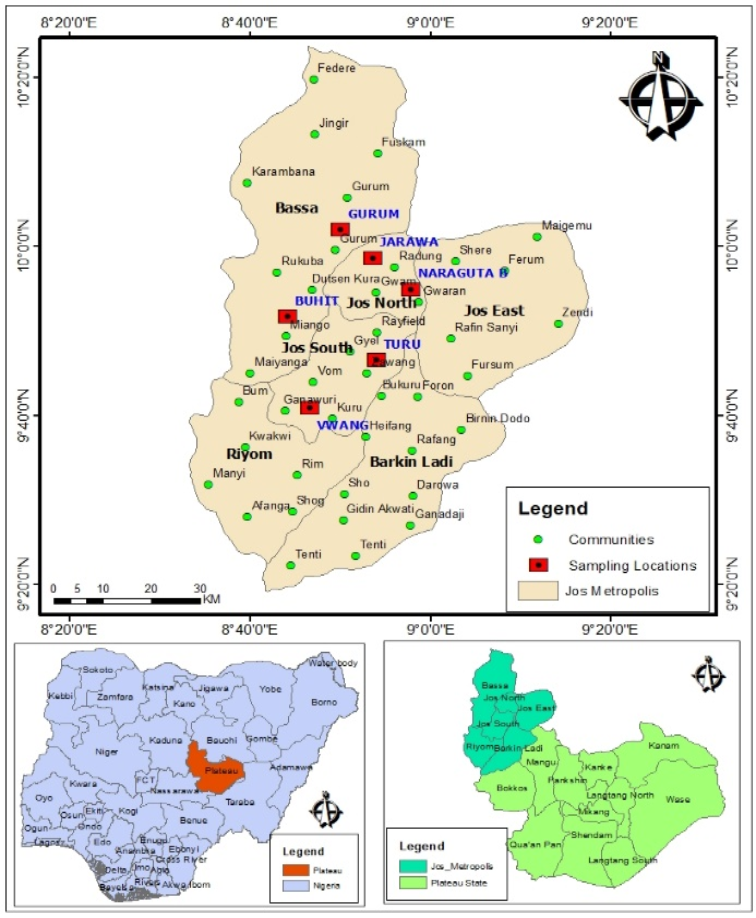
The study was conducted at the Jos Metropolis located between latitudes 9°54 N and 10°10 N and longitudes 8°48’ E and 9°30 ‘E, comprising of Jos North, Jos South and parts of Jos East, Riyom, Bassa, Barkin Ladi and Riyom Local Government Areas (LGAs) of Plateau State, which is also known as Greater Jos Metropolis according to the Plateau State Government (2009) (Figure 1). Plateau State is the 12th largest State in Nigeria with 17 LGAs having an area of 26,899 square kilometres and a population of 3,206,531 million people according to 2006 population Census. The State located in the North-Central geo-political zone of Nigeria shares geographic boundaries with Bauchi, Kaduna, Nasarawa and Taraba States at its North-Eastern, North-Western, South-Western and South-Eastern boundaries respectively. The State has a near temperate climate with an average temperature between 18 ℃ and 22 ℃ and a mean annual rainfall that varies from 131.75 cm (52 in) and 146 cm (57 in). Agricultural activities in the State include crop farming such as maize, guinea corn, cassava, yam, cow peas, rice, fonios which is locally called ‘acha’, monumental crops, mango, strawberries, flowers, vegetables, tomatoes, onion, cabbage, carrot and cucumber. Plateau State is also an important cattle producing area in Nigeria, with a high concentration of pastoral Fulani and indigenous herders. Plateau State has 1.3million cattle, 1.8 million goats and 1.2million sheep as the population of domestic ruminants as cited by .
Ethical Clearance
Ethical approval for the study was obtained from the Ahmadu Bello University Committee on Animal Use and Care (ABUCAUC) and the Health Research Ethics Committee (HREC) of the Plateau State Specialist Hospital (PSSH).
2.2. Study Design
A cross-sectional study was conducted to detect the presence of L. monocytogenes in animals, humans and the environmental samples in some farms in Jos Metropolis, Plateau State, Nigeria. Multistage sampling method was used to collect data. In the first stage, simple random sampling method was used to select three (3) LGAs from Jos Metropolis, this was done excluding Barkin Ladi LGA from the sampling frame due to logistical volatility and security constraints active within the region at the time of the study while in the second stage, simple random sampling technique was employed to select two wards each in the selected LGAs and in the third stage, simple random sampling method was used to select two farms each based on the owner’s consent to participate in the study. The sample size determined was divided proportionately among the subjects sampled.
Figure 1. Map of Nigeria showing Plateau State and the sampling locations.
2.3. Sample Size Determination
Sample size was calculated using the formula by at 95% confidence level and respective prevalence for the different sample types is applied below:
n=z2pqd2
Where:
n = sample size
Z = z-score at 95% confidence interval (1.96)
P = prevalence
q = 1-p
d = level of significance (0.05)
Sample Size Calculation for Animal samples
Milk sample - Calculated with a prevalence of 18.46% for milk and milk product by = 231.29 samples plus 10% for attrition rate = 254 samples.
Faecal sample - Calculated with a prevalence of 3.4% for cattle farms and beef abattoir by = 50.46 plus 10% for attrition rate = 55 samples.
Sample Size Calculation for Human Subjects
Hand swab - Calculated with prevalence of 16% from hand swab of farm workers by = 206.52 samples plus 10% for attrition rate = 227 samples.
Animal handlers cloth sample - Calculated with a prevalence of 6.0% from personnel cloths in meat plant by = 86.66 samples plus 10% for attrition rate = 95 samples.
Sample Size Calculation for Environmental Samples
Environmental samples for this study are defined as the cattle farm premises where cattle are housed including the water sources used for the animals.
Water sample - Calculated with a prevalence of 6.8% for irrigation water by = 97.38 samples plus 10% for attrition rate = 107 samples.
Soil sample - Calculated with a prevalence of 6.6% for agricultural soil by = 94.72 samples plus 10% for attrition rate = 104 samples.
Total sample n = 842 samples.
2.4. Sample Collection and Transportation
Fifty millilitres (50ml) of milk and water sample were aseptically collected in a labelled wide-mouthed sample bottles, and fifty grams (50g) of faecal and soil samples were collected into clean labelled polythene bags respectively, while a 5x5 cm dimension of swab from the hands and work cloths of the animal handlers were aseptically collected using sterile swab sticks that were moisten with distilled water and labelled appropriately. All samples collected were packed and transported in a Coleman box containing icepacks to the Bacterial Zoonoses Laboratory of the Department of Veterinary Public Health and Preventive Medicine, Faculty of Veterinary Medicine, Ahmadu Bello University, Zaria, Nigeria for analysis.
2.5. Processing of Samples
Ten grams (10g) of faecal and soil samples were added separately to 90ml of 0.1% peptone (Oxoid® UK CM0009) water in a stomacher bag and homogenized for two minutes in a stomacher at room temperature as described by .
2.6. Isolation of Listeria Species
The ISO 11290-1 method for the qualitative isolation and identification of L. monocytogenes was used with modification as described by . One (1) ml from each milk and water samples, the homogenized soil and faecal samples and swab sticks (cut) from the hand and cloth samples were enriched by adding 9ml of Listeria enrichment broth base (Oxoid® UK, CM0862) incorporated with Listeria selective enrichment supplement (Oxoid® UK, SR0141E) in labelled plain sample bottles and all the samples were incubated at 37°C for 18-48 hours. A loop-full of the overnight culture were streaked onto the surface of Listeria selective agar base (Oxoid® UK, CM0856) plates incorporated with Listeria selective supplement (Oxoid®, SR0140E) and were incubated at 37°C for 24-48 h. The colonies were identified by colonial morphology for Listeria colonies viz grayish colonies surrounded by black halos with sunken centre. Suspected colonies were inoculated onto Tryptone Soya Agar (Oxoid®, CM0131) supplemented by 0.6% of Yeast Extract Powder (Oxoid®, LP0021) (TSAYE) slants and were incubated at 37°C for 24 hours. The suspected isolates on the TSAYE slants were then stored at 4°C for further identification as described by . The presumptive Listeria species were subjected to conventional biochemical tests including catalase, oxidase, β-haemolysis on 7% sheep blood, aesculin hydrolysis, hydrogen sulphide, indole and motility test, Voges-Proskauer, methyl red reaction and carbohydrate fermentation test using mannitol, rhamnose, arabinose, maltose, glucose, sucrose and xylose. Gram’s staining was also performed on the suspected isolates.
2.7. Antimicrobial Susceptibility Testing of Listeria Species
The antibiotic susceptibility of the isolates was determined by the Kirby-Bauer disc diffusion method on Mueller Hinton agar (MHA, Oxoid, Basingstoke, UK). Standard discs were applied using a disc dispenser following the procedures recommended by the European Committee on Antimicrobial Susceptibility Testing (EUCAST) 2026 guidelines. Three to five well distinct colonies of the L. monocytogenes isolates were transferred into 5ml Brain Heart Infusion Broth (BHIB, Oxoid) and were incubated at 37℃ for 24 hours. The overnight broth cultures were diluted using sterile normal saline to a turbidity equivalent to 0.5 McFarland standard (108cfu/ml) and were inoculated onto the dried surface of Muller Hinton agar (MHA, Oxoid) plate. Sterile cotton-tipped swabs were used to inoculate the plates using the lawn inoculation technique by streaking back and forth from top of the plate to the bottom of the plate, turning the plate 60 degrees and repeated, then and turn another 60 degrees and repeated. The inoculated MHA plates were allowed to dry at room temperature for approximately 10 minutes and paper discs impregnated with Trimethoprim & sulfamethoxazole (SXT, 25 µg) Streptomycin (S, 10 µg), Gentamycin (GN, 30 µg), Ciprofloxacin (CIP, 5 µg), Ceftazidime (CAZ, 30 µg), Clindamycin (C, 2 µg), Ampicillin (AMP, 30 µg), Ceftriaxone (CRO 30 µg ), Amoxicillin (AX, 30 µg) and Vancomycin (VA, 10µ) were placed using a disc dispenser and incubated at 37℃ for 24 hours. After incubation, the diameters (mm) of clear zones of inhibition around each disc were measured and interpreted in accordance with the European Committee on Antimicrobial Susceptibility Testing (EUCAST) 2026 guidelines, clinical breakpoints for Staphylococcus, Enterobacterales and Streptococcus were used for the unavailable breakpoints for L. monocytogenes . Staphylococcus aureus ATCC 25923 was used as quality control strain as described by .
2.8. Determination of Multiple Drug Resistance (MDR) and Multiple Antibiotic Resistance Index of Listeria Species
The number of classes of antibiotic each isolate was resistant to were noted for the identification of multiple drug resistance (MDR). MDR was performed as described by as the acquired non-susceptibility of an isolate to at least one agent in three or more antimicrobial categories. Multiple resistance and resistance pattern of Listeria species isolates were determined and the multi-antibiotic resistance index were calculated using the formula described by :
MARI =Number of antibiotics an isolate is resistant toTotal number of antibiotics used to which the isolates were subjected to
3. Data Analysis
Data obtained from the study were subjected to descriptive statistical analysis through the use of a statistical software package (SPSS version 25.0). Results were presented in tables, charts, and chi square test were calculated to test for the level of association between positive L. monocytogenes and the location from which they were obtained as well as the type of sample. Prevalence was calculated for the isolates using the formula:
Prevalence% =Number of positive samplesTotal number of samples× 100
p-value ≤ 0.05 were considered statistically significant.
4. Results
Out of the 842 samples comprising of 254 milk, 55 faeces, 227 hand swabs, 95 cloth swabs, 107 water and 104 soil analysed, 58 (6.9%) were positive for Listeria species based on `conventional culture, biochemical and sugar fermentation assays. Species differentiation of the 58 Listeria species showed that 12 (20.69%) were L. monocytogenes while 2 (3.45%), 14 (24.14%), 2 (3.45), 27 (46.55%) and 1 (1.72%) were L. grayi, L. innocua, L. ivanovii, L. welshimeri and L. seeligeri respectively (Table 1).
Table 1. Relative Species Distribution and Frequency among the Recovered Listeria isolates (n=58).

Listeria Species

Frequency of Isolation

Prevalence (%)

L. monocytogenes

12

20.69

L. grayi

2

3.45

L. innocua

14

24.14

L. ivanovii

2

3.45

L. welshimeri

27

46.55

L. seeligeri

1

1.72

Total

58

100

Distribution of the Listeria species based on sampling location showed that Jos South LGA (13.19%) had the highest contamination rate, followed by Jos North LGA (5.59%) with the least contamination in by Bassa LGA (5.58%). The frequency of isolation of L. monocytogenes was highest in Jos South LGA (2.08%) followed by Bassa LGA (1.40%) with the least isolated in Jos North LGA (1.24%). There was statistically significant association (p<0.05) between the prevalence of L. monocytogenes and the sampling location in this study (Table 2).
Table 2. Prevalence of Presumptive Listeria Species Based on Location.

Location

No.

Listeria

Listeria

Species

χ2

p-value

(LGA)

Sampled

Species (%)

L. grayi (%)

L. innocua (%)

L. ivanovii (%)

L. monocyte-genes (%)

L. welshimeri (%)

L. seeligeri (%)

Bassa

215

12 (5.58)

0

4 (1.86)

1 (0.47)

3 (1.40)

4 (1.86)

0

Jos North

483

27 (5.59)

2 (0.41)

7 (1.45)

0

6 (1.24)

12 (2.48)

0

21.928

0.0383

Jos south

144

19 (13.19)

0

3 (2.08)

1 (0.69)

3 (2.08)

11 (7.64)

1 (0.69)

Total

842

58 (6.89)

2 (0.24)

14 (1.66)

2 (0.24)

12 (1.43)

27 (3.21)

1 (0.12)

Distribution of the Listeria species showed that the highest prevalence was isolated from cloth swabs (16.84%) which was followed by faecal samples (10.91%), water samples (7.48%), hand swabs (6.61%), soil samples (5.77%) and the least occurring in milk samples (2.76%). The occurrence of L. monocytogenes from the highest and lowest was observed in cloth swabs (3.16%), hand swab (2.20%), faecal samples (1.82%) and milk (1.18%). There was however no significant statistically association between the prevalence of L. monocytogenes and the sample type (p>0.05) in this study (Table 3).
Table 3. Prevalence of Presumptive Listeria Species Based on Sample Type.

Sample type

No. sampled

Listeria species

Listeria species

χ2

p-value

Total

L. grayi (%)

L. innocua (%)

L. ivanovii (%)

L. monocyte-genes (%)

L. Welshime-ri (%)

L. seeligeri (%)

Cloth swab

95

16 (16.84)

1 (1.05)

4 (4.21)

1 (1.05)

3 (3.16)

7 (7.37)

0

Faeces

55

6 (10.91)

0

2 (3.64)

0

1 (1.82)

3 (3.64)

0

Hand swab

227

15 (6.61)

1 (0.44)

3 (1.32)

1 (0.44)

5 (2.20)

5 (2.20)

0

39.635

0.1121

Milk

254

7 (2.76)

0

0

0

3 (1.18)

3 (1.18)

1 (0.39)

Soil

104

6 (5.77)

0

2 (1.92)

0

0

4 (3.85)

0

Water

107

8 (7.48)

0

3 (2.80)

0

0

5 (4.67)

0

Total

842

58 (6.89%)

2 (0.24)

14 (1.66)

2 (0.24)

12 (1.43)

27 (3.21)

1 (0.12)

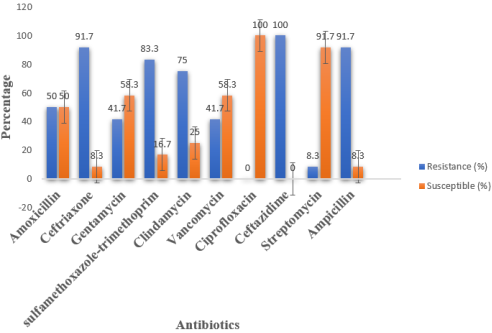
The antibiotic sensitivity testing of the 12 L. monocytogenes isolates tested against 10 antibiotics, the isolates showed susceptibility in descending order to the following antimicrobial agents at various percentages: ciprofloxacin 100%, streptomycin 91.7%, vancomycin 58.3%, gentamycin 58.3%, amoxicillin 50%, clindamycin 25%, sulfamethoxazole-trimethoprim 16.7%, ampicillin 8.3% and ceftriaxone 8.3%. In contrast, all 12 isolates of L. monocytogenes were resistant (100%) to ceftazidime. Resistance was observed against ampicillin (91.7%), ceftriaxone (91.7%), sulfamethoxazole-trimethoprim (83.3%), clindamycin 75%, and amoxicillin 50%. The least resistance was observed in streptomycin 8.3% followed by gentamycin and vancomycin with 41.7% each. No resistance (0%) was obtained for ciprofloxacin (Figure 2).
Figure 2. Percentage Distribution of Antibiotics Susceptibility Testing of Listeria monocytogenes Isolates.
The cumulative antibiotic resistance profile showed that majority (91.7%) of the L. monocytogenes isolates were resistance to at least four antimicrobial agents in at least three classes of antibiotics (Table 4).
Table 4. Distribution of Listeria monocytogenes isolates based on the cumulative number of resistant antibiotics (n=12).

Number of Resistant Antibiotics

Frequency

Percent (%)

Cumulative percent (%)

Resistance to less than three antibiotics

1

8.3

8.3

Resistance to four antibiotics

2

16.7

91.7

Resistance to more than four antibiotics

9

75.0

Total

12

100

100

The isolates showed 9 different antibiograms with ceftazidime occurring in all. Antimicrobial resistance to eight (8) antibiotics: amoxicillin (AX) a penicillin, ceftriaxone (CRO) a cephalosporin, gentamycin (GN) an aminoglycoside, Sulfamethoxazole-Trimethoprim (SXT) a sulphonamide/folate inhibitor, clindamycin (CD) a lincosamide, vancomycin (VA) a glycopeptide, ampicillin (AMP) a β-lactam penicillin and ceftazidime (CAZ) a cephalosporin were the most common patterns occurring in 4 of the 12 L. monocytogenes isolates. The mean MAR index is 0.58 ± 0.2 with the minimum being 0.20 and the maximum 0.80 (Table 5).
Table 5. Antibiogram Pattern and Multiple Antibiotic Resistance (MAR) Index of Listeria monocytogenes Isolates.

Isolate I. D

Source

Antibiogram

MAR Index

JSC 92

Cloth swab

AX, CRO, CD, AMP, CAZ

0.50

JNF 125

Faeces

AX, CRO, GN, SXT, CD, VA, AMP, CAZ

0.80

JSM 141

Milk

AX, CRO, GN, SXT, CD, VA, AMP, CAZ

0.80

JSM 237

Milk

AX, CRO, GN, SXT, CD, VA, AMP, CAZ

0.80

BM 273

Milk

AX, CRO, GN, SXT, CD, VA, AMP, CAZ

0.80

BH 295

Hand swab

CRO, SXT, CD, AMP, CAZ

0.50

JNC 781

Cloth swab

SXT, CAZ

0.20

BH 801

Hand swab

AX, CRO, GN, SXT, CD, AMP, CAZ

0.70

JNC 813

Cloth swab

CRO, SXT, AMP, CAZ

0.40

JNC 814

Cloth swab

CRO, CD, AMP, CAZ

0.40

JNH 821

Hand swab

CRO, SXT, CD, VA, AMP, CAZ

0.60

JNH 840

Hand swab

CRO, SXT, S, AMP, CAZ

0.50

Amoxicillin AX (penicillin); Ceftriaxone CRO (cephalosporin); Gentamycin GN (aminoglycoside); Sulfamethoxazole-Trimethoprim SXT (sulphonamides/folate inhibitor); Clindamycin CD (Lincosamide); Vancomycin VA (glycopeptide); Ampicillin AMP (β-lactam penicillin); Ceftazidime CAZ (cephalosporin); Streptomycin S (aminoglycoside).
5. Discussion
Listeria monocytogenes has been documented to be the pathogenic species responsible for both human and animal listeriosis and has been responsible for many foodborne listeriosis outbreaks with fatal outcomes . L. ivanovii and L. innocua have been established as the pathogenic species responsible for animal listeriosis especially in livestock .
The study established an overall prevalence of 6.89% of Listeria species in cattle, humans and environmental samples in some selected cattle farms in three LGA of Jos Metropolis, Plateau State, Nigeria. This result is much lower than the 38.2%, 27.8%, 27.5%, 17.5% and 14.6% reported by isolated from milk and environmental samples in selected areas of Eastern Ethiopia, from raw cow milk (nono) in Ogun and Oyo States, Nigeria, from fresh raw meat retailed in Zaria, Northwestern Nigeria, from raw food and environmental samples in Asaba, Nigeria and from cattle farms and beef abattoirs in Gauteng Province, South Africa respectively. However, the result of this study is slightly higher than the 4.75% prevalence documented by from frozen Atlantic mackerel fish in Nigeria. This is probably due to the fact that Listeria species are ubiquitous in nature and are especially found in temperate regions .
The results of the different Listeria species recorded from the most occurring to the least is, L. welshimeri, (46.55%) L. innocua (24.14%), L. monocytogenes (20.69%), L. grayi (3.45%) L. ivanovii (3.45%) and L. seeligeri (1.72%). All the non-pathogenic Listeria species confirmed in this research namely, L. seeligeri, L. ivanovii, L. grayi, and L, innocua have been documented in human infections with the exception L. welshimeri . This result obtained in this study in Jos Metropolis, Plateau State, Nigeria varied with a previous study conducted in Jos North, Jos South and Jos East which are still part of Jos Metropolis where the Listeria species isolated were 22.2%, 0.9%, 1.9% and 1.7% for L. ivanovii, L. monocytogenes, L. grayi and L. seeligeri respectively in abattoir by-products and effluent , however, L. welshimeri and L. innocua were not isolated. This could be due to the type of samples analysed in this study that in addition to animal samples, human and environmental samples (soil and water) were included in this study. Probably, this is because Listeria is widely distributed in the natural environment, with soil representing a key ecological niche for the persistence of globally distributed isolates where soil runoff may contaminate water sources which then serve as reservoirs that transfer the organism through the environment. Also, studies have documented L. monocytogenes circulating in the aquatic environment belonging to clonal complexes that contain the same virulence traits as that frequently isolated from human and animal clinical cases and from globally occurring outbreaks, including hypervirulent clones . The result of this study is higher than the 40.5%, 19.5%, 19.0% and 2.4% prevalence for L. welshimeri, L. monocytogenes, L. innocua and L. grayi respectively observation of , from broad food sources including ready to eat foods, raw and suya meat, dairy products, fruits and vegetables in Borno State, Nigeria, however, they reported a higher prevalence of 11.9% for L. ivanovii but their research did not isolate L. seeligeri. observation differed from our report by documenting four (4) Listeria species with the most occurring as L. grayi (59.1%), L. innocua (19.7%), L. monocytogenes (12.5%) and the least, L. ivanovii (9.1%).
The occurrence of Listeria species in the samples analysed was highest in cloth swabs (16.84%) compared with hand swab (6.61%), similarly, L. monocytogenes frequency of isolation was highest in cloth swab (3.16%) compared with hand swab (2.20%) among the human samples tested. These findings are lower compared to the 28% and 14% report of from apron of slaughterhouse workers and the 14% and 28% of hand swabs tested in two slaughterhouses in Egypt. This is also lower than the 22.8% report of for Listeria species isolated in hand swab and cloth swab of abattoir workers in Turkey and lower than the 5.7% for L. monocytogenes. This is probably due to the personal hygiene practice between these countries as poor personal hygiene such as hand-washing during milking, will aid the transmission of the pathogen from animals to humans and human to animals and other objects such as clothing.
The environmental samples i.e. water (7.48%) and soil (5.77%) had the next highest isolation rate of Listeria species with only L. innocua and L. welshimeri isolated in both samples. This differs from positive L. monocytogenes isolation in water by researchers including the 20% report of from irrigation water in selected areas of Osun State, Nigeria and the 13% report of isolated from flowing surface waters in Switzerland and also the 6.8% report of isolated from irrigation water and agricultural soil samples in Eastern Cape Province, South Africa. In a research similar to this study, L. monocytogenes was not isolated as documented by from soil samples in Iran. This also differs from the works of and who both reported a prevalence of 23% and 1.75% of L. monocytogenes in South Africa and India respectively. This difference in isolation of L. monocytogenes in these studies is probably due to the differences in sample size. The observed L. innocua and L. welshimeri prevalence in water samples is indicative that the aquatic environment act as reservoirs for these species. Poor sanitation, runoff contamination from farms, abattoirs and discharge of untreated waste into water bodies which are common challenges in many Nigerian settings are likely contribute to their persistence. The detection of these two species in environmental samples in the study location reflects the environmental distribution and ecological adaptability of non-pathogenic Listeria species. These findings are consistent with the understanding that Listeria species are ubiquitous in natural environments such as soil, water, and decaying vegetation, where non-pathogenic species often predominate over L. monocytogenes .
The occurrence of Listeria species in the animal samples was highest in faecal samples (10.91%) compared to milk samples (2.76%), likewise, L. monocytogenes prevalence was higher in cattle faeces (1.82%) compared to milk samples (1.18%). This is lower than the 27.8% of L. monocytogenes findings of in raw cow milk in Ogun and Oyo States, Nigeria. A lower prevalence of 4.7% for Listeria species and also a lower prevalence of 1.0% for L. monocytogenes isolated from faeces has been reported by in Egypt. In contrast, a much higher prevalence of 37.5% was observed for Listeria species by in cattle faeces in Maiduguri, Borno State. These findings highlight the significant role of both food products and animal reservoirs in the epidemiology of listeriosis. L. monocytogenes is a well-recognized zoonotic pathogen capable of persisting in farm environments, contaminating dairy products, and colonizing the gastrointestinal tract of animals. The prevalence milk samples suggests that post-milking contamination, poor milking hygiene, and environmental exposure may amplify bacterial presence in dairy products. The prevalence of L. monocytogenes in faecal samples is epidemiologically important, as faecal shedding by livestock is a key source of environmental dissemination coupled with the poor personal hygiene of the animal handlers in this location.
Antibiotics are the most significant class of pharmaceuticals and are one of the most influential medical inventions since their discovery . They are extensively used in animals to prevent, control and treat illnesses, they are also enormously used as growth promoters in animal production . This extensive administration of antibiotics has led to misuse of these drugs in both humans and animals which has invariably contributed to the widespread antibiotic resistance among foodborne pathogens such as L. monocytogenes . Antimicrobial resistance (AMR) currently presents a significant challenge to all healthcare systems worldwide . Antimicrobial resistance have been demonstrated to develop in bacteria either through the bacteria exhibiting some intrinsic resistance to certain antibiotics due to their general physiology, through mutations or other kinds of genetic alteration while others by adapting to environmental stresses .
The high number of L. monocytogenes isolates (100%) resistant to ceftazidime in this study, is expected as the organism is intrinsically resistant to ceftazidime which is often used in selective media to isolate Listeria species, leveraging its natural resistance to this antibiotic due to its lack of the specific penicillin-binding proteins (PBPs) that third-generation cephalosporins targets . However, this is in contrast to the observation of that documented a 14% susceptibility to ceftazidime from open-air fish markets in Iran.
Listeria monocytogenes displayed a high resistance (91.7%) to both ampicillin and ceftriaxone, this is similar to a previous finding where 100% of the isolates were resistant to ampicillin in the same study area as well as the 100% report of from fresh raw meat retailed in Zaria, Northwestern, Nigeria but differ from the 100% susceptible report of from food sources in Poland. The high level of resistance to ceftriaxone (91.7%) observed in this study indicates a significant public health concern, particularly in the context of foodborne L. monocytogenes infections in Nigeria. Ceftriaxone, a third-generation cephalosporin, is widely used in clinical practice; however, L. monocytogenes is intrinsically less susceptible to cephalosporins due to the low affinity of its penicillin-binding proteins for this class of antibiotics. The observed high resistance to β-lactam antibiotic (ampicillin) is highly significant from public health perspective which reflects both intrinsic and acquired resistance mechanisms and appears to be increasingly reported in food and environmental isolates . Resistance of L. monocytogenes to ceftriaxone and other cephalosporins has also been reported, a clinical study by reported a lower ceftriaxone resistance of 53.5% and slightly lower ampicillin resistance of 81.4% among L. monocytogenes isolates isolated from women with spontaneous abortion in Ugandan tertiary hospitals. Similarly, documented 85.7% resistance to ampicillin from humans, animals and dairy products in Egypt. Increasing resistance to β-lactam antibiotics such as ampicillin is concerning, given that these drugs are considered first-line therapy for listeriosis .
The high resistance to clindamycin (75%) observed in this study indicates a high level of antimicrobial resistance among foodborne isolates in Nigeria and raises significant public health concerns. This study agrees with the 71.4% resistance to clindamycin by , from locally processed fermented foods in Ethiope West, Delta State, Nigeria. A lower prevalence of 48% was obtained by from diverse food commodities across Sikkim, India. In contrast, a 100% resistance from the two positive L. monocytogenes isolates was documented by from different dairy and street food sources in North Karnataka, India. Clindamycin, a lincosamide antibiotic, is not a first-line drug for the treatment of listeriosis, however, it is often used as an alternative in patients allergic to β-lactams. Therefore, increasing resistance to this antibiotic may limit therapeutic options, particularly in resource-limited settings such as Nigeria. A 50% resistance to amoxicillin observed in this study is higher than the 12.5% report of from various ready-to-eat foods in Borno State, Nigeria and differs from the 0% resistance observed by from raw frozen Atlantic mackerel fish in Nigeria. The differences could be due to the type of samples analysed in these studies and also, mackerel fish are found in the Atlantic Ocean, their natural habitat and may not have been exposed to antimicrobials.
The 41.7% resistance to gentamycin and vancomycin each is higher than the 22.2% resistance to gentamycin from a previous study in the same study location , this is very concerning that there is growing resistance among the organism in Jos, Plateau State, Nigeria. This this higher than the observation of that documented a 0.72% to 10.2% resistance to gentamycin from clinical, seafood, poultry, raw meat, pork and dairy products in Usa, Iran, Italy, China and Spain, only the Nigerian isolate had 31.7% resistance. This could be due to different geographical region’s antimicrobial regulations, handling and stewardship. In Nigeria, non-medical personnel have access to drugs and these antimicrobials are available in the open markets and reconstituted in a cocktail for farmers to buy directly by the drug sellers in the hot sun . Sometimes, the farmers misuse antibiotics by frequently administering it to healthy animals in a bid to avoid infections in those animals . Earlier molecular and surveillance analyses have reported that L. monocytogenes isolates are generally susceptible to gentamicin, a key aminoglycoside used in clinical treatment for listeriosis. In the past, resistance genes such as acetyltransferase (aac) and phosphotransferase (aph) are common in other Gram-positive bacteria which have been rarely described in Listeria species are now being reported with a mechanism of resistance involving active efflux and genetic determinants that affect the uptake of the antibiotic through altered membrane potential .
Likewise, vancomycin resistance in L. monocytogenes obtained in this study is much lower than the 7% and 14.3% reported by and from foods in Morocco and from locally processed fermented foods in Ethiope West, Delta State, Nigeria respectively. However, a much higher resistance of 83.1% was reported by from fruits and vegetables in selected locations in Nigeria. Vancomycin resistance in L. monocytogenes is less commonly reported but is biologically plausible due to the presence of vancomycin-associated resistance genes e.g., vanC, vanR, vanS identified in some environmental isolates. Both gentamicin and vancomycin resistance observed in this study are a significant finding, particularly given the clinical importance of these antibiotics in the treatment of listeriosis. Gentamicin is commonly used in combination with ampicillin as a first-line therapy, while vancomycin is often considered an alternative in severe infections or in cases of β-lactam intolerance . Therefore, resistance to these agents may compromise treatment efficacy and represents a growing public health concern antimicrobial resistance.
The 100% susceptibility of L. monocytogenes isolate to ciprofloxacin agrees with the findings of and from some foods in Borno State, from retail raw frozen Atlantic mackerel fish in Nigeria and from raw cow milk (nono) in Ogun and Oyo States, Nigeria respectively. The finding of 100% susceptibility of L. monocytogenes to ciprofloxacin in this study indicates a high level of effectiveness of fluoroquinolones against L. monocytogenes in the studied area. This result is particularly important given the increasing global concern over antimicrobial resistance in foodborne pathogens. Ciprofloxacin, a fluoroquinolone antibiotic, acts by inhibiting bacterial DNA gyrase and topoisomerase IV, thereby preventing DNA replication and transcription . The complete susceptibility observed suggests that these target mechanisms remain largely conserved and unaffected by resistance mutations in the isolates examined. A lower susceptibility of 73.1% was documented by from ready-to-eat vegetables and fermented milk in Yola, Nigeria. However, this study is not in agreement with the 100% resistant report of from seafood sold in Rivers State, Nigeria. This indicate that while ciprofloxacin remains broadly effective, there is emerging evidence of gradual adaptation and potential resistance development. Studies have demonstrated that L. monocytogenes can develop reduced susceptibility to ciprofloxacin under selective pressure through mutations in genes such as parC and fepR, which affect fluoroquinolone targets and efflux mechanisms .
The susceptibility of the isolates to streptomycin (91.7%) is slightly lower than the 100% susceptibility report of from meat products and processing environment in Poland but its slightly higher than the 87.5% report by from some foods in Borno State, Nigeria. The susceptibility of L. monocytogenes to streptomycin observed in this and other studies indicates that the majority of isolates remain sensitive to this aminoglycoside, although the presence of resistant isolates (8.3%) suggests the emergence of reduced susceptibility within the population. This might be probably due reduced antibiotic pressure or its non-availability in the markets in the study areas as compared to other drugs such as oxytetracycline, gentamycin, penicillin, ampicillin, amoxicillin to mention a few. The widespread and often uncontrolled use of antibiotics in Nigeria particularly in agriculture and animal husbandry creates strong selective pressure that promotes the emergence of resistant strains. Secondly, environmental reservoirs such as water, soil, and food processing environments serve as hotspots for the accumulation and dissemination of antimicrobial resistance genes. Thirdly, horizontal gene transfer among bacteria in these environments may facilitate the spread of resistance determinants, including those affecting aminoglycosides and glycopeptides.
Multiple antibiotic resistance (MAR) index of the L. monocytogenes isolates revealed that the mean MAR index is 0.58 ± 0.20. A slightly lower mean MAR index of 0.343 for cattle and 0.375 for human isolates was documented by from ruminants and humans in New Valley and Beheira Governorates, Egypt. stated that a greater than 0.2 MAR index points to the fact that the isolates originate from high-risk area where the rate of antibiotic usage is much. This study is one of such where 100% the minimum MAR index was ≥0.2. This is similar to the report of who reported 100% of the L. monocytogenes isolates have a MAR index ≥0.2 from seafood sold in Rivers state, Nigeria.
The high level of resistance of L. monocytogenes to these antibiotics should be of great concern to relevant health agencies, regulators and the general public because this typically suggesting that the isolates originate from high-risk environments where antibiotics are frequently used or misused . Therefore, a mean value of 0.58 strongly implies that the L. monocytogenes strains in this study location were exposed to substantial antimicrobial pressure. The implication of a multidrug resistant pathogen as seen in this study is that, it becomes more pathogenic compared to non-multidrug resistant pathogens . This scenario also makes treatment regimen unsuccessful in infected patients and there is additional cost of treatment, as well as prolonged hospital stay and consequent death .
The public health implications of these findings are substantial, the presence of non-pathogenic Listeria species in environmental samples as recorded in this study may indicate potential contamination with L. monocytogenes. Milk serves as a direct vehicle for human infection, particularly when consumed raw or inadequately pasteurized, which is still common in many Nigerian communities as the handlers often drink directly from source. The presence of resistant isolates suggests the potential for emerging resistance and underscores the need for continuous surveillance, antimicrobial stewardship, and prudent antibiotic use by observing withdrawal periods and using veterinary prescribed drugs, to preserve the effectiveness of antibiotics and prevent future resistance development.
6. Conclusion
The findings in this study demonstrates that L. monocytogenes is widely distributed across human, animal and environmental sources in the study area. Multiple drug resistance showed most of the L. monocytogenes isolates were resistant to at least four (4) antimicrobial agents in at least three classes of antibiotics. It is therefore recommended that strict hygiene practice among farm workers and high-risk individuals who are susceptible to L. monocytogenes infection should observe food safety and food hygiene by cooking food from animal sources thoroughly. Government agencies responsible should enforce regulations on access and use of antimicrobial agents, the use of these agents should be limited to licenced personnel and violators should receive strict penalties in order to reduce the incidence of drug resistance from food animal sources. Licenced personnel should also exhibit good antimicrobial stewardship by performing culture and sensitivity testing to select the most suitable drugs for treatment and ensure the observance of withdrawal periods as well as exploring other sources of therapy like the use probiotics, phage therapies amongst others.
Author Contributions
Hassana Issac Dunka: Conceptualization, Formal Analysis, Funding acquisition, Methodology, Writing – original draft
Habiba Iliyasu Atta: Conceptualization, Methodology, Supervision, Validation, Writing – review & editing
Habiba Momoh: Funding acquisition, Methodology, Writing – review & editing
Mohammed Kabiru Lawan: Conceptualization, Methodology, Supervision, Validation, Writing – review & editing
Mohammed Bello: Conceptualization, Methodology, Supervision, Validation, Writing – review & editing
Conflicts of Interest
The authors declare no conflict of interest.
References
[1] Magalhães L, Nitschke M. Antimicrobial activity of rhamnolipids against Listeria monocytogenes and their synergistic interaction with nisin. Food control. 2013 Jan 1; 29(1): 138-42.
[2] Gray ML, Killinger AH. Listeria monocytogenes and listeric infections. Bacteriological reviews. 1966 Jun; 30(2): 309-82.
[3] Ferreira V, Wiedmann M, Teixeira P, Stasiewicz MJ. Listeria monocytogenes persistence in food-associated environments: epidemiology, strain characteristics, and implications for public health. Journal of food protection. 2014 Jan 1; 77(1): 150-70.
[4] Thønnings S, Knudsen JD, Schønheyder HC, Søgaard M, Arpi M, Gradel KO, Østergaard C, Jensen US, Koch K, Pinholt M, Smit J. Antibiotic treatment and mortality in patients with Listeria monocytogenes meningitis or bacteraemia. Clinical Microbiology and Infection. 2016 Aug 1; 22(8): 725-30.
[5] Hung DL, Lau SK, Woo PC. Severe sepsis caused by Listeria monocytogenes in a patient given monoclonal antibodies against CD38 and proteosome inhibitor. Infectious Microbes & Diseases. 2019 Sep 1; 1(1): 30-1.
[6] Sim J, Hood D, Finnie L, Wilson M, Graham C, Brett M, Hudson JA. Series of incidents of Listeria monocytogenes non‐invasive febrile gastroenteritis involving ready‐to‐eat meats. Letters in applied microbiology. 2002 Nov 1; 35(5): 409-13.
[7] Kaptchouang Tchatchouang CD, Fri J, De Santi M, Brandi G, Schiavano GF, Amagliani G, Ateba CN. Listeriosis outbreak in South Africa: A comparative analysis with previously reported cases worldwide. Microorganisms. 2020 Jan 17; 8(1): 135.
[8] Dunphy L, Polkampali M, Simmons W, Fowler G. Maternal sepsis caused by Listeria monocytogenes with a fatal fetal outcome. BMJ Case Reports CP. 2022 Oct 1; 15(10): e249989.
[9] Ieren II, Bello M, Kwaga JK. Occurrence and antibiotic resistance profile of Listeria monocytogenes in salad vegetables and vegetable salads sold in Zaria, Nigeria. African Journal of Food Science. 2013 Sep 15; 7(9): 334-8.
[10] Nüesch-Inderbinen M, Bloemberg GV, Müller A, Stevens MJ, Cernela N, Kollöffel B, Stephan R. Listeriosis caused by persistence of Listeria monocytogenes serotype 4b sequence type 6 in cheese production environment. Emerging Infectious Diseases. 2021 Jan; 27(1): 284.
[11] Nichols M, Conrad A, Whitlock L, Stroika S, Strain E, Weltman A, Johnson L, DeMent J, Reporter R, Williams I. Multistate outbreak of Listeria monocytogenes infections retrospectively linked to unpasteurized milk using whole-genome sequencing. Journal of dairy science. 2020 Jan 1; 103(1): 176-8.
[12] Usman UB, Kwaga JK, Kabir J, Olonitola OS. Isolation and antimicrobial susceptability of Listeria monocytogenes from raw milk and milk products in Northern Kaduna State, Nigeria. Journal of Applied and Environental Microbiology. 2016; 4(3): 46-54.
[13] Kayode AJ, Okoh AI. Assessment of multidrug-resistant Listeria monocytogenes in milk and milk product and One Health perspective. PLoS One. 2022 Jul 6; 17(7): e0270993.
[14] Meza-Bone GA, Meza Bone JS, Cedeño Á, Martín I, Martín A, Maddela NR, Córdoba JJ. Prevalence of Listeria monocytogenes in RTE meat products of Quevedo (Ecuador). Foods. 2023 Aug 4; 12(15): 2956.
[15] Ebakota DO, Abiodun OA, Nosa OO. Prevalence of antibiotics resistant Listeria monocytogenes strains in Nigerian ready-to-eat foods. Food Safety. 2018; 6(3): 118-25.
[16] Olaniyan SE, Kwaga J, Saidu AS, Usman UB. Multiple anti-microbial resistance profile and molecular detection of some virulence‎ genes of Listeria monocytogenes isolated from fresh raw meat retailed in Zaria,‎ Northwestern Nigeria‎. Afro-Egyptian Journal of Infectious and Endemic Diseases. 2022: 12(1): 3-15.
[17] Omogbai BA, Esokpunwu DE. Molecular Characterization and Antibiotic Resistance Patterns of Listeria Species in Frozen Beef and Chicken Sold in Benin City, Nigeria. Food and Applied Bioscience Journal. 2019; 7(1): 68-86.
[18] Chiamaka E, Emeka N, Ifeanyichukwu E. Research Article Incidence and Antimicrobial Susceptibility of Listeria monocytogenes Isolated from Different Food Sources in Enugu, Nigeria. Asian Journal of Biological Sciences. 2019; 12: 671-676.
[19] Dunka HI, Bello M, Lawan MK. Prevalence and antibiogram of Listeria monocytogenes contamination of liver, spleen, ruminal content and effluent in Jos, Nigeria. Journal of Veterinary Medicine and Animal Sciences. 2021; 4(1): 1072.
[20] Iwu CD, Okoh AI. Characterization of antibiogram fingerprints in Listeria monocytogenes recovered from irrigation water and agricultural soil samples. PLoS One. 2020 Feb 10; 15(2): e0228956.
[21] Wilson A, Gray J, Chandry PS, Fox EM. Phenotypic and genotypic analysis of antimicrobial resistance among Listeria monocytogenes isolated from Australian food production chains. Genes. 2018 Feb 9; 9(2): 80.
[22] Lee BH, Cole S, Badel-Berchoux S, Guillier L, Felix B, Krezdorn N, Hébraud M, Bernardi T, Sultan I, Piveteau P. Biofilm formation of Listeria monocytogenes strains under food processing environments and pan-genome-wide association study. Frontiers in microbiology. 2019 Nov 21; 10: 2698.
[23] Thomas J, Govender N, McCarthy KM, Erasmus LK, Doyle TJ, Allam M, Ismail A, Ramalwa N, Sekwadi P, Ntshoe G, Shonhiwa A. Outbreak of listeriosis in South Africa associated with processed meat. New England Journal of Medicine. 2020 Feb 13; 382(7): 632-43.
[24] Kayode AJ, Semerjian L, Osaili T, Olapade O, Okoh AI. Occurrence of multidrug-resistant Listeria monocytogenes in environmental waters: a menace of environmental and public health concern. Frontiers in Environmental Science. 2021 Oct 12; 9: 737435.
[25] Thrusfield M. Veterinary Epidemiology [electronic resource]. Edinburgh: EBL. 2013.
[26] Gana J, Gcebe N, Moerane R, Ngoshe YB, Tshuma T, Moabelo K, Adesiyun AA. A comparative study on the occurrence, genetic characteristics, and factors associated with the distribution of Listeria species on cattle farms and beef abattoirs in Gauteng Province, South Africa. Tropical Animal Health and Production. 2024 Mar; 56(2): 88.
[27] Tahoun AB, Abou Elez RM, Abdelfatah EN, Elsohaby I, El-Gedawy AA, Elmoslemany AM. Listeria monocytogenes in raw milk, milking equipment and dairy workers: Molecular characterization and antimicrobial resistance patterns. Journal of global antimicrobial resistance. 2017 Sep 1; 10: 264-70.
[28] Kahraman T, Cetin O, Dumen E, Buyukunal SK. Incidence of Salmonella spp. and Listeria monocytogenes on equipment surfaces and personnel hands in meat plants. Revue de Médecine Vétérinaire. 2010 Mar 1; 161(3): 108-13.
[29] Indrawattana N, Nibaddhasobon T, Sookrung N, Chongsa-Nguan M, Tungtrongchitr A, Makino SI, Tungyong W, Chaicumpa W. Prevalence of Listeria monocytogenes in raw meats marketed in Bangkok and characterization of the isolates by phenotypic and molecular methods. Journal of health, population, and nutrition. 2011 Feb; 29(1): 26..
[30] Jantzen MM. Specific detection of Listeria monocytogenes in foods using commercial methods: from chromogenic media to real-time PCR. Spanish Journal of Agricultural Research. 2006 Jan 1.
[31] Jemmi T, Stephan R. Listeria monocytogenes: food-borne pathogen and hygiene indicator. Rev Sci Tech. 2006 Aug 1; 25(2): 571-80.
[32] Parra-Flores J, Holý O, Bustamante F, Lepuschitz S, Pietzka A, Contreras-Fernández A, Castillo C, Ovalle C, Alarcón-Lavín MP, Cruz-Córdova A, Xicohtencatl-Cortes J. Virulence and antibiotic resistance genes in Listeria monocytogenes strains isolated from ready-to-eat foods in Chile. Frontiers in microbiology. 2022 Feb 21; 12: 796040.
[33] Lourenco A, Linke K, Wagner M, Stessl B. The saprophytic lifestyle of Listeria monocytogenes and entry into the food-processing environment. Frontiers in microbiology. 2022 Mar 8; 13: 789801.
[34] Magiorakos AP, Srinivasan A, Carey RB, Carmeli Y, Falagas ME, Giske CG, Harbarth S, Hindler JF, Kahlmeter G, Olsson-Liljequist BJ, Paterson DL. Multidrug-resistant, extensively drug-resistant and pandrug-resistant bacteria: an international expert proposal for interim standard definitions for acquired resistance. Clinical microbiology and infection. 2012 Mar 1; 18(3): 268-81.
[35] Krumperman PH. Multiple antibiotic resistance indexing of Escherichia coli to identify high-risk sources of fecal contamination of foods. Applied and environmental microbiology. 1983 Jul; 46(1): 165-70.
[36] Dhama K, Karthik K, Tiwari R, Shabbir MZ, Barbuddhe S, Malik SV, Singh RK. Listeriosis in animals, its public health significance (food-borne zoonosis) and advances in diagnosis and control: a comprehensive review. Veterinary Quarterly. 2015 Oct 2; 35(4): 211-35.
[37] Manyi-Loh CE, Lues R. Listeria monocytogenes and listeriosis: The global enigma. Foods. 2025 Apr 3; 14(7): 1266.
[38] Končurat A, Sukalić T. Listeriosis: characteristics, occurrence in domestic animals, public health significance, surveillance and control. Microorganisms. 2024 Oct 12; 12(10): 2055.
[39] Rossi F, Giaccone V, Colavita G, Amadoro C, Pomilio F, Catellani P. Virulence characteristics and distribution of the pathogen Listeria ivanovii in the environment and in food. Microorganisms. 2022 Aug 20; 10(8): 1679.
[40] Kemal J, Hassen A, Tamerat N, Regassa D, Bekele F. Listeria monocytogenes and Other Listeria Species from Milk and Environmental Samples and Milk Safety Assessment in Selected Areas of Eastern Ethiopia. East African Journal of Sciences. 2024 Jun 1; 18(2).
[41] Ojomo JL, Olukoya DK, Essiet UU, Ajayi A, Smith SI. Detection of Listeria monocytogenes from Raw Milk (Nono) in Cows Using Polymerase Chain Reaction. Foodborne Pathogens and Disease. 2026 Mar 28: 15353141261438103.
[42] Omamuyovwe OF, Ifeanyichukwu A, Adeola MO, Chike DF, Tennyson EU, Anna O, Olannye DU. Detection of Listeria monocytogenes in raw food and environmental samples in Asaba, Nigeria. Journal of Agricultural and Food Chemical Engineering. 2024 Oct 14; 4(3): 1-6.
[43] Okorie-Kanu OJ, Anyanwu MU, Okosi RI, Oyeleye FA, Olorunleke SO, Mgbeahuruike AC, Anyaoha CO, Ejiofor TE, Majesty-Alukagberie LO, Okorie-Kanu CO, Ezenduka EV. Epidemiology and antibiogram of listeria species from retail raw frozen atlantic mackerel fish (Scomber scombrus) in Nigeria. Nigerian Veterinary Journal. 2023 Jun 27; 43(2): 12-26.
[44] Favaro M, Sarmati L, Sancesario G, Fontana C. First case of Listeria innocua meningitis in a patient on steroids and eternecept. JMM case reports. 2014 Jun; 1(2): e003103.
[45] Rocourt J, Hof H, Schrettenbrunner A, Malinverni R, Bille JJ. Acute purulent Listeria seelingeri meningitis in an immunocompetent adult. Schweizerische Medizinische Wochenschrift. 1986 Feb 1; 116(8): 248-51.
[46] Snapir YM, Vaisbein E, Nassar F. Low virulence but potentially fatal outcome—Listeria ivanovii. European Journal of Internal Medicine. 2006 Jul 1; 17(4): 286-7.
[47] Perrin M, Bemer M, Delamare C. Fatal case of Listeria innocua bacteremia. Journal of clinical microbiology. 2003 Nov; 41(11): 5308-9.
[48] Issa MR, Habboubat I, Ben LY, Chadli M. Listeria grayi meningitis in a polypathological patient: A case report. 2024.62-67.
[49] Raschle S, Stephan R, Stevens MJ, Cernela N, Zurfluh K, Muchaamba F, Nüesch-Inderbinen M. Environmental dissemination of pathogenic Listeria monocytogenes in flowing surface waters in Switzerland. Scientific Reports. 2021 Apr 27; 11(1): 9066.
[50] Haruna BA, Chiwar HM, Kumurya AS, Balla HJ. Assessment of Antimicrobial Resistance Trends in Listeria monocytogenes in Borno State: Implications for Food Safety and Public Health. UMYU Journal of Microbiology Research. 2025 Nov 8; 10(2): 1-0.
[51] Akkaya L, Alisarli M, Çetinkaya Z, Kara R, Telli R. Occurrence of Escherichia coli O157:H7/O157, Listeria monocytogenes and Salmonella spp. in beef slaughterhouse environments, equipment and workers. Journal of Muscle Foods. 2008 Jul; 19(3): 261-74.
[52] Agboola TD, Bisi-Johnson MA. Occurrence of Listeria monocytogenes in irrigation water and irrigated vegetables in selected areas of Osun State, Nigeria. Scientific African. 2023 Mar 1; 19: e01503.
[53] Gholipour S, Nikaeen M, Farhadkhani M, Nikmanesh B. Survey of Listeria monocytogenes contamination of various environmental samples and associated health risks. Food Control. 2020 Feb 1; 108: 106843.
[54] Tahir R, Rabbani M, Ahmad A, Tipu MY, Chaudhary MH, Jayarao BM. Study on occurrence of Listeria monocytogenes in soil of Punjab Province and its associated risk factors. Journal of Animal and Plant Sciences. 2021 Jun 14; 32(1): 45-51.
[55] Markovich Y, Moura A, Gomis J, Leclercq A, Gómez‐Martín Á, Bracq‐Dieye H, Palacios‐Gorba C, Tessaud‐Rita N, Ortolá S, Vales G, Yáñez MA. Predominance of L. monocytogenes Lineage I Clones in Wastewater, Ruminants, and Natural Environments. Environmental Microbiology. 2025 Sep; 27(9): e70169.
[56] Liu Y, Zhang H, Wu C, Deng W, Wang D, Zhao G, Song J, Jiang Y. Molecular analysis of dominant species in Listeria monocytogenes-positive biofilms in the drains of food processing facilities. Applied microbiology and biotechnology. 2016 Apr; 100(7): 3165-75..
[57] Shaaban SI, Awwad N, Nossair M, Ayoub M, Eid AE. Gene profiling and serotyping of multidrug-resistant Listeria monocytogenes isolated from humans, animals, and dairy products. BMC Veterinary Research. 2025 Dec; 21(1): 702.
[58] Lawan FA, Tijjani AN, Raufu AI, Ameh JA, Ngoshe IY, Auwal MS. Isolation and characterisation of Listeria species from ruminants in Maiduguri north-eastern Nigeria. African Journal of Biotechnology. 2013 Dec 11; 12(50): 6997.
[59] Uddin TM, Chakraborty AJ, Khusro A, Zidan BR, Mitra S, Emran TB, Dhama K, Ripon MK, Gajdács M, Sahibzada MU, Hossain MJ. Antibiotic resistance in microbes: History, mechanisms, therapeutic strategies and future prospects. Journal of infection and public health. 2021 Dec 1; 14(12): 1750-66.
[60] Olaimat AN, Al‐Holy MA, Shahbaz HM, Al‐Nabulsi AA, Abu Ghoush MH, Osaili TM, Ayyash MM, Holley RA. Emergence of antibiotic resistance in Listeria monocytogenes isolated from food products: a comprehensive review. Comprehensive Reviews in Food Science and Food Safety. 2018 Sep; 17(5): 1277-92.
[61] Martínez-Gonzáles NE, Martínez-Chávez L, Martínez-Cárdenas C, Cabrera-Díaz E, Castillo A. The Polymyxin Ceftazidime Oxford Medium as an alternative selective and differential medium for isolation of Listeria monocytogenes from raw or unpasteurized food. Food microbiology. 2014 Apr 1; 38: 44-51.
[62] Jamali H, Paydar M, Ismail S, Looi CY, Wong WF, Radmehr B, Abedini A. Prevalence, antimicrobial susceptibility and virulotyping of Listeria species and Listeria monocytogenes isolated from open-air fish markets. BMC microbiology. 2015 Jul 25; 15(1): 144.
[63] Zawiasa A, Olejnik-Schmidt A. Antibiotic Resistance Profiles and Genetic Determinants of Listeria innocua Isolated from Food Sources in Poland. Genes. 2025 Dec 5; 16(12): 1455.
[64] Collins B, Curtis N, Cotter PD, Hill C, Ross RP. The ABC transporter AnrAB contributes to the innate resistance of Listeria monocytogenes to nisin, bacitracin, and various β-lactam antibiotics. Antimicrobial agents and chemotherapy. 2010 Oct; 54(10): 4416-23.
[65] Ssentongo E, Kasujja M, Musinguzi R, Kanika JC, Bivako R, Kintu M, Byonanuwe S, Enyamitoit RS, Okurut E. Antibiotic susceptibility and risk factors for listeriosis in women with spontaneous abortion in Ugandan tertiary hospitals: a cross-sectional study. BMC Pregnancy and Childbirth. 2025 Feb 28; 25(1): 227.
[66] Elsayed MM, Elkenany RM, Zakaria AI, Badawy BM. Epidemiological study on Listeria monocytogenes in Egyptian dairy cattle farms’ insights into genetic diversity of multi-antibiotic-resistant strains by ERIC-PCR. Environmental Science and Pollution Research. 2022 Aug; 29(36): 54359-77.
[67] Beshiru A, Uwhuba KE. Detection and characterization of Listeria monocytogenes from locally processed fermented foods in Ethiope West, Delta State, Nigeria. Ife Journal of Science. 2023; 25(3): 483-93.
[68] Byahut A, Das M, Chowdhury G, Mukhopadhyay AK, Khati R, Das S, Ramamurthy T, Dolma KG. Exploring the prevalence and antibiotic resistance of Listeria monocytogenes in diverse food commodities across Sikkim, India. Brazilian Journal of Microbiology. 2026 Dec; 57(1): 23.
[69] Sharma RK, Jalalpure SS, Pathak S, Ganapathy S, Desvaux M, Roy S, Hegde S. Molecular detection of Listeria monocytogenes from different dairy and street food sources in North Karnataka, India. Journal of Infection and Public Health. 2024 Apr 1; 17(4): 696-703.
[70] Keet R, Rip D. Listeria monocytogenes isolates from Western Cape, South Africa exhibit resistance to multiple antibiotics and contradicts certain global resistance patterns. AIMS microbiology. 2021 Jan 19; 7(1): 40.
[71] Olagunju OJ, Egbo B, Olayinka O, Majolagbe OG, Osanyinlusi OO, Titilade A, Atoyebi OF, Ojo IO, Dawha SD. Poorly regulated antibiotic use in nigeria: A critical public health concern and its impact on medical practice. Cureus. 2025; 17(6).
[72] Oyebanji B. Use of antibiotics and knowledge of antibiotics resistance by selected farmers in Oyo Town, Nigeria. Uganda Journal of Agricultural Sciences. 2018 Mar 15; 18(1): 43-56.
[73] Ng HF, Ng JM, Ngeow YF. Mechanisms of gentamicin resistance in Listeria monocytogenes: A mini review. Sains Malaysiana. 2023 Sep; 52(9): 2625-32.
[74] Schwarz S, Chaslus-Dancla E. Use of antimicrobials in veterinary medicine and mechanisms of resistance. Veterinary research. 2001; 32(3-4): 201-25..
[75] Bouymajane A, Filali FR, Oulghazi S, Lafkih N, Ed-Dra A, Aboulkacem A, El Allaoui A, Ouhmidou B, Moumni M. Occurrence, antimicrobial resistance, serotyping and virulence genes of Listeria monocytogenes isolated from foods. Heliyon. 2021 Feb 1; 7(2).
[76] Adegoke A, Igoche KO, Owolawi O, Ekpenyong M, Omololu AJ, Aiyegoro OA. Antibiogram, antibiotic resistance genes and health risks of Listeria species from fruits and vegetables in selected locations in Nigeria. F1000 Research. 2025 Dec 22; 14: 1421.
[77] Hof H. An update on the medical management of listeriosis. Expert opinion on pharmacotherapy. 2004 Aug 1; 5(8): 1727-35.
[78] Thai T, Salisbury BH, Zito PM. Ciprofloxacin. InStatPearls [internet] 2023 Aug 28. StatPearls Publishing.
[79] Sale MP, Ibrahim A, Adedeji BA, Hamza FA. Prevalence and antibiogram of Listeria monocytogenes isolated from ready-to-eat vegetables and fermented milk in Yola, Nigeria. Microbes and Infectious Diseases. 2024 Nov 1; 5(4): 1606-13.
[80] Barika PN AN, Amadi LO, Sampson T. Prevalence and antibiogram of Listeria monocytogenes isolated from seafood sold in Rivers state, Nigeria. Journal of Advances in Microbiology Research. 2023; 4(2): 33-7.
[81] Domen A, Porter J, McIntyre L, Waite-Cusic J, Kovacevic J. Fluoroquinolone susceptibility of wild-type Listeria monocytogenes isolates and the role of FepR and ParC mutations in conferring fluoroquinolone tolerance. International Journal of Food Microbiology. 2025 Oct 2; 441: 111290.
[82] Kawacka I, Pietrzak B, Schmidt M, Olejnik-Schmidt A. Listeria monocytogenes isolates from meat products and processing environment in poland are sensitive to commonly used antibiotics, with rare cases of reduced sensitivity to ciprofloxacin. Life. 2023 Mar 17; 13(3): 821.
[83] Sotohy SA, Elnaker YF, Omar AM, Alm Eldin NK, Diab MS. Prevalence, antibiogram and molecular characterization of Listeria monocytogenes from ruminants and humans in New Valley and Beheira Governorates, Egypt. BMC Veterinary Research. 2024 Jul 6; 20(1): 297.
[84] Wong WC, Pui CF, Tunung R, Ubong A, Noor Hidayah MS, Farinazleen MG, Noorlis A, Cheah YK, Son R. Antibiogram pattern among cultures of Listeria monocytogenes isolated from frozen burger patties in Malaysia. Pertanika Journal of Tropical Agricultural Sciences. 2012. 35(4): 793-804.
[85] Foley SL, Lynne AM. Food animal-associated Salmonella challenges: pathogenicity and antimicrobial resistance. Journal of animal science. 2008 Apr 1; 86(suppl_14): E173-87.
[86] Adzitey F, Huda N, Ali GR, Manuel CS. Isolation and Characterization of Unidentified Listeria Strains Showing Phenotypic and Genetic Similarities to a Novel Group of Listeria Species from Malaysian Pekin Ducks. Journal of Biological Sciences. 2013. 13: 614-620.
[87] Buzby JC, Roberts T. The economics of enteric infections: human foodborne disease costs. Gastroenterology. 2009 May 1; 136(6): 1851-62.
Cite This Article
  • APA Style

    Dunka, H. I., Atta, H. I., Momoh, H., Lawan, M. K., Bello, M. (2026). Prevalence and Antibiogram of Listeria monocytogenes Isolated from Animals, Humans and Environmental Samples in Jos Metropolis, Plateau State, Nigeria. Animal and Veterinary Sciences, 14(4), 106-119. https://doi.org/10.11648/j.avs.20261404.13

    Copy | Download

    ACS Style

    Dunka, H. I.; Atta, H. I.; Momoh, H.; Lawan, M. K.; Bello, M. Prevalence and Antibiogram of Listeria monocytogenes Isolated from Animals, Humans and Environmental Samples in Jos Metropolis, Plateau State, Nigeria. Anim. Vet. Sci. 2026, 14(4), 106-119. doi: 10.11648/j.avs.20261404.13

    Copy | Download

    AMA Style

    Dunka HI, Atta HI, Momoh H, Lawan MK, Bello M. Prevalence and Antibiogram of Listeria monocytogenes Isolated from Animals, Humans and Environmental Samples in Jos Metropolis, Plateau State, Nigeria. Anim Vet Sci. 2026;14(4):106-119. doi: 10.11648/j.avs.20261404.13

    Copy | Download

  • @article{10.11648/j.avs.20261404.13,
      author = {Hassana Issac Dunka and Habiba Iliyasu Atta and Habiba Momoh and Mohammed Kabiru Lawan and Mohammed Bello},
      title = {Prevalence and Antibiogram of Listeria monocytogenes Isolated from Animals, Humans and Environmental Samples in Jos Metropolis, Plateau State, Nigeria},
      journal = {Animal and Veterinary Sciences},
      volume = {14},
      number = {4},
      pages = {106-119},
      doi = {10.11648/j.avs.20261404.13},
      url = {https://doi.org/10.11648/j.avs.20261404.13},
      eprint = {https://article.sciencepublishinggroup.com/pdf/10.11648.j.avs.20261404.13},
      abstract = {Listeria monocytogenes is an infectious foodborne pathogen causing the disease listeriosis which is considered a serious public health problem due to severity of symptoms and its high mortality rate specially in high-risk group. The study aimed to determine the prevalence and antibiogram of L. monocytogenes isolated from cattle, humans and environment samples at cattle farms in Jos Metropolis, Plateau State, Nigeria. A cross-sectional study was carried out using multistage sampling technique in three selected Local Government Areas where 254 milk, 55 faeces, 227 hand swabs, 95 cloth swabs, 107 water and 104 soil samples totalling 842 samples were collected. The ISO 11290-1 protocol was used aseptically to phenotypically characterize the isolates and the Kirby-Bauer disc diffusion method was used to determine the antibiogram. Data obtained were subjected to descriptive statistics using SPSS 25.0. Results showed out of the 842 samples 58 (6.89%) were positive for Listeria species. Distribution of the Listeria species showed that 12 (20.69%) were L. monocytogenes. The frequency of isolation of L. monocytogenes based on location was highest in Jos South LGA (2.08%) and the association was statistically significant (pL. monocytogenes from the highest to the lowest prevalence was observed in cloth swabs (3.16%), hand swab (2.20%), faecal sample (1.82%) and milk (1.18%) and association was not statistically significant (p>0.05). The isolates tested against 10 antibiotics, showed 100% resistance to ceftazidime, 91.7% to ampicillin, 91.7% ceftriaxone, 83.3% to sulfamethoxazole-trimethoprim while all (100%) were susceptible to ciprofloxacin. The antibiogram showed majority (91.7%) the isolates were resistance to at least four antimicrobial agents in at least three classes of antibiotics. The mean MAR index is 0.58 ± 0.2. These results are of a public health significance because this pathogenic organism have been shown to cross-contaminate meat and other animal products.},
     year = {2026}
    }
    

    Copy | Download

  • TY  - JOUR
    T1  - Prevalence and Antibiogram of Listeria monocytogenes Isolated from Animals, Humans and Environmental Samples in Jos Metropolis, Plateau State, Nigeria
    AU  - Hassana Issac Dunka
    AU  - Habiba Iliyasu Atta
    AU  - Habiba Momoh
    AU  - Mohammed Kabiru Lawan
    AU  - Mohammed Bello
    Y1  - 2026/08/17
    PY  - 2026
    N1  - https://doi.org/10.11648/j.avs.20261404.13
    DO  - 10.11648/j.avs.20261404.13
    T2  - Animal and Veterinary Sciences
    JF  - Animal and Veterinary Sciences
    JO  - Animal and Veterinary Sciences
    SP  - 106
    EP  - 119
    PB  - Science Publishing Group
    SN  - 2328-5850
    UR  - https://doi.org/10.11648/j.avs.20261404.13
    AB  - Listeria monocytogenes is an infectious foodborne pathogen causing the disease listeriosis which is considered a serious public health problem due to severity of symptoms and its high mortality rate specially in high-risk group. The study aimed to determine the prevalence and antibiogram of L. monocytogenes isolated from cattle, humans and environment samples at cattle farms in Jos Metropolis, Plateau State, Nigeria. A cross-sectional study was carried out using multistage sampling technique in three selected Local Government Areas where 254 milk, 55 faeces, 227 hand swabs, 95 cloth swabs, 107 water and 104 soil samples totalling 842 samples were collected. The ISO 11290-1 protocol was used aseptically to phenotypically characterize the isolates and the Kirby-Bauer disc diffusion method was used to determine the antibiogram. Data obtained were subjected to descriptive statistics using SPSS 25.0. Results showed out of the 842 samples 58 (6.89%) were positive for Listeria species. Distribution of the Listeria species showed that 12 (20.69%) were L. monocytogenes. The frequency of isolation of L. monocytogenes based on location was highest in Jos South LGA (2.08%) and the association was statistically significant (pL. monocytogenes from the highest to the lowest prevalence was observed in cloth swabs (3.16%), hand swab (2.20%), faecal sample (1.82%) and milk (1.18%) and association was not statistically significant (p>0.05). The isolates tested against 10 antibiotics, showed 100% resistance to ceftazidime, 91.7% to ampicillin, 91.7% ceftriaxone, 83.3% to sulfamethoxazole-trimethoprim while all (100%) were susceptible to ciprofloxacin. The antibiogram showed majority (91.7%) the isolates were resistance to at least four antimicrobial agents in at least three classes of antibiotics. The mean MAR index is 0.58 ± 0.2. These results are of a public health significance because this pathogenic organism have been shown to cross-contaminate meat and other animal products.
    VL  - 14
    IS  - 4
    ER  - 

    Copy | Download

Author Information
  • Department of Veterinary Public Health and Preventive Medicine, Ahmadu Bello University, Zaria, Nigeria; Department of Veterinary Public Health and Preventive Medicine, University of Jos, Jos, Nigeria

  • Department of Microbiology, Ahmadu Bello University, Zaria, Nigeria

  • Department of Animal Health, Federal Collage of Animal Health and Production Technology, Vom, Nigeria

  • Department of Veterinary Public Health and Preventive Medicine, Ahmadu Bello University, Zaria, Nigeria

  • Department of Veterinary Public Health and Preventive Medicine, Ahmadu Bello University, Zaria, Nigeria

  • Abstract
  • Keywords
  • Document Sections

    1. 1. Introduction
    2. 2. Materials and Methods
    3. 3. Data Analysis
    4. 4. Results
    5. 5. Discussion
    6. 6. Conclusion
    Show Full Outline
  • Author Contributions
  • Conflicts of Interest
  • References
  • Cite This Article
  • Author Information