Hypertension is a major determinant of cardiovascular morbidity and mortality, particularly among older adults, and in sub-Saharan Africa its screening and control remain insufficient despite the ongoing epidemiological transition. This study aimed to assess the prevalence of hypertension among people aged 60 years and older living in the Dakar suburbs and to describe their sociodemographic and clinical profile and associated risk factors. We conducted a quantitative, descriptive and analytical cross-sectional study with prospective data collection between October 2022 and June 2023 in the department of Guediawaye. Participants aged 60 years and older were recruited using stratified and systematic sampling, and data were collected through a questionnaire and a standardised clinical examination. Hypertension was defined as systolic blood pressure ≥140 mmHg and/or diastolic blood pressure ≥90 mmHg, or current use of antihypertensive treatment, and analyses were performed using RStudio. A total of 1,815 participants aged 60 to 103 years were included, with a mean age of 69.79 years. The crude prevalence of hypertension was 83.4%, corresponding to 1,513 hypertensive participants, of whom 69.4% were women. More than half had a low socioeconomic status, which was associated with poor blood pressure control, and the main cardiovascular risk factors were physical inactivity (88.3%), overweight (30.9%), obesity (19.6%) and diabetes (19.4%). Overall, 39.1% of hypertensive participants were unaware of their diagnosis; among those with known hypertension, 80.5% were receiving treatment, yet only 17.3% of treated patients had controlled blood pressure, and mean blood pressure was 156.7/89.1 mmHg. The most frequent symptoms were dyspnoea, palpitations and chest pain. In conclusion, hypertension was highly prevalent among older adults in Guediawaye, with poor blood pressure control, and these findings support systematic screening, regular follow-up and improved access to treatment.
This is an Open Access article, distributed under the terms of the Creative Commons Attribution 4.0 International License (http://creativecommons.org/licenses/by/4.0/), which permits unrestricted use, distribution and reproduction in any medium or format, provided the original work is properly cited.
Hypertension remains the leading modifiable cardiovascular risk factor and contributes substantially to stroke, ischaemic heart disease, heart failure, chronic kidney disease and premature mortality. In 2024, approximately 1.4 billion adults aged 30 to 79 years were living with hypertension worldwide, nearly two-thirds of them in low- and middle-income countries. However, only 23% of adults with hypertension had controlled blood pressure
[1]
World Health Organization. Hypertension. Fact sheet. Geneva: WHO; 2025.
[2]
World Health Organization. Global report on hypertension 2025: high stakes. Geneva: WHO; 2025.
[1, 2]
. This situation reflects not so much a lack of therapeutic knowledge as an incomplete care cascade, involving underdiagnosis, irregular access to medicines, therapeutic inertia and difficulties with treatment adherence.
Sub-Saharan Africa is experiencing rapid urbanisation, demographic ageing, high dietary sodium exposure, declining physical activity and health systems still largely organised around acute diseases. Hypertension is therefore often diagnosed late and remains insufficiently controlled
[3]
NCD Risk Factor Collaboration (NCD-RisC). Worldwide trends in hypertension prevalence and progress in treatment and control from 1990 to 2019. Lancet. 2021, 398, 957-980.
. Among older adults in Africa, a meta-analysis estimated the pooled prevalence of hypertension at 57%, with values ranging from 22.3% to 90% depending on the populations and methods used
[4]
Bosu WK, Reilly ST, Aheto JMK, Zucchelli E. Hypertension in older adults in Africa: a systematic review and meta-analysis. PLoS One. 2019, 14, e0214934.
. Advanced age also increases the absolute risk of cardiovascular events, making screening particularly important in this population.
In Senegal, available data remain fragmented. The 2015 STEPwise Approach to Surveillance (STEPS) survey reported a national adult prevalence close to 30%, while a community-based study in Dakar found a prevalence of 27.5%, with low levels of awareness, treatment and control
[5]
Duboz P, Boetsch G, Gueye L, Macia E. Hypertension prevalence, awareness, treatment and control in Dakar (Senegal). J Hum Hypertens. 2014, 28, 489-493.
. The World Health Organization (WHO) Senegal profile estimated that, in 2019, 1.7 million adults aged 30 to 79 years had hypertension, and that only 7% had controlled blood pressure
[7]
World Health Organization. Hypertension Senegal 2023 country profile. Geneva: WHO; 2023.
[7]
. However, data specifically focusing on older adults living in the Dakar suburbs remain limited. In this context, robust evidence is needed to guide prevention policies.
The primary objective of this study was to estimate the prevalence of hypertension among people aged 60 years and older living in the department of Guediawaye. The secondary objectives were to describe their sociodemographic and clinical profile, the coexistence of cardiovascular risk factors, and levels of diagnosis awareness, treatment, adherence and blood pressure control.
2. Methodology
A quantitative, descriptive and analytical cross-sectional study with prospective data collection was conducted in the department of Guediawaye, Dakar region, between October 2022 and June 2023. Guediawaye is a densely populated urban area comprising five municipalities and 157 neighbourhoods, served by several health facilities, including Dalal Jamm Hospital. The target population consisted of men and women aged 60 years and older residing in the department.
Eligible participants were individuals aged 60 years or older, living in Guediawaye, who had at least one blood pressure measurement. Individuals who refused to participate were not included. Stratified and systematic sampling was conducted according to the catchment areas of 13 health facilities, with a random starting point, a predefined direction of progression and a sampling interval of seven. An initial cluster-based strategy was also used, based on the selection of 65 neighbourhoods out of 157. The final analytical sample included 1,815 participants.
Following a community information campaign, data were collected during individual face-to-face interviews by trained cardiologists and residents. A pretested electronic questionnaire documented age, sex, municipality of residence, schooling, educational level, occupational status, marital status, socioeconomic level and health coverage. A clinical form collected anthropometric measurements, medical history, symptoms, cardiovascular risk factors, known hypertension status, treatment, adherence, vital signs, cardiovascular and neurological examination findings and, where available, complementary investigations.
Blood pressure was measured using certified OMRON electronic blood pressure monitors. Hypertension was defined as systolic blood pressure of at least 140 mmHg, diastolic blood pressure of at least 90 mmHg, or self-reported use of antihypertensive treatment. Grades 1, 2 and 3 followed the conventional thresholds used at the time of the survey: grade 1 (140–159/90–99 mmHg), grade 2 (160–179/100–109 mmHg) and grade 3 (≥180/≥110 mmHg). Blood pressure control was defined as blood pressure below 140/90 mmHg in a treated participant. Weight was measured using CAMRY scales, and body mass index was used to classify underweight, normal weight, overweight and obesity. Physical inactivity, diabetes, smoking, alcohol consumption and stress were self-reported through the questionnaire.
The devices used were from the same brands, series and versions in order to reduce inter-instrument variability. Heart rate, respiratory rate and peripheral oxygen saturation were also recorded at rest during the clinical examination.
Mandatory electronic data entry was used to reduce missing data. The database was checked successively by three people. Analyses were performed using RStudio and included descriptive statistics, bivariate comparisons and, according to the protocol, multivariable analysis. Quantitative variables were summarised as means and standard deviations, while qualitative variables were presented as frequencies and percentages. The significance threshold was set at 5%. The study was approved by the relevant administrative and health authorities. Each participant received prior information, provided free consent, and was guaranteed anonymity and confidentiality.
3. Results
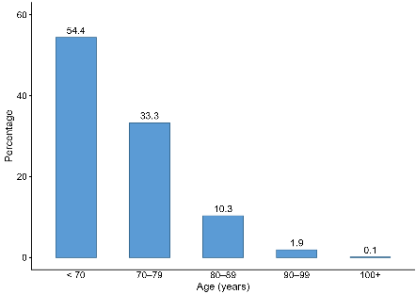
A total of 1,815 participants aged 60 to 103 years were included. The mean age was 69.79 years. Among them, 1,513 had hypertension, corresponding to a crude prevalence of 83.4%; 302 participants had normal blood pressure values. Of the 1,513 hypertensive participants, 54.4% were in the 60-69 age group and 33.3% in the 70-79 age group (Figure 1). Based on the available denominators, hypertension prevalence was 80.7% before age 70 and 87.2% between 70 and 79 years (p = 0.001 and p = 0.003, respectively).
Figure 1. Distribution of hypertension by age group (N = 1,513).
Among the 1,513 hypertensive participants, 1,050 were women (69.4%) and 463 were men (30.6%), giving a male-to-female sex ratio of 0.44; the reported difference was not statistically significant (p = 0.683). More than one-third had never attended school (35.6%), 33.6% had attended French school and 30.8% Quranic school. Among those with formal education, primary education was the most frequent level (41%). Retired participants represented 45.1% of hypertensive individuals, 39.7% were still professionally active, and 60.6% were married.
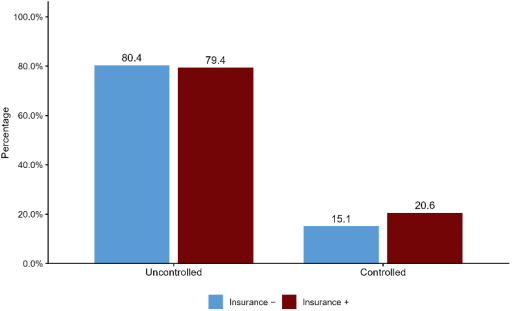
Self-reported socioeconomic status was low in 55.7% of hypertensive participants, intermediate in 40.4% and high in 3.9%. Among those with low socioeconomic status, 84.5% had uncontrolled blood pressure (p = 0.029). Only 17.8% of participants reported having health insurance to cover their disease-related costs; among those with insurance, 20.6% had controlled blood pressure (Figure 2).
Figure 2. Distribution of blood pressure control according to disease-related financial coverage (No = without health insurance; Yes = with health insurance).
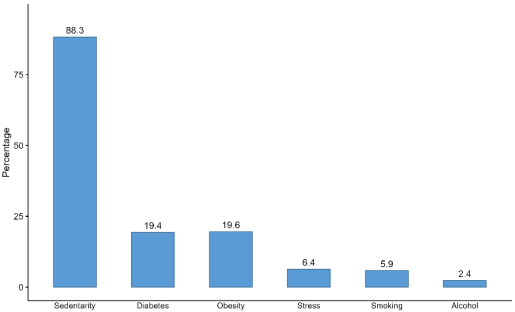
Diabetes was present in 293 hypertensive participants (19.4%) and was associated with hypertension status in bivariate analysis (p < 0.001). Obesity was present in approximately 19.6%, overweight in 30.9%, and the mean body mass index was 25.95 ± 6.25 kg/m². Physical inactivity was highly frequent: 1,336 hypertensive participants (88.3%) did not engage in regular physical activity. Smoking was reported by 5.9% and alcohol consumption by 2.4%. A stroke history was found in 4.1%, and heart disease in 3.4% (Figure 3).
Figure 3. Distribution of cardiovascular risk factors among hypertensive patients.
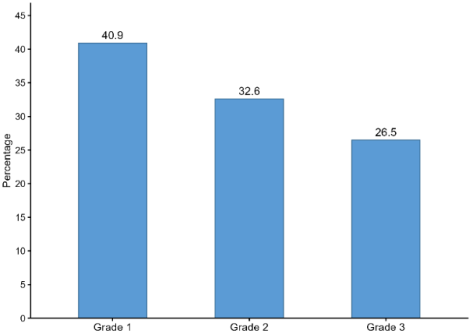
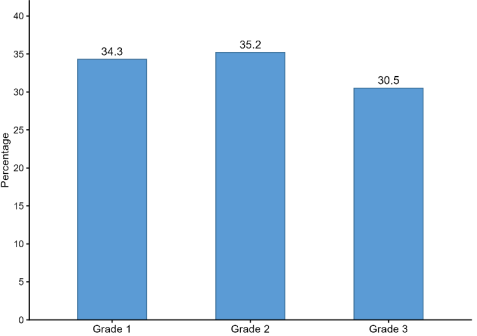
Among hypertensive participants, 921 (60.9%) were previously aware of their diagnosis, while 592 (39.1%) were newly detected during the study. Hypertension was classified as grade 1 in 40.9% of cases, grade 2 in 32.6% and grade 3 in 26.5% (Figure 4). Among participants with known hypertension, 741 (80.5%) were receiving treatment. However, among treated patients, 613 (82.7%) had uncontrolled blood pressure, corresponding to a control rate of 17.3% (Figure 5). Treatment adherence was good in 439 treated patients (59.2%), poor in 242 (32.7%) and unspecified in 60 (8.1%). Even among patients reporting good adherence, only 87 of 439 (20%) were controlled, compared with 29 of 242 (12%) among those with poor adherence (p = 0.009) (Table 1).
Figure 5. Distribution of uncontrolled known hypertension under treatment by grade (N = 613).
Table 1. Summary of bivariate analyses.
Hypertension
Total
p
No
Yes
Age < 70
Sample size
197
823
1020
0.001
%
19.30%
80.70%
100.00%
Age [70 - 79]
Sample size
74
504
578
0.003
%
12.80%
87.20%
100%
Residence (Sam Notaire)
Mean
70.08
7.866
0.013
Residence (Wakhinane Nimzatt)
Mean
68.94
7.232
0.004
Low Socioeconomic status
Sample size
398
65
463
0.029
%
86.00%
14.00%
100%
Stroke
Sample size
4
62
66
0.019
%
6.10%
93.90%
100%
Familial heart disease
Sample size
8
85
93
0.033
%
8.60%
91.40%
100%
COPD
Sample size
3
2
5
0.035
%
60.00%
40.00%
100%
Diabetes
Sample size
32
293
325
<0.001
%
10.60%
19.40%
17.90%
Underweight
Sample size
26
75
101
0.014
%
25.70%
74.30%
100%
Adherence (Good)
Sample size
352
87
439
0.009
%
80%
20%
100%
Adherence (Poor)
Sample size
213
29
242
%
88%
12%
100%
%
17.50%
82.50%
100%
Heart rate
Mean
79.18
80.94
0.045
Weight
Mean
69.56
72.25
0.003
Waist circumference
Mean
87.17
91.92
0
Among hypertensive participants, mean blood pressure was approximately 156.7/89.1 mmHg. Mean weight was 72.25 kg and mean waist circumference was 91.92 cm. The most frequently reported symptoms were dyspnoea (19.8%), palpitations (13.0%) and chest pain (6.5%). A heart murmur was found in 6.7%, lower limb oedema in 1.8% and motor deficit in 2.0%.
4. Discussion
This survey shows a particularly high prevalence of hypertension, reaching 83.4% among people aged 60 years and older in Guediawaye. This estimate is substantially higher than those previously reported in the general adult Senegalese population: 27.5% in Dakar in 2009 and 29.8% in the 2015 STEPS survey
[5]
Duboz P, Boetsch G, Gueye L, Macia E. Hypertension prevalence, awareness, treatment and control in Dakar (Senegal). J Hum Hypertens. 2014, 28, 489-493.
Secula F, Sy MS, Bijou S, et al. Integrating hypertension data into routine health data collection: the experience of CARDIO4Cities and DHIS2 in Dakar, Senegal. Discover Health Systems. 2025, 4, 57.
. Direct comparison should, however, be made with caution, as these earlier surveys included younger adults. Nevertheless, our finding is consistent with the high burden reported among older adults in Africa, where estimates have reached up to 90%
[4]
Bosu WK, Reilly ST, Aheto JMK, Zucchelli E. Hypertension in older adults in Africa: a systematic review and meta-analysis. PLoS One. 2019, 14, e0214934.
This burden is not specific to Africa. In the United States, the 2021-2023 National Health and Nutrition Examination Survey (NHANES) estimated hypertension prevalence at 71.6% among adults aged 60 years and older
[9]
Fryar CD, Kit B, Carroll MD, Afful J. Hypertension prevalence, awareness, treatment, and control among adults: United States, August 2021–August 2023. NCHS Data Brief. 2024, (511), 1-8.
Murphy CM, Kearney PM, Shelley EB, et al. Hypertension prevalence, awareness, treatment and control in the over 50s in Ireland: evidence from TILDA. J Public Health. 2016, 38, 450-458.
Zieleniewicz P, et al. Hypertension in the Polish elderly: insights into prevalence, awareness, treatment, and control from the NOMED-AF study. Pol Heart J. 2024, 82, 727-732.
. A recent analysis of 68,047 adults from 27 European countries reported a diagnosed hypertension prevalence of approximately 63% among those aged 65-79 years and 72% to 78% after 80 years of age
[12]
Grgic J, Wazny VK. Prevalence of hypertension in Europe: a pooled analysis of 68,047 adults from 27 countries. Prev Med Rep. 2026, 64, 103435.
Todd O, Johnson O, Welsh V, et al. Attainment of NICE blood pressure targets among older people with newly diagnosed hypertension. Age Ageing. 2023, 52, afad077.
Hardy ST, Sakhuja S, Jaeger BC, et al. Trends in blood pressure control among US adults with hypertension, 2013–2014 to 2021–2023. Am J Hypertens. 2025, 38, 120-128.
. These comparisons should also be interpreted cautiously: NHANES used the American threshold of 130/80 mmHg, whereas the European study was based on diagnosed hypertension, which may underestimate undiagnosed cases. The increase observed between participants younger than 70 years and those aged 70-79 years is consistent with vascular ageing, arterial stiffness and the accumulation of cardiometabolic exposures.
The female predominance reflects the composition of the sample and does not demonstrate a higher prevalence among women. In our study, this female majority may reflect greater availability of older women during household visits. This interpretation is supported by American data showing no significant sex difference after age 60
[9]
Fryar CD, Kit B, Carroll MD, Afful J. Hypertension prevalence, awareness, treatment, and control among adults: United States, August 2021–August 2023. NCHS Data Brief. 2024, (511), 1-8.
Richardson LC, Vaughan AS, Wright JS, Coronado F. Examining the hypertension control cascade in adults with uncontrolled hypertension in the US. JAMA Netw Open. 2024, 7, e2431997.
McGarvey C, Scarlett S, Briggs R, et al. Adherence to the European Society of Cardiology hypertension guidelines over 12 years of follow-up in the Irish population. Open Heart. 2025, 12, e003744.
Stergiou GS, Menti A, Kalpourtzi N, et al. Prevalence, awareness, treatment and control of hypertension in Greece: EMENO national epidemiological study. J Hypertens. 2021, 39.
Psaltopoulou T, Orfanos P, Naska A, et al. Prevalence, awareness, treatment and control of hypertension in a general population sample of 26,913 adults in the Greek EPIC study. Int J Epidemiol. 2004, 33, 1345-1352.
The most concerning finding relates to the hypertension care cascade. Nearly four out of ten hypertensive participants were unaware of their diagnosis. Among those with known hypertension, 80.5% reported receiving treatment, but only 17.3% of treated patients had controlled blood pressure. This finding is consistent with the difficulties observed in sub-Saharan Africa and remains higher than the WHO estimate of 7% control in Senegal in 2019
[7]
World Health Organization. Hypertension Senegal 2023 country profile. Geneva: WHO; 2023.
[19]
Gafane-Matemane LF, Craig A, Kruger R, et al. Hypertension in sub-Saharan Africa: the current profile, recent advances, gaps, and priorities. J Hum Hypertens. 2025, 39, 95-110.
. In the United States, among hypertensive adults aged 60 years and older, 73.7% were aware of their status, 69.1% were treated and 29.2% were controlled using the more stringent 130/80 mmHg threshold
[9]
Fryar CD, Kit B, Carroll MD, Afful J. Hypertension prevalence, awareness, treatment, and control among adults: United States, August 2021–August 2023. NCHS Data Brief. 2024, (511), 1-8.
Chow CK, Teo KK, Rangarajan S, et al. Prevalence, awareness, treatment, and control of hypertension in rural and urban communities in high-, middle-, and low-income countries. JAMA. 2013, 310, 959-968.
. This gap suggests that, in Guediawaye, prescription does not translate sufficiently into effective control. Good self-reported adherence combined with poor control suggests therapeutic inertia, medicine stock-outs, insufficient combination therapy and irregular follow-up. Contemporary recommendations emphasise standardised treatment protocols, fixed-dose combinations, out-of-office blood pressure measurement where feasible, and individualised targets in frail older adults
[21]
McEvoy JW, et al. 2024 ESC Guidelines for the management of elevated blood pressure and hypertension. Eur Heart J. 2024, 45, 3912-4018.
Jones DW, Ferdinand KC, Taler SJ, et al. 2025 AHA/ACC multisociety guideline for the prevention, detection, evaluation, and management of high blood pressure in adults. J Am Coll Cardiol. 2025.
. The number of antihypertensive agents taken per patient was not systematically recorded, which precluded analysis of treatment intensity among participants with uncontrolled blood pressure.
5. Conclusion
Hypertension was extremely frequent among the older adults surveyed in Guediawaye, Dakar, and blood pressure control remained insufficient despite a high proportion of treated patients. Community-based screening should be followed by rigorous diagnostic confirmation, standardised treatment, sustained access to medicines and monitoring of the hypertension care cascade.
6. Recommendations
Based on these findings, we recommend the following priorities for hypertension control among older adults in Guediawaye. First, community-based screening should be scaled up and coupled with systematic diagnostic confirmation, given that nearly four in ten hypertensive participants were unaware of their diagnosis. Second, treated patients require closer follow-up and, where appropriate, intensification of therapy with fixed-dose combinations, since only 17.3% of those on treatment achieved control. Third, sustained and affordable access to antihypertensive medicines should be strengthened, particularly for participants of low socioeconomic status, in whom blood pressure control was poorest. Finally, routine monitoring of the hypertension care cascade (awareness, treatment and control) should be integrated into local health services to guide and evaluate prevention efforts.
World Health Organization. Hypertension. Fact sheet. Geneva: WHO; 2025.
[2]
World Health Organization. Global report on hypertension 2025: high stakes. Geneva: WHO; 2025.
[3]
NCD Risk Factor Collaboration (NCD-RisC). Worldwide trends in hypertension prevalence and progress in treatment and control from 1990 to 2019. Lancet. 2021, 398, 957-980.
Bosu WK, Reilly ST, Aheto JMK, Zucchelli E. Hypertension in older adults in Africa: a systematic review and meta-analysis. PLoS One. 2019, 14, e0214934.
World Health Organization. Hypertension Senegal 2023 country profile. Geneva: WHO; 2023.
[8]
Secula F, Sy MS, Bijou S, et al. Integrating hypertension data into routine health data collection: the experience of CARDIO4Cities and DHIS2 in Dakar, Senegal. Discover Health Systems. 2025, 4, 57.
Fryar CD, Kit B, Carroll MD, Afful J. Hypertension prevalence, awareness, treatment, and control among adults: United States, August 2021–August 2023. NCHS Data Brief. 2024, (511), 1-8.
Murphy CM, Kearney PM, Shelley EB, et al. Hypertension prevalence, awareness, treatment and control in the over 50s in Ireland: evidence from TILDA. J Public Health. 2016, 38, 450-458.
Zieleniewicz P, et al. Hypertension in the Polish elderly: insights into prevalence, awareness, treatment, and control from the NOMED-AF study. Pol Heart J. 2024, 82, 727-732.
Todd O, Johnson O, Welsh V, et al. Attainment of NICE blood pressure targets among older people with newly diagnosed hypertension. Age Ageing. 2023, 52, afad077.
Hardy ST, Sakhuja S, Jaeger BC, et al. Trends in blood pressure control among US adults with hypertension, 2013–2014 to 2021–2023. Am J Hypertens. 2025, 38, 120-128.
Richardson LC, Vaughan AS, Wright JS, Coronado F. Examining the hypertension control cascade in adults with uncontrolled hypertension in the US. JAMA Netw Open. 2024, 7, e2431997.
McGarvey C, Scarlett S, Briggs R, et al. Adherence to the European Society of Cardiology hypertension guidelines over 12 years of follow-up in the Irish population. Open Heart. 2025, 12, e003744.
Stergiou GS, Menti A, Kalpourtzi N, et al. Prevalence, awareness, treatment and control of hypertension in Greece: EMENO national epidemiological study. J Hypertens. 2021, 39.
Psaltopoulou T, Orfanos P, Naska A, et al. Prevalence, awareness, treatment and control of hypertension in a general population sample of 26,913 adults in the Greek EPIC study. Int J Epidemiol. 2004, 33, 1345-1352.
Gafane-Matemane LF, Craig A, Kruger R, et al. Hypertension in sub-Saharan Africa: the current profile, recent advances, gaps, and priorities. J Hum Hypertens. 2025, 39, 95-110.
Chow CK, Teo KK, Rangarajan S, et al. Prevalence, awareness, treatment, and control of hypertension in rural and urban communities in high-, middle-, and low-income countries. JAMA. 2013, 310, 959-968.
Jones DW, Ferdinand KC, Taler SJ, et al. 2025 AHA/ACC multisociety guideline for the prevention, detection, evaluation, and management of high blood pressure in adults. J Am Coll Cardiol. 2025.
Gaye, N. D., Ngaide, A. A., Leye, F. A., Sarr, S. A., Mingou, J. S., et al. (2026). Prevalence and Characteristics of Hypertension Among People Aged 60 Years and Older in Guediawaye, Senegal:
A Population-based Cross-sectional Study. Cardiology and Cardiovascular Research, 10(3), 41-48. https://doi.org/10.11648/j.ccr.20261003.13
Gaye, N. D.; Ngaide, A. A.; Leye, F. A.; Sarr, S. A.; Mingou, J. S., et al. Prevalence and Characteristics of Hypertension Among People Aged 60 Years and Older in Guediawaye, Senegal:
A Population-based Cross-sectional Study. Cardiol. Cardiovasc. Res.2026, 10(3), 41-48. doi: 10.11648/j.ccr.20261003.13
Gaye ND, Ngaide AA, Leye FA, Sarr SA, Mingou JS, et al. Prevalence and Characteristics of Hypertension Among People Aged 60 Years and Older in Guediawaye, Senegal:
A Population-based Cross-sectional Study. Cardiol Cardiovasc Res. 2026;10(3):41-48. doi: 10.11648/j.ccr.20261003.13
@article{10.11648/j.ccr.20261003.13,
  author = {Ngone Diaba Gaye and Aliou Alassane Ngaide and Fatou Aw Leye and Simon Antoine Sarr and Joseph Salvador Mingou and Marguerite Tening Diouf and Malick Ndiaye and Momar Dioum and Mouhamadou Bamba Ndiaye and Alassane Mbaye and Maboury Diao and Abdoul Kane},
  title = {Prevalence and Characteristics of Hypertension Among People Aged 60 Years and Older in Guediawaye, Senegal:
A Population-based Cross-sectional Study},
  journal = {Cardiology and Cardiovascular Research},
  volume = {10},
  number = {3},
  pages = {41-48},
  doi = {10.11648/j.ccr.20261003.13},
  url = {https://doi.org/10.11648/j.ccr.20261003.13},
  eprint = {https://article.sciencepublishinggroup.com/pdf/10.11648.j.ccr.20261003.13},
  abstract = {Hypertension is a major determinant of cardiovascular morbidity and mortality, particularly among older adults, and in sub-Saharan Africa its screening and control remain insufficient despite the ongoing epidemiological transition. This study aimed to assess the prevalence of hypertension among people aged 60 years and older living in the Dakar suburbs and to describe their sociodemographic and clinical profile and associated risk factors. We conducted a quantitative, descriptive and analytical cross-sectional study with prospective data collection between October 2022 and June 2023 in the department of Guediawaye. Participants aged 60 years and older were recruited using stratified and systematic sampling, and data were collected through a questionnaire and a standardised clinical examination. Hypertension was defined as systolic blood pressure ≥140 mmHg and/or diastolic blood pressure ≥90 mmHg, or current use of antihypertensive treatment, and analyses were performed using RStudio. A total of 1,815 participants aged 60 to 103 years were included, with a mean age of 69.79 years. The crude prevalence of hypertension was 83.4%, corresponding to 1,513 hypertensive participants, of whom 69.4% were women. More than half had a low socioeconomic status, which was associated with poor blood pressure control, and the main cardiovascular risk factors were physical inactivity (88.3%), overweight (30.9%), obesity (19.6%) and diabetes (19.4%). Overall, 39.1% of hypertensive participants were unaware of their diagnosis; among those with known hypertension, 80.5% were receiving treatment, yet only 17.3% of treated patients had controlled blood pressure, and mean blood pressure was 156.7/89.1 mmHg. The most frequent symptoms were dyspnoea, palpitations and chest pain. In conclusion, hypertension was highly prevalent among older adults in Guediawaye, with poor blood pressure control, and these findings support systematic screening, regular follow-up and improved access to treatment.},
 year = {2026}
}
TY  - JOUR
T1  - Prevalence and Characteristics of Hypertension Among People Aged 60 Years and Older in Guediawaye, Senegal:
A Population-based Cross-sectional Study
AU  - Ngone Diaba Gaye
AU  - Aliou Alassane Ngaide
AU  - Fatou Aw Leye
AU  - Simon Antoine Sarr
AU  - Joseph Salvador Mingou
AU  - Marguerite Tening Diouf
AU  - Malick Ndiaye
AU  - Momar Dioum
AU  - Mouhamadou Bamba Ndiaye
AU  - Alassane Mbaye
AU  - Maboury Diao
AU  - Abdoul Kane
Y1  - 2026/08/18
PY  - 2026
N1  - https://doi.org/10.11648/j.ccr.20261003.13
DO  - 10.11648/j.ccr.20261003.13
T2  - Cardiology and Cardiovascular Research
JF  - Cardiology and Cardiovascular Research
JO  - Cardiology and Cardiovascular Research
SP  - 41
EP  - 48
PB  - Science Publishing Group
SN  - 2578-8914
UR  - https://doi.org/10.11648/j.ccr.20261003.13
AB  - Hypertension is a major determinant of cardiovascular morbidity and mortality, particularly among older adults, and in sub-Saharan Africa its screening and control remain insufficient despite the ongoing epidemiological transition. This study aimed to assess the prevalence of hypertension among people aged 60 years and older living in the Dakar suburbs and to describe their sociodemographic and clinical profile and associated risk factors. We conducted a quantitative, descriptive and analytical cross-sectional study with prospective data collection between October 2022 and June 2023 in the department of Guediawaye. Participants aged 60 years and older were recruited using stratified and systematic sampling, and data were collected through a questionnaire and a standardised clinical examination. Hypertension was defined as systolic blood pressure ≥140 mmHg and/or diastolic blood pressure ≥90 mmHg, or current use of antihypertensive treatment, and analyses were performed using RStudio. A total of 1,815 participants aged 60 to 103 years were included, with a mean age of 69.79 years. The crude prevalence of hypertension was 83.4%, corresponding to 1,513 hypertensive participants, of whom 69.4% were women. More than half had a low socioeconomic status, which was associated with poor blood pressure control, and the main cardiovascular risk factors were physical inactivity (88.3%), overweight (30.9%), obesity (19.6%) and diabetes (19.4%). Overall, 39.1% of hypertensive participants were unaware of their diagnosis; among those with known hypertension, 80.5% were receiving treatment, yet only 17.3% of treated patients had controlled blood pressure, and mean blood pressure was 156.7/89.1 mmHg. The most frequent symptoms were dyspnoea, palpitations and chest pain. In conclusion, hypertension was highly prevalent among older adults in Guediawaye, with poor blood pressure control, and these findings support systematic screening, regular follow-up and improved access to treatment.
VL  - 10
IS  - 3
ER  -
Faculty of Medicine, Cheikh Anta Diop University, Dakar, Senegal; Department of Cardiac Rehabilitation, Ibra Mamadou Wane Medical Center, Dakar, Senegal
Gaye, N. D., Ngaide, A. A., Leye, F. A., Sarr, S. A., Mingou, J. S., et al. (2026). Prevalence and Characteristics of Hypertension Among People Aged 60 Years and Older in Guediawaye, Senegal:
A Population-based Cross-sectional Study. Cardiology and Cardiovascular Research, 10(3), 41-48. https://doi.org/10.11648/j.ccr.20261003.13
Gaye, N. D.; Ngaide, A. A.; Leye, F. A.; Sarr, S. A.; Mingou, J. S., et al. Prevalence and Characteristics of Hypertension Among People Aged 60 Years and Older in Guediawaye, Senegal:
A Population-based Cross-sectional Study. Cardiol. Cardiovasc. Res.2026, 10(3), 41-48. doi: 10.11648/j.ccr.20261003.13
Gaye ND, Ngaide AA, Leye FA, Sarr SA, Mingou JS, et al. Prevalence and Characteristics of Hypertension Among People Aged 60 Years and Older in Guediawaye, Senegal:
A Population-based Cross-sectional Study. Cardiol Cardiovasc Res. 2026;10(3):41-48. doi: 10.11648/j.ccr.20261003.13
@article{10.11648/j.ccr.20261003.13,
  author = {Ngone Diaba Gaye and Aliou Alassane Ngaide and Fatou Aw Leye and Simon Antoine Sarr and Joseph Salvador Mingou and Marguerite Tening Diouf and Malick Ndiaye and Momar Dioum and Mouhamadou Bamba Ndiaye and Alassane Mbaye and Maboury Diao and Abdoul Kane},
  title = {Prevalence and Characteristics of Hypertension Among People Aged 60 Years and Older in Guediawaye, Senegal:
A Population-based Cross-sectional Study},
  journal = {Cardiology and Cardiovascular Research},
  volume = {10},
  number = {3},
  pages = {41-48},
  doi = {10.11648/j.ccr.20261003.13},
  url = {https://doi.org/10.11648/j.ccr.20261003.13},
  eprint = {https://article.sciencepublishinggroup.com/pdf/10.11648.j.ccr.20261003.13},
  abstract = {Hypertension is a major determinant of cardiovascular morbidity and mortality, particularly among older adults, and in sub-Saharan Africa its screening and control remain insufficient despite the ongoing epidemiological transition. This study aimed to assess the prevalence of hypertension among people aged 60 years and older living in the Dakar suburbs and to describe their sociodemographic and clinical profile and associated risk factors. We conducted a quantitative, descriptive and analytical cross-sectional study with prospective data collection between October 2022 and June 2023 in the department of Guediawaye. Participants aged 60 years and older were recruited using stratified and systematic sampling, and data were collected through a questionnaire and a standardised clinical examination. Hypertension was defined as systolic blood pressure ≥140 mmHg and/or diastolic blood pressure ≥90 mmHg, or current use of antihypertensive treatment, and analyses were performed using RStudio. A total of 1,815 participants aged 60 to 103 years were included, with a mean age of 69.79 years. The crude prevalence of hypertension was 83.4%, corresponding to 1,513 hypertensive participants, of whom 69.4% were women. More than half had a low socioeconomic status, which was associated with poor blood pressure control, and the main cardiovascular risk factors were physical inactivity (88.3%), overweight (30.9%), obesity (19.6%) and diabetes (19.4%). Overall, 39.1% of hypertensive participants were unaware of their diagnosis; among those with known hypertension, 80.5% were receiving treatment, yet only 17.3% of treated patients had controlled blood pressure, and mean blood pressure was 156.7/89.1 mmHg. The most frequent symptoms were dyspnoea, palpitations and chest pain. In conclusion, hypertension was highly prevalent among older adults in Guediawaye, with poor blood pressure control, and these findings support systematic screening, regular follow-up and improved access to treatment.},
 year = {2026}
}
TY  - JOUR
T1  - Prevalence and Characteristics of Hypertension Among People Aged 60 Years and Older in Guediawaye, Senegal:
A Population-based Cross-sectional Study
AU  - Ngone Diaba Gaye
AU  - Aliou Alassane Ngaide
AU  - Fatou Aw Leye
AU  - Simon Antoine Sarr
AU  - Joseph Salvador Mingou
AU  - Marguerite Tening Diouf
AU  - Malick Ndiaye
AU  - Momar Dioum
AU  - Mouhamadou Bamba Ndiaye
AU  - Alassane Mbaye
AU  - Maboury Diao
AU  - Abdoul Kane
Y1  - 2026/08/18
PY  - 2026
N1  - https://doi.org/10.11648/j.ccr.20261003.13
DO  - 10.11648/j.ccr.20261003.13
T2  - Cardiology and Cardiovascular Research
JF  - Cardiology and Cardiovascular Research
JO  - Cardiology and Cardiovascular Research
SP  - 41
EP  - 48
PB  - Science Publishing Group
SN  - 2578-8914
UR  - https://doi.org/10.11648/j.ccr.20261003.13
AB  - Hypertension is a major determinant of cardiovascular morbidity and mortality, particularly among older adults, and in sub-Saharan Africa its screening and control remain insufficient despite the ongoing epidemiological transition. This study aimed to assess the prevalence of hypertension among people aged 60 years and older living in the Dakar suburbs and to describe their sociodemographic and clinical profile and associated risk factors. We conducted a quantitative, descriptive and analytical cross-sectional study with prospective data collection between October 2022 and June 2023 in the department of Guediawaye. Participants aged 60 years and older were recruited using stratified and systematic sampling, and data were collected through a questionnaire and a standardised clinical examination. Hypertension was defined as systolic blood pressure ≥140 mmHg and/or diastolic blood pressure ≥90 mmHg, or current use of antihypertensive treatment, and analyses were performed using RStudio. A total of 1,815 participants aged 60 to 103 years were included, with a mean age of 69.79 years. The crude prevalence of hypertension was 83.4%, corresponding to 1,513 hypertensive participants, of whom 69.4% were women. More than half had a low socioeconomic status, which was associated with poor blood pressure control, and the main cardiovascular risk factors were physical inactivity (88.3%), overweight (30.9%), obesity (19.6%) and diabetes (19.4%). Overall, 39.1% of hypertensive participants were unaware of their diagnosis; among those with known hypertension, 80.5% were receiving treatment, yet only 17.3% of treated patients had controlled blood pressure, and mean blood pressure was 156.7/89.1 mmHg. The most frequent symptoms were dyspnoea, palpitations and chest pain. In conclusion, hypertension was highly prevalent among older adults in Guediawaye, with poor blood pressure control, and these findings support systematic screening, regular follow-up and improved access to treatment.
VL  - 10
IS  - 3
ER  -





 Share This Article
 Twitter
 Linked In
 Facebook
 Copy
Copy Download