Abstract
In contemporary digitally mediated and economically volatile environments, organisations face mounting pressure to reconfigure capabilities rapidly in response to technological disruption, geopolitical uncertainty, and persistent talent shortages. Within this context, outsourcing has evolved beyond its traditional cost-efficiency rationale to become a strategic mechanism for accessing scarce expertise, enhancing capability flexibility, and supporting organisational agility through build–buy–borrow talent configurations. This study investigates how outsourcing strategies interact with talent management systems to influence organisational agility in global organisations. Adopting a qualitative comparative case study design based on publicly available secondary data, the article examines three multinational retail firms (Carrefour, Tesco, and Walmart) through thematic analysis structured around outsourcing logic, talent orientation, agility implications, and governance mechanisms. The findings indicate that outsourcing does not, in itself, generate agility; rather, agility outcomes depend on the degree of alignment between externally sourced capabilities, retained internal talent, and governance capacity. Carrefour reflects a partnership-intensive model that facilitates rapid access to digital capabilities but also increases dependency risk where critical knowledge remains externalised. Tesco demonstrates a more hybrid and increasingly rebalanced approach, combining selective external sourcing with stronger internal integration. Walmart exhibits the most internally anchored model, in which selective outsourcing complements substantial in-house digital and supply-chain capabilities, thereby supporting stronger operational and strategic agility. Across the cases, governance quality, knowledge reintegration, and internal capability retention emerge as decisive moderators of the outsourcing–agility relationship. On this basis, the article advances an Agile Outsourcing–Talent Alignment Model, arguing that organisational agility is best understood as the outcome of alignment between sourcing strategy, talent architecture, and governance rather than outsourcing intensity alone. The study contributes to the literature by integrating outsourcing, talent management, and agility into a unified analytical framework and offers practical guidance for designing capability-based sourcing strategies.
Keywords
Organisational Agility, Outsourcing, Talent Management, Digital Transformation
1. Introduction
Contemporary organisations operate in a global economic system marked by a drastic structural metamorphosis imposed by transformative strategies derived from technological developments, unprecedented geo-political frameworks, social reengineering, and the intensifying complexity governing global competitiveness. Collectively, these disruptive vectors coalesce into a smart market defined by a digitally integrated economic architecture grounded in automation, digitalisation and big data emerging into advanced data analytics, cloud computing, Artificial Intelligence (AI) and cyber-innovation. In this operating environment, cyber-intelligence is perceived through a holistic approach and becomes embedded into the entire operational and managerial processes, communication, and decision-making systems, resulting in new adaptive mindset and organisational reengineering. This algorithmically configured market does not only impact organisational behaviour. It also marks the smart organisational genesis, where its participants continuously develop and activate as data-augmented entities. In this context, organisational and talent structures are progressively adjusted to continuous operational vigilance, readiness, prompt adaptation, and effective integration with the market's digital infrastructure
| [1] | Brynjolfsson, E., McAfee, A. The Second Machine Age: Work, Progress, and Prosperity in a Time of Brilliant Technologies. MIT Press: Cambridge, MA; 2014. |
| [2] | Susskind, R., Susskind, D. The Future of the Professions: How Technology Will Transform the Work of Human Experts. Oxford University Press: Oxford, UK; 2015. |
[1, 2]
. In these digital setups, companies possess a strategic advantage through a pathbreaking capability: leveraging the talent they do not own by usage of external expertise, enabled by technology and globalisation of talent. Based on this, outsourcing has emerged from a cost-reduction approach into a solid and strategic mechanism for reaching scarce capabilities, expanding technological capacities, and improving organisational flexibility
| [3] | Lacity, M., Willcocks, L. Nine Keys to World-Class Business Process Outsourcing. Bloomsbury Publishing: London, UK; 2014. |
[3]
.
A potential challenge correlated with this migration to technology-intensive operational frameworks is represented by the increasing scarcity of critical competences, whuch generates global talent shortages. These outcomes highlight the strategic role of the build–buy–borrow organisational architecture as it promotes a talent investment approach, rather than mere competence acquisition
. Younger and Smallwood
| [5] | Younger, J., Smallwood, N. Agile Talent: How to Source and Manage Outside Experts. Harvard Business Review Press: Boston, MA; 2016. |
[5]
sustain the currently increasing outsourcing approach focused on obtaining competitive advantage by leveraging resources organisations do not possess. More exactly, talent by sourcing external experts to bridge capability gaps in an agile, lean, and fast manner. Their efforts demonstrate that agility, speed, and innovation are in direct proportion with the capacity to manage both internal and external talent ecosystems, rather than depending exclusively on conventional employment models. These statements are solidified through concrete examples such as Campbell Soup Company and PepsiCo consulting anthropologists to better understand customer tastes and preferences, and Google and Intel contracting experts in social science and biomechanics to discover how consumers think about and use technology.
As agilisation deliberately accelerates, companies are rechanneling their interest from a solution-oriented organisational mindset towards a vigilant, constantly and systematically problem identification approach, anticipating risks, and focusing on risk mitigation and governance models. Bloom
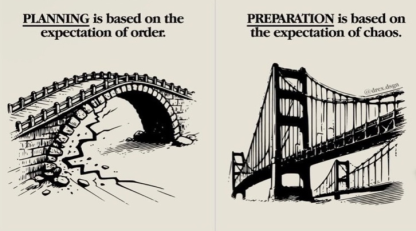
supports this adaptive approach, stating that preparation exceeds planning in practical terms, as it is rooted in an anticipation of uncertainty and chaos rather than a general assumption of order and stability. He argues that preparation offers organisations the opportunity to explore uncertainty and sustain high performance in complex and dynamic environments. Moreover, Bloom
notes that resilience is generated by preparation for turbulent, chaotic market conditions, not solely for order (see Appendix).
As reported by the 2025 Business Agility Report, 90% of respondents in the procurement and supply domains agreed that adopting an agile methodology possesses a strategic impact on organisational efficiency. Furthermore, companies that increased their organisational agility in 2025 achieved up to 10.3% revenue growth, compared to only 3.5% for those with decreasing agility
| [7] | Cummins, T., Kleiner, M. State of Agility in Procurement & Supply: Global Annual Report 2025 (R1.0). Scrum.org; 2025. |
[7]
. Based on this, organisational agilisation is becoming the main objective in current digitally augmented markets, and the ability to reconfigure capacities rapidly and flexibly, whether built, bought, or borrowed through outsourcing, has gathered strategic importance for mitigating market uncertainty
| [8] | Doz, Y., Kosonen, M. Embedding Strategic Agility: A Leadership Agenda for Accelerating Business Model Renewal. Long Range Planning. 2010, 43(2–3), 370–382.
https://doi.org/10.1016/j.lrp.2009.07.006 |
| [9] | Rigby, D., Sutherland, J., Takeuchi, H. Embracing Agile. Harvard Business Review. 2016, 94(5), 40–50. |
[8, 9]
. This research article is supported by the author's professional expertise as a Global IT Outsourcing Manager in a retail European organisation with more than 300 operational units, offering practical perspectives into the entire outsourcing process lifecycle: from design, creation, sourcing, selection, implementation, governance, and stakeholder and vendor ecosystem management to partnership closure.
Even if the externalisation approach possesses strong strategic importance, numerous organisations disregard the talent element from the outsourcing decision-making process. Research demonstrates that organisations frequently outsource critical knowledge zones without a full-scale assessment of capacity erosion or consequence management on internal resource development
| [10] | Willcocks, L., Lacity, M., Craig, A. Robotic Process Automation and Risk Mitigation: The Definitive Guide. SB Publishing: Stratford-upon-Avon, UK; 2017. |
[10]
. At the same time, the academic discourse on talent management is predominantly focused on internal resource development strategies, frequently neglecting the importance of external stakeholders and contingent talent
| [11] | Collings, D. G., Mellahi, K., Cascio, W. F. Global Talent Management and Performance in Multinational Enterprises: A Multilevel Perspective. Journal of Management. 2019, 45(2), 540–566. https://doi.org/10.1177/0149206318757018 |
[11]
. The organisational agility academic discourse also focuses predominantly on internal capacity and offers limited interest to the externalisation process in generating agility results
| [12] | Teece, D. J., Peteraf, M., Leih, S. Dynamic Capabilities and Organizational Agility: Risk, Uncertainty, and Strategy in the Innovation Economy. California Management Review. 2016, 58(4), 13–35. https://doi.org/10.1525/cmr.2016.58.4.13 |
[12]
.
This conceptual fragmentation generates a theoretical blind spot: companies progressively outsource talent to obtain improved agility and increased competitive advantage, yet the current academic discourse does not explore the way outsourcing and talent frameworks coact. Despite the fact that outsourcing, talent management, and organisational agility have been exhaustively and systematically analysed, research efforts integrating these areas are still limited. None of them offer a conceptual model demonstrating when outsourcing improves or challenges agility. This academic research gap is considerably salient in operational environments encountering fast digital transfiguration, where capacity requirements are dynamic and external collaborations possess a central role.
In this context, the main research question of this paper is: How do outsourcing strategies interact with talent management systems to influence organisational agility in global organisations?
The current research article provides three main levels of contribution: (1) Empirical: a comparative analysis of Carrefour, Tesco, and Walmart, examining how each integrates outsourcing, talent management, and agility. (2) Theoretical: the basis for the Agile Outsourcing and Talent Alignment Model, which describes how outsourcing decision-making processes can either improve, or constrain agility implementation. (3) Practical: functional guidelines for building talent-oriented externalisation frameworks, grounded in both scientific discourse and the author's professional expertise in the global outsourcing area.
2. Conceptual Framework
Contemporary organisations are constantly and gradually required to adjust their strategies to dynamic and complex frameworks through prompt resource reconfiguration, usually faster than conventional planning processes
| [12] | Teece, D. J., Peteraf, M., Leih, S. Dynamic Capabilities and Organizational Agility: Risk, Uncertainty, and Strategy in the Innovation Economy. California Management Review. 2016, 58(4), 13–35. https://doi.org/10.1525/cmr.2016.58.4.13 |
| [13] | Nguyen, T., Le, C. V., Nguyen, M., Nguyen, G., Lien, T. T. H., Nguyen, O. The Organisational Impact of Agility: A Systematic Literature Review. Management Review Quarterly. 2024. https://doi.org/10.1007/s11301-024-00446-9 |
[12, 13]
. Talent-driven agility is correlated not only with organisational strategy, but also with the build-buy-borrow talent structures and capacity to meet emerging capability requirements
. The literature review focuses on three transecting dimensions: agility, talent management, and outsourcing to design the build–buy–borrow decision-making framework as the axis mechanism for enabling organisational agility through talent
| [13] | Nguyen, T., Le, C. V., Nguyen, M., Nguyen, G., Lien, T. T. H., Nguyen, O. The Organisational Impact of Agility: A Systematic Literature Review. Management Review Quarterly. 2024. https://doi.org/10.1007/s11301-024-00446-9 |
| [16] | Williamson, O. E. Outsourcing: Transaction Cost Economics and Supply Chain Management. Journal of Supply Chain Management. 2008, 44(2), 5–16.
https://doi.org/10.1111/j.1745-493X.2008.00051.x |
[13, 16]
.
2.1. Agility: Stabilising Flexibility
Organisational agility is predominantly represented as the organisational capacity to anticipate the change and react in an effective and efficient manner by adjusting resources, structures, and processes promptly
| [13] | Nguyen, T., Le, C. V., Nguyen, M., Nguyen, G., Lien, T. T. H., Nguyen, O. The Organisational Impact of Agility: A Systematic Literature Review. Management Review Quarterly. 2024. https://doi.org/10.1007/s11301-024-00446-9 |
[13]
. It has extended its scope from an IT-oriented notion into an organisational framework concentrated on the ability to respond promptly to change across multiple levels of activity, including strategy, operations, and workforce
| [13] | Nguyen, T., Le, C. V., Nguyen, M., Nguyen, G., Lien, T. T. H., Nguyen, O. The Organisational Impact of Agility: A Systematic Literature Review. Management Review Quarterly. 2024. https://doi.org/10.1007/s11301-024-00446-9 |
[13]
.
Recent academic efforts have discovered that agility acts as a multidimensional construct, but concrete definitions and measurements are still inconsistent
| [13] | Nguyen, T., Le, C. V., Nguyen, M., Nguyen, G., Lien, T. T. H., Nguyen, O. The Organisational Impact of Agility: A Systematic Literature Review. Management Review Quarterly. 2024. https://doi.org/10.1007/s11301-024-00446-9 |
| [17] | Alviani, D. A. D., Hilmiana, H. I., Widianto, S., Muizu, W. O. W. O. Z. Workforce Agility: A Systematic Literature Review and Research Agenda. Frontiers in Psychology. 2024, 15, Article 1376399.
https://doi.org/10.3389/fpsyg.2024.1376399 |
[13, 17]
. This disorganisation complicates cross-comparison and can generate micro-fragmented managerial approaches, particularly when agile techniques are overlapped with ampler organisational agility
| [13] | Nguyen, T., Le, C. V., Nguyen, M., Nguyen, G., Lien, T. T. H., Nguyen, O. The Organisational Impact of Agility: A Systematic Literature Review. Management Review Quarterly. 2024. https://doi.org/10.1007/s11301-024-00446-9 |
[13]
. Agility is also academically represented as a manifestation of dynamic capacities, highlighting the organisation’s capability to identify changes and opportunities, and to restructure its resources and processes
| [13] | Nguyen, T., Le, C. V., Nguyen, M., Nguyen, G., Lien, T. T. H., Nguyen, O. The Organisational Impact of Agility: A Systematic Literature Review. Management Review Quarterly. 2024. https://doi.org/10.1007/s11301-024-00446-9 |
| [18] | Kump, B., Engelmann, A., Kessler, A., Schweiger, C. Toward a Dynamic Capabilities Scale: Measuring Organizational Sensing, Seizing, and Transforming Capacities. Industrial and Corporate Change. 2019, 28(5), 1149–1172.
https://doi.org/10.1093/icc/dty054 |
[13, 18]
. The operational sensing–seizing–adapting structure has leveraged empirical efforts to comparatively assess dynamic capacities, supporting more complex agility research designs
| [18] | Kump, B., Engelmann, A., Kessler, A., Schweiger, C. Toward a Dynamic Capabilities Scale: Measuring Organizational Sensing, Seizing, and Transforming Capacities. Industrial and Corporate Change. 2019, 28(5), 1149–1172.
https://doi.org/10.1093/icc/dty054 |
[18]
.
The scientific literature on agile methodologies signals that speed is not the central element in agile processes. Strategic agility requires purposeful redeployment and coordination of resources as a reactive approach is insufficient
| [13] | Nguyen, T., Le, C. V., Nguyen, M., Nguyen, G., Lien, T. T. H., Nguyen, O. The Organisational Impact of Agility: A Systematic Literature Review. Management Review Quarterly. 2024. https://doi.org/10.1007/s11301-024-00446-9 |
[13]
. Context represents the steering mechanism in agile methodology implementation. Extensive research reveals that organisational efficiency is dependent on environmental change aggressiveness, leadership styles, and various external vectors
| [13] | Nguyen, T., Le, C. V., Nguyen, M., Nguyen, G., Lien, T. T. H., Nguyen, O. The Organisational Impact of Agility: A Systematic Literature Review. Management Review Quarterly. 2024. https://doi.org/10.1007/s11301-024-00446-9 |
[13]
. The role of leadership is further reinforced as it actively interacts with capabilities enhancement through the development of sensing, seizing, and reconfiguration functions
| [19] | Bornay-Barrachina, M., López-Cabrales, Á., Salas-Vallina, A. Sensing, Seizing, and Reconfiguring Dynamic Capabilities in Innovative Firms: Why Does Strategic Leadership Make a Difference? Business Research Quarterly. 2025, 28(2), 399–420. https://doi.org/10.1177/23409444231185790 |
[19]
. Technological transformation solidifies the need for agility by intensifying uncertainty and dissolving the organisational resource base, which must be restructured
| [13] | Nguyen, T., Le, C. V., Nguyen, M., Nguyen, G., Lien, T. T. H., Nguyen, O. The Organisational Impact of Agility: A Systematic Literature Review. Management Review Quarterly. 2024. https://doi.org/10.1007/s11301-024-00446-9 |
| [20] | Harvard Business School Working Knowledge. Leading in the Digital Era: A Curated Collection of Research Articles from Harvard Business School Faculty. Harvard Business School: Boston, MA. [n.d]. |
[13, 20]
.
A Harvard study on digital-era leadership demonstrates that technologically mature organisations distinguish themselves through leadership and continuous resource development that enables flexibility and prompt responsiveness
| [20] | Harvard Business School Working Knowledge. Leading in the Digital Era: A Curated Collection of Research Articles from Harvard Business School Faculty. Harvard Business School: Boston, MA. [n.d]. |
[20]
. From the dynamic capability perspective, agility is particularly suitable in innovation-based environments where uncertainty cannot be diminished by calculable risk and organisations need to constantly reassess their resources
| [12] | Teece, D. J., Peteraf, M., Leih, S. Dynamic Capabilities and Organizational Agility: Risk, Uncertainty, and Strategy in the Innovation Economy. California Management Review. 2016, 58(4), 13–35. https://doi.org/10.1525/cmr.2016.58.4.13 |
[12]
. In this context, agility is systematically positioned as a strategic requirement for survival and renaissance rather than a facultative improvement initiative
| [12] | Teece, D. J., Peteraf, M., Leih, S. Dynamic Capabilities and Organizational Agility: Risk, Uncertainty, and Strategy in the Innovation Economy. California Management Review. 2016, 58(4), 13–35. https://doi.org/10.1525/cmr.2016.58.4.13 |
| [13] | Nguyen, T., Le, C. V., Nguyen, M., Nguyen, G., Lien, T. T. H., Nguyen, O. The Organisational Impact of Agility: A Systematic Literature Review. Management Review Quarterly. 2024. https://doi.org/10.1007/s11301-024-00446-9 |
[12, 13]
. As agility ultimately is based on human decision and collaboration, workforce agility has evolved as a central element supporting adaptability, proactivity, and resilience
| [13] | Nguyen, T., Le, C. V., Nguyen, M., Nguyen, G., Lien, T. T. H., Nguyen, O. The Organisational Impact of Agility: A Systematic Literature Review. Management Review Quarterly. 2024. https://doi.org/10.1007/s11301-024-00446-9 |
| [17] | Alviani, D. A. D., Hilmiana, H. I., Widianto, S., Muizu, W. O. W. O. Z. Workforce Agility: A Systematic Literature Review and Research Agenda. Frontiers in Psychology. 2024, 15, Article 1376399.
https://doi.org/10.3389/fpsyg.2024.1376399 |
[13, 17]
.
An extensive analysis of human resource agility presents its definitional development from confined notions (e.g., multitasking) toward ampler behavioural and cognitive constructs, while also noting measurement unreliability and the demand for multi-levelled research
| [17] | Alviani, D. A. D., Hilmiana, H. I., Widianto, S., Muizu, W. O. W. O. Z. Workforce Agility: A Systematic Literature Review and Research Agenda. Frontiers in Psychology. 2024, 15, Article 1376399.
https://doi.org/10.3389/fpsyg.2024.1376399 |
[17]
. This workforce perspective directly increases talent-based agility by correlating agility outcomes with how promptly organisations can adapt, restructure, or source scarce capabilities
| [13] | Nguyen, T., Le, C. V., Nguyen, M., Nguyen, G., Lien, T. T. H., Nguyen, O. The Organisational Impact of Agility: A Systematic Literature Review. Management Review Quarterly. 2024. https://doi.org/10.1007/s11301-024-00446-9 |
| [14] | Jooss, S., Collings, D. G., McMackin, J., Dickmann, M. A Skills-Matching Perspective on Talent Management: Developing Strategic Agility. Human Resource Management. 2024, 63, 141–157. https://doi.org/10.1002/hrm.22192 |
[13, 14]
. According to the current conceptual process models, strategic agility facilitates phased business model innovation by translating meta-capabilities (strategic sensitivity and resource fluidity) into coherent implementation routes
| [21] | Mueller-Saegebrecht, S., Walter, A.-T. Strategic Agility – An Urgent Capability for Successful Business Model Innovation? A Conceptual Process Model and Theoretical Framework. Strategic Change. 2025.
https://doi.org/10.1002/jsc.2645 |
[21]
. The Stanford-published IBM case illustrates how sensing market shifts, seizing opportunities, and reconfiguring assets supported a transformation from hardware to solutions, representing agility as deliberate strategic renewal
| [22] | Harreld, J. B., O'Reilly, C. A., Tushman, M. L. Dynamic Capabilities at IBM: Driving Strategy into Action. California Management Review. 2007, 49(4), 21–43.
https://doi.org/10.1525/cmr.2007.49.4.21 |
[22]
. Recent systematic scientific discourse attempts to coalesce agility as a conglomerate of interconnected capacities (macro and micro level agility), sustaining more integrated hypotheses on agility genesis and development
| [23] | Asghar, J., Kanbach, D. K., Kraus, S. Toward a Multidimensional Concept of Organizational Agility: A Systematic Literature Review. Management Review Quarterly. 2025.
https://doi.org/10.1007/s11301-025-00497-6 |
[23]
.
2.2. Talent Management
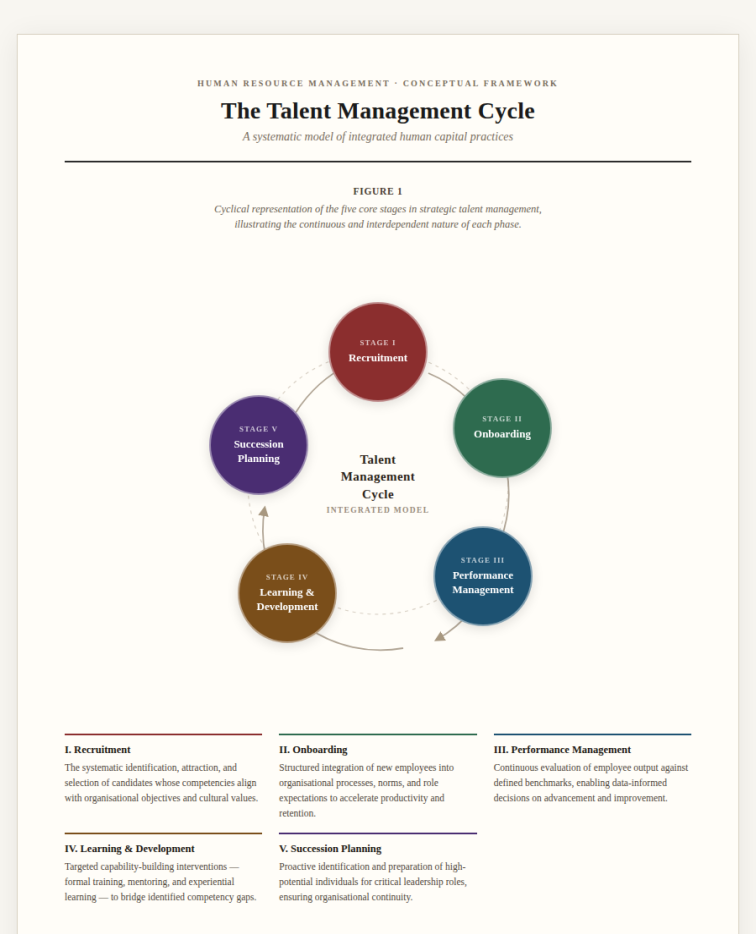
Talent management represents a strategic, integrated approach to identifying, selecting, attracting, developing, motivating, and retaining efficient and engaged human resources. The Talent Management Cycle illustrates this process as a constant, closed-loop framework comprising five interdependent phases, as shown in
Figure 1. Glaister et al.
| [24] | Glaister, A. J., Karacay, G., Demirbag, M., Tatoglu, E. HRM and Performance – The Role of Talent Management as a Transmission Mechanism in an Emerging Market Context. Human Resource Management Journal. 2018, 28(1), 148–166.
https://doi.org/10.1111/1748-8583.12170 |
[24]
demonstrated through extensive research on 198 companies that talent management, when centred on human resource continuous development practices, directly influences organisational performance. More concretely, companies with coordinated HRM (Human Resource Management), organisational strategies, and structured talent management techniques obtained better outcomes compared to those without such coordination.
In the current digitally augmented operational landscapes, the focus is no longer centred on how resources work, but on the skills needed to perform that work, as careers are emergent, flexible, and hybrid. To solidify the attraction–development–retention cycle, companies provide individualised experiences and continuous soft and hard skills development, while creating a pipeline of anticipated capacities.
Contemporary organisations are progressively considering technology as a main digital companion to support business requirements. By leveraging AI, organisations can attract and build the required capacities for the future while allowing each individual to create a career focused on their expertise. Empowering individuals to contemplate and express more about their needs, skills, limitations, and aspirations offers organisations the opportunity to match employees with purposeful work and create optimal, dynamic teams
. Moreover, this skills-matching approach is also perceived as a strategic agility promoter through active correspondence in both internal and external labour markets, generating meta-skills such as strategic sensitivity and resource fluidity
| [14] | Jooss, S., Collings, D. G., McMackin, J., Dickmann, M. A Skills-Matching Perspective on Talent Management: Developing Strategic Agility. Human Resource Management. 2024, 63, 141–157. https://doi.org/10.1002/hrm.22192 |
[14]
. This perspective is supported by Harvard Business School research that proposes talent as a central asset necessitating procedural discipline. More specifically, talent supply and development are perceived as managed flows rather than episodic activities
| [27] | Kerr, W. R., Fuller, J. B., Raman, M., Kreitzberg, C. Managing Talent Pipelines in the Future of Work (HBS Background Note No. 819-131). Harvard Business School: Boston, MA; 2021. |
[27]
.
Based on this, talent-powered agility involves a shorter cycle timeframe from strategic requirement to capacity deployment, implying internal mobility, redeployment, and continuous improvement
| [14] | Jooss, S., Collings, D. G., McMackin, J., Dickmann, M. A Skills-Matching Perspective on Talent Management: Developing Strategic Agility. Human Resource Management. 2024, 63, 141–157. https://doi.org/10.1002/hrm.22192 |
| [26] | Gibson, A., Oldroyd, N. Agile Workforce Planning. In Strategic Workforce Planning: Best Practices and Emerging Directions. Sokol, M., Tarulli, B., Eds. Oxford University Press: Oxford, UK; 2024, pp. 116–139.
https://doi.org/10.1093/oso/9780197759745.003.0007 |
[14, 26]
. The academic discourse provides a concrete example through Oxford Academic research on agile workforce planning, which highlights iterative and incremental scenario-based techniques and addresses limitations of conventional headcount-based planning
| [26] | Gibson, A., Oldroyd, N. Agile Workforce Planning. In Strategic Workforce Planning: Best Practices and Emerging Directions. Sokol, M., Tarulli, B., Eds. Oxford University Press: Oxford, UK; 2024, pp. 116–139.
https://doi.org/10.1093/oso/9780197759745.003.0007 |
[26]
. This approach sustains the build–buy–borrow decisional framework by promoting continuous skills-gap anticipation and capability mitigation, rather than static predictive analysis that becomes rigid in uncertain operational landscapes
| [13] | Nguyen, T., Le, C. V., Nguyen, M., Nguyen, G., Lien, T. T. H., Nguyen, O. The Organisational Impact of Agility: A Systematic Literature Review. Management Review Quarterly. 2024. https://doi.org/10.1007/s11301-024-00446-9 |
| [26] | Gibson, A., Oldroyd, N. Agile Workforce Planning. In Strategic Workforce Planning: Best Practices and Emerging Directions. Sokol, M., Tarulli, B., Eds. Oxford University Press: Oxford, UK; 2024, pp. 116–139.
https://doi.org/10.1093/oso/9780197759745.003.0007 |
[13, 26]
.
2.3. Outsourcing: Globalising Talent
Outsourcing is conventionally perceived as a build-or-buy decisional model based on whether resources should be internally developed, acquired, or externally supplied, with governance frameworks adapted by contracting nature and transaction characteristics
. In this context, transaction cost economics (TCE) theory examines the potential and cumulative costs of economic exchanges, such as coordination, negotiation, and enforcement, positioning the outsourcing process in direct relation to governance costs across markets
. Moreover, current research efforts extend this process beyond bilateral contracting into portfolios of delivery models and highlight the need for internal capacities to monitor and coordinate value achievement, supplier structures, and emerging digital-based delivery
.
A recent research study on outsourcing observes that externalisation can increase organisational productivity levels through adaptation, standardisation, and development. This evidence-based approach places outsourcing as an active element of corporate reconfiguration and unbundling of functions
. ICT domain advancement further extends organisational scope, correlating historical outsourcing mechanisms to modern hybrid or fully remote work and digital platform-mediated approaches that reconfigure the manner companies manage work globally
| [30] | Erickson, C. L., Norlander, P. How the Past of Outsourcing and Offshoring is the Future of Post-Pandemic Remote Work: A Typology, a Model and a Review. Industrial Relations Journal. 2022, 53(1), 71–89. https://doi.org/10.1111/irj.12355 |
[30]
. These technological developments are relevant to talent-based agility as they solidify the base of borrow alternatives for accessing scarce capacities beyond company boundaries
.
Additionally, current evidence provided by Deloitte defines sourcing as a multidimensional process allowing organisations to integrate outsourcing, insourcing, and global in-house centres to manage flexibility, increase control, and build a strong capacity base
. This supports the talent-based agility approach because when internal development levels are slow or labour markets are constrained, externalisation frameworks can leverage time-to-skill and allow access to scarce resources
. Moreover, AI-based outsourcing intervention through digital workers further extends the sourcing palette and strengthens the importance of agile governance and contracting capacities
.
A joint MIT Sloan Management study observed that multiple organisations externalise their human resources and integrate them as part of a dynamic workforce ecosystem, but a small proportion confirm that they are sufficiently prepared to coordinate this increasing complexity
| [31] | PR Newswire. MIT Sloan Management Review and Deloitte Survey Finds 74% of Leaders Believe Effective Management of External Workers is Critical to Organization's Success. [Internet]. 2022. Available from:
https://www.prnewswire.com/news-releases/ [Accessed March 2025]. |
[31]
. This outsourcing framework denotes that borrow approaches require new management structures to effectively integrate external talent and protect agility
. Complementing scope expansion and globalisation perspectives, a Stanford study explains that work has become geographically more decoupled from employer offices following the pandemic, which can expand talent pools but also restructure labour distribution frameworks
| [32] | Akan, M., Barrero, J. M., Bloom, N., Bowen, T., Davis, S. J., Kim, H. The New Geography of Labor Markets. Stanford Institute for Economic Policy Research Working Paper; 2024. Available from: https://siepr.stanford.edu [Accessed March 2025]. |
[32]
.
Across the Agile Methodology literature, agility is increasingly treated as a dynamic capacity enabling timely reconfiguration under deep uncertainty
| [12] | Teece, D. J., Peteraf, M., Leih, S. Dynamic Capabilities and Organizational Agility: Risk, Uncertainty, and Strategy in the Innovation Economy. California Management Review. 2016, 58(4), 13–35. https://doi.org/10.1525/cmr.2016.58.4.13 |
| [23] | Asghar, J., Kanbach, D. K., Kraus, S. Toward a Multidimensional Concept of Organizational Agility: A Systematic Literature Review. Management Review Quarterly. 2025.
https://doi.org/10.1007/s11301-025-00497-6 |
[12, 23]
. Talent management literature is perceived as micro-foundations generator: dynamic skills matching across internal and external labour markets helps create strategic agility by increasing resource fluidity and strategic sensitivity
| [14] | Jooss, S., Collings, D. G., McMackin, J., Dickmann, M. A Skills-Matching Perspective on Talent Management: Developing Strategic Agility. Human Resource Management. 2024, 63, 141–157. https://doi.org/10.1002/hrm.22192 |
[14]
. Outsourcing literature contributes governance logic: borrowing talent through vendors, contractors, or ecosystems can accelerate capability access, but outcomes depend on contracting, retained capabilities, and integration effectiveness
. Accordingly, the build–buy–borrow framework can be interpreted as an organisational capability to select and manage sourcing modes to minimise time-to-skill while maintaining governance quality and strategic alignment
.
3. Materials and Methods
3.1. Research Design
This research paper conducts a qualitative comparative case study based on the analysis of public secondary data. The qualitative design approach is relevant as this study aims to explore the manner outsourcing strategies, talent management, and governance structures coact and impact organisational agility, rather than to test a narrowly specified framework through statistical inference. In this context, the current Agile research increasingly conceptualises organisational agility as a multidimensional capacity defined by both internal and external actors, including governance, knowledge implementation, and stakeholder management
| [23] | Asghar, J., Kanbach, D. K., Kraus, S. Toward a Multidimensional Concept of Organizational Agility: A Systematic Literature Review. Management Review Quarterly. 2025.
https://doi.org/10.1007/s11301-025-00497-6 |
[23]
. Likewise, outsourcing academic discourse has advanced beyond a cost-efficiency dimension to highlight knowledge base creation, and the management of extensive workforce ecosystems
.
3.2. Case Selection
The study analyses 3 international retail organizations: Carrefour, Tesco, and Walmart, selected through purposive sampling. These companies were selected because they represent big multinational retailers activating at across various complex markets. Additionally, each of them operates within digital environments, adapting their capabilities to these market cyber-trends. Moreover, all of them demonstrates a relatively increased level of transparency in public reporting, and adopts a different capability-sourcing logic, making them analytically valid for observing the process through which different outsourcing–talent frameworks provide agility results.
3.3. Data Sources
The empirical base for this study encompasses publicly available data provided by the focal companies during a multi-year timeframe. The main data-sources are based on annual reports, governance and sustainability documentation, press releases, and strategy communications. This data sourcing approach was engaged because it provides solid evidence on transformation strategies, investments appetite in technological and supply chain capabilities, people and governance frameworks, and partnerships models. The triangulation of various document types reduces reliance on a single narrative and increases the researcher’s interpretation reliability.
3.4. Data Analysis
The data were examined through a qualitative document analysis engaging a thematic coding methodology. This analytical strategy is feasible as this study’s objectives based on the identification of strategic patterns, and organisational logics across textual data, and comparison of the manner different retail companies narrate and structure similar strategic challenges. Based on this, four coding categories guided the analysis: outsourcing logic; talent focus; agility implications; and governance mechanisms. The analysis proceeded in two phases: first, each organisation was analysed separately to create a case-specific profile of its outsourcing–talent structure and secondly, a cross-case comparison was conducted to identify convergent and divergent patterns across the three retailers.
3.5. Validity and Reliability
Multiple actions were taken to solidify scientific reliability the study. First, data triangulation was employed across annual reports, governance documents, press releases, and public strategy communications to reduce dependence on a single corporate narrative. Second, the coding framework was transparent and theoretically grounded, increasing analytical data consistency across all the three cases. Third, the use of publicly verifiable data sources increases replicability, as future researchers can explore the same scientific base. Moreover, public corporate disclosures represent strategic information and present organisations from a curated and favorable perspective. Consequently, data are interpreted cautiously and presented as evidence of strategic positioning rather than direct and concrete proof of internal causal mechanisms.
4. Results
4.1. Carrefour
The Carrefour case presented a sourcing framework defined by extensive partnership-based capacity acquisition, especially in areas correlated to digital transformation, and ecosystem expansion. The reports analysed for this case suggested a digital transformation integration through the increasing technology usage, and AI solutions acquisition. Moreover, the Carrefour 2026 strategy presents the retail company as a cutting-edge group activating through increasingly digitised and omni-channel structures. Additionally, fom a talent management perspective, Carrefour tends to retain an increased amount of internal operational retail workforce to secure the commercial strategy and operational knowledge, while engaging external partners to complement and scale scarce digital capabilities. This outsourcing framework can increase operational speed and broaden access to niche skills. Moreover, Carrefour’s agility profile possesses mixed characteristics as stakeholder collaboration intensity may accelerate innovation, yet it may also expose the organisation to dependency risk if digital expertise remains insufficiently integrated within the company
.
4.2. Tesco
Tesco adopts a more hybrid and rebalanced sourcing approach. Publicly available data reports a continued investment in customer database creation, digital infrastructure, and technology-based service delivery. At the same time, Tesco’s externalization strategy reflects an increased inclination to in-house expertise for system integration and data sensitive digital capabilities, despite continuing to source third-party components. Tesco’s operational and managerial narrative highlights various Agile values such as collaboration, adaptability and functional results over rigid processes. This approach implies a talent focus on internal digital capability as it represents not only a support function, but a strategic enabler that allows external resources to be engaged more strategically and coherently. Moreover, Tesco’s governance framework is complex, with formal board-level structures, risk oversight, and clear strategic prioritization
.
4.3. Walmart
Walmart represents the template of a strategic outsourcing model grounded in continuous internal capacity development. More concretely, the 2025 report presents the company as a people-oriented, technology-driven and omni-channel retailer, mentioning a continuing investment in e-commerce, automation, AI, and an integrated supply-chain network. Walmart’s talent management strategy is correspondingly internalized, being perceived as a competitive advantage characteristic. Based on this, a comparatively mature governance framework is adopted by Walmart, in which external providers are grouped within a broader ecosystem of internal control, operating discipline, and strategic prioritization, creating an agile organization
.
4.4. Cross-case Comparison
The cross-case review identifies fewer differences in the external resources’ engagement levels and a more different approach in the manner these companies manage the relationship between outsourcing, internal talent, and governance. Carrefour’s approach is broader and more partnership oriented. Tesco’s presents a hybrid and integrative outsourcing framework. Additionally, Walmart possesses a selective and internally grounded outsourcing strategy
. These distinctions are presented in
Table 1 below.
Table 1. Cross-case comparison of outsourcing–talent configurations across the three retailers.
Retailer | Outsourcing Logic | Talent Focus | Agility Implications | Governance |
Carrefour | Broad, capability-gap driven | Greater reliance on external digital capability alongside internal retail expertise | Rapid deployment; elevated dependency risk | Partnership-based and relational |
Tesco | Hybrid and increasingly rebalanced | Mixed internal/external model with stronger in-house integration | Variable but improving agility | Strengthened oversight and integration |
Walmart | Selective and capability-driven | Strong internal digital and supply-chain talent | High operational and digital agility | Mature and internally integrated |
Source: author’s own contribution
4.5. Emergent Patterns
Three outsourcing strategy patterns are generated through the study’s results. More concretely, outsourcing supports agility only when strategic capacities are internally retained or developed. This pattern is mostly represented in Walmart’s case and, to a lower degree, in Tesco’s strategy on in-house integration. Additionally, extensive externalisation without sufficiently strong internal capability may generate dependence, as presented by Carrefour’s partnership approach. Furthermore, governance quality acts as a bridge between vendor and client through knowledge reintegration, and RACI matrix. If these monitoring structures are well defined, the external sourcing is more likely to function as an agility enabler rather than a source of fragility.
5. Discussion
The findings indicate that outsourcing is neither inherently agility-enhancing nor intrinsically detrimental. Rather, its consequences depend on whether organisations comply the outsourcing decision-making processes with their internal talent architecture and governance framework. A core contribution of the analysis is the identification of talent alignment as the missing element between outsourcing and agility. While the most of academic discourse on outsourcing area has focused on cost, or stakeholder performance, comparatively less efforts have been distributed towards internal capability retention. More concretely, the manner it shapes the ability to learn how to not depend on external providers. The cases also highlight that retailers differ in capability management, not merely in sourcing intensity.
Based on the study’s findings, this research article creates the base for an Agile Outsourcing-Talent Alignment Model. This framework suggests that agility outcomes are defined by the integration of four elements: outsourcing strategy, talent management system, Agile methodology, and governance. Outsourcing strategy represents the scope, depth, and logic of external sourcing. At the same time, talent management reflects the organisation’s internal capability development, knowledge retention techniques, and integration of vendor-side expertise. Moreover, Agile methodology is translated into operational, executive and strategic adaptability. Also, governance acts as a transversal layer, correlating all three dimensions through monitorisation, accountability, and knowledge reintegration. In this context, the proposed model sustains that agility is generated not by outsourcing per se, but by the alignment between sourcing decision-making process and the internal capability system that governs them.
Based on this model, six theoretical propositions are developed:
P1: The positive relationship between outsourcing and agility is stronger when outsourced activities are limited to complementary or non-core capabilities, while strategically critical capabilities remain internally anchored.
P2: Outsourcing strategically important technological capabilities without concurrent internal capability development reduces strategic organisational agility.
P3: Reinvestment in internal digital and integrative talent following excessive external dependence improves agility by restoring absorptive capacity and coordination capability.
P4: Governance quality positively moderates the relationship between outsourcing and agility.
P5: Knowledge retention and vendor–client integration mediate the relationship between outsourcing and agility.
P6: Companies that align build–buy–borrow framworks with capability achieve higher operational, and strategic agility than organisations guided mainly by cost-based outsourcing rationale.
This research article provides three core contributions within the scientific discourse. It integrates outsourcing and talent management strategies by demonstrating that the outsourcing outcomes cannot be fully achieved without internal capabilities. Also, it extends agility theoretical scope by perceiving external capability access and inter-organisational governance as constitutive components of agility rather than as auxiliar factors. Moreover, it provides a capability-management model that correlates outsourcing scope, talent, knowledge retention, and governance frameworks into a unified approach of agility integration.
The findings suggest that managers should perceive outsourcing strategies as talent and capability decisions, not primary as cost or procurement decisions. In practice, this represents a clear segregation of internal and external capabilities. More specifically, a procedural difference from internally built capabilities, or capabilities that may be bought externally, and capabilities that can be borrowed through strategic stakeholder collaboration. Managers should also treat governance and knowledge transfer as strategic priorities. Vendor management should extend beyond SLA compliance to include mechanisms for learning, reintegration, and partner accountability.
The study encounters several limitations. The main challenge is based on secondary data, which means that conclusions are derived from public disclosures rather than internal observation or interviews. Additionally, the scope of this study is limited to three retailers, which constrains the breadth of sectoral generalisation. Moreover, as the analysis is document-based, certain interpretations, particularly around tacit governance practices or informal knowledge-sharing processes remain inferential.
Future research efforts should focus on testing the proposed model in larger samples and across various sectors. Quantitative frameworks could investigate whether retained internal capacity manages the outsourcing–agility relationship at scale. Furthermore, a qualitative analysis could explore vendor–client talent integration in more profoundly, especially through interviews that reflect knowledge transfer processes, reintegration practices, and the operational tensions between internal and external teams.
6. Conclusions
This research article addressed the manner through which outsourcing strategies are integrated within talent management frameworks to influence organisational agility on a global level. This research problem was generated by a solid gap in the current literature: while outsourcing, talent management, and organisational agility have each been analysed extensively, the mechanisms through which they integrate have remained under-examined, leaving organisations without a coherent structure for building capability-based sourcing strategies.
The comparative analysis of Carrefour, Tesco, and Walmart comprises three main findings. First, outsourcing does not independently produce organisational agility. Its agility potential is conditional on the extent to which capabilities sourced externally are congruent with internally retained talent and complex governance structures. Second, the three retailer organisations demonstrate significantly distinct sourcing philosophies. Carrefour's partnership-focused model enhances access to technological competencies but introduces a risk of dependency due to insufficient internal critical knowledge. Conversely, Tesco's hybrid and incrementally adjusted approach integrates selective outsourcing models with stronger internal integration, generating increased organizational agility levels. Walmart's internally integrated framework, defined by a strategic combination of selective outsourcing approach with significant in-house digital and supply-chain competencies, presents the strongest operational and strategic agility implementation among the three models. Third, and most importantly, the quality of governance, knowledge reintegration processes, and the retention of internal expertise consistently serve as decisive moderators of the outsourcing–agility relationship across all three cases. The research therefore develops the argument that agility is best perceived and conceptualized not as a direct result of outsourcing intensity, but as the outcome of deliberate alignment between outsourcing strategy, talent architecture, and governance capabilities.
These findings build the empirical and theoretical foundation for the Agile Outsourcing–Talent Alignment Model proposed in this research article. This model encompasses four interdependent dimensions: outsourcing strategy, talent management frameworks, Agile methodology, and governance, arguing that sustainable agility arises only when these dimensions are coherently configured. The extensive managerial implication is that decisions regarding the build–buy–borrow workflow must be approached as capability and talent investments rather than exclusively as financial or acquisition exercises.
This research article offers multiple directions for future research. First, the proposed Agile Outsourcing–Talent Alignment Model requires empirical validation and it should be tested through large-scale quantitative studies across multiple industries to assess its generalisability beyond the retail sector and to establish whether internal capacity retention functions serve as a statistically significant moderator of the outsourcing–agility relationship. Second, qualitative research implying direct access to practitioners using interviews and ethnographic observation. This approach can provide a deeper investigation of knowledge transfer processes, reintegration practices, and the informal governance processes that secondary data cannot sufficiently disclose. Third, future research can be focused on the implications of the current market developments, including AI-driven outsourcing, digital labour platforms, and post-pandemic geographic segregation of work, restructuring the dynamics of the build–buy–borrow framework and the conditions under which borrowed talent can effectively serve as a facilitator of organizational agility rather than a source of strategi vulnerability.
Abbreviations
AI | Artificial Intelligence |
HRM | Human Resource Management |
ICT | Information and Communication Technology |
IT | Information Technology |
SLA | Service Level Agreement |
TCE | Transaction Cost Economics |
Author Contributions
Dora Ioana Damian: Conceptualization, Investigation, Methodology, Writing – original draft, Writing – review & editing
Funding
This paper is the result of research conducted within the Doctoral School of Management at the Bucharest University of Economic Studies.
Data Availability Statement
The data supporting the findings of this research article are derived from publicly available corporate reports and disclosures and have been reported in the References section of this manuscript.
Conflicts of Interest
The author declares no conflicts of interest.
Appendix
Figure 2. Planning vs Preparation. Source - (Bloom, 2025).
References
| [1] |
Brynjolfsson, E., McAfee, A. The Second Machine Age: Work, Progress, and Prosperity in a Time of Brilliant Technologies. MIT Press: Cambridge, MA; 2014.
|
| [2] |
Susskind, R., Susskind, D. The Future of the Professions: How Technology Will Transform the Work of Human Experts. Oxford University Press: Oxford, UK; 2015.
|
| [3] |
Lacity, M., Willcocks, L. Nine Keys to World-Class Business Process Outsourcing. Bloomsbury Publishing: London, UK; 2014.
|
| [4] |
Cappelli, P., Keller, J. Talent Management: Conceptual Approaches and Practical Challenges. Annual Review of Organizational Psychology and Organizational Behavior. 2014, 1(1), 305–331. 2014, 1(1), 305–331.
https://doi.org/10.1146/annurev-orgpsych-031413-091314
|
| [5] |
Younger, J., Smallwood, N. Agile Talent: How to Source and Manage Outside Experts. Harvard Business Review Press: Boston, MA; 2016.
|
| [6] |
Bloom, S. I wish I had learned this earlier in my career. [Internet]. LinkedIn; 2025. Available from:
https://www.linkedin.com/posts/sahilbloom
[Accessed 4 April 2025].
|
| [7] |
Cummins, T., Kleiner, M. State of Agility in Procurement & Supply: Global Annual Report 2025 (R1.0). Scrum.org; 2025.
|
| [8] |
Doz, Y., Kosonen, M. Embedding Strategic Agility: A Leadership Agenda for Accelerating Business Model Renewal. Long Range Planning. 2010, 43(2–3), 370–382.
https://doi.org/10.1016/j.lrp.2009.07.006
|
| [9] |
Rigby, D., Sutherland, J., Takeuchi, H. Embracing Agile. Harvard Business Review. 2016, 94(5), 40–50.
|
| [10] |
Willcocks, L., Lacity, M., Craig, A. Robotic Process Automation and Risk Mitigation: The Definitive Guide. SB Publishing: Stratford-upon-Avon, UK; 2017.
|
| [11] |
Collings, D. G., Mellahi, K., Cascio, W. F. Global Talent Management and Performance in Multinational Enterprises: A Multilevel Perspective. Journal of Management. 2019, 45(2), 540–566.
https://doi.org/10.1177/0149206318757018
|
| [12] |
Teece, D. J., Peteraf, M., Leih, S. Dynamic Capabilities and Organizational Agility: Risk, Uncertainty, and Strategy in the Innovation Economy. California Management Review. 2016, 58(4), 13–35.
https://doi.org/10.1525/cmr.2016.58.4.13
|
| [13] |
Nguyen, T., Le, C. V., Nguyen, M., Nguyen, G., Lien, T. T. H., Nguyen, O. The Organisational Impact of Agility: A Systematic Literature Review. Management Review Quarterly. 2024.
https://doi.org/10.1007/s11301-024-00446-9
|
| [14] |
Jooss, S., Collings, D. G., McMackin, J., Dickmann, M. A Skills-Matching Perspective on Talent Management: Developing Strategic Agility. Human Resource Management. 2024, 63, 141–157.
https://doi.org/10.1002/hrm.22192
|
| [15] |
Deloitte. Global Outsourcing Survey 2024: Multidimensional Sourcing – Orchestrating the Extended Workforce Ecosystem. Deloitte; 2024. Available from:
https://www.deloitte.com/global/en/issues/work/global-outsourcing-survey.html
[Accessed March 2025].
|
| [16] |
Williamson, O. E. Outsourcing: Transaction Cost Economics and Supply Chain Management. Journal of Supply Chain Management. 2008, 44(2), 5–16.
https://doi.org/10.1111/j.1745-493X.2008.00051.x
|
| [17] |
Alviani, D. A. D., Hilmiana, H. I., Widianto, S., Muizu, W. O. W. O. Z. Workforce Agility: A Systematic Literature Review and Research Agenda. Frontiers in Psychology. 2024, 15, Article 1376399.
https://doi.org/10.3389/fpsyg.2024.1376399
|
| [18] |
Kump, B., Engelmann, A., Kessler, A., Schweiger, C. Toward a Dynamic Capabilities Scale: Measuring Organizational Sensing, Seizing, and Transforming Capacities. Industrial and Corporate Change. 2019, 28(5), 1149–1172.
https://doi.org/10.1093/icc/dty054
|
| [19] |
Bornay-Barrachina, M., López-Cabrales, Á., Salas-Vallina, A. Sensing, Seizing, and Reconfiguring Dynamic Capabilities in Innovative Firms: Why Does Strategic Leadership Make a Difference? Business Research Quarterly. 2025, 28(2), 399–420.
https://doi.org/10.1177/23409444231185790
|
| [20] |
Harvard Business School Working Knowledge. Leading in the Digital Era: A Curated Collection of Research Articles from Harvard Business School Faculty. Harvard Business School: Boston, MA. [n.d].
|
| [21] |
Mueller-Saegebrecht, S., Walter, A.-T. Strategic Agility – An Urgent Capability for Successful Business Model Innovation? A Conceptual Process Model and Theoretical Framework. Strategic Change. 2025.
https://doi.org/10.1002/jsc.2645
|
| [22] |
Harreld, J. B., O'Reilly, C. A., Tushman, M. L. Dynamic Capabilities at IBM: Driving Strategy into Action. California Management Review. 2007, 49(4), 21–43.
https://doi.org/10.1525/cmr.2007.49.4.21
|
| [23] |
Asghar, J., Kanbach, D. K., Kraus, S. Toward a Multidimensional Concept of Organizational Agility: A Systematic Literature Review. Management Review Quarterly. 2025.
https://doi.org/10.1007/s11301-025-00497-6
|
| [24] |
Glaister, A. J., Karacay, G., Demirbag, M., Tatoglu, E. HRM and Performance – The Role of Talent Management as a Transmission Mechanism in an Emerging Market Context. Human Resource Management Journal. 2018, 28(1), 148–166.
https://doi.org/10.1111/1748-8583.12170
|
| [25] |
SAP. Explaining the Importance of Talent Management. [Internet]. SAP Learning. [n.d.]. Available from:
https://learning.sap.com/courses/discovering-sap-solutions-for-talent-management/explaining-the-importance-of-talent-management
[Accessed March 2025].
|
| [26] |
Gibson, A., Oldroyd, N. Agile Workforce Planning. In Strategic Workforce Planning: Best Practices and Emerging Directions. Sokol, M., Tarulli, B., Eds. Oxford University Press: Oxford, UK; 2024, pp. 116–139.
https://doi.org/10.1093/oso/9780197759745.003.0007
|
| [27] |
Kerr, W. R., Fuller, J. B., Raman, M., Kreitzberg, C. Managing Talent Pipelines in the Future of Work (HBS Background Note No. 819-131). Harvard Business School: Boston, MA; 2021.
|
| [28] |
Oshri, I., Kotlarsky, J., Willcocks, L. P. The Handbook of Global Outsourcing and Offshoring. Springer: Cham, Switzerland; 2023.
https://doi.org/10.1007/978-3-031-12034-3
|
| [29] |
Sako, M. Outsourcing and Offshoring: Implications for Productivity of Business Services. Oxford Review of Economic Policy. 2006, 22(4).
https://doi.org/10.1093/oxrep/grj029
|
| [30] |
Erickson, C. L., Norlander, P. How the Past of Outsourcing and Offshoring is the Future of Post-Pandemic Remote Work: A Typology, a Model and a Review. Industrial Relations Journal. 2022, 53(1), 71–89.
https://doi.org/10.1111/irj.12355
|
| [31] |
PR Newswire. MIT Sloan Management Review and Deloitte Survey Finds 74% of Leaders Believe Effective Management of External Workers is Critical to Organization's Success. [Internet]. 2022. Available from:
https://www.prnewswire.com/news-releases/
[Accessed March 2025].
|
| [32] |
Akan, M., Barrero, J. M., Bloom, N., Bowen, T., Davis, S. J., Kim, H. The New Geography of Labor Markets. Stanford Institute for Economic Policy Research Working Paper; 2024. Available from:
https://siepr.stanford.edu
[Accessed March 2025].
|
| [33] |
Smuts, H., Kotzé, P. Client-Vendor Knowledge Transfer Mechanisms in the Context of Information Systems Outsourcing in Knowledge Management in Organizations. Springer: Cham, Switzerland; 2015, pp. 102–119.
https://doi.org/10.1007/978-3-319-21009-4_9
|
| [34] |
Carrefour Group. Universal Registration Document 2024. [Internet]. Available from:
https://www.carrefour.com/en/finance/regulated-information
[Accessed March 2025].
|
| [35] |
Tesco PLC. Annual Report and Financial Statements 2024. [Internet]. Available from:
https://www.tescoplc.com/investors/reports-results-and-presentations/
[Accessed March 2025].
|
| [36] |
Walmart Inc. Annual Report (Form 10-K) 2025. [Internet]. Available from:
https://stock.walmart.com/financials/annual-reports/default.aspx
[Accessed March 2025].
|
Cite This Article
-
APA Style
Damian, D. I., Radu, C. (2026). Build, Buy, or Borrow – Outsourcing Talent-Based Agility in Global Retail Organisations. International Journal of Economics, Finance and Management Sciences, 14(3), 184-194. https://doi.org/10.11648/j.ijefm.20261403.11
 Copy
|
Copy
|
 Download
ACS Style
Damian, D. I.; Radu, C. Build, Buy, or Borrow – Outsourcing Talent-Based Agility in Global Retail Organisations. Int. J. Econ. Finance Manag. Sci. 2026, 14(3), 184-194. doi: 10.11648/j.ijefm.20261403.11
Copy
|
Download
AMA Style
Damian DI, Radu C. Build, Buy, or Borrow – Outsourcing Talent-Based Agility in Global Retail Organisations. Int J Econ Finance Manag Sci. 2026;14(3):184-194. doi: 10.11648/j.ijefm.20261403.11
Copy
|
Download
-
@article{10.11648/j.ijefm.20261403.11,
  author = {Dora Ioana Damian and Catalina Radu},
  title = {Build, Buy, or Borrow – Outsourcing Talent-Based Agility in Global Retail Organisations},
  journal = {International Journal of Economics, Finance and Management Sciences},
  volume = {14},
  number = {3},
  pages = {184-194},
  doi = {10.11648/j.ijefm.20261403.11},
  url = {https://doi.org/10.11648/j.ijefm.20261403.11},
  eprint = {https://article.sciencepublishinggroup.com/pdf/10.11648.j.ijefm.20261403.11},
  abstract = {In contemporary digitally mediated and economically volatile environments, organisations face mounting pressure to reconfigure capabilities rapidly in response to technological disruption, geopolitical uncertainty, and persistent talent shortages. Within this context, outsourcing has evolved beyond its traditional cost-efficiency rationale to become a strategic mechanism for accessing scarce expertise, enhancing capability flexibility, and supporting organisational agility through build–buy–borrow talent configurations. This study investigates how outsourcing strategies interact with talent management systems to influence organisational agility in global organisations. Adopting a qualitative comparative case study design based on publicly available secondary data, the article examines three multinational retail firms (Carrefour, Tesco, and Walmart) through thematic analysis structured around outsourcing logic, talent orientation, agility implications, and governance mechanisms. The findings indicate that outsourcing does not, in itself, generate agility; rather, agility outcomes depend on the degree of alignment between externally sourced capabilities, retained internal talent, and governance capacity. Carrefour reflects a partnership-intensive model that facilitates rapid access to digital capabilities but also increases dependency risk where critical knowledge remains externalised. Tesco demonstrates a more hybrid and increasingly rebalanced approach, combining selective external sourcing with stronger internal integration. Walmart exhibits the most internally anchored model, in which selective outsourcing complements substantial in-house digital and supply-chain capabilities, thereby supporting stronger operational and strategic agility. Across the cases, governance quality, knowledge reintegration, and internal capability retention emerge as decisive moderators of the outsourcing–agility relationship. On this basis, the article advances an Agile Outsourcing–Talent Alignment Model, arguing that organisational agility is best understood as the outcome of alignment between sourcing strategy, talent architecture, and governance rather than outsourcing intensity alone. The study contributes to the literature by integrating outsourcing, talent management, and agility into a unified analytical framework and offers practical guidance for designing capability-based sourcing strategies.},
 year = {2026}
}
Copy
|
Download
-
TY  - JOUR
T1  - Build, Buy, or Borrow – Outsourcing Talent-Based Agility in Global Retail Organisations
AU  - Dora Ioana Damian
AU  - Catalina Radu
Y1  - 2026/05/15
PY  - 2026
N1  - https://doi.org/10.11648/j.ijefm.20261403.11
DO  - 10.11648/j.ijefm.20261403.11
T2  - International Journal of Economics, Finance and Management Sciences
JF  - International Journal of Economics, Finance and Management Sciences
JO  - International Journal of Economics, Finance and Management Sciences
SP  - 184
EP  - 194
PB  - Science Publishing Group
SN  - 2326-9561
UR  - https://doi.org/10.11648/j.ijefm.20261403.11
AB  - In contemporary digitally mediated and economically volatile environments, organisations face mounting pressure to reconfigure capabilities rapidly in response to technological disruption, geopolitical uncertainty, and persistent talent shortages. Within this context, outsourcing has evolved beyond its traditional cost-efficiency rationale to become a strategic mechanism for accessing scarce expertise, enhancing capability flexibility, and supporting organisational agility through build–buy–borrow talent configurations. This study investigates how outsourcing strategies interact with talent management systems to influence organisational agility in global organisations. Adopting a qualitative comparative case study design based on publicly available secondary data, the article examines three multinational retail firms (Carrefour, Tesco, and Walmart) through thematic analysis structured around outsourcing logic, talent orientation, agility implications, and governance mechanisms. The findings indicate that outsourcing does not, in itself, generate agility; rather, agility outcomes depend on the degree of alignment between externally sourced capabilities, retained internal talent, and governance capacity. Carrefour reflects a partnership-intensive model that facilitates rapid access to digital capabilities but also increases dependency risk where critical knowledge remains externalised. Tesco demonstrates a more hybrid and increasingly rebalanced approach, combining selective external sourcing with stronger internal integration. Walmart exhibits the most internally anchored model, in which selective outsourcing complements substantial in-house digital and supply-chain capabilities, thereby supporting stronger operational and strategic agility. Across the cases, governance quality, knowledge reintegration, and internal capability retention emerge as decisive moderators of the outsourcing–agility relationship. On this basis, the article advances an Agile Outsourcing–Talent Alignment Model, arguing that organisational agility is best understood as the outcome of alignment between sourcing strategy, talent architecture, and governance rather than outsourcing intensity alone. The study contributes to the literature by integrating outsourcing, talent management, and agility into a unified analytical framework and offers practical guidance for designing capability-based sourcing strategies.
VL  - 14
IS  - 3
ER  -
Copy
|
Download





 Share This Article
 Twitter
 Linked In
 Facebook